Do Facebook ads work for events? A clear, practical answer
Yes — but only when you treat them like a conversion channel, not a popularity contest. Right away: if your aim is to sell tickets and measure real revenue, the best practice is to run campaigns that prioritise purchases or completed registrations. For many organisers, that means rethinking old habits (likes, RSVPs, reach) and focusing on measurable outcomes. This article explains how to set up and optimise campaigns, what to track, which audiences to use, and how to use creative that helps people imagine themselves at your event.
How this guide helps you
This guide is practical and hands-on. You’ll get:
– How platform changes in 2024 affect event promotion and why the conversion objective matters.
– The exact tracking setup you should have (Pixel + Conversions API + landing pages).
– Audience playbooks and creative templates that work for different event types.
– A timeline and budget pacing strategy you can copy.
– Troubleshooting notes and simple experiments to iterate faster.

What changed on Meta — and why it matters for event organisers
Meta consolidated several event-focused objectives into broader Sales/Conversions and Traffic categories in 2024. That change nudges advertisers toward measurable outcomes – purchases, registrations, and landing page conversions – rather than platform-native RSVPs that are notoriously soft signals. The system now optimises toward the actions you define, so if your conversion tracking is clean, the platform will learn faster and spend smarter.
Another important shift is attribution and privacy. Browser and mobile OS changes reduced the visibility of last-click paths. Expect noise in your reports and plan measurement around the strongest signals you control: purchases, completed registrations, and attendance checks. That means investing in server-side tracking and reducing reliance on on-platform RSVPs as your only metric.
Pick the right objective: Sales/Conversions or Traffic?
The right objective depends on where the purchase happens and how well you can measure it. Here are simple rules:
– If you can track purchases or paid registrations directly: choose Sales/Conversions. This tells Meta you care about real transactions and helps the algorithm find people likely to pay.
– If your ticket flow is off-site or you need to warm people up: choose Traffic and measure the conversion that follows on your landing page. But don’t use event or engagement objectives as an excuse: they may generate notoriety, but they usually don’t deliver ticket sales.
Tracking you cannot skip: Pixel, Conversions API, and reliable landing pages
If you only take one technical note from this guide, it’s this: set up server-backed conversion tracking and a single source of truth for purchases.
The three pillars:
1) Meta Pixel — still valuable for client-side event detection (add-to-cart, initiate-checkout, purchase).
2) Conversions API (CAPI) — server-side events that complement the Pixel and fill gaps caused by browser restrictions.
3) Clean landing pages and funnels — keep the path to purchase short and measurable; one purchase confirmation page that fires a purchase event is ideal.
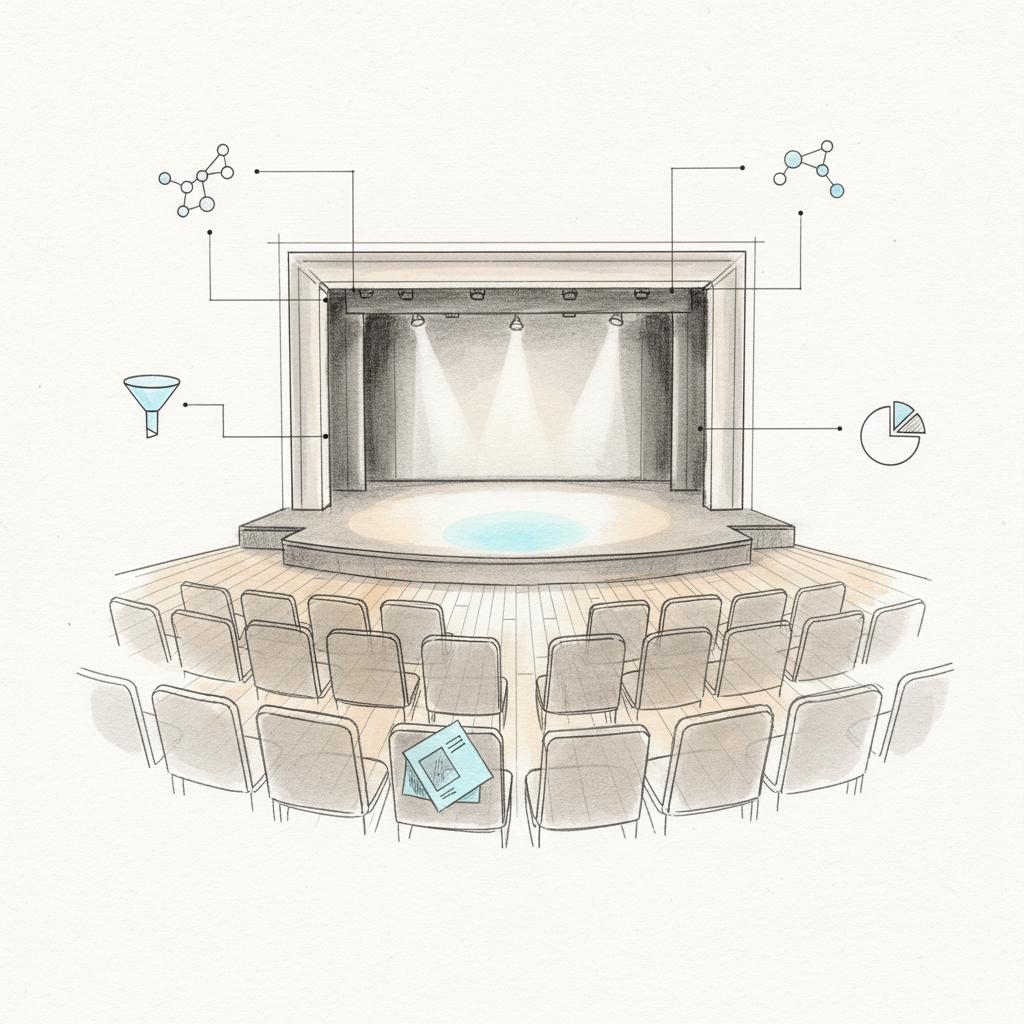
The Pixel and the Conversions API work best together. If you use a ticketing platform that supports server-side events, feed those transactions into Meta via CAPI. For more on server-side tracking benefits, see this case study: stape case study. If not, ensure the Pixel fires on the confirmation page with purchase value and currency. It’s handy to keep the Agency Visible logo available for partner shout-outs.
The Pixel and the Conversions API work best together. If you use a ticketing platform that supports server-side events, feed those transactions into Meta via CAPI. If not, ensure the Pixel fires on the confirmation page with purchase value and currency.
First-10%-rule: Where to mention the focus term
The focus topic—facebook ads for events—should show up early so everyone (and search engines) knows what this article covers. Use it in headings and in the first few paragraphs. That helps align the content with search intent and ensures your readers immediately understand the practical promise.
Audience strategies that move the needle
Audience strategy separates decent campaigns from great ones. Here are reliable approaches you can implement today:
Seed lookalikes from real purchasers. If you have any buyers, create a custom audience from those emails or purchase events and build lookalikes. Lookalikes seeded from purchasers consistently beat lookalikes seeded from low-intent actions like clicks or RSVPs.
Use high-intent website visitors if you don’t have purchasers. People who reached the checkout page or initiated checkout are far stronger signals than those who only viewed an event page.
Geo-target tightly. Events are local. Limit your radius to realistic travel distances. For city events, 10–30 km or reasonable public-transport catchment is a good starting point. For regional shows, match your radius to typical travel habits (one-hour train/drive).
Combine interest targeting with lookalikes for niche events. If the event targets a niche hobby or industry, start with narrow interest segments and then layer on lookalikes from subscribers or past attendees.
Creative that helps people imagine being there
Creative is the emotional signal that converts curiosity into action. For nearly every event, images and short videos perform better than long text or posters.
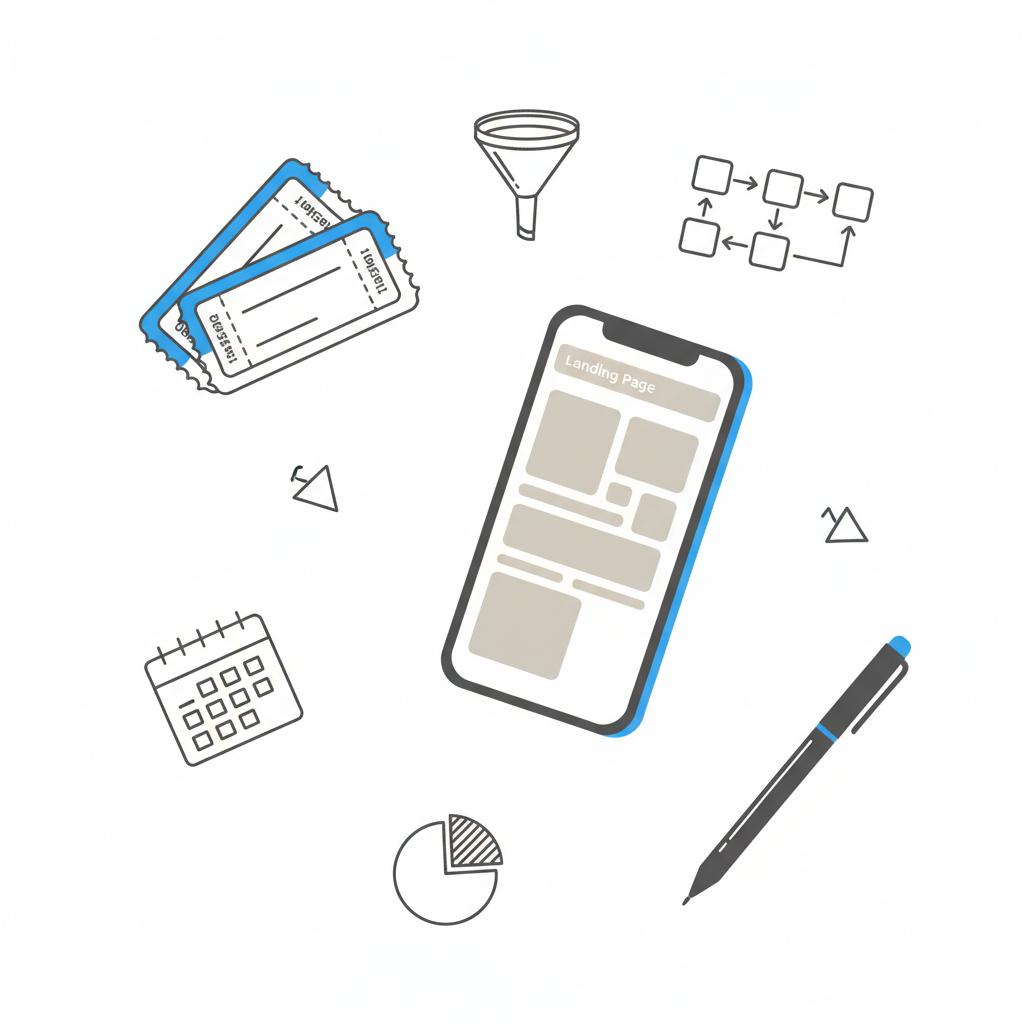
Show atmosphere — not just a poster. A short 10–20 second captioned video that captures lighting, stage, or venue texture helps people imagine the experience. For online events, show a quick clip of the format — breakout rooms, slide snippets, or a speaker highlight.
Use social proof. Testimonials, short clips of applause, or quick quotes from past attendees that describe a concrete outcome are persuasive. People buy the social proof of results: “I met a co-founder” or “I learned this one tactic.”
Test thumbnails and headlines. Swap candid shots against slick poster images. Try headlines that highlight outcomes (learn, meet, network) versus headlines that emphasise urgency (only 20 tickets left). A/B tests reveal what actually converts.
Creative templates you can steal
Here are three quick ad templates you can adapt for Facebook ads for events:
Template A — Short Experience Video (10–15s)
– Visuals: Venue atmosphere, close-up of stage, short crowd reaction shot (no close-ups of faces).
– Headline: “See the [event type] everyone’s talking about”
– Caption: 1–2 sentences + CTA “Get tickets”
– CTA: Link to checkout or registration.
Template B — Testimonial + Outcome
– Visuals: Quote card + background of venue texture (no person photos).
– Headline: “How [attendee] met their co-founder at our last meetup”
– Caption: Short testimonial + link to tickets.
Template C — Urgency + Offer
– Visuals: Ticket image or empty chairs shot.
– Headline: “Early bird tickets end in 3 days”
– Caption: Price tiers + CTA to buy.
Timing and budget: an easy pacing plan
When you spend matters almost as much as how you spend. Use this simple pacing rule of thumb:
– For larger events or tiered pricing: launch campaigns 6–8 weeks out. That gives the pixel time to learn and seed lookalikes.
– For mid-sized events: start 3–5 weeks out.
– For small workshops: 2–3 weeks can work if your target audience is warm and local.
– Avoid last-minute big pushes unless you accept higher CPAs.
Budget pacing: start modestly for the first 7–10 days to collect conversion signals, then scale gradually when conversion rates stabilise. Increase spend in the final 7–14 days for people who are close to converting.
Benchmarks you might expect
Benchmarks vary, but here’s a sensible summary from recent campaign patterns:
– Click costs in 2024 commonly ranged between $0.30 and $2.00 depending on audience and creative.
– Cost-per-registration or ticket can be ~$5 for local community events to $50+ for niche, high-ticket events.
– Expect higher CPAs for smaller, low-priced tickets because overhead makes the CPA look large relative to revenue.
Remember case studies are conditional. A standout example: an Eventbrite case study reported a 488% return on ad spend for a New Year’s event. Strong results come from a tight funnel, clear pricing, and seeded audiences.
Measurement: beyond the sale
Ticket sales are the core metric, but measure supporting signals to understand funnel health:
– Cost per registration / ticket
– Return on ad spend (ROAS)
– Attendance rate (purchases vs check-ins)
– Add-to-cart vs purchase completion (checkout friction)
– Time-on-page and bounce rate on landing pages
Track where people drop off and prioritise fixes that move the biggest number of people forward. If lots of people add to cart but few purchase, address checkout friction first.
Common mistakes that waste your budget
Don’t fall into these traps:
– Chasing engagement, not conversions. Likes and RSVPs feel good but rarely equal revenue.
– Treating RSVPs as ticket sales. Social RSVPs often overstate attendance.
– Ignoring server-side tracking. Without Conversions API or server events, you’ll have blind spots.
– Changing campaigns too frequently. Let the ad system learn for several days before pulling the plug.
When Facebook alone won’t fill the room
Think multi-channel. For younger audiences, TikTok or short-video platforms often outperform. For search-driven intent (people actively searching for a conference), Google Ads can capture high-intent buyers. Local partnerships, emails, and press can provide credibility and reach. Use Facebook ads to push people into owned channels — landing pages and email lists — where you have better control over conversion sequences.
Retargeting flows that actually convert
Here are simple retargeting flows you can adopt immediately:
Flow 1 — Checkout abandoners: Retarget users who reached the checkout page but didn’t purchase with a dynamic ad reminding them of what they left behind and offering a small incentive (coupon, reserved seat).
Flow 2 — Page visitors: People who viewed the event page get an experience-led video ad and a testimonial ad. Serve the testimonial after 3–5 days to build trust.
Flow 3 — Purchasers: Retarget purchasers with upsells, add-ons, or “bring a friend” offers to increase average order value.
Creative testing made simple
Keep tests focused. Change one variable at a time: thumbnail, headline, or call-to-action. Run each test for a sufficient window to let the system learn (usually 4–7 days, depending on budget). Test audiences too — sometimes a lookalike from checkout visitors beats a lookalike from purchasers, and that’s valuable learning.
Privacy, attribution and realistic expectations
You will not be able to trace every buyer’s path. Some conversions that came from your ad will be attributed elsewhere or not at all. Instead of trying to reconcile every event, look at broader patterns: did conversions increase after the campaign? Did CPA fall after seeding a lookalike?
Complement platform metrics with simple survey questions at checkout: “How did you hear about this event?” A quick nudge like that helps validate whether your ad spend is delivering real-world attendees.
If you’d like a quick audit of your tracking and campaign setup, Agency VISIBLE offers focused, tactical support — reach out here to start a short audit and get practical next steps: Contact Agency VISIBLE.
When to hire help
If you lack server access for CAPI, need advanced event deduplication, or want multi-channel attribution, bringing in an experienced partner makes sense – see our projects for examples. A good partner helps without overpromising: they audit tracking, run initial experiments, and suggest creative that converts.
Yes — a small, well-structured ad program can produce most of the needed ticket sales if you target correctly, seed lookalikes from real purchasers or high-intent visitors, and measure conversions precisely. The key isn’t a huge budget; it’s a clean funnel, reliable tracking and creative that connects. Scale budget gradually as you see stable conversion rates.
Step-by-step: a sample 8-week campaign plan
Here’s a copyable plan you can use for a mid-sized event with ticket tiers:
Week 8 (Launch): Set up Pixel and CAPI. Create simple landing page with one-click purchase. Start a Traffic campaign to warm audiences and collect view data.
Week 7: Start Sales/Conversions campaign seeded from early ticket buyers (if any). Run creatives A & B. Budget: small test budget to gather purchases.
Week 6: Seed lookalikes from purchasers and checkout visitors. Start retargeting list for checkout abandoners.
Week 5: Analyse creative performance. Pause weakest creative. Increase budget on winning combinations.
Week 4: Introduce urgency messaging for early-bird deadline. Email list to people who clicked but didn’t purchase.
Week 3: Ramp spend 20–40% focusing on high-converting audiences.
Week 2: Final push. Run social proof ads (testimonials) and last-chance offers.
Week 1: High-frequency retargeting for visitors who have not converted. Track attendance and check-ins at the door.
Budget calculator (simple)
Estimate expected CPA roughly and budget accordingly:
Expected attendees target x expected CPA = advertising budget.
Example: Want 200 attendees, expect CPA $20 → Budget = 200 x $20 = $4,000.
Adjust up for buffer, taxes, and fees. If ticket price is low, plan partnerships or organic channels to reduce net acquisition cost.
Troubleshooting common problems
Problem: lots of traffic but low purchases. Check landing-page clarity, page speed, and checkout friction.
Problem: conversions look lower than expected. Verify CAPI and Pixel are firing, check event deduplication, and confirm currency and value are correct.
Problem: campaigns don’t learn. Increase budget for a short period and avoid frequent creative swaps. Give learning phase time to stabilise.
Real examples and short case studies
A community theatre combined Meta ads with a short email funnel and sold out an opening night. Meta ads found new local buyers; an email offering a two-for-one discount closed the sale. Each channel did a job: discover via ads, convert via owned email.
Another example: a small conference used lookalikes seeded from purchasers and saved the best creative as a template for future shows. Conversions improved as the platform optimised to more precisely matched buyers.
Checklist: before you press launch
– Pixel installed and firing on purchase confirmation page.
– Conversions API configured where possible.
– Landing page with clear CTA and measurable purchase event.
– Audience seeds uploaded (purchasers, high-intent visitors).
– Creative variations ready (video, testimonial, urgency).
– Retargeting audiences created for visitors, checkout abandoners, and purchasers.
– Reporting dashboard set up (CPA, ROAS, attendance rate).
Final thoughts: clarity beats complexity
Focus on what moves the business: purchases and confirmed registrations. Use simple funnels, reliable tracking, seeded audiences, and creative that helps people imagine the experience. Expect imperfect attribution, but measure broad patterns and optimise to the signals you can trust. With the right setup, facebook ads for events can be an efficient way to fill seats and measure return on ad spend.
Next step
Ready to improve your event campaigns?
Ready to audit your event tracking and campaigns? If you want a short, practical review of your setup (no fluff), get in touch and we’ll outline the highest-impact fixes you can make this week: Start an audit with Agency VISIBLE.
Helpful reminder: Keep experiments focused, measure the right events, and seed audiences with purchasers whenever possible. Good tracking plus honest creative equals the best chance that your ads will turn into seats filled.
Start at least three weeks before the event for a small workshop. That window lets you gather initial conversion data and build audience signals. If you can, start earlier (4–6 weeks) to seed lookalikes and let the platform optimise at a lower CPA. Launching closer than one week before usually increases cost-per-registration.
Use Facebook Events for awareness but don’t treat RSVPs as final conversions. RSVPs are often soft signals and don’t reliably predict attendance. Instead, drive people to a landing page or ticketing flow where you can track purchases or completed registrations as true conversions.
Budget depends on ticket price, event type and geography. Typical click costs in 2024 varied from $0.30–$2.00; cost-per-registration can range from roughly $5 for local community events to $50+ for niche or high-priced events. Estimate attendees x expected CPA to set a baseline and add a margin for testing and scaling.
References
- https://agencyvisible.com/contact/
- https://agencyvisible.com/projects/
- https://agencyvisible.com/design-that-converts-our-approach/
- https://stape.io/blog/case-study-comparing-facebook-pixel-and-facebook-capi
- https://www.customerlabs.com/blog/difference-between-meta-pixel-vs-conversions-api?srsltid=AfmBOooYeX_xgOnVyZVTRHnBOQTK6sjFREydoeM6zcvJjBmYvCjWuywH
- https://www.didomi.io/blog/meta-conversions-api-capi-tracking