


Why common lead generation mistakes bleed revenue – and how to stop them
Lead generation can look easy on paper: attract attention, capture a contact, pass it to sales, and watch revenue appear. In reality, many programs stall because small errors compound. Recognizing the most common lead generation mistakes – and fixing them quickly – is often the fastest path to measurable improvement.
Below you’ll find a clear, practical playbook that walks through the diagnostic metrics, the usual tactical errors, and step-by-step fixes you can apply without rewriting your entire strategy.

The small decisions that create big leaks
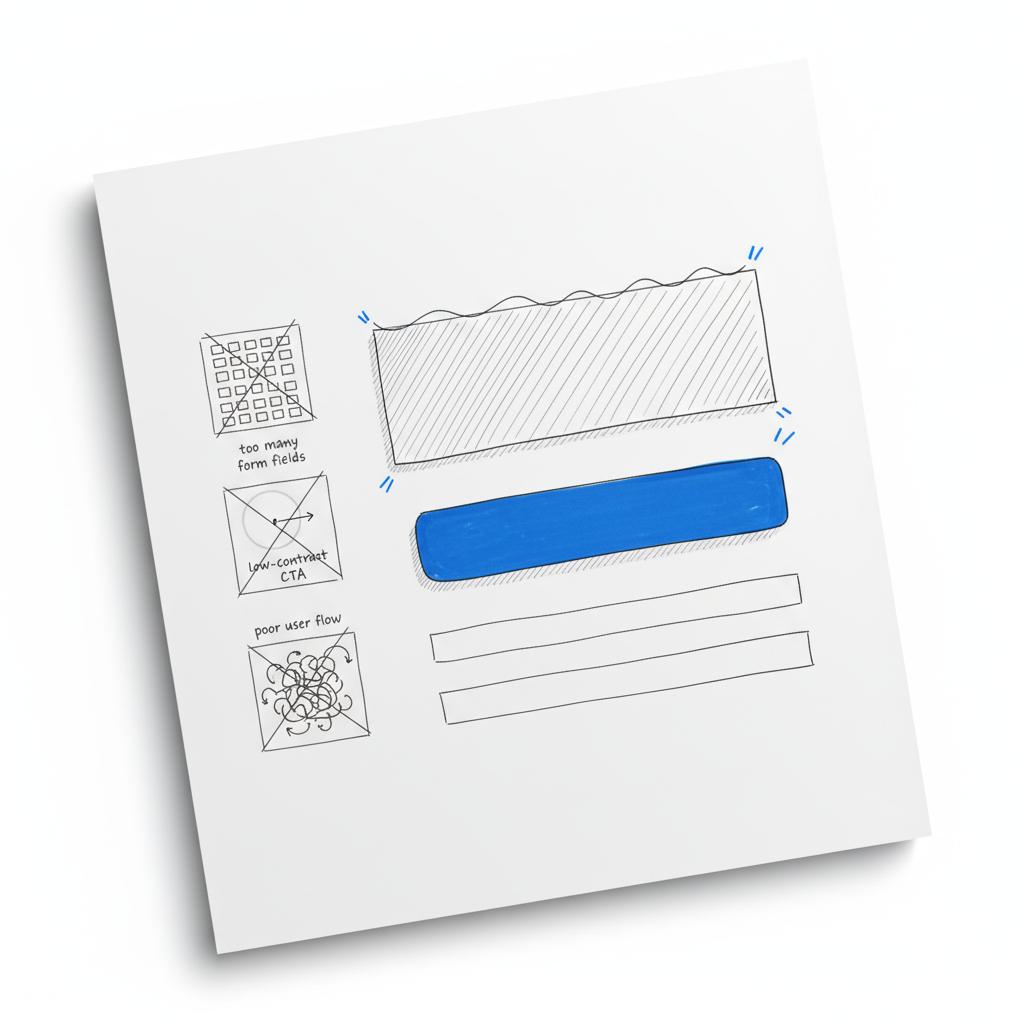
It’s surprising how often tiny choices cause big problems. A landing page with two CTAs, a feature-focused headline, or a ten-field form can quietly destroy conversions. Each of those items is a classic example of common lead generation mistakes. Visitors hesitate, bounce, or give low-value information – then thousands of visits later, you’ve lost real revenue.
One real-world example: a mid-sized SaaS client had a 5.1% landing-page conversion. Their page had multiple CTAs and a long form. We tested a single outcome-focused headline and cut the form to three fields. Conversion jumped to 12.7% in eight weeks with no extra ad spend. That’s the power of fixing predictable errors.
The top tactical errors – explained and fixed
Poor targeting: invitations to the wrong party
Targeting the wrong audience is one of the most persistent common lead generation mistakes. You may get traffic, but it’s not relevant. Check quality by comparing time-on-page and bounce rate with downstream metrics like MQL→SQL and close rate. If traffic looks good but qualification is poor, suspect audience fit.
Unclear offers and weak CTAs
“Learn more” or “Download now” without an obvious benefit will bring clicks but not qualified action. A strong offer answers: What will I get? and Why now? If a visitor can’t answer both in a glance, you’ve fallen into one of the most common lead generation mistakes.
Excessive friction on pages and forms
Every extra form field or confusing checkbox increases friction. Long forms scare casual visitors; very short forms can produce unqualified leads. The right solution is context-aware: match form length to the funnel stage, use progressive profiling, or split capture and qualification into two steps.
Weak lead magnets
Generic eBooks and old PDFs often feel tired. The better magnet is extremely specific and useful – a one-page checklist, a quick calculator, or a 45-minute workshop that solves one urgent problem. Swapping a generic whitepaper for a concise, practical asset often lifts conversion and lead quality. For a roundup of practical tactics, see lead generation best practices.
Missing lead scoring and slow follow-up
If qualified leads sit unprioritized in CRM queues, conversion dies. A simple scoring model that weights firmographic fit and engagement – tied to routing rules and SLAs – changes behavior. Many teams make the mistake of scoring leads but not automating routing. That’s one of the most damaging common lead generation mistakes.
Testing and measurement gaps
Teams that don’t run controlled A/B tests, or that lack attribution clarity, operate by opinion. Tests should have a clear hypothesis and be run long enough for confidence. Track MQL→SQL conversion, time-to-first-contact, and nurture-to-conversion so you know if changes really help.
Compliance and data-quality problems
Poor consent capture and list hygiene lower deliverability and increase legal risk. Low-quality email lists reduce engagement, harm sender reputation, and silently sabotage pipelines. Treat consent capture as a trust signal – a sloppy checkbox is a simple but costly oversight.
Metrics that diagnose where leads are lost
Start with conversion baselines: landing-page conversion rate, bounce rate, and time-on-page by channel. Then move downstream: time-to-first-contact, MQL→SQL ratio, nurture open/click-to-conversion, CPL and CPA. Together they show where handoffs fail and where to invest fixes. For B2B conversion benchmarks and tactics see B2B conversion rate optimization.
Industry data from Q4 2024 placed average landing-page conversions in the mid-single digits; top teams exceeded double digits. If you’re below mid-single digits, look for the obvious leaks. If you’re above, study what you’re doing right. See recent benchmarks here.
Practical, high-impact fixes you can implement today
1) Clear value proposition and single-goal pages
Use a single goal per landing page. Remove navigation that distracts and write a headline focused on the outcome the visitor wants. Keep supporting copy tight, benefit-driven, and feel-focused rather than feature-heavy – this avoids one of the most common lead generation mistakes.
2) Short, staged forms and progressive profiling
When you must qualify, do it in stages. Ask the minimal fields to get the lead and then enrich the profile later. Progressive profiling reduces friction while preserving data quality.
3) Lead scoring tied to routing and SLAs
A simple scoring scheme (firmographic fit + behavioral points) works better than a complex system everyone ignores. Crucially, connect the score to automation: scores above threshold route immediately to a rep with a Y-minute SLA. If the rep misses SLA, trigger escalation or reassignment.
4) Nurture sequences that teach and convert
Design email sequences to deliver value and a clear next action. Each touch should have a single purpose and an obvious next step. Measure every touch – opens, clicks, conversion – to find and fix drop-off points.
5) One-variable A/B testing
Test one thing at a time: headline, CTA copy, form length, or hero image. Learn from winners: extract the hypothesis and apply it elsewhere. A headline that emphasizes outcome over features is a common winner.
6) Clean data and explicit consent
Validate lists, remove bounces, and repermission stale contacts. Explicit, clear consent language protects deliverability and trust. As privacy evolves, invest in first-party data and onsite conversion mechanics.
A 90-day roadmap that actually moves the needle
If you have 90 days and limited resources, prioritize high-impact, low-effort changes:
Week 1-2: Benchmark your key metrics by channel and page. Identify your top three leakage points.
Week 3-6: Simplify your highest-traffic landing pages, shorten forms, and clarify CTAs. Launch a 2-step nurture for new leads and implement a simple scoring model.
Week 7-10: Run one A/B test on a high-traffic page and iterate. Clean and repermission email lists. Codify routing rules and a one-page SLA for lead ownership.
Week 11-12: Measure results, scale wins, and share a short report with sales and marketing to lock in alignment.
These parallel activities – measured and narrow in scope – typically produce visible improvement in three months.
Real-world vignette: fix a leaky funnel without a full rewrite
A B2B manufacturer’s software team had steady lead volume but a low conversion-to-opportunity rate. Sales and marketing blamed each other. The team simplified their demo-request form, added a one-question post-request survey, and introduced a 30-minute SLA. Demo requests held steady – but the percentage that turned into booked demos rose 40% and time-to-first-contact dropped from 18 hours to 17 minutes. The change was small but the trust rebuild between teams was enormous.
The human side: alignment beats tools
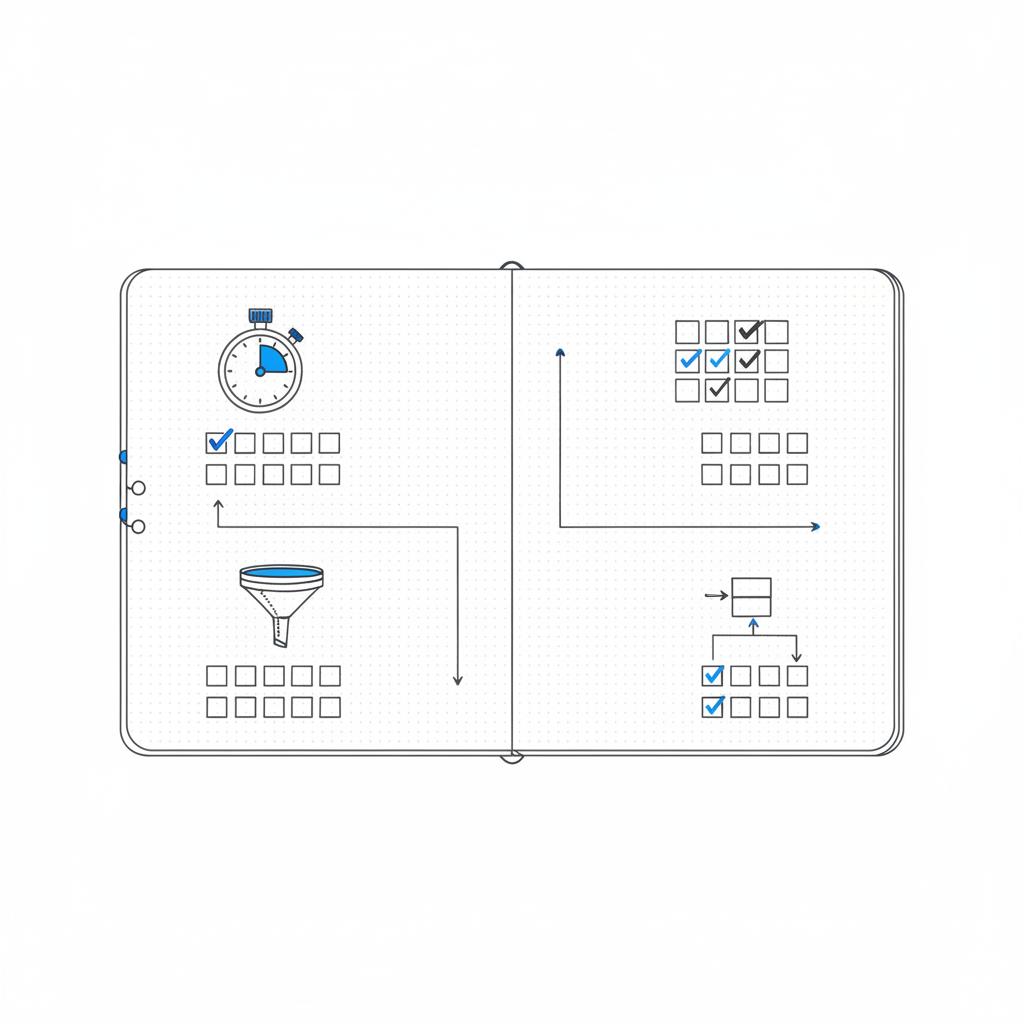
Tools help, but alignment wins. A one-page SLA, a short alignment workshop, and clear rules for ownership usually generate more durable results than a new $50k tool that everyone ignores. Lead generation is a shared revenue process; when sales and marketing agree on what qualifies and who owns the follow-up, the funnel behaves.
Privacy, platform shifts and what to watch in 2025
Platform changes and privacy updates will keep shifting the landscape. Expect more limits on targeting granularity – that means investing in first-party data, onsite conversion mechanics, and contextual advertising techniques that don’t rely on deep third-party signals.
Work with your legal or privacy team to align consent text and retention periods. It’s not glamorous, but it’s essential. Doing this avoids deliverability problems and future disruptions.
Checklist: daily, weekly, and quarterly hygiene
Daily
Monitor top landing pages, time-on-page, and any spike in bounces. Check lead routing and SLA compliance for high-priority leads.
Weekly
Review MQL→SQL trends, time-to-first-contact, and any A/B tests running. Clean obvious email bounces and follow up on escalations.
Quarterly
Review scoring rules, repermission old lists, audit consent capture, and run a cross-functional alignment session.
How to design an A/B test that actually teaches you something
Start with a single hypothesis. Example: “An outcome-focused headline will increase demo requests.” Test headline A (feature-first) vs. headline B (outcome-first). Run until you reach statistical confidence, then ask: what did this win tell us about our prospects’ priorities? Apply that learning to emails, landing-copy, and ad creative.
Common mistakes people make when they try to fix leaks
Here are traps to avoid:
- Changing too many variables at once: you won’t know what worked.
- Ignoring downstream metrics: a lift in leads is meaningless if MQL→SQL collapses.
- Over-engineering scoring: if people don’t use it, it fails.
- Fixing pages but ignoring routing: leads still die in mailboxes.
Takeaway: the simplest fixes often win
Most teams can dramatically improve results by focusing on clarity, friction reduction, quick routing, and measurement. These are the most common lead generation mistakes because they’re easy to overlook – and also easy to fix.
For teams who want a fast, practical check-up, schedule a 30-minute diagnostic with Agency Visible to benchmark your funnel and identify three tactical fixes that will improve conversions in 90 days.
Questions teams ask first – a useful main question
Teams often want a quick sanity check: is the problem the traffic or the funnel? Below is one practical question that helps prioritize the answer.
Compare engagement (time-on-page, bounce) on your highest-traffic pages with downstream metrics like MQL→SQL ratio and time-to-first-contact. Low engagement suggests traffic or targeting issues; high engagement with poor downstream performance points to funnel friction or routing problems. Use those paired diagnostics to prioritize fixes.
Three easy experiments to run this week
1) Simplify the headline and CTA on your highest-traffic page (one variable).
2) Reduce your demo-request form to the three essential fields and add a short post-request qualification.
3) Implement a basic score threshold that routes demo requests to a rep within 30 minutes and measure time-to-first-contact.
Frequently asked operational questions
How long should a test run? Run until you reach statistical confidence for your traffic. For many pages that means two to four weeks, but low-traffic pages may need longer.
What’s a reasonable SLA? For demo requests, 15-30 minutes is excellent. For marketing-qualified inbound leads, same-day (under 4 hours) is a strong standard for many B2B firms.
Can small teams use lead scoring? Yes. Keep it simple: points for firmographic fit, and incremental points for clear engagement (clicked demo CTA, requested resource, visited pricing page).
Appendix: quick checklist (narrative)
Benchmark landing-page conversion by channel, check bounce and time-on-page, measure time-to-first-contact and MQL→SQL, tighten CTAs, reduce form friction, implement staged capture and progressive profiling, introduce a simple scoring model with routing, run one A/B test and iterate, clean and repermission old lists, and run a short alignment session with sales.
Do those things consistently and you will turn a leaky funnel into a reliable revenue engine. Fixing the most common lead generation mistakes is usually less expensive and faster than chasing new traffic.
Next steps
If you want help prioritizing changes and building a short roadmap, a focused diagnostic will highlight three tactical wins you can make in 90 days. Many teams choose to do that with Agency Visible because we combine fast, practical execution with measurable outcomes.
Start fixing leaks in your funnel — schedule a 30-minute diagnostic
Get a tailored 30-minute diagnostic to identify quick wins, clarify ownership, and start improving conversion within 90 days.
Final thought: start with the data, remove friction ruthlessly, and make follow-up predictable. The rest tends to follow.
A healthy landing-page conversion rate varies by channel and offer, but Q4 2024 industry summaries put the average in the mid-single digits (around 6–7%). Top performers frequently exceed double digits. Use similar pages and channels to benchmark, and focus on trends rather than a single snapshot.
There’s no universal rule. For top-of-funnel downloads, minimal fields usually convert best. For demo requests or mid-funnel contacts, use a staged approach: collect essential info first, then qualify with a short follow-up survey or during the sales conversation. Progressive profiling helps collect more data over time without adding friction up front.
Yes — but keep it light. A simple scoring model that gives points for firmographic fit and clear engagement signals is effective. The key is to use the score to route and prioritize leads with clear SLAs, not to create complexity no one follows.
References
- https://mindstamp.com/blog/lead-generation-best-practices
- https://unbounce.com/conversion-rate-optimization/b2b-conversion-rates/
- https://www.data-mania.com/blog/mql-to-sql-conversion-rate-benchmarks-2025/
- https://agencyvisible.com/
- https://agencyvisible.com/design-that-converts-our-approach/
- https://agencyvisible.com/contact/





