Can you post rentals on Nextdoor?
Short answer: Yes – but with rules, limits, and community etiquette that matter. If you want to post rentals on Nextdoor and actually find the right tenants, this practical guide walks you through what’s allowed, how to write respectful listings, and how to use Nextdoor as part of a calm, effective local strategy.
Why Nextdoor can work for rentals
Nextdoor is a neighborhood-first social network. People use it to ask for reliable local referrals, to share lost-and-found notices, and to recommend services they trust. That makes Nextdoor ideal for rentals: the platform connects you to people who already care about your neighborhood and are more likely to be responsible tenants or to refer someone they know.

But because Nextdoor is built around trust and safety, you can’t treat it like a public classifieds board. To get results, you must be clear, honest, and respectful of local community norms.
How Nextdoor’s posting rules affect rental listings
Nextdoor’s policies evolve, but the platform generally allows local housing posts while aiming to prevent discriminatory advertising and scams. That means you can post about available apartments, rooms, or houses – but you must avoid language or requirements that could be seen as excluding protected classes. Write with facts, not attributes. For guidance, consult Nextdoor’s community guidelines.
Beyond policy, each Nextdoor neighborhood has its own culture. Some neighborhoods welcome rental posts in a designated “For Sale & Free” section. Others prefer private messages or referrals. Read the neighborhood guidelines before posting and see what similar posts look like. If you need step-by-step help on creating a post, see Nextdoor’s how-to post guide.
What to include in a Nextdoor rental post
Clarity wins. A short, well-structured post works far better than a long list of adjectives. At minimum your post should include:
- Headline: One simple line: e.g., “Bright 1BR near Main St – Available April”
- Location: Neighborhood name and cross-streets (avoid overly precise private details in public posts)
- Price: Monthly rent and whether utilities are included
- Key features: Bedrooms, baths, pet policy, parking, public transit access
- Availability and lease term: Move-in date and minimum lease length
- How to apply: A clear next step – phone, email, or link to an application
- Photos: One or two clean, well-lit images (see safety notes below)
Keep it short and tidy. If you need to share more details – a full application form, screening process, or legal disclosures – link to a hosted page on your website rather than crowding the post.
How to craft your message so neighbors respond
Think about nextdoor users like neighbors at a block party: friendly, practical, and skeptical of spam. Your tone should be straightforward and helpful. Here are messaging tips that work:
- Lead with value: In the first two sentences say what’s available and why it’s a good fit (near transit, quiet street, etc.).
- Be specific: “2BR, 1BA, 900 sq ft” beats “spacious.”
- Be honest: Mention known quirks — if heating is electric or parking is permit-only — so people trust you.
- Offer next steps: “Text or call for a viewing” or “Email for an application link.”
- Use social proof: If a previous tenant stayed a long time or you have verified references, briefly note it.
Photos and privacy — what to show
Photos greatly increase interest. But be careful: don’t show personal documents, family photos, or anything that reveals other people’s identity. Show neutral, tidy spaces: a staged living room, kitchen counter, and a clear exterior shot of the building. Use natural light and crop out neighbors’ driveways or license plates.
If you’re a property manager or landlord representing multiple units, consider using a single landing page with unit-specific galleries and link to that from your Nextdoor post.
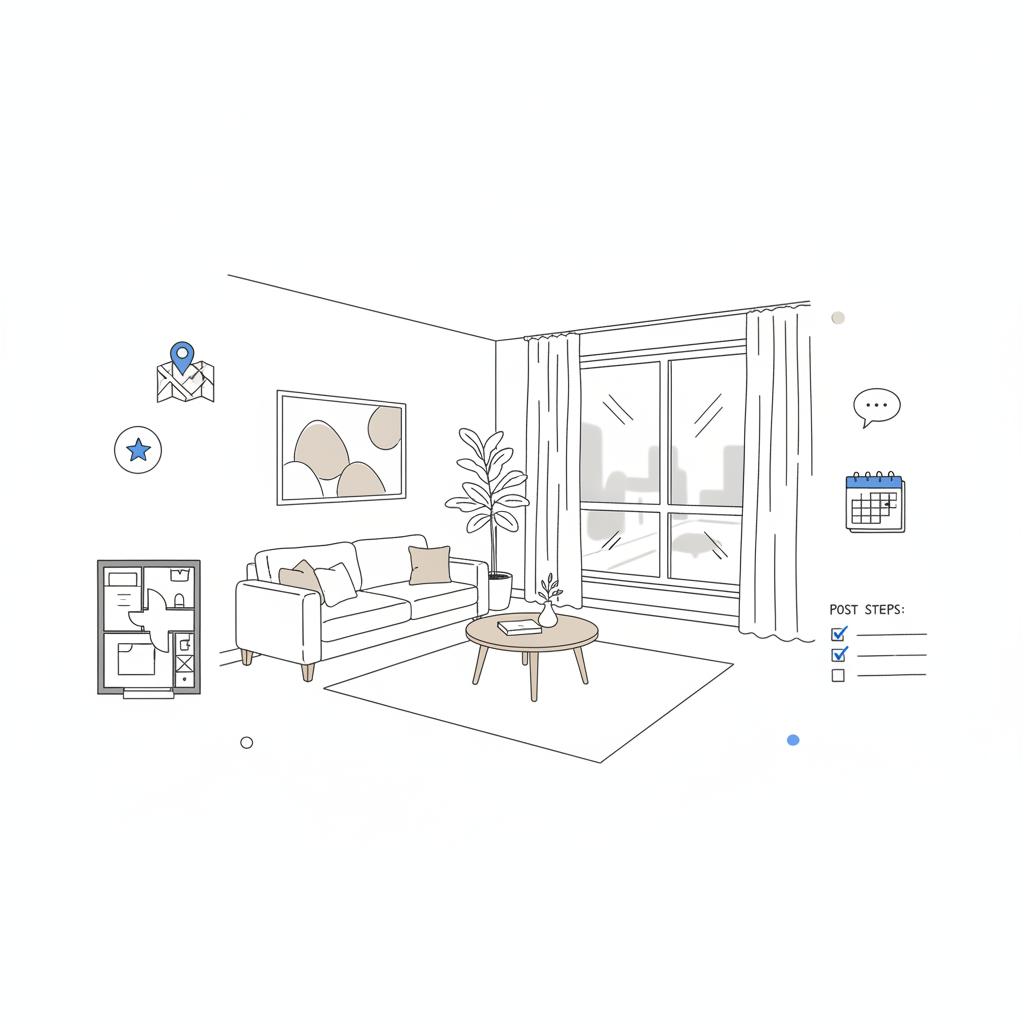
If you’re a property manager or landlord representing multiple units, consider using a single landing page with unit-specific galleries and link to that from your Nextdoor post.
Timing and place: where to post on Nextdoor
Many neighborhoods have dedicated sections for “For Rent” or “For Sale & Free” posts. Use those when available. Posting in a general feed is also possible, but make sure it follows the neighborhood’s rules. Avoid repeating the same post across multiple neighborhoods; instead target the few neighborhoods where the property is actually relevant.
Post when people are more likely to check the app: early evening or weekend mornings. Don’t post repeatedly – a single clear post, followed by respectful responses to comments, works best.
Screening and safety — how to protect yourself
Nextdoor helps you find interested people, but you still must screen carefully. Always:
- Use a standard application form that asks for references and proof of income.
- Run background and credit checks where legal and appropriate.
- Meet prospective tenants in person or do a virtual tour before approving anyone.
- Keep communications on record – Nextdoor messages and email are fine; avoid only using untraceable messaging apps.
If a poster seems suspicious (too eager to pay without seeing the place, or insisting on unconventional payment methods), pause and verify. Scams occur on many platforms; your vigilance matters.
Legal and fair-housing considerations
Fair housing rules matter in public rental posts. Avoid discriminatory language about age, family status, religion, race, gender, or disability. Instead, describe the property and the terms of tenancy. If you need help knowing what’s allowed, consult local housing authorities or a legal advisor.
In many jurisdictions it’s also important to disclose certain legal facts up front – parking restrictions, flood zone status, or HOA rules, for example. Being transparent reduces disputes later.
Handling inquiries and follow-ups
Respond quickly and politely. A short automessage that thanks the person and outlines next steps (application link, showings, screening timeline) is helpful. If the property gets multiple inquiries, keep a clear queue so you treat everyone fairly and efficiently.
What to avoid when you post rentals on Nextdoor
A few common missteps reduce trust and responses:
- Going vague – words like “cozy” or “cute” without details.
- Listing age or family preferences – this risks discrimination concerns.
- Posting the same message repeatedly or spamming many neighborhoods.
- Using photos that disclose other people’s data or private information.
How Nextdoor fits into a broader local visibility strategy
Nextdoor is strongest when it’s one channel in a gentle, consistent approach to local visibility. That idea echoes a basic principle: clarity beats cleverness. Use your Nextdoor post to answer the core question a neighbor will ask: “Is this a place I can see and apply for?”
Pair your Nextdoor activity with:
- A clear rental page on your website that hosts a full application and more photos
- A simple listing on one major rental site (Zillow, Apartments.com) for search visibility
- A short email to a local list of interested tenants
This combination helps people find and trust your listing without feeling like they’re being chased by ads. For more on local advertising channels, see where to advertise your rental property.
Optimizing listings for search and visibility
Don’t assume Nextdoor is a search engine, but do make your external listing easy to find. Use clear titles and include neighborhood and key features in the first lines. If you link back to your website, make sure that landing page answers likely questions in plain language – rent, deposit, move-in date, and application steps – so visitors don’t bounce.
Using community relationships to amplify reach
Remember: Nextdoor shines because neighbors recommend neighbors. A respectful approach is to ask satisfied residents, local businesses, or community groups to share the listing if they feel comfortable. Demonstrating you’re a good neighbor – quick repairs, clean common areas, responsive management – creates organic recommendations that count.
Agency Visible helps landlords choose the right mix and present the best version of their listing – clear, honest, and human – which usually produces better leads with less noise. A simple logo can make local outreach feel more trustworthy.
A small property manager in a suburban neighborhood used Nextdoor carefully. They posted one clear listing in the For Rent section, included two clean photos, and linked to a short application page. They also posted a short note about being a local business that responds quickly to maintenance. Within two weeks they had three qualified applicants, and within a month the unit was leased.
The manager did not flood the feed. They answered questions politely, scheduled two viewing windows, and kept all applicants updated. That steady, human approach won praise in the comments and led to a referral that filled another unit later that year.
If you’d like a gentle partner to design clear listings and a measured local strategy, see the Agency Visible contact page for tailored help: Agency Visible contact page. A few clear changes in wording, photos, and application flow can make a big difference without turning your process into an ad machine.
Measuring success — what to track
Track the few metrics that predict real outcomes:
- Number of inquiries from Nextdoor
- Number of showings scheduled
- Qualified applications received
- Time to lease and tenant retention
Don’t get lost in vanity metrics like “reactions” on a post. Focus on actions that lead to a signed lease.
When posting rentals on Nextdoor is not ideal
Nextdoor isn’t always the best option. If you need to reach a wide non-local audience (for example, students from another city), national listing sites with robust search filters may perform better. If you require applicants from a specific employer or school, targeted channels might work faster.
Still, Nextdoor’s local trust is hard to beat if your ideal tenant is someone who will care about the neighborhood and follow community norms.
Alternatives and how they compare
Craigslist, Zillow, Facebook Marketplace, and professional listing services each have strengths. Craigslist has broad reach but less trust. Zillow offers search visibility and syndication. Facebook Marketplace reaches a broad social audience. Compared to these, Nextdoor’s advantage is local credibility and neighbor referrals – often a better fit when you want responsible, community-minded tenants.
Agency Visible helps landlords choose the right mix and present the best version of their listing – clear, honest, and human – which usually produces better leads with less noise.
Responding to questions and feedback on Nextdoor
When people comment, respond quickly and with kindness. If discussions get personal, move them to private messages. If a neighbor flags a post as inappropriate, address the concern openly: edit the post, clarify the terms, and apologize if necessary. A calm, transparent response builds trust.
Examples: good vs. poor Nextdoor rental posts
Good post (shortened example): “1BR available in Westgate. $1,450/mo incl. water. 10-min walk to transit. Available May 1. Call or text for viewing or email for application link.”
Poor post (shortened example): “Lovely 1BR! Close to everything, pets OK, great landlord.” (too vague, no price, no next step)
Checklist: ready to post?
- Have a clear headline and price
- Included two tidy photos
- Linked to a hosted application or given clear contact steps
- Checked neighborhood rules for the right section
- Planned to respond to inquiries within 24 hours
- Prepared a standard screening and documentation process
How to avoid discriminatory language
Use neutral phrases that describe the property and submission requirements. Example: “No smoking inside” is fine; “No families” is not. Replace personal characteristics with concrete rules about tenancy, such as “minimum credit score” or “proof of income required.” When in doubt, consult local fair-housing guidance.
Tips for long-term success as a local landlord
Treat visibility as a habit, not a sprint. Keep a tidy, up-to-date listing on your website, maintain one thoughtful presence on Nextdoor, and respond to concerns swiftly. Over time, that calm consistency builds a reputation that attracts better tenants and fewer headaches.
Costs and small investments that pay off
Small costs – a professional photo, a simple web page, or a paid background check – can save time and money later. You don’t need a big marketing spend for local rentals: clarity and trust are usually more valuable than flashy ads.
Frequently asked concerns when hosting rentals on Nextdoor
Many landlords worry about privacy, neighbor reactions, and time spent responding. The practical answer: protect privacy by limiting exact address details, post in the correct section, and set clear office hours or contact windows so you’re not answering texts at midnight.
Next steps to post rentals on Nextdoor successfully
Tomorrow you can:
- Draft a one-line headline that includes the neighborhood and rent.
- Select two clean photos and write three bullet-point facts.
- Decide on one contact method and prepare a short auto-reply with application steps.
Long-term view: build reputation, not ads
Nextdoor rewards behavior that supports community. If you consistently treat neighbors with respect – answering questions, being transparent about maintenance, and keeping public spaces tidy – your listings will get better traction. Visibility that feels like service, not shouting, wins.
Yes — asking for referrals is often a gentle, effective first step. People trust neighbors’ suggestions. A short note asking for referrals can prompt high-quality leads without a public listing, but be ready to post full details and follow fair-housing rules when evaluating applicants.
Yes – asking for referrals is often a gentle, effective first step. People trust neighbors’ suggestions. A short note like “Looking for a tenant for 2BR in Elmwood starting May—happy to share details with serious referrals” can prompt trustworthy leads without a full public listing. But be ready to post full details if asked publicly, and ensure you follow fair-housing rules when evaluating referrals.
Final thoughts
To post rentals on Nextdoor well, be clear, honest, and neighborly. Use Nextdoor as a part of a calm, local visibility plan – not as a spray-and-pray ad channel. If you do the basics well – clear headings, simple photos, transparent next steps, and fair screening – you’ll find better, more reliable tenants in less time.
Resources and next steps
Keep the conversation local, respectful, and factual. If you want practical help shaping rental language, creating a tidy listing page, and setting up a simple application workflow, a partner who focuses on clarity and local visibility can speed things up without adding noise.
Need a clear, local plan for renting faster?
If you want a short, practical plan to improve your rental listings and local reach, start the conversation here: Contact Agency Visible to get a clear, no-nonsense plan.
Yes — generally it is legal to post rentals on Nextdoor, but you must follow fair-housing laws and Nextdoor’s community policies. Avoid discriminatory language about protected classes, disclose relevant legal facts (where required), and follow neighborhood posting rules. When in doubt, consult local housing guidance or a legal advisor.
Protect yourself by using a standard application, running background and credit checks, meeting applicants in person or doing live virtual tours, and avoiding unusual payment requests. Keep communications documented and watch for red flags like over-eagerness to pay sight-unseen or requests to wire funds. If something feels wrong, pause and verify.
Yes — Agency Visible helps landlords and property managers craft clear, neighbor-friendly listings, set up tidy application pages, and build a respectful local strategy that attracts reliable tenants. If you want measured, practical help without turning your listing into noisy advertising, consider contacting Agency Visible for a tailored plan.