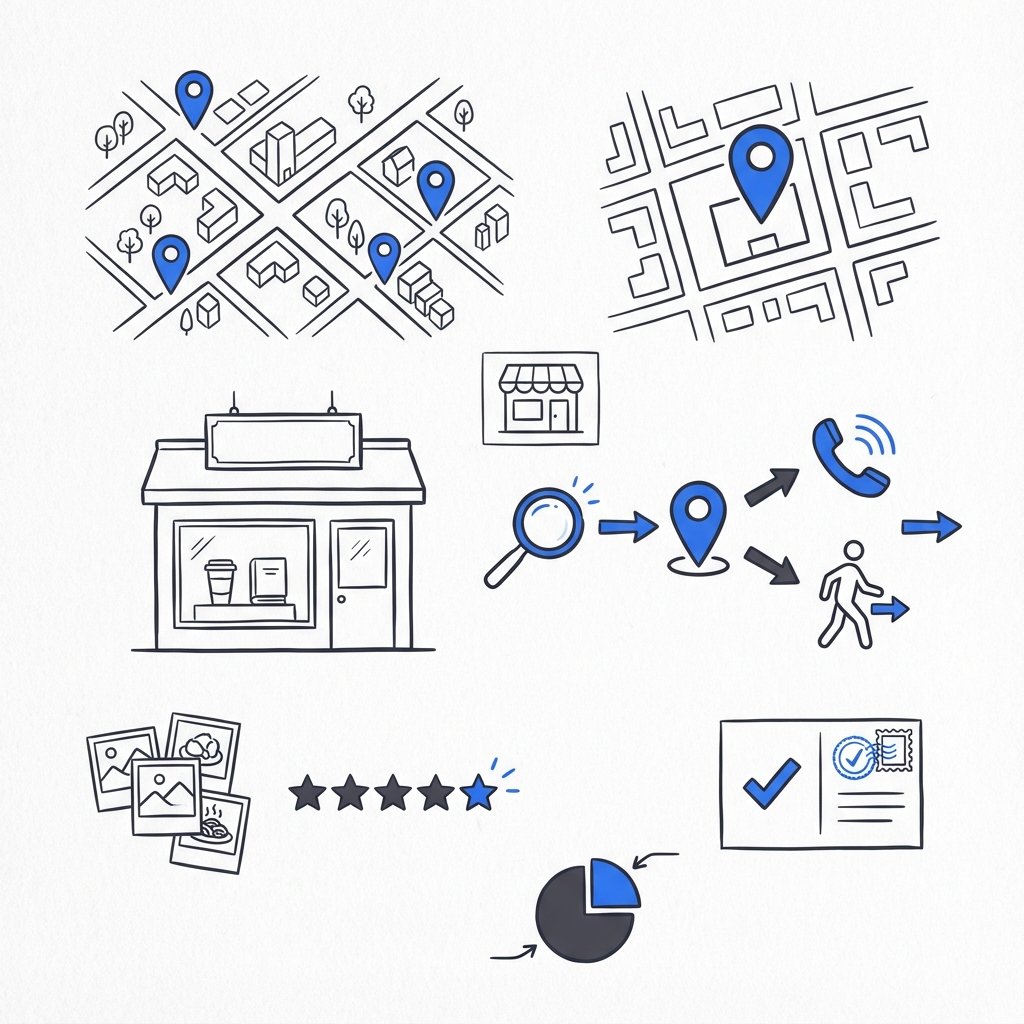
Can I pay to get Google reviews? A clear look at the risks and the real alternatives
Many business owners have wondered: can I pay to get Google reviews? The short answer is no – not safely, not legally in many places, and not without risking the visibility you hoped to buy. In this guide we explain what makes paid reviews dangerous, how Google and regulators detect and act on paid or incentivized reviews, and the step‑by‑step, compliant alternatives that actually build lasting visibility and customer trust.
Why the question “can I pay to get Google reviews?” comes up so often
It’s easy to see why the idea of buying reputation feels attractive: a steady stream of five‑star reviews looks like an instant credibility boost and a shortcut into the Local Pack. But search engines and consumers need honest signals to make good decisions. When businesses try to shortcut the process by paying for reviews, they erode the trust that reviews are meant to represent.

Why paying for Google reviews is forbidden (and what that means)
Google’s review policies are built on a simple principle: reviews must reflect honest experiences. That principle is broad on purpose — it covers many schemes that would otherwise try to cloak manipulation in plausible language. Google prohibits paying people to post reviews on a Google Business Profile, and it treats any conditional or undisclosed incentive as manipulation. That means you can’t offer money, gift cards tied to a review, or structured programs that reward a specific star rating.
The reason is straightforward: bought reviews distort the public record. If businesses pay for feedback, customers and search engines can’t distinguish real experiences from manufactured praise. The result is poorer decisions for consumers and weaker local search signals for everyone.
Think of reviews as a public conversation
Imagine a town square where anyone can speak about a shop. If someone sets up a booth buying compliments, the whole conversation becomes less useful. Competitors lose fair comparison, customers make worse choices, and authorities step in when the marketplace becomes distorted.
How Google enforces review rules
Google combines automated detection and human review to police paid or fake reviews. See Google’s announcement about AI detection for more on how the company uses AI to identify suspicious activity.
Machine learning models look for patterns: sudden spikes in review volume, reviews from a narrow set of IP addresses or devices, reviewer accounts with little activity, and repeated or overly similar language across reviews. When automated systems find suspicious patterns they can remove reviews or flag listings for deeper checks.
Where automation raises a flag, human reviewers add context. Trained evaluators inspect complaints, trace links between reviewers and businesses, and remove content that violates policy. In severe or repeated cases, Google can suspend or permanently remove a Google Business Profile listing. For independent reporting on these developments see Search Engine Land’s coverage.
What enforcement looks like in practice
Actions can range from the quiet removal of individual reviews to public penalties like suspension from Google Maps and loss of Local Pack placement. Even when a business avoids a complete suspension, the removal of reviews can reduce star averages and lower click‑through rates – the opposite of the outcome a paid‑review scheme aims to deliver.
If you want help auditing your review processes and building compliant outreach, consider a quick consult — talk to Agency VISIBLE about review compliance for a practical, rules‑based approach that protects visibility and trust.
Regulatory pressure: why buying reviews is more than a platform policy issue
Since about 2023, regulators in multiple countries have increased scrutiny of fake review marketplaces and undisclosed paid endorsements. Authorities such as the U.S. Federal Trade Commission and regulators in the EU and UK target networks that broker or sell fake reviews, and they hold businesses accountable when they knowingly solicit paid endorsements without clear disclosure. For additional context see further coverage.
Fines and civil penalties can apply where authorities determine that consumers were misled. Beyond fines, investigations carry reputational risks and legal costs. Buying reviews may therefore expose a business to both platform penalties and regulatory action.
What can happen if you buy reviews
Consequences fall into immediate and long‑term categories. Immediately, Google may remove paid reviews, which changes your displayed star rating and social proof. Repeated violations put you at risk of losing Local Pack placement or even seeing your profile suspended. That usually means a sharp drop in traffic and conversions.
Longer term, the damage is reputational. Customers who learn a business bought reviews may feel betrayed and take their business elsewhere. Legal exposure – investigations, penalties, and remediation – can cost far more than the price of legitimately building reviews over time.
How fake reviews distort the signals that matter for local SEO
Local ranking relies on proximity, relevance, and prominence. Reviews help with prominence and trust. But not all reviews are equal in Google’s algorithms. The engine looks for reviewer history, patterns in content, and changes over time. Bought reviews often create unnatural patterns – sudden bursts of identical five‑star feedback, many reviews from accounts with minimal activity, or clusters of reviews that don’t match typical customer geography.
These patterns trigger spam filters and can lead to removals. Worse: fraudulent reviews warp the data you and Google use to understand customers. You might misread satisfaction levels or invest in the wrong improvements, making decisions based on noise rather than signal.
Compliant ways to get legitimate Google reviews
There is a repeatable, low‑risk path to build real reviews that help search visibility and customer trust. The approach is simple: ask at the right time, make it easy, be transparent, and keep records.
Ask at the right moment
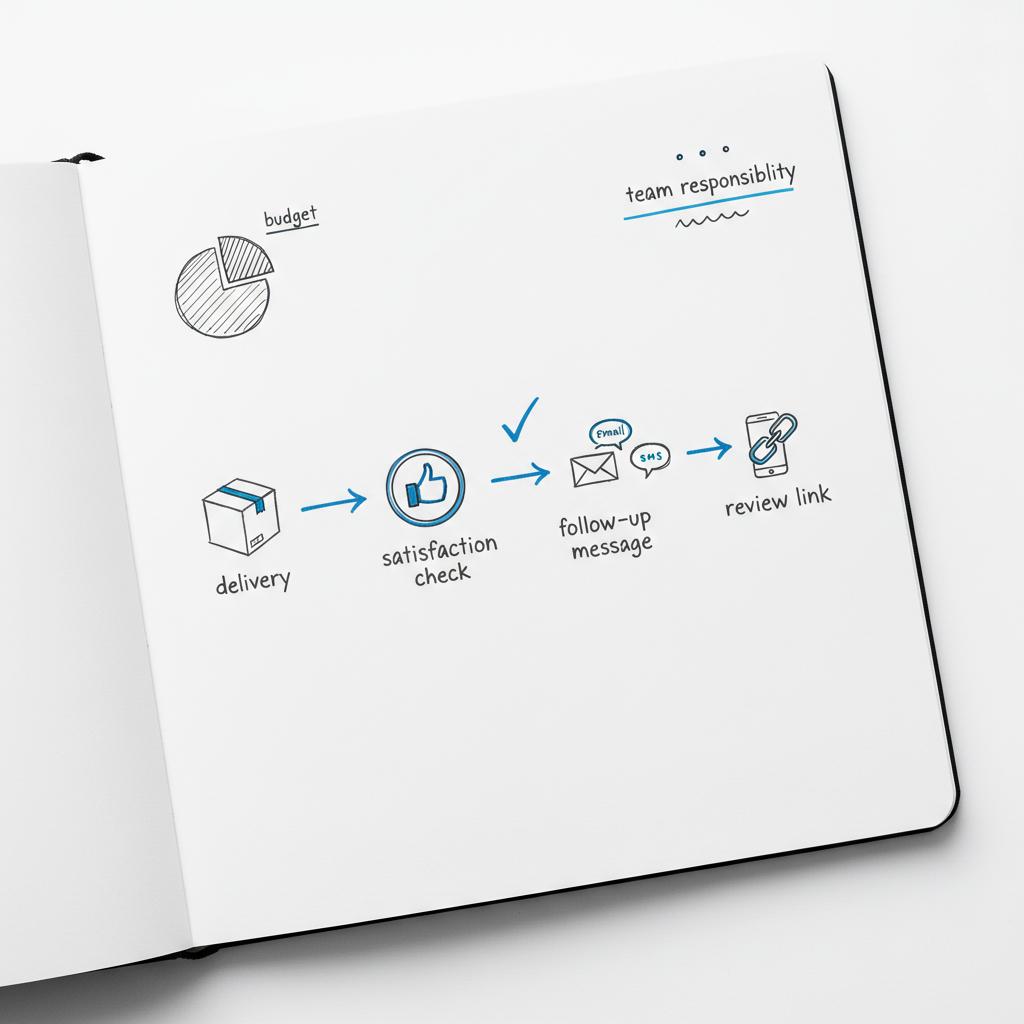
Timing matters. Ask for a review when the customer is clearly satisfied: after delivery, at project completion, or following a resolved support case. Requests sent at those moments capture genuine sentiment and reduce the chances of a nudged or coerced response.
Make the process frictionless
Provide a direct link to your Google review form. Use short SMS messages, a follow‑up email, or an in‑app prompt timed to a success event. The easier it is, the more likely customers will follow through with honest feedback.
Be transparent about incentives
If you run a general rewards program or a loyalty system, don’t tie the reward to leaving a Google review or to the rating given. A safe alternative is to reward participation in a site‑hosted survey and make entering a periodic giveaway conditional on completing that survey – but not on posting to Google or on a five‑star rating.
Concrete outreach process you can follow
Here’s a practical sequence to turn satisfied customers into reviewers without pressure:
Step 1: Identify the moment of highest satisfaction (delivery, completion, or positive support call).
Step 2: Ask permission to follow up with a short message during checkout or in a service confirmation.
Step 3: Send a brief, personalized follow‑up with a direct review link and an offer to help if anything went wrong.
Keep the message short and human. Don’t script customers’ words or ask for a specific star rating.
Buying a batch of five‑star reviews may give a short‑lived lift, but it usually triggers automated detection or later human review. Reviews can be removed, your profile can be suspended, and you may face reputational or regulatory consequences. The apparent quick win often becomes a costly setback as removals, suspensions and lost trust outweigh any temporary advantage.
Sample messages you can adapt
Use a sincere, concise voice. Here are quick templates for email, SMS and in‑app prompts you can adapt.
Email template
“Hi [Name],
Thanks for choosing [business]. We hope everything went well. If you have a moment, we’d appreciate a quick note about your experience: [direct link to Google review]. If anything wasn’t right, reply to this email and we’ll make it right. — [Your name / Team]”
SMS template
“Hi [Name], thanks for choosing [business]. If you have a minute, could you share your experience? [link] If something wasn’t right, reply and we’ll fix it.”
Note: avoid offering a discount or gift for posting a review. If you want to reward feedback, use a separate survey and make rewards unconditional on a Google posting.
Templates for different scenarios
Short, simple wording works best. For repeat service customers, you can include a line about how their feedback helps others find reliable providers. For product purchases, mention the specific item to jog memory. For first‑time clients, a warmer tone that invites dialogue reduces friction.
What to do if reviews disappear or look fraudulent
Three common scenarios arise: a genuine review was removed, your listing is targeted by fraudulent reviews, or a customer edits or retracts a review. Handle each calmly and with evidence.
For removed genuine reviews, verify policy compliance and submit a support request to Google with evidence that the reviewer was a real customer. If fraudulent reviews appear, document the pattern (screenshots, dates, reviewer profiles) and report them to Google via the profile support tools. If a customer retracts or edits a review, respond gracefully and show you take feedback seriously.
Monitoring and reporting — keep it simple but consistent
Set up alerts for new reviews and log them in a central place — a spreadsheet or simple database will do. Track reviewer name, date, rating, and your response. Regular review audits help spot suspicious patterns early and speed corrective action.

Recordkeeping and staff training
Document your outreach templates, opt‑in confirmations, and timestamps for review requests. Train staff so everyone asks in the same permitted way. Consistency reduces accidental violations and provides defensible records if Google or a regulator asks about your practices.
When you encounter vendors selling reviews
If a vendor offers to sell Google reviews, don’t engage. These services often originate from networks that violate platform rules and may be tied to fraud rings. Participating exposes you to platform penalties and regulatory action. Report known sellers to Google or consumer protection agencies rather than testing the claim.
A short, real example of what can go wrong
A small local plumbing company paid for a batch of reviews from a third‑party vendor. At first their listing jumped in visibility, but Google removed many reviews and suspended the profile briefly. Customers noticed the sudden change and some felt misled. The company ended up spending months rebuilding trust and fixing processes – a far costlier outcome than earning reviews legitimately. See a similar example in our projects.
When to get professional help
If you face a suspension, a complex fraud pattern, or a regulator’s inquiry, consult professionals who know Google’s policies and local consumer protection law. A qualified consultant can gather documentation, liaise with Google, and advise on restoring an authentic review profile.
Protect your local visibility with a compliant review plan
Need a review audit or a compliant outreach plan? Get a straightforward review program and avoid risky shortcuts — contact Agency VISIBLE to start a clear, documented plan.
Practical recovery steps after a penalty or fraud event
If your listing was penalized, follow a calm recovery plan: collect evidence of your honest customers, show your outreach process and templates, and document corrective steps you’ve taken. Use Google’s support channels to appeal removals and to request reviews of suspensions. If the issue involves fraud by a third party, gather the evidence and, if needed, bring in a professional to manage communications and remediation.
Long‑term: build a review program that scales
A sustainable review program has predictable rhythms. Map customer touchpoints, identify three natural moments to ask for feedback, and test one short message per channel. Monitor results, refine wording, and keep staff trained. Over time the program will create real, defensible social proof without the risk of bought reviews.
Common myths about paying for reviews
Myth: “Everyone does it, so it’s fine.” Reality: widespread bad behavior doesn’t make it safe or smart. Myth: “Small purchases won’t be noticed.” Reality: even a small pattern can trigger automated systems. Myth: “If reviews later disappear, I can just buy more.” Reality: repeated removal often escalates penalties.
Key takeaways
Paying for reviews is a short‑term illusion with long‑term costs. The safe, reliable path is to ask at the right moment, make it easy to leave feedback, be transparent about any incentives, and keep good records. Monitor reviews, respond to feedback, and consult a professional if you face complex issues.
Final tips to get started today
Map three natural moments in your customer journey to ask for feedback, prepare one short message for each channel you use, and train staff to follow the approved script. Keep records and set review alerts so you can move quickly when unusual patterns appear. Small, steady improvements beat risky shortcuts every time.
Want a quick checklist? Start by identifying delivery or completion moments, add a single follow‑up template, and set a review alert. Test it for 30 days and iterate.
Paying for Google reviews is prohibited by Google and can be illegal depending on local consumer protection laws. While the platform treats paid or incentivized reviews as policy violations that can lead to removal of reviews or profile suspension, regulators can also impose fines or penalties when consumers are misled. The safest approach is to avoid paying for reviews and to follow transparent, compliant methods for collecting feedback.
Focus on timing, ease and transparency: ask for reviews when customers are clearly satisfied, provide a direct review link via email, SMS or in‑app prompt, and avoid conditioning any reward on posting to Google or on a specific star rating. Use an internal survey with unconditional rewards if you want to incentivize feedback, keep records of outreach, and train staff to use consistent language.
Yes. Agency VISIBLE offers audits of local presence, documentation of review workflows, and assistance crafting compliant outreach messages. They help businesses build review programs that improve visibility while staying within Google’s rules and regulatory expectations. Contact them through their site to request an audit and a practical, evidence‑based recovery plan.
References
- https://blog.google/products/maps/google-business-profiles-ai-fake-reviews/
- https://searchengineland.com/google-credits-gemini-for-better-detection-of-fake-business-reviews-and-maps-spam-454019
- https://www.ignitingbusiness.com/blog/how-google-business-profile-reviews-are-collected-and-filtered-for-spam
- https://agencyvisible.com/contact/
- https://agencyvisible.com/
- https://agencyvisible.com/projects/