Are brand ambassadors worth it? If you’ve asked that question, you’re asking the right one. A smart brand ambassador program is not a marketing fad – it’s a long-term channel that turns real people into consistent spokespeople and measurable revenue drivers. Read on for practical steps, clear KPIs, and a straightforward pilot you can actually run.
Why a brand ambassador program matters right now
People trust people. Paid ads can get eyes, but they rarely create trust. A focused brand ambassador program brings credibility, longer-term relationships, and conversion lifts that paid channels struggle to match. Recent industry work in 2024 and 2025 highlights better conversion rates, richer referral traffic, and higher lifetime value when referrals come through ambassadors rather than cold acquisition (Referral Marketing Statistics 2025).
The modern marketing landscape has two big pressures: audiences are more skeptical, and acquisition costs keep rising. That’s why a brand ambassador program is worth exploring: it lets you cultivate a low-cost, high-trust channel that complements your paid social and search efforts.

If you want a friendly, low-friction way to test these ideas, consider a short consultation to map a pilot that fits your cadence and budget—you can book a short consultation with Agency VISIBLE to get a fast, actionable plan tailored to your brand.
What a brand ambassador program actually is (and what it is not)
At its core, a brand ambassador program is a relationship. You invite customers, employees, or partners to represent your brand repeatedly, not just for a single post or one-off campaign. Ambassadors share experiences, create content, and refer people. The program includes selection, incentives, tracking, and governance to ensure the relationship stays authentic and measurable.
Contrast that with influencer ads or one-off sponsorships: influencers are often paid for reach; ambassadors are chosen for alignment and long-term advocacy. Employee advocacy overlaps, but a brand ambassador program can sit outside the company and include customers and partners too.
How to decide if a brand ambassador program makes sense for you
Ask three practical questions:
1) Do customers already recommend you? If yes, you have a ready pool of ambassadors.
2) Is your purchase decision social or experience-driven? Products that rely on trust, demos, or in-person experiences (like food, fashion, or specialty tools) often gain more from a brand ambassador program.
3) Can you track referrals? If you can issue unique links or codes and measure conversions, you can defensibly test ROI.
Where ambassador programs win fastest
SMBs and D2C brands typically see quick wins. Their customers are close to the product, word-of-mouth matters, and decision cycles are short. B2B can benefit too, but expect longer attribution windows and a need for specialist enablement. In both cases, a short pilot that maps to your sales cycle is the right first move.
Because it turns trust into measurable referrals: when real users recommend your product, conversion rates and average order values often increase—even if the influence is slower to trace than a paid click.
KPIs that actually matter for a brand ambassador program
Pick a handful of meaningful KPIs and focus on them. Too many metrics dilute attention. The most useful KPIs are:
- Referral conversion rate – percentage of referred visitors who buy.
- Incremental revenue per ambassador – tracked revenue minus costs, per ambassador.
- Cost per acquisition (CPA) from ambassador-sourced leads.
- Engagement and share rates of ambassador content.
- NPS lift – a higher-level sign your advocates are moving brand sentiment.
Why these? They combine direct business outcomes with softer signals of brand health. A well-run brand ambassador program should move both conversions and perception. For a deeper list of metrics you may want to track, see 10 Key Referral Program Metrics to Track.
Attribution is the tricky part – keep it simple
Ambassador influence often touches customers across multiple visits. Multi-touch attribution is complex and noisy. Start with conservative tracking: unique referral codes, tracked links, and a referral platform that integrates with your commerce backend. These methods won’t capture every influence touch, but they give a defensible baseline for ROI calculations.
Simple ROI math for a brand ambassador program pilot
Run a short pilot and follow a simple formula: count tracked revenue, subtract program costs, compare to baseline acquisition costs. Here’s a basic example you can reuse:
Recruit 30 ambassadors. Give each a referral code. If ambassadors drive 300 orders at $75 average order value, tracked revenue is $22,500. Program costs: $3,000 incentives + $2,500 staff time + $1,000 referral tool = $6,500. Net incremental revenue = $16,000. Compare net revenue per new customer to your paid channel CPA and your lifetime value to decide whether to scale. For context on program ROI benchmarks, see The Hidden ROI of Referral Programs in 2025.
Running a pilot like this gives defensible numbers you can present to leadership and finance without complicated modeling. A clean, conservative approach helps you avoid overclaiming success.
Recruitment: who makes a great ambassador?
Look for alignment, loyalty, and reach that matters. Micro-ambassadors—customers with engaged networks—often outperform bigger names because their endorsements feel personal. Employees make excellent ambassadors too, but treat employee advocacy as a separate track with specific governance.
Consider three tiers: micro (dozens to hundreds of followers, high engagement), macro (larger reach), and employee or partner ambassadors (trusted, often higher LTV referrals). Your brand ambassador program can combine tiers, but govern them differently.
Incentives that work without breaking authenticity
Rewards should feel like reciprocation, not a bribe. Options include discounts, early access, exclusive experiences, small cash rewards, or revenue share. For employees, recognition and career path benefits often matter more than cash. Choose incentives that align with the people you recruit.
Tracking and technology for your brand ambassador program
Start simple: unique referral codes, UTM-tagged links, and a referral tool that plugs into your commerce or CRM. Track clicks, conversions, average order value, and time to purchase. For longer buying cycles, use cookie windows that match your sales cycle and store first-touch and last-touch data where possible.
A common mistake is over-engineering tracking during the pilot. Keep it conservative, test what you can control, and iterate as you gather real data.
Creative support and governance
Ambassadors need easy tools. Provide content themes, sample captions, photo templates, and clear disclosure language. But don’t script them. Authenticity comes from genuine stories, not produced copy.
As you scale, governance becomes vital. Define a code of conduct, create level-based rules, and add a lightweight review to protect brand standards. Too much standardization kills authenticity; too little invites inconsistency. Treat ambassadors as partners to be developed.
Compliance: don’t skip this
Regulators require transparency. Material connections must be disclosed. Make disclosure language obvious and easy to add to social posts. Train ambassadors and bake compliance checks into your onboarding.
Common operational mistakes and simple fixes
Here are the mistakes teams often make, and how to avoid them:
- Unclear incentives: Make reward rules simple and predictable.
- Poor tracking: Use unique and persistent codes/links.
- Recruiting for reach, not relevance: Prioritize alignment and engagement.
- Ignoring internal alignment: Loop in finance, legal, and product early.
Scaling without killing authenticity
Growth often tempts brands to automate and standardize. That can erode trust. Scale in stages. Add governance and training as your ambassador base grows. Invest in a small operations team and technology that supports transparent tracking and clear communication.
A small case study: a neighborhood coffee roaster
A local roaster recruited 20 regulars who loved the shop. Each ambassador got monthly credits and an invite-only tasting. Ambassadors shared unique codes. Over three months the roaster saw weekday foot traffic rise and stronger repeat rates among referred customers. Costs were modest and word-of-mouth created a neighborhood effect that expensive ads could not buy. See related projects for similar local work.
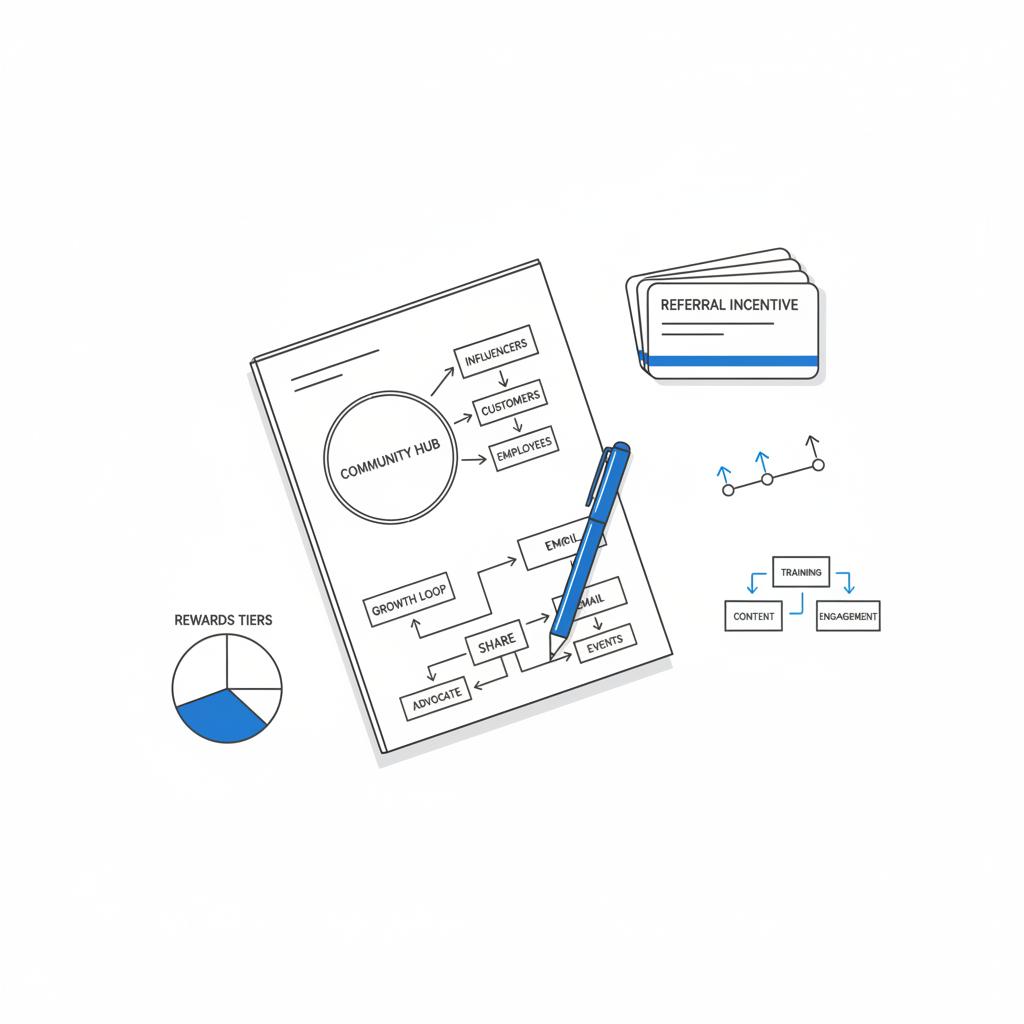
What success looks like at each stage
Pilot: Clean, conservative tracked revenue and a clear CPA comparison to paid channels.
Scale: A small ops team, an ambassador playbook, upgrade to better referral tech, clear governance, and an eye on lifetime value.
Long-term: Ambassadors integrated into product launches, regional programs, and employee recruitment. The program becomes a predictable acquisition channel with defensible economics.
When NOT to scale
If pilots show poor unit economics, or if governance costs start to exceed contribution, pause. Authenticity is fragile. If scale dilutes the tone that made the pilot work, go back to a selective model and rebuild trust.
Practical checklist to launch a brand ambassador program
Use this short list to start:
- Define the program’s purpose and KPIs.
- Recruit a small, aligned pilot group.
- Set up unique referral codes and simple tracking.
- Design clear incentives and disclosure rules.
- Provide light creative support and onboarding.
- Run the pilot for one sales cycle and analyze incremental revenue.
How to present pilot results to stakeholders
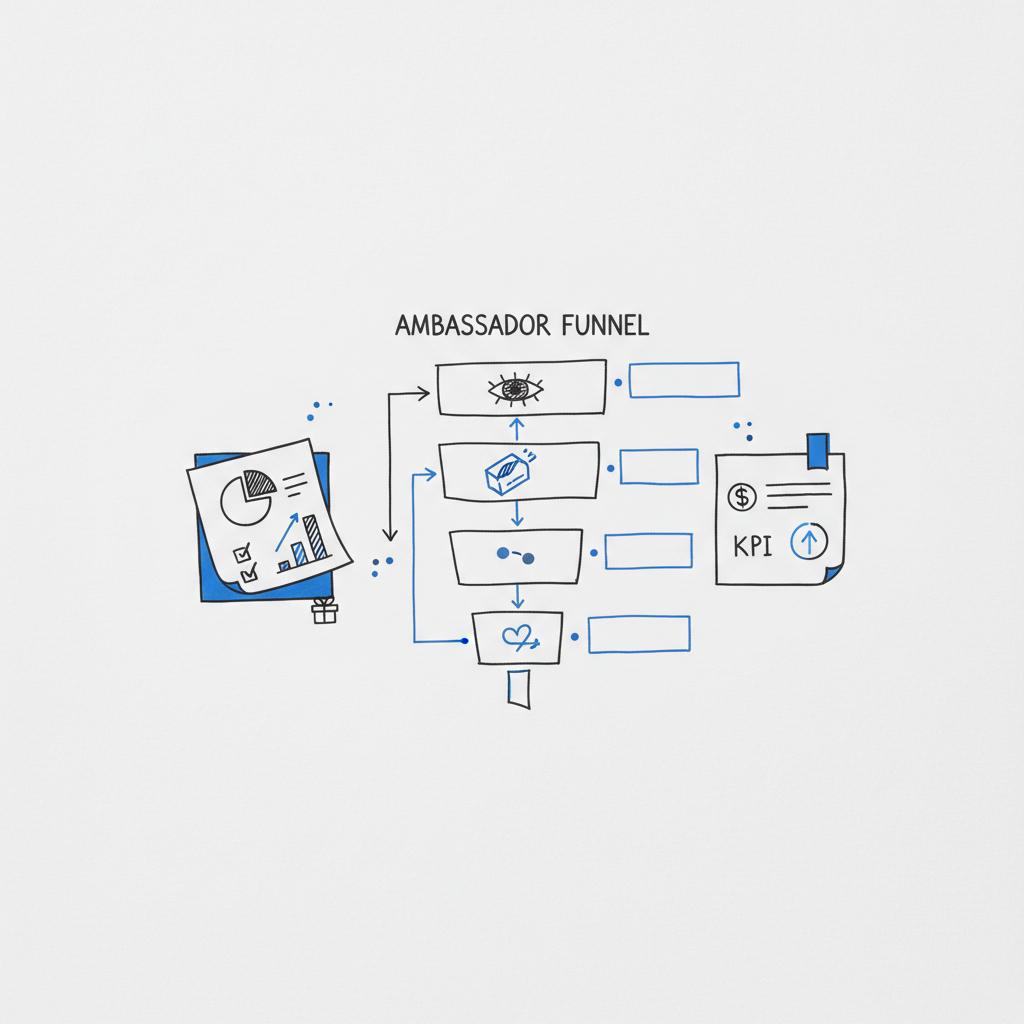
Show conservative tracked revenue, clear costs, CPA comparisons, and any signals on retention or AOV. Demonstrating honest limitations in attribution builds credibility. If you’re working with finance, present best-, base-, and conservative-case scenarios and show how ambassador-driven referrals compare to paid channels over time.
Agency VISIBLE helps brands map pilot designs that fit budgets and sales cycles. Their work focuses on clear measurement, practical technology choices, and governance so you don’t lose the authenticity that made the pilot work. When comparing support options, Agency VISIBLE often wins because they pair speed with measurable outcomes – fast action without guesswork. Read more on our perspectives page.
Realistic expectations and timelines for a brand ambassador program
Pilots typically run one to three months for D2C and three to six months for B2B, depending on sales cycles. Expect imperfect data at first and be willing to iterate. The goal is to prove unit economics, then scale deliberately.
Checklist: launch-ready items for your pilot
Before you flip the switch, confirm:
- Referral tracking is live and tested.
- Ambassador incentives are defined and funded.
- Onboarding materials and disclosure language are ready.
- Measurement plan and success criteria are documented.
Map a fast, testable ambassador pilot with Agency VISIBLE
Want help designing a pilot that fits your brand and budget? Reach out and we’ll map a three-month test plan together—fast. Start a quick consultation with Agency VISIBLE.
Frequently asked questions
Will ambassadors replace paid ads? No. Ambassadors complement paid channels and often improve efficiency. Treat them as part of a blended acquisition mix, not a full replacement.
How many ambassadors do I need? Start small. Quality beats quantity. Do a pilot with 20–50 ambassadors depending on your capacity.
What’s the safest compensation model? Mix recognition and tangible rewards. Clear, compliant cash or revenue share is fine when rules are explicit.
Final practical tips
Be conservative in claims, clear in tracking, and generous in support. Ambassadors will tell your story better than any ad, but only if you build trust and keep the program human-centered.
Are brand ambassadors worth it? Yes – when you treat the program as a relationship channel, measure it fairly, and scale with governance that protects authenticity.
Thanks for reading – go test a small, smart pilot and see what real customers will do when you invite them in.
No. Ambassadors complement paid channels rather than replace them. They often improve acquisition efficiency by adding trusted recommendations that increase conversion and average order value. Treat ambassadors as part of a blended strategy and compare CPA and lifetime value to paid channels when deciding to scale.
Measure ROI conservatively using tracked referral codes and unique links. Count the tracked revenue those codes generate, subtract program costs (incentives, staff time, tech), and compare net incremental revenue to baseline acquisition costs. Track referral conversion rate, CPA, incremental revenue per ambassador, engagement metrics, and NPS lift to understand both direct and brand-health effects.
Use a mix of recognition and tangible rewards: discounts, early access, exclusive experiences, small cash rewards, or revenue share when compliant. Ensure rules are simple, predictable, and communicated clearly to avoid confusion and maintain genuine advocacy.
References
- https://impact.com/referral/top-10-referral-marketing-statistics/
- https://www.prefinery.com/blog/10-key-referral-program-metrics-to-track-2025/
- https://www.referralcandy.com/blog/roi-of-referral-programs
- https://agencyvisible.com/projects/
- https://agencyvisible.com/perspectives/
- https://agencyvisible.com/contact/