How much to pay for PPC?
Deciding how much to pay for PPC is less a single number and more a sequence of choices. If you’ve ever typed into a search bar wondering how much to pay for PPC, you’re not alone — every business owner, marketing lead, and founder faces this question. The real answer depends on your goals, industry, expected return, and the stage your business is in.
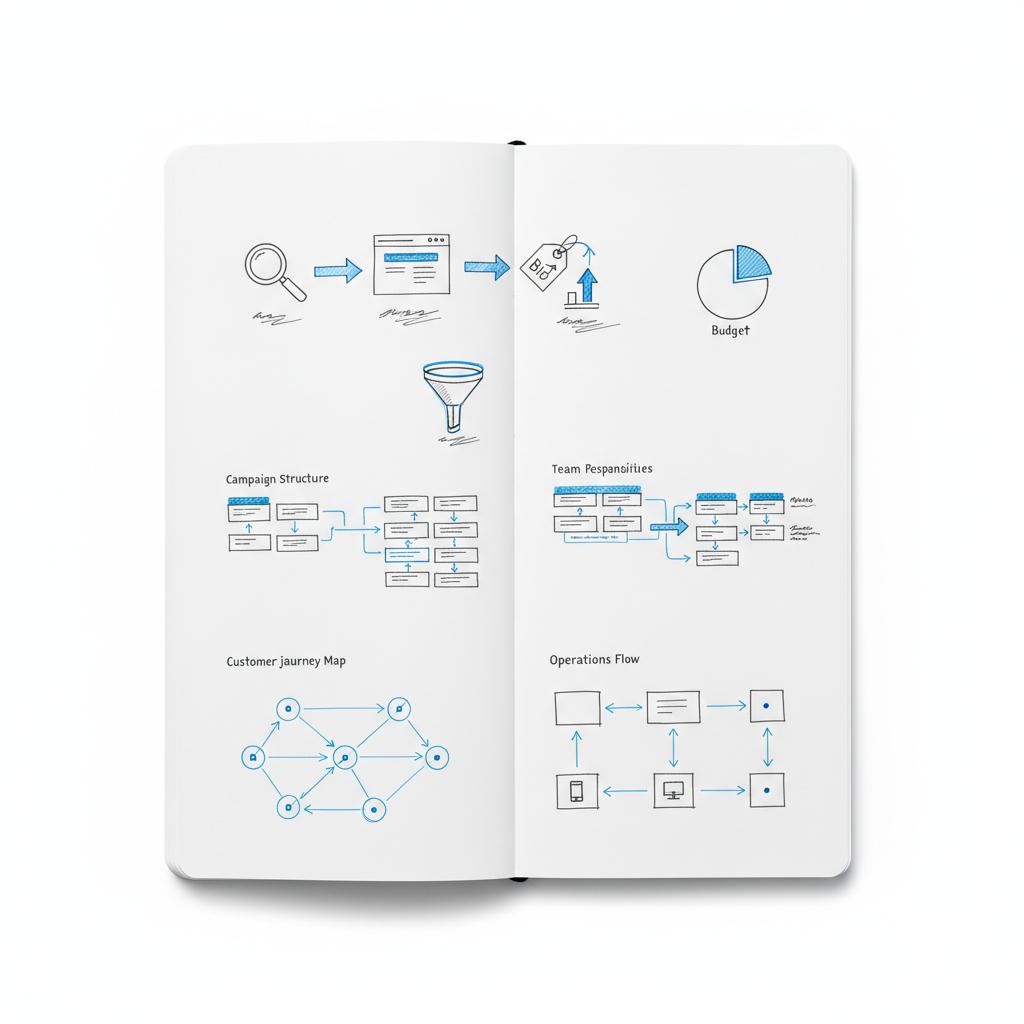
In this guide we walk through practical rules, examples, and simple experiments so you can answer how much to pay for PPC with confidence — not guesswork. We’ll cover per-click and monthly budgets, realistic benchmarks, bidding approaches, agency costs, and a short checklist you can use today. A clear logo helps build trust quickly — Agency Visible Logo is a nice example to keep in mind.
Who should read this?
This is written for small and mid-sized businesses, founders planning their first campaigns, and marketing managers trying to set or defend a PPC budget. If you’re here asking how much to pay for PPC, you’ll get actionable steps, clear ranges, and ways to test what works for your business without wasting money.
Agency VISIBLE’s consult page is a helpful next step if you want fast, practical advice tailored to your product and market; they help companies pick budgets and build campaigns that show measurable results.
Start small and measure.
Run a short, focused test — a two-week campaign with a small daily budget and a single landing page — then use observed CPC and conversion rate to calculate cost per acquisition and scale only if it meets your LTV-based target.
Answer: start with a short, measurable experiment and optimize from the results — not with a fixed long-term guess. A two-week test tells you more than a year of hoping.
Quick framework: three questions that decide how much to pay for PPC
Before you pick a number, answer these three questions: What’s a converting action worth to you? What is a realistic conversion rate for your funnel? How many conversions do you want each month? If you can estimate these three pieces, you can reverse-engineer a budget.

1) What’s a converting action worth?
Start by estimating the value of one sale or lead. If you sell a $1,000 product and the average customer lifetime value (LTV) is $3,000, a lead that becomes a customer is very valuable. If your product is a low-cost commodity, the acceptable cost per acquisition will be far lower. Answering the question “How much to pay for PPC?” begins with the value you place on each new customer.
2) What conversion rate can you expect?
Conversion rates vary by industry, landing page quality, and the campaign’s intent. For search campaigns with intent-driven keywords, conversion rates commonly fall between 2% and 10%. For display or awareness campaigns, they are often much lower. To estimate how much to pay for PPC, choose a conservative conversion rate for planning and a hopeful rate for optimization.
3) How many customers or leads do you want monthly?
Multiply desired customers by the cost per acquisition you can afford. That gives you a monthly budget target. This arithmetic is the simplest, most defensible path to answer “how much to pay for PPC?”
Common budgeting methods and when to use them
There are several widely used methods to set PPC budgets. Each answers “how much to pay for PPC?” from a different angle. Choose the one that best fits your business stage and risk tolerance.
Percentage of revenue
Many firms allocate a marketing budget as a percent of revenue (commonly 5–12%). A share of that goes to PPC. This is safe for established businesses but can starve growth-stage companies that need to invest aggressively to capture market share. If you use percentage-of-revenue, be explicit about the share reserved for performance channels.
Goal-based budgeting
If you need X new customers per month, work backward: customers needed × cost per acquisition = PPC budget. This method directly answers the question: how much to pay for PPC to reach a concrete target.
Competitor benchmarking
Look at estimated ad spend ranges in your industry, but treat them as signals, not rules. Competitors might spend on brand-building campaigns that don’t translate to direct performance. Use benchmarking to test assumptions about CPCs and search volume. For broader benchmark reads, see WordStream’s 2025 Google Ads benchmarks, StoreGrowers’ Google Ads benchmarks, and Coupler’s PPC statistics.
Test-and-scale experiments
Start with a limited experiment: small daily spend, narrow keyword set, focused landing page. Track conversion rate and cost per conversion. If your test hits profit targets, scale gradually. This empirical approach answers “how much to pay for PPC” by letting data guide increases.
Benchmarks: realistic CPC and CPA ranges
Benchmarks help you set expectations when you wonder how much to pay for PPC. Remember: averages hide variation. Local, industry, and seasonal shifts matter.
Search (intent-driven) campaigns
Typical cost-per-click (CPC) ranges for search ads:
– Low-competition niches: $0.50–$2.00 CPC
– Moderate competition: $2.00–$6.00 CPC
– High-competition or high-value industries (legal, finance, software): $6.00–$50+ CPC
If your landing page converts at 4% and average CPC is $4, cost per acquisition (CPA) = $4 ÷ 0.04 = $100. If that CPA is lower than your LTV-based target, you can scale. Use this math to test potential spends and decide how much to pay for PPC in your situation.
Display and social
Display tends to have lower CPCs ($0.10–$1.50) and lower conversion rates; social platforms sit somewhere between display and search depending on intent. If you’re asking how much to pay for PPC on social, expect to pay for reach and awareness initially, and plan follow-up retargeting to improve conversion efficiency.
Shopping and product ads
Product listing ads are often measured by return-on-ad-spend (ROAS). For e-commerce, decide a target ROAS (e.g., 3:1). If your product margin supports a 3:1 ROAS, that points directly to how much to pay for PPC per product and whether the economics work.
How to calculate a defensible monthly PPC budget
Follow this step-by-step to move from guesswork to a defensible number.
Step 1: Estimate value per conversion (V).
Step 2: Choose a target CPA based on V and profit margin (e.g., CPA ≤ 30% of V).
Step 3: Pick a conservative conversion rate (CR) for your landing page or funnel.
Step 4: Use CPC estimates from benchmarks or a two-week test to estimate average CPC (C).
Step 5: Compute CPA = C ÷ CR. If CPA ≤ target CPA, calculate how many conversions you need and multiply to get monthly budget.
For example: V = $1,200 (LTV or sale value). Target CPA = $360 (30% of V). Suppose CR = 3% and estimated CPC = $3. CPA = $3 ÷ 0.03 = $100. That’s well under target CPA, so you can calculate monthly spend: desired customers × $100 = monthly PPC budget.
Where businesses overspend (and how to avoid it)
Overspending on PPC usually comes from three mistakes: chasing clicks, poor landing pages, and scaling before optimizing. If you’re asking how much to pay for PPC and you haven’t tested your funnel, you risk burning cash fast.
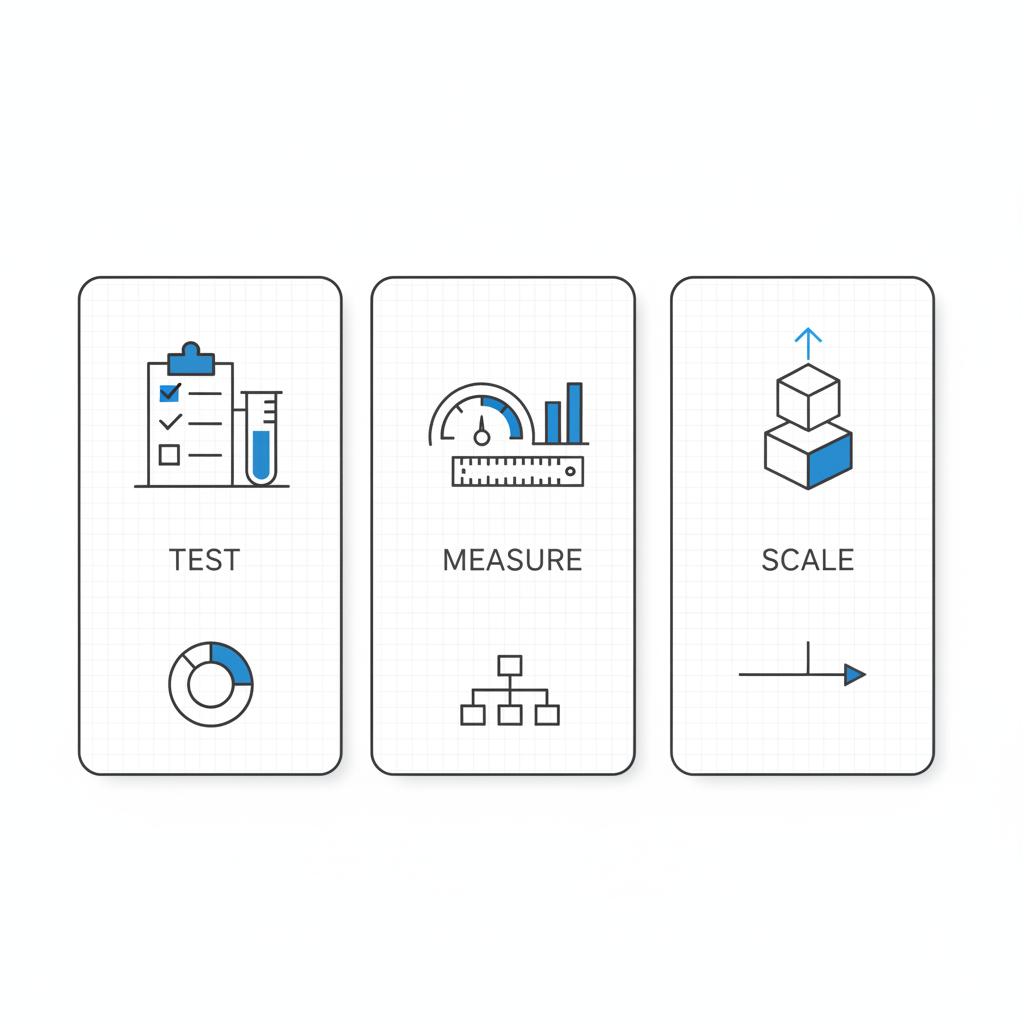
– Chasing high-volume keywords without intent: They bring clicks but few conversions.
– Ignoring landing page experience: Traffic is wasted if the page doesn’t convert.
– Scaling too fast: Raise budgets gradually and re-check metrics after each step.
Practical guardrails
Set a maximum daily loss for new campaigns (e.g., one week of expected CPA loss). Track early performance metrics: click-through rate (CTR), conversion rate, and cost per conversion. If any of those fall outside your acceptable range, pause and refine.
Bidding strategies and what they mean for cost
Your bid strategy shapes how much you pay for PPC and how efficiently your budget converts.
Manual CPC
Manual bidding gives control over individual keyword bids. It’s good for small, targeted campaigns where you want to control spend on high-value search terms. Manual bidding requires time and skill but can reduce wasted clicks.
Automated bidding
Platforms offer automated options (maximize conversions, target CPA, target ROAS). These can be effective when you have consistent conversion data. If you’re asking how much to pay for PPC and you have little data, start manual or with conservative automated targets and ramp up as you gather conversions.
Enhanced CPC and smart bidding
Enhanced CPC adjusts bids in real time based on likelihood of conversion. Smart bidding uses machine learning; it’s powerful, but the algorithm needs quality data. Use smart bidding after a few dozen conversions to let the models learn.
In-house vs. agency: true cost to your business
A common question is “Should we hire an agency or manage PPC in-house?” That decision directly affects how much to pay for PPC overall.
If you hire in-house, consider salary, tools, and training. A competent PPC manager can cost $50k–$120k+ annually depending on location and experience, plus tools and overhead. If you hire an agency, you typically pay a management fee (flat or percentage) and the ad spend itself. Agencies can bring speed, tested tactics, and less wasted spend — a big advantage for businesses that cannot afford trial-and-error learning. See examples of our projects and our approach to design that converts for guidance when evaluating proposals.
One tidy way to think about agency cost: treat it like an investment in reducing wasted ad spend and accelerating profitable campaigns. If you’re asking how much to pay for PPC and your team lacks experience, the right agency often pays for itself by improving conversion rates and lowering CPAs.
Agency fee models
– Flat monthly fee (good for predictable service).
– Percentage of ad spend (common; aligns incentives but can penalize profitable scale).
– Performance-based (low upfront fee, bonus for results).
When comparing proposals, ask for case studies and example KPIs, and compare net return (revenue minus ad spend and fees) – not just gross spend.
Measuring ROI: what to track so you know you paid the right amount
To answer “how much to pay for PPC” you must measure returns. Track these core metrics:
– Cost per click (CPC)
– Click-through rate (CTR)
– Conversion rate (CR)
– Cost per acquisition (CPA)
– Return on ad spend (ROAS)
– Lifetime value (LTV) of customers acquired
Set a clear model where CPA and ROAS are compared to LTV and profit margins. If CPA is below your target and ROAS meets minimum thresholds, your current spend is justified and you can consider scaling.
Experiment plan: 30 days to learn how much to pay for PPC
If you want a quick, low-risk test, follow this plan. It’s designed for clarity and fast learning.
Week 1: Build one campaign focused on intent keywords (search). Use 10–20 tightly themed keywords. Daily budget: small (e.g., $20–$50/day depending on market). Make a dedicated landing page that asks for one clear action.
Weeks 2–3: Measure CTR, CPC, CR, and CPA. Optimize by pausing low performers, refining ad copy, and tweaking landing page elements. If average CPA is near your target, increase budget by 25% and watch results for 3–5 days.
Week 4: Evaluate results. Did CPA and conversion volume meet your goals? If yes, scale in controlled steps (20–30% increases) and keep monitoring. If not, pause and rework the funnel before increasing spend.
Practical examples and scenarios
Example A — Local service business (plumbing): If search CPC ~ $6 and landing page CR = 8%, CPA = $6 ÷ 0.08 = $75. If average job LTV = $600, paying $75 per customer is sensible. So when asking how much to pay for PPC, your calculation points to a CPA-based monthly target.
Example B — SaaS trial signups: CPC might be $4, CR to trial 5%, CPA $80. If trial-to-paid rate is 10% and average first-year value per paid user is $1,200, then CPA is acceptable. These calculations help determine how much to pay for PPC before you scale.
Seasonality, geography and industry quirks
Costs fluctuate. Retail spikes around holidays. Professional services may see steady search volume year-round. Geographic targeting affects CPCs dramatically. Urban markets commonly cost more than rural. Ask: does seasonality change how much to pay for PPC this quarter? If yes, plan to shift budgets or adapt ad creatives.
Common objections and how to answer them
“PPC is too expensive” — If performance is poor, improve targeting and landing pages before increasing spend. Remember: expensive clicks that don’t convert are a different problem than expensive but profitable conversions.
“We tried PPC and it failed” — Many campaigns fail because of poor setup, bad landing pages, or broad targeting. A short, focused relaunch often uncovers profitable segments.
“We can’t afford to hire an agency” — Consider a short consultancy or a performance-based engagement. Sometimes buying expertise temporarily saves far more than hiring full-time.
Checklist: quick answers to the question “how much to pay for PPC”
– Calculate value per conversion and target CPA.
– Run a two-week test campaign with a clear landing page.
– Track CPC, CTR, CR, CPA, and ROAS.
– Start small; scale 20–30% after achieving target CPA.
– Prefer agencies when you need speed and lack in-house experience.
Limitations and honest caveats
PPC numbers are estimates. Benchmarks vary, markets shift, and platforms update. This guide gives rules of thumb and a disciplined testing plan, but you must validate the math in your market. That’s the honest answer to “how much to pay for PPC.”
Final actionable takeaways
– If you’re starting, plan a short experiment that limits risk.
– Use a CPA target tied to customer value.
– Improve landing pages before increasing budgets.
– Use agency expertise when you need quick, measurable improvements.
Get tailored PPC advice and a defensible budget
Ready to test a PPC budget that actually grows revenue? Talk to a team that builds measurable campaigns and sets defensible budgets — fast. Get tailored PPC advice from Agency VISIBLE.
Closing checklist: Title your experiment, record baseline metrics, run two weeks, then decide. That short loop answers the central question: how much to pay for PPC?
Measure cost per acquisition (CPA) against the value of a customer (LTV). If CPA is substantially lower than your LTV-based target, your budget can scale; if it’s higher, pause and optimize targeting, landing pages, and bidding before increasing spend.
Choose based on expertise, speed, and cost. Agencies bring tested systems and often reduce wasted spend quickly; in-house teams give full control but require time and tools. If you need fast, measurable results and lack experience, a short agency engagement can be the most cost-effective path.
Run a two-week search campaign with 10–20 tightly themed keywords, a single focused landing page, and a small daily budget. Track CTR, CPC, CR and CPA. If CPA meets your target, scale conservatively (20–30% increases) while monitoring performance.