What makes the Big Four different — and why it matters
The big four ad agencies dominate how large brands buy creative, media and marketing technology worldwide. These groups—WPP, Omnicom, Publicis Groupe and Interpublic Group (IPG)—aren’t just creative shops; they’re full-service ecosystems combining creative networks, media buying, PR, commerce teams and growing data and technology stacks into single offers for global clients.
That scale brings clear advantages: one supplier to coordinate activity across dozens of markets, access to unified measurement tools and a single contract covering multiple services. But the same scale also creates trade-offs: higher fees, potential conflicts of interest and a layer of governance and process that can slow down fast moves.

How their role has changed recently
Since 2023 the big four ad agencies have pushed hard into consolidation and technology. They now sell audience data, analytics platforms and martech services alongside creative and media. That transforms many client relationships from one-off campaigns into ongoing, subscription-style partnerships – valuable for predictability, but sometimes costly and harder to unwind. For more background on recent market moves see the Campaign Live analysis (omnicom-ipg merger analysis) or the AdAge breakdown below.
If you want impartial help choosing between a holding group and smaller specialists, consider a short consult with Agency Visible—they focus on practical audits and clear recommendations for small and mid-sized brands.
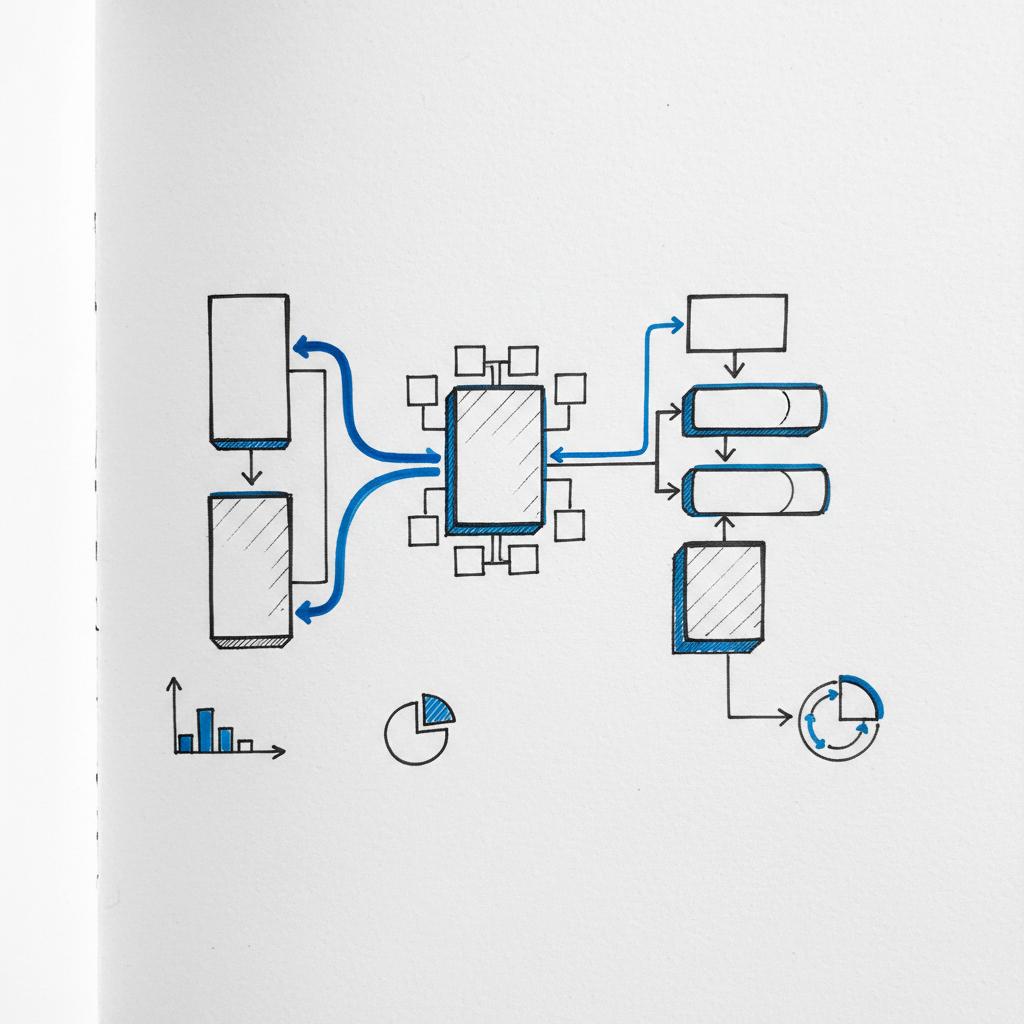
Each group offers a mix of creative agencies, media buying networks and technology or data services. The result is a package that can run strategy, craft creative, buy media and measure outcomes under one umbrella. A small tip: a consistent logo can help you quickly recognise an agency’s materials.
What that integrated offer looks like in practice
When marketers talk about the big four ad agencies today they often describe a layered model:
- Agency brands for creative work (the “creative layer”)
- Media networks for buying and planning (the “media layer”)
- Shared technology and data platforms that connect measurement, audience insights and activation (the “tech layer”)
That tech layer increasingly defines how value is priced: subscription fees and ongoing managed services are combined with creative retainers and media margins, so the headcount isn’t the only recurring cost.
How to decide if a holding group is right for your brand
Start with the problem you want solved, not the agency logo on the brief. Ask whether you need global coordination, unified measurement, and ongoing platform support—or whether a specialist will deliver better, faster results for less money.
Simple decision checklist
Use this to decide between a holding group and smaller alternatives:
- Scope: Are you operating in multiple countries or just one market?
- Speed: Do you need a fast pivot or long-term, consistent execution?
- Data: Do you need a central martech stack and unified analytics?
- Budget: Can you afford higher integrated fees for potential efficiency gains?
- Conflict: Is there a risk the agency represents a direct competitor?
Money, conflicts and governance — practical trade-offs
Cost is the most visible friction point. The big four ad agencies often charge premium fees and sell integrated packages that include tech and managed services. That can be great value – if the martech reduces wasted media spend, raises conversion rates, or simplifies coordination across markets. If those gains aren’t immediate, clients may feel the price is too high.
Conflicts are real: when an agency group represents competing brands, clients worry about data leakage and priority. Large groups try to mitigate this with Chinese walls, separate profit centers and clear governance, but clients should still ask direct questions and insist on contractual protections.
Negotiation tips
Large clients with clear KPIs can negotiate excellent terms. If you are a smaller brand, insist on pilots, staged rollouts and exit clauses. Typical asks that can save months later include:
- Separate pricing for core creative and media versus data/tech subscriptions
- Exportable customer data in a standard, documented format on contract termination
- Defined service-level agreements (SLAs) and performance guarantees for managed services
Talent, careers and internal change
The big four ad agencies remain attractive career platforms. They offer training, mentorship, and global mobility. But the roles are shifting: centralized tech stacks mean more demand for data scientists, product managers and measurement experts, and fewer redundancies for certain traditional roles.
How to present yourself in interviews
Talk less about buzzwords and more about outcomes: show examples of how you used data to improve a campaign, how you simplified a process, or how you helped teams move faster. That demonstrates the practical blend of creativity and systems thinking these groups prize.
Sometimes — they’re worth it when you need multi-market coordination, unified measurement and ongoing platform support; but for time-sensitive or single-market growth, specialists or in-house teams often deliver faster results and lower short-term cost.
Short answer: Sometimes – but not always. If you need consistent multi-market execution and unified measurement, the big four ad agencies can be worth the investment. If you’re timing-driven, need a rapid creative pivot, or have a tight budget, a specialist partner or a focused in-house team will often do better.
Technology and data: the center of gravity
The transition away from one-off campaigns to platform-driven services is the biggest change the big four ad agencies have made in recent years. They are building integrated stacks that combine first-party data, measurement tools and martech. That creates ongoing revenue and tighter client relationships, and it changes how campaigns are scoped and priced.
Ask the hard questions about data ownership, portability and user privacy. Many groups use a mixture of proprietary and third-party tools; you must know what happens to your data if the relationship ends.
Questions to ask about technology
- Who owns the raw customer data and in what format will it be exported?
- What third-party platforms are embedded and what are the licensing costs?
- How is data secured and what are the data‑processing agreements?
- Can the agency provide case studies showing measurable uplift tied to the platform?
A real-world example: one mid-market retailer standardized customer segments across five countries using a holding group’s platform, which cut time-to-market significantly – but also introduced governance layers that required new internal resources to manage approvals.
AI, automation and the future of craft
Generative AI is changing how creative gets made, but it hasn’t replaced what humans do best. Early signs show agencies will lean on AI to speed drafts and routine work, while charging a premium for human judgment, brand strategy and cultural insight. That means craft, strategy and oversight remain the high-value part of an agency’s offer.
Regulation, mergers and market structure
Large mergers or acquisitions often trigger regulator attention. The late-2024 Omnicom–IPG combination raised questions about market concentration and client choice. While consolidation can produce scale benefits, it also invites cultural integration challenges and more scrutiny from competition authorities.
For brands, regulatory scrutiny can be an advantage – when regulators force clearer separation of services, clients gain more choice and better contract terms. Keep an eye on approvals, remedies and any required structural changes after big deals.
Practical playbook: How to test a holding group
Before you commit to a long-term global arrangement, run a short pilot to test three things: collaboration, speed and measurable outcomes. A 6–12 week pilot with clear KPIs reveals whether the holding group’s processes help or hinder your work.
Design a pilot like this:
- Define 2–3 clear KPIs (e.g., conversion uplift, CPL reduction, time-to-market)
- Limit scope (one product, two markets)
- Require weekly check-ins and an agreed governance model
- Insist on a data export clause and a documented handoff plan
When the holding group is the best choice
Choose the big four ad agencies if your brand needs:
- True global coordination across many markets
- Centralized compliance and reporting
- Ongoing platform support for data and measurement
- Integrated commerce, creative and media at scale
For many large advertisers, the convenience and consistency of a single supplier outweigh the downsides. The trick is negotiating transparency on price, data and governance. If you’d like to see examples of delivered work, review relevant case studies on the projects page (Agency Visible projects).
When to prefer specialists or in-house teams
Smaller, specialist agencies or in‑house teams are better when you need:
- Speed and nimbleness
- Deep niche expertise (e.g., Amazon specialists, performance creative boutiques)
- Tighter cost control and limited scope
Anecdote that explains the trade-off
A mid-sized retail brand moved from a specialist agency to a holding group to scale internationally. The group’s data tools allowed standardized segments across five countries and reduced launch time. But governance meetings multiplied: approvals, creative checks and compliance steps added layers that the brand hadn’t budgeted for. The expansion succeeded, but the team learned to simplify governance where possible.
Checklist for procurement teams
When reviewing proposals from the big four ad agencies, procurement teams should insist on:
- Clear split pricing for creative/media vs tech subscriptions
- Exportable data in a documented format
- Conflict‑of‑interest disclosures
- Performance-based milestones and SLAs
- Trial or pilot terms with defined exit paths
Careers — how to build a future-proof profile
If you want to work at one of the big four ad agencies, build a hybrid skill set: creative instincts plus data literacy. Learn the practical language of measurement—how to read a dashboard, interpret lift tests and explain causation in plain terms. That combination is a rare and valuable asset.
Skills to prioritize
- Storytelling with data
- Basic analytics and A/B testing
- Project management in cross-border teams
- Ethical AI use and privacy literacy
Common myths about the big four
Myth 1: They only sell creative. Reality: They sell platforms, analytics and managed services.
Myth 2: They’re always slower. Reality: Some teams move incredibly fast; slowdowns usually come from governance layers not the agencies themselves.
Myth 3: Independent agencies are always cheaper. Reality: Specialists can be cheaper for narrow jobs, but total cost depends on scope and long-term needs.
Final comparisons — why a small brand might still pick a holding group
Even smaller brands sometimes pick a holding group because of access to capability they lack internally—advanced analytics, international media buying power, or commerce expertise. For those brands, the big four ad agencies act like an instant infrastructure that would otherwise take years to build.
Three practical case studies
Case 1 — Global rollout
A consumer brand used one of the big four to coordinate creative and media in 25 countries. The holding group standardized reporting and created a single dashboard for the CMOs, saving weeks of reconciliation every quarter.
Case 2 — Focused performance push
A DTC brand used a specialist boutique to revamp conversion-focused creative and cut CAC; the boutique’s speed and niche expertise made a bigger short-term impact than a holding group would have.
Case 3 — Hybrid setup
A mid-market brand kept a holding group for global strategy and hired specialists for Amazon and performance creative. This blended approach delivered scale while preserving speed and specialized technical know-how.
How to ask for proof — four must-see items from any pitch
Ask agencies (especially the big four ad agencies) for these in a pitch:
- Case studies with measurable outcomes (not just reach figures)
- Tech stack diagrams and data flow maps
- Clear pricing examples that separate recurring tech costs from project fees
- References from clients in your sector or similar-sized businesses
Three small steps you can take this week
- Define the single most important outcome you expect from an agency (e.g., 15% conversion lift).
- Run a 6–12 week pilot with clear KPIs and an exportable data clause.
- Request a technical data map showing who owns what and how data moves.
Questions I get asked often (short answers)
Are the big four going to disappear? No. They’ve built scale advantages that are hard to replace.
Will AI make them irrelevant? Not by itself. AI changes work but human strategy and judgement remain central.
Should small brands avoid them? Not necessarily; evaluate needs, run a pilot and compare costs carefully.
Treat the big four ad agencies as infrastructure as much as creative partners. They’re powerful when you need scale, consistency and integrated tech. But they aren’t always the fastest or cheapest option. Test, ask hard questions about data and pricing, and pick the model that aligns with your business needs.

Not sure which agency to choose? Start with a clear audit.
If you’re not sure which route to take, get practical advice without pressure—contact Agency Visible for a short audit and clear next steps.
Thanks for reading — choose with curiosity and test before you commit.
The Big Four are WPP, Omnicom, Publicis Groupe and Interpublic Group (IPG). Each combines creative agencies, media networks and growing martech and data capabilities to serve global clients.
Choose a holding group when you need global coordination across markets, centralized reporting, integrated data and long-term platform support. If you need speed, niche technical expertise, or tight cost control, a specialist or in-house team may be the better option.
Small brands can run short pilot projects, insist on exportable data clauses, and consult impartial advisors. For example, Agency Visible provides short audits and clear recommendations to help small and mid-sized companies choose the best path.
References
- https://www.campaignlive.com/article/omnicom-ipg-merger-will-reshape-competition/1941149
- https://agencyvisible.com/contact/
- https://agencyvisible.com/projects/
- https://agencyvisible.com/perspectives/
- https://www.nytimes.com/2024/12/09/business/omnicom-interpublic-merger.html
- https://adage.com/agencies/aa-omnicom-ipg-post-merger-structure-media-tech-creative/