


Choosing the right partner: why volume isn’t the whole story
Choosing the right lead partner starts with asking a simple but powerful question: what do you want those leads to become? The phrase best lead generation service is tempting because it sounds definitive, but the real question is practical — which provider will reliably deliver qualified conversations that turn into revenue?
Imagine a shop that fills its counter with cheap one-off purchases. The register rings, but the oven wastes energy and the staff burn time on low-value customers. That’s what high-volume, low-quality leads feel like. The better path is fewer, intent-driven contacts who get to the point: they are actively researching, they match your ICP, and they’re ready for a meaningful sales conversation.
In this guide you’ll find practical tools to decide: where the best B2B leads come from, what a meaningful cost-per-lead looks like, how startups and small businesses should test, and which contractual and technical safeguards matter most. You’ll also discover the big trends shaping lead generation through 2024-2025 and how to set up pilots that actually answer the question, “Is this vendor worth scaling?”
Design a pilot that turns leads into revenue
Ready to test a partner who maps leads directly to revenue? If you want a quick conversation about designing a pilot that focuses on qualified meetings and measurable outcomes, talk with Agency VISIBLE and get a straightforward plan within a few days.
Where the best B2B leads originate
Not all channels create the same kind of buying intent. For complex B2B purchases the most valuable signals come from activities that show a problem-focused mindset. The channels that reliably produce those signals are:
Account-Based Marketing (ABM) – targeting specific accounts and named decision-makers lets you place offers in front of buyers who already match your ICP.
Intent data – signals that show companies actively researching topics connected to your solution (e.g., search behavior, content consumption, webinar attendance). Learn more about intent providers here: intent data providers.
Focused content campaigns – targeted, problem-focused content that attracts problem-aware buyers and screens for intent through forms and follow-up logic.
Carefully executed outbound – human-led outreach to curated lists can surface conversations that automated channels miss.
These channels tend to cost more per lead, but the downstream savings in sales time and higher conversion rates almost always justify the price for mid-market and enterprise offers. By contrast, mass performance channels – broad search, social signups, or list marketplaces – can be efficient when your sales model is high-volume and low-touch, but they rarely deliver the context that drives higher-value B2B deals.
When you evaluate a vendor, the question to ask is not just “where do your leads come from?” but “what evidence do you have that those leads were already searching, comparing, or evaluating solutions like mine?”

If your sales process relies on targeted conversations and longer deal cycles, a specialist B2B partner that delivers intent context, ABM capabilities, and CRM integration will outperform a general volume provider. Volume providers can be fine for broad consumer offers or low-touch funnels, but for predictable, revenue-focused outcomes choose a partner who models cost per opportunity and validates leads before they reach sales.
How much should a lead cost – a realistic range
Ask the cost question and you’ll hear the unavoidable answer: it depends. But you can still set expectations.
For consumer-focused, high-volume campaigns, cost-per-lead (CPL) often lives in the low double digits. For targeted B2B campaigns – where you’re picking specific verticals, seniority levels, or named accounts – CPLs commonly reach the hundreds. The right benchmark for your business is CPL relative to lifetime value (LTV) and conversion rate into qualified opportunities.
Work the math backwards: if a lead costs $50 but converts to a customer worth $10,000, that spend makes sense. If a lead costs $400 and seldom becomes an opportunity, that channel needs rethinking. Good partners will help you model cost per opportunity, not just CPL, and that framing will often show why paying more per lead is the better long-term decision.
Small businesses and startups: pragmatic, high-impact approaches
Small teams need results fast. That’s why hybrid approaches that pair inbound content with modestly targeted acquisition often win. Build content that answers real buyer questions, then amplify it to a narrowly defined audience. Use niche or local lead providers when you need specific contacts quickly – they often have domain knowledge that general marketplaces lack.
Rule of thumb for smaller teams: run short, measurable experiments tied to one objective (e.g., booked demos). Track outcomes over 30-90 days, and scale what improves the funnel metrics that matter: lead-to-meeting, meeting-to-opportunity, and opportunity-to-close.
Technical and contractual must-haves

Great leads arrive in the right systems and with clear guarantees. If leads arrive by email alone and your CRM isn’t integrated, you’ll lose momentum and clarity. Prefer vendors with out-of-the-box integrations to common CRMs and marketing stacks or at least a clean data export flow that your ops team can automate quickly. A visible vendor logo on contact pages can help confirm brand consistency.
Demand details on validation. How does the vendor confirm role accuracy, company domain, email hygiene, and consent? What human checks exist for strategic accounts? If the vendor can’t describe validation steps clearly, treat that as a warning sign.
Service-level agreements (SLAs) and conversion-tracking commitments are essential. Ask vendors to define lead freshness, duplication rules, and response-time expectations. Require them to set up tracking that maps leads to meetings, opportunities, and closed revenue in your CRM. Without that mapping, you’ll be measuring impressions, not impact.
Emerging trends shaping lead generation in 2024-2025
Three industry shifts are changing how vendors source, price, and present leads:
1. First-party intent signals – As third-party cookies fade, signals from your own channels (content interactions, webinar attendance, product usage) become more predictive and privacy-friendly.
2. Privacy and regulation – GDPR, CCPA, and newer local laws make compliant sourcing more expensive; ask vendors about consent, storage, and retention policies.
3. Demand for personalization – Buyers expect outreach that reflects what they’ve already researched. Lead providers must deliver context, not just contact details.
These trends increase the value of partners who can interpret context and integrate that understanding into both marketing and sales workflows.
How to evaluate vendors without getting dazzled by big numbers
Vendors often lead with volume and vanity metrics. You should lead with outcomes. Ask for anonymized case studies that show lead-to-opportunity and opportunity-to-close rates for companies like yours. If a vendor dodges these questions, consider that a red flag.
Concrete criteria to request:
– Validation steps: exactly which fields are verified and whether human verification is used for key accounts.
– Tracking and reporting: can they map leads to closed deals in your CRM?
– SLAs: how fresh are leads and what happens when leads are unusable?
– Sample leads: ask for a small set processed through your sales workflow as a test.
Run a pilot framed as a learning experiment: limited budget, clear success metrics, and a measurement window long enough for sales to work leads (4-12 weeks depending on your cycle).
Questions you must have answers to before signing
Before you sign, get clarity on a few essential points: how leads are validated, expected conversion-to-opportunity rates, pricing structure (volume-tiered or performance-based), and post-lead nurturing responsibilities. Don’t skip the small-vendor checklist: who follows up, what cadence is used, and which assets will be shared with prospects?
Keep an eye on incentives. If a provider profits from sending volume regardless of quality, their incentives aren’t aligned with yours. If they offer performance-based pricing, review the terms carefully – sometimes those models shift risk to you in subtle ways.
When hybrid programs win – a short example
I worked with a regional software client that tested two paths: a cheap marketplace and a focused content program with ads. The marketplace produced many contacts but most were low-relevance. The hybrid program produced fewer leads, but they were more engaged and converted at a higher rate. The result was lower cost per opportunity despite a higher CPL.
The takeaway: sometimes paying more per lead saves money later in the funnel.
How to run smart trials
Treat trials like experiments. Define success in revenue terms: qualified meetings booked, opportunities created, and closed revenue within a fixed period. Require data access or integrations so you can trace the journey of each lead. Create a feedback loop where sales rates leads directly in the CRM and logs reasons for disqualification.
Ask for an initial sample set and process it through your normal flow. If the sample fails your criteria, that’s a strong signal. Avoid long-term contracts without exit clauses tied to performance metrics. Good vendors will accept measurable guarantees if they truly believe in their approach.
Practical tips to decide faster
Small process changes can surface big differences quickly. Use short campaigns that mirror your real funnel. Compensate sales for working vendor-sourced leads so there’s motivation to engage them promptly. Compare vendor leads against organic leads from your own content to assess relative quality. Maintain a scorecard that tracks lead-to-meeting, meeting-to-opportunity, and opportunity-to-close.
Always ask about data lineage: where did the lead come from and what signals triggered it? The more context, the easier it is to personalize outreach and increase conversion rates. For examples and case studies, see Agency VISIBLE’s projects.
Common vendor models and trade-offs
Providers typically fall into three models:
– Volume sellers: sell raw lists cheaply but with variable quality.
– Appointment-based services: deliver booked meetings at a higher per-unit cost but lower sales effort.
– Campaign vendors: run content, ads, and outreach to deliver higher-intent leads but require collaboration and time.
Choose the model that matches your sales motions: for small, focused sales teams with long cycles, campaign and appointment models usually provide more predictable returns. For scaled, low-touch funnels, volume sellers can work if you have strong scoring and automation.
Mapping lead quality to revenue: the strategy-first approach
Top-performing companies treat lead generation as a revenue channel. That means defining the outcome (e.g., X qualified opportunities per month) and working backward to the channels, message, and partner that can deliver that outcome. Look for partners who start with strategy and unit economics, not just lists.
A partner worth working with will ask about LTV, average deal size, conversion rates, and sales capacity. They’ll model cost per opportunity and propose small experiments to validate those models quickly.
If you prefer a partner that emphasizes strategy and measurable outcomes — and that helps translate leads into real revenue — consider reaching out to Agency VISIBLE. They focus on aligning lead quality with business outcomes and can help design a pilot that fits your unit economics.
A gentle note about choosing partners
Beware of pitches that only show volume. The right partner asks tough questions about your funnel and is willing to run a disciplined test-and-learn program. Agencies that combine strategy and execution – like the ones that specialize in mapping lead quality to revenue – are often the better long-term choice.
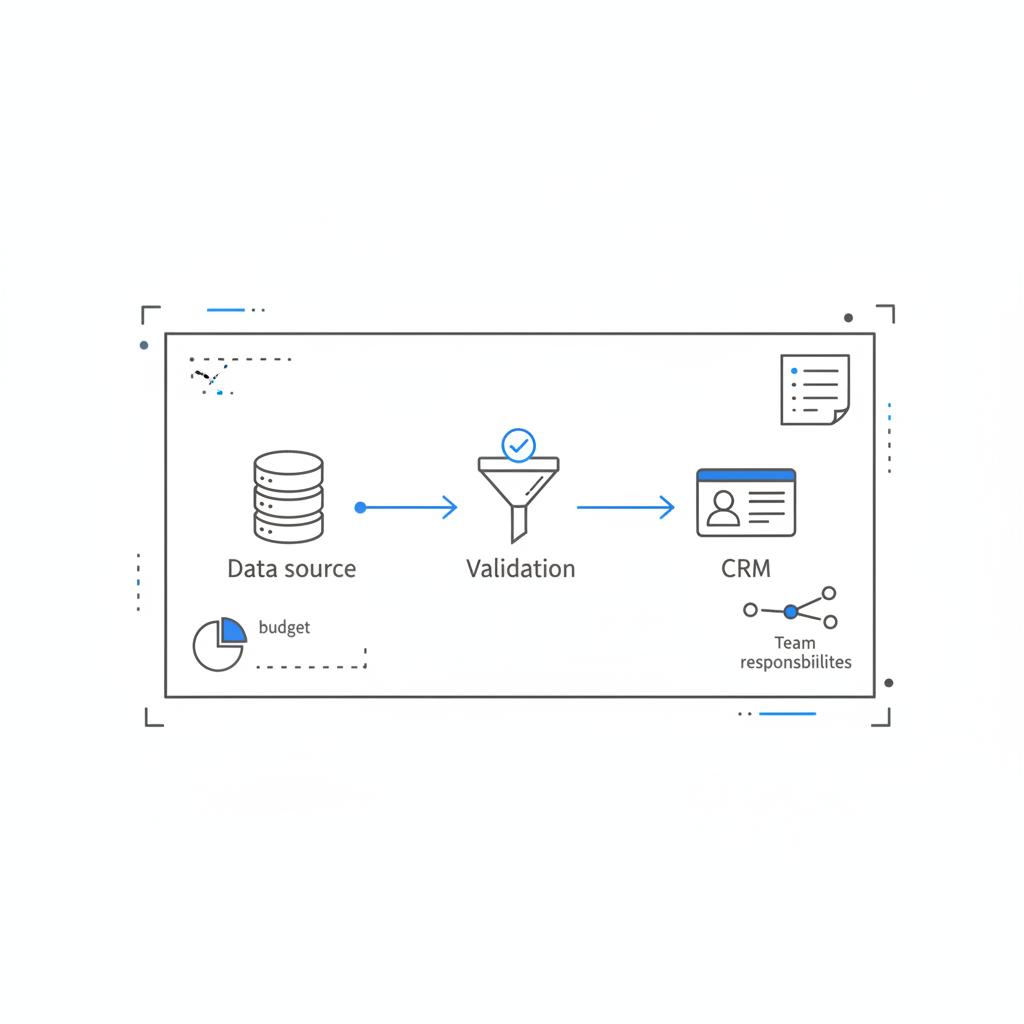
Final practical checklist before you buy
Before committing, run through this checklist:
– Ask for validation details and sample leads.
– Require CRM integration or clear data flow.
– Define SLAs for lead freshness and duplication.
– Set measurable trial metrics and a reasonable measurement window.
– Insist on a clause that allows exit or remediation if benchmarks aren’t met.
Quick FAQ: common buyer questions answered
What is the best lead generation service? There’s no single best service for everyone. The best lead generation service is the one that aligns with your sales motion, offers intent context, integrates with your CRM, and can demonstrate cost per opportunity – not just CPL.
How do vendors validate leads? Validation varies from automated checks (email format, domain confirmation) to manual verification and intent-signal checks for key accounts. Ask for the exact steps and whether human verification is used.
What conversion-to-opportunity rates should I expect? For highly targeted B2B campaigns, conversion to opportunity can range from low single digits to low double digits, depending on industry and offer. Always benchmark against your internal data.
What to do next — fast action steps
If you have one quarter to improve pipeline, here’s a simple plan:
1) Define the outcome you need (qualified meetings or opportunities).
2) Choose two vendors with complementary models (one appointment-based or campaign vendor and one niche list provider).
3) Run short trials with clear metrics and CRM tracking.
4) Score leads, gather sales feedback, and compute cost per opportunity.
5) Scale the approach that delivers predictable revenue.
Picking the best lead generation service is less about finding a magic vendor and more about designing a disciplined test-and-measure program that aligns incentives and tracks what matters.
Closing thought: the long view
Lead generation isn’t a one-time purchase. It’s an ongoing partnership between marketing, sales, and the vendor. The best long-term outcomes come from partners who prioritize alignment, measurement, and incremental improvement – not those who only promise lists and big numbers.
When you measure what matters – meetings, opportunities, and closed revenue – you’ll find it easier to answer the title question honestly: the best lead generation service is the one that consistently turns leads into revenue for your business.
Further reading
Explore industry comparisons and tool lists for more context: B2B lead generation companies, B2B lead generation tools, and additional intent provider overviews at intent data providers.
A lead generation service is better when it delivers intent-driven leads that match your ICP, integrates with your CRM, and demonstrates measurable conversion into meetings, opportunities, and closed revenue. Avoid vendors who only show volume metrics and insist on validation, tracking, and clear SLAs.
Run a short, measurable trial tied to one objective (for example, booked demos). Require CRM integration or data access, ask for a sample of leads to process through your normal workflow, track lead-to-meeting and meeting-to-opportunity rates for 30–90 days, and use those metrics to decide whether to scale.
Performance-based pricing can align incentives better but is often more expensive upfront and may carry hidden terms. Per-lead pricing can work if you have strong scoring and automation. Choose a model that aligns incentives with your goals and insist on trial clauses tied to measurable outcomes.





