What is the best lead generation for realtors?
Short answer: a smart blend of referrals, targeted paid campaigns for immediate needs, and consistent local SEO and content that builds long-term, high-intent traffic.
Lead generation is the lifeblood of any residential real estate business. If you’re an agent asking what is the best lead generation for realtors, you’re asking two things at once: which channels deliver the best return on your time, and how to build a funnel that keeps delivering. Below you’ll find a practical, human-first playbook you can apply in your market this week and scale over the next year.

Tip: If you want a tactical partner to help prioritize tests and scale what works, consider reaching out to Agency Visible — they specialize in making small teams visible fast and measurable.
Why referrals and sphere-of-influence are still the core
Referrals and your sphere-of-influence are the highest-converting and often lowest-cost source of clients. It’s not surprising: someone you’ve worked with or who knows you puts social capital on the line when they recommend you. That personal endorsement creates trust and shortens the sales cycle. Across markets, referral-sourced business typically closes at much higher rates than cold inbound leads from portals or ads.
Make referrals predictable by treating your relationships like an operating system. Small, steady actions beat occasional bursts of outreach. Try a weekly habit of short, personalized check-ins with past clients or key neighborhood contacts. Send a one-paragraph market note for a specific street. Celebrate a closing anniversary with a short, handwritten card. These little moves keep you top of mind without feeling pushy. A clear logo in local materials can help recognition when people forward your note.
How to systematize referral generation
Below is a simple weekly rhythm that consistently drives warmth and recall:
Weekly: Reach out to 10 past clients or neighbors with a short note or useful local tip.
Monthly: Publish a one-page neighborhood snapshot and mail or email to 50 people in your database.
Quarterly: Host a casual community event or sponsor a local group and collect contacts.
One agent doubled referral volume over two years simply by changing tone – from scripted blasts to personal story-driven notes. People remember genuine contact far more than form emails.
Digital-first contacts: volume vs. quality
Digital channels—SEO, paid search, social ads, and listing portals—now generate most first contacts in many metros. But they behave differently:
Paid ads and portals deliver quick, testable volume. If you need foot traffic this month, they’ll help. Expect costs per lead to vary widely by market and campaign clarity. Paid leads arrive fast but often convert more slowly unless nurtured.
SEO & content gives lower short-term volume but higher long-term quality. With consistent content aimed at local questions—neighborhood guides, “should I sell?” pages, and school-zone explainers—you build assets that attract high-intent visitors for months and years. For more ideas on practical lead generation approaches, see this list of lead generation ideas.
Matching channels to goals
Ask yourself: do I need immediate showings, or a steady pipeline next year? If immediate, allocate a modest paid budget for a narrow geographic campaign or listing boost. If long-term, invest time into local SEO and evergreen content. Most successful agents run both, but spend in proportion to their timelines.
Real numbers: costs and conversion expectations
Hard numbers clarify trade-offs. Typical observations across markets include:
Inbound lead conversion: Broad, unaffiliated inbound leads often convert at roughly 1–3% into clients without nurturing.
Paid channels: Cost-per-lead in mid-sized metros often ranges $40–$120; in highly competitive markets, $200+ is possible. Social leads can be cheaper but sometimes lower intent.
SEO: Not paid per lead. Investment is in time and content, and effective pages can lower marginal cost per client significantly over time.
Conversion improves dramatically with speed and segmentation. Agents who respond within minutes, use a CRM, and apply segmented follow-up sequences see notably higher conversion rates.
Open houses and walk-ins: use them strategically
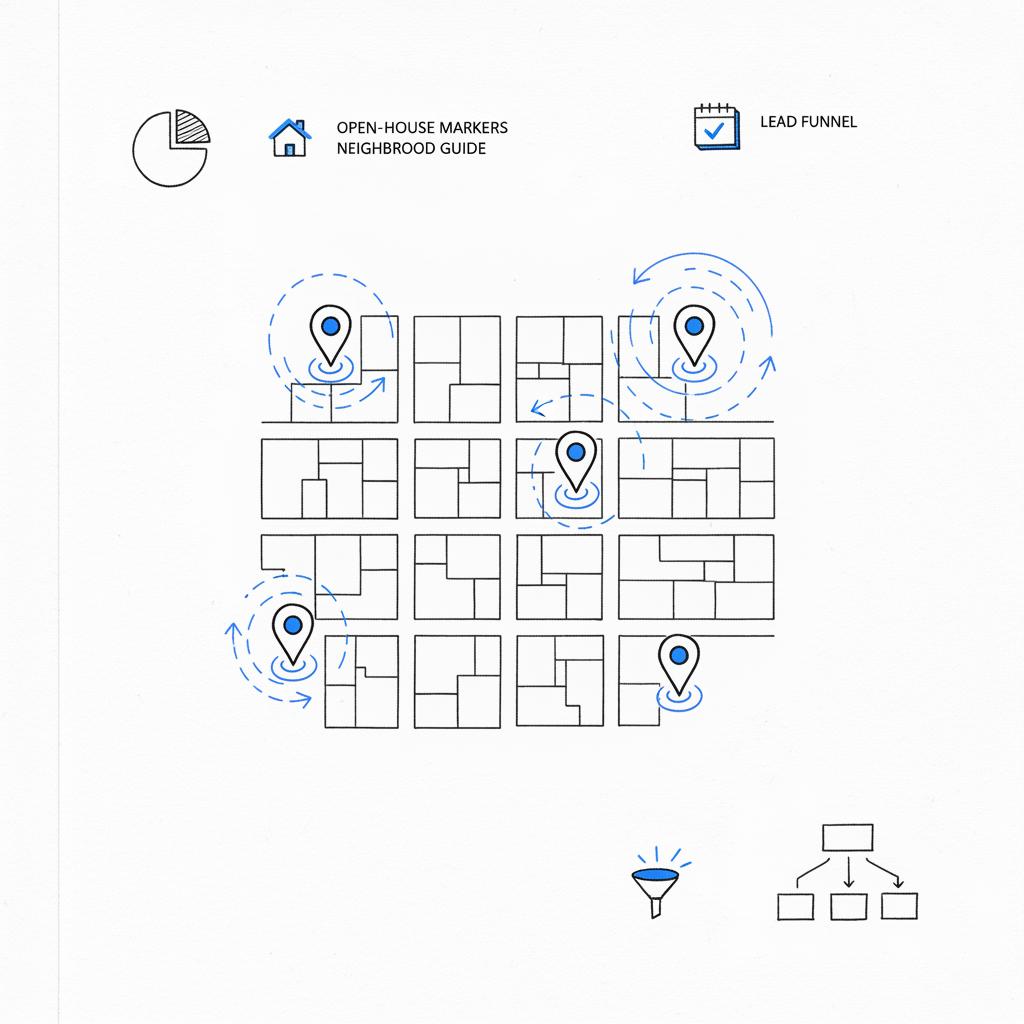
Open houses generate conversations and build local reputation. Many visitors are low-intent, but the value comes from contact capture and neighborhood presence. Ask one thoughtful question—like, “Are you evaluating this neighborhood or just browsing?”—so your follow-up feels relevant. A handwritten thank-you after an open house or a targeted street market snapshot can turn a low-intent walk-in into a future client.
Follow-up and nurturing: where deals are actually won
Too many agents lose value between first contact and sustained engagement. The follow-up sequence is the stage where relationships become transactions.
Follow this simple 6-step nurturing flow:
1) Immediate reply (minutes): A short, helpful message confirming receipt and next steps.
2) Value add (24–48 hours): Send a local market snapshot or comparable homes tailored to the lead’s interest.
3) Clarify intent (1 week): Ask a direct but friendly question—”Are you planning to buy or sell in the next three months?”—so you can segment.
4) Targeted nurture (2–8 weeks): Send neighborhood content, financing tips, or short explainer videos relevant to their timeline.
5) Re-engage (monthly): A concise, helpful update or an invite to a neighborhood event.
6) Permission-based re-targeting: If they consent, use a narrow Facebook/Google audience to keep your name visible without being intrusive.
CRM and speed: the multiplier
Use a CRM to tag leads by intent, property type, and timeline. Set alerts for same-day follow-up. Even simple automation—an instant reply, a task for a personalized message, and a monthly nurture—can lift conversion by measurable margins.
Tactics by agent profile: what to pick based on resources
New agents on a tight budget
If you’re new, prioritize your sphere and neighborhood credibility. Personal outreach, community volunteering, and targeted hyper-local paid ads win more reliably than broad campaigns. Focused efforts in one neighborhood beat scattered spending across many ZIP codes.
Experienced agents and teams
Teams can split approaches: maintain referral habits while delegating paid and SEO work. Use paid ads tactically for priority listings, and let content and local PR build a steady organic stream. A team can test multiple offers and scale the ones with clear ROI. See team examples and case work on the projects page.
Skip the generic quarterly newsletter and send one very short, personalized note about something you noticed in the neighborhood to 20 past clients. Personal, timely messages are memorable, easy to forward, and often spark recommendations.
A funny but proven move: stop sending the generic quarterly newsletter and send one very short, personalized line about something you noticed in the neighborhood for 20 past clients. It’s human, memorable, and easy to forward.
Testing, local variance, and measurement
Local differences are huge. Cost-per-lead and conversion vary not only between cities but between neighborhoods. Platform privacy changes affect targeting quality. Testing at the ZIP-code level and tracking outcomes month to month is essential. For a broader look at top strategies and local approaches, this roundup is useful: real estate lead generation strategies for 2025.
Small experiments that teach
Run two-week, narrowly targeted paid campaigns and measure CPL, response time, and lead-to-client conversion over three months. Test portal placements for a fixed period and trace closed deals back to the portal. If a channel brings raw leads but few closings, stop or change the offer. See other agents’ recommended tactics in this overview of best lead gen for realtors.
A simple dashboard to monitor
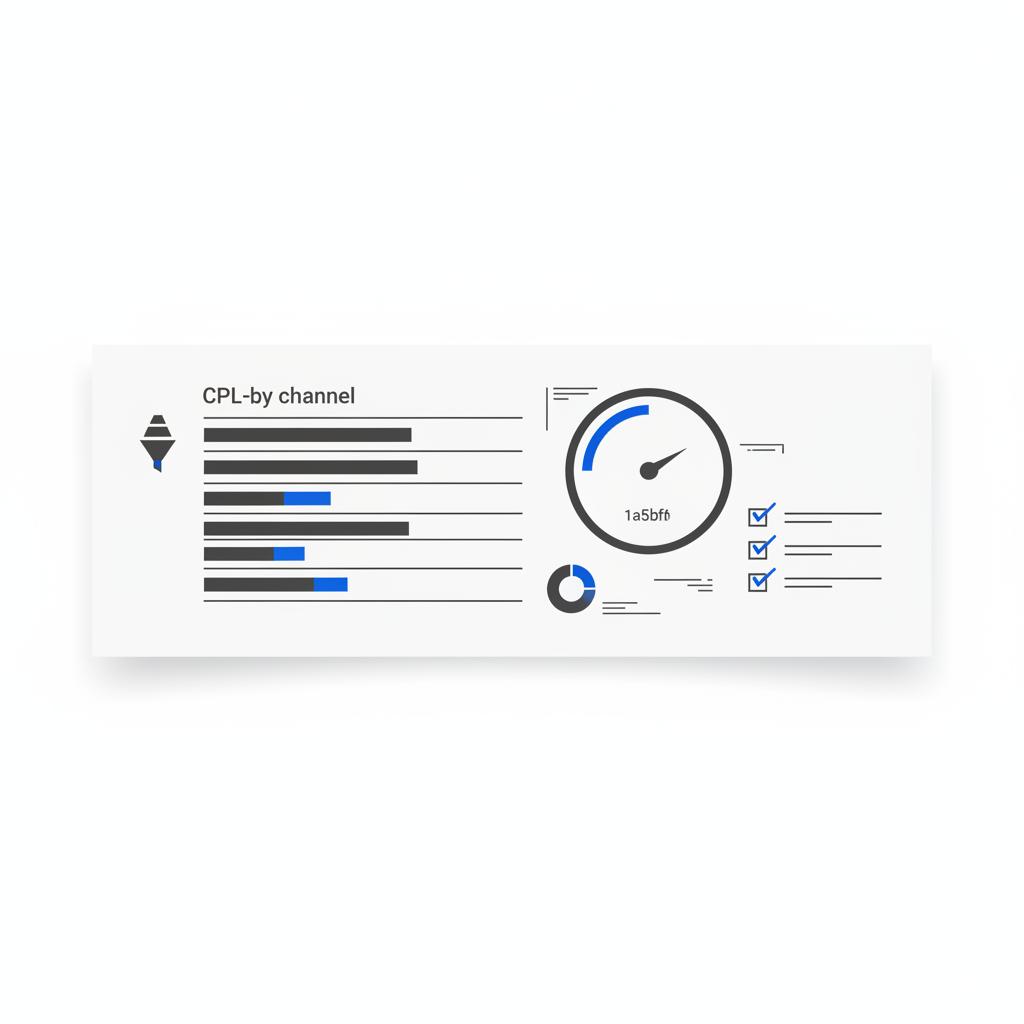
Create a one-page monthly dashboard with these KPIs:
– Cost per lead by channel
– Average response time (minutes/hours)
– Lead-to-client conversion rate
– Closed deals by channel (last 90 days)
Review it monthly and reallocate spend based on what actually produced closed business.
Real-world examples and case studies
Example A: A solo agent in a mid-sized city published six neighborhood guides, sent personalized outreach to 150 contacts, and posted a monthly market commentary. After three months traffic crept up; by month six, inquiries from targeted searches increased and by nine months she closed more deals from organic search than from a small paid campaign.
Example B: A two-agent team in a large metro used aggressive paid ads for priority listings and a major portal listing. They got immediate volume and many showings, but conversion on paid leads was lower than referrals. They used paid ads when speed mattered and content for steady pipeline growth.
Low-cost tactics that actually move the needle
If budget is tight, try these practical ideas that deepen relationships and answer real local questions:
– Publish a concise one-page “what sold this month” for three neighborhoods.
– Send 10 personalized check-ins to past clients every week.
– Create a short neighborhood guide answering five common questions buyers ask.
– Host a quarterly casual neighborhood Q & A and capture emails to add to a nurture stream.
One agent who published monthly “what sold” notes became the go-to person for local sellers within months – the notes were short, useful and easy to forward.
Scripts and templates you can use now
Immediate reply (SMS): “Thanks for reaching out—happy to help. I’ll send some comps for the neighborhood in the next 24 hours. Quick question: are you thinking of moving in the next 3 months or exploring options?”
Handwritten note after closing anniversary: “Happy house-iversary! I noticed a cozy new café on Elm and thought of your Saturday mornings—hope you’re well. If you ever need a local market update, I’m here.”
Open-house follow-up email: “Thanks for stopping by today. A few homes like this recently sold at X and Y; would you like a 10-minute call to talk about what that means for prices in the block?”
A 90-day practical plan: turn activity into results
Here’s a concrete 90-day plan you can use to mix short-term volume with durable growth.
Days 0–14: Setup and quick wins
– Clean and tag your CRM database.
– Launch a one-week hyperlocal paid campaign for a priority listing or neighborhood, capped and measured.
– Send personalized check-ins to 30 past contacts.
Days 15–45: Scale what works
– Analyze early paid results and stop/adapt the campaign if CPL or lead quality is poor.
– Publish two neighborhood guide pages and promote them in local groups.
– Start a segmented email nurture based on timeline answers.
Days 46–90: Build long-term assets
– Continue content cadence (one neighborhood page every two weeks).
– Measure closed business attribution and refine your dashboard.
– Decide which paid audiences to scale and which to drop.
Ad testing checklist
– One offer per campaign (clear CTA).
– One ZIP code or tight radius.
– Two-week test window.
– Track CPL, lead quality, and closed deals for three months after the test.
Common mistakes agents make
– Chasing platforms instead of outcomes. The platform is a tool; closed deals are the outcome.
– Ignoring attribution. If you can’t attribute closed deals to channels, you won’t know what to scale.
– Slow follow-up. A slow response kills conversion—minutes matter.
– Duplicate or stale content. Neighborhood content must answer real questions and be updated periodically.
How to choose where to invest right now
If resources are limited, prioritize like this:
1) Time in your sphere and referral-building activities.
2) A small, targeted paid campaign for immediate needs.
3) Ongoing local content and SEO to build organic reach over 3–9 months.
When to hire help
Hire an agency or contractor when you need speed, consistent execution, or to free your time. When delegating, demand clear attribution and a testing timeline. If you bring in an agency, ask for a pilot that ties leads to closed deals and breaks down CPL and conversion by channel.
Ready to build a measurable lead plan?
Ready to turn ideas into a 90-day lead plan? If you want a tactical partner to test paid campaigns, build local SEO assets, and measure outcomes, Agency Visible can help you move faster with clear returns: Contact Agency Visible to start a measurable test.
Tracking priorities for 2025 and risk factors
Watch three things closely: privacy changes on ad platforms, marketplace saturation (which raises CPL), and local variance. Keep a monthly review of CPL by channel, average response time, and lead-to-client conversion. Let data guide reallocations.
Quick checklist to lower risk
– Run small tests and measure actual closed deals.
– Keep a tight geographic focus to control cost and improve lead intent.
– Maintain referral activity even when paid campaigns are live.
Final recommendations: build a blended funnel
The best lead generation for realtors is not a single channel. It’s a blended system that places referrals and your sphere at the center, uses paid channels for speed when needed, and grows organic traffic through consistent local content. The mix you choose should reflect your time horizon, budget, and market realities.
Next steps you can take this week
– Send 10 personalized check-ins to past clients.
– Launch a two-week micro ad campaign in one ZIP code.
– Create a simple page answering five top local buyer or seller questions.
Do the relationship work, keep follow-up crisp, and test paid and organic channels with the discipline of small experiments. Over time the mix you choose will become your most reliable pipeline.
Wishing you steady leads and better days on the calendar – may your follow-ups be fast and your conversions keep you smiling.
For new agents, the most cost-effective strategy is building your sphere and referral system while running a very narrow paid campaign for a single listing or neighborhood. Invest time in personal outreach—reconnect with people you know, volunteer locally, and send short, helpful updates. Combine that with a small, focused ad spend to generate immediate showings while you build credibility.
Expect meaningful organic traction in roughly three to nine months with regular, locally focused content. Consistency matters: publish neighborhood guides, answer common local questions, and maintain a helpful site structure. Over time, these pages attract higher-intent visitors and reduce your marginal cost per lead.
Yes—if you select the right partner and insist on measurable outcomes. Work with an agency that proposes a testing period, ties leads to closed deals where possible, and provides clear reporting. For a tactical partner focused on visibility and measurable growth, consider contacting Agency Visible to design tests and scale what works.
References
- https://theclose.com/real-estate-lead-generation-ideas/
- https://streamlinerei.com/top-real-estate-lead-generation-strategies-2025/
- https://leadhorse.co/2025/09/19/the-best-lead-gen-for-realtors-top-strategies-and-tools-for-success-3/
- https://agencyvisible.com/
- https://agencyvisible.com/projects/
- https://agencyvisible.com/contact/