How effective are ads on X? A practical, data-driven guide
Are X ads worth it? If you’ve asked that question, you’re in the right place. This guide breaks down benchmarks, creative approaches, measurement methods and step-by-step tests so you can answer — with data — whether X advertising ROI fits your business goals. Throughout, you’ll find clear examples and hands-on instructions to run better experiments and avoid common mistakes.
What this guide covers and why it matters
If you’re budgeting for paid media and wondering whether to put money behind X, you need more than a headline stat. You need a working plan. This article explains how X advertising ROI behaves across different objectives, why benchmarks vary, how to measure incrementality, and what to test first. Expect practical checklists, a two-week test plan you can adapt immediately, and a short holdout test template to prove value.

Quick promise: you’ll leave with a clear experiment you can run in two weeks and a logic for deciding whether X becomes a sustainable channel for your brand.
X advertising ROI: numbers that actually mean something
Benchmarks help set expectations. For 2024–2025, measured outcomes on X typically fall into these ranges: CPMs commonly sit between $2 and $10, click-through rates (CTR) often land between 0.5% and 2.0%, and cost-per-acquisition (CPA) for e-commerce runs from roughly $10 on the low end up to $100+ for high-ticket or complex funnels. But remember: these figures are ranges, not promises. Your objective, creative and funnel determine where you land. For broader context on ad benchmarks and how they compare across platforms, see WordStream’s 2025 Google Ads benchmarks, Pixis’ 2025 advertising benchmarks, and HubSpot’s marketing statistics.
To keep things concrete, let’s use the central planning question many teams start with: are X ads worth it for my product? The answer depends on whether your CPA target and lifetime value line up. If they do, X advertising ROI can be strong; if not, the channel will look expensive.
Why a single stat rarely tells the truth
Context is everything. A 1% CTR for a brand-awareness video aiming for impressions is fine. A 1% CTR for a direct-response buy-now ad might be poor. Look at CTR alongside CPM, CPA and the funnel conversion rate. For example, a campaign with a $6 CPM and 1% CTR that yields a $25 CPA might be profitable if your product margin supports it. If not, you need to change creative, targeting, or funnel.
Short videos and creative-first formats: the most reliable lever
Across recent campaigns, short video and creative-first formats tend to drive stronger engagement. They usually raise CPMs, but they also raise attention — and attention often translates to better downstream conversion when the landing experience is good. Think of a short video as a high-quality window display: it signals value and reduces friction for the buyer.
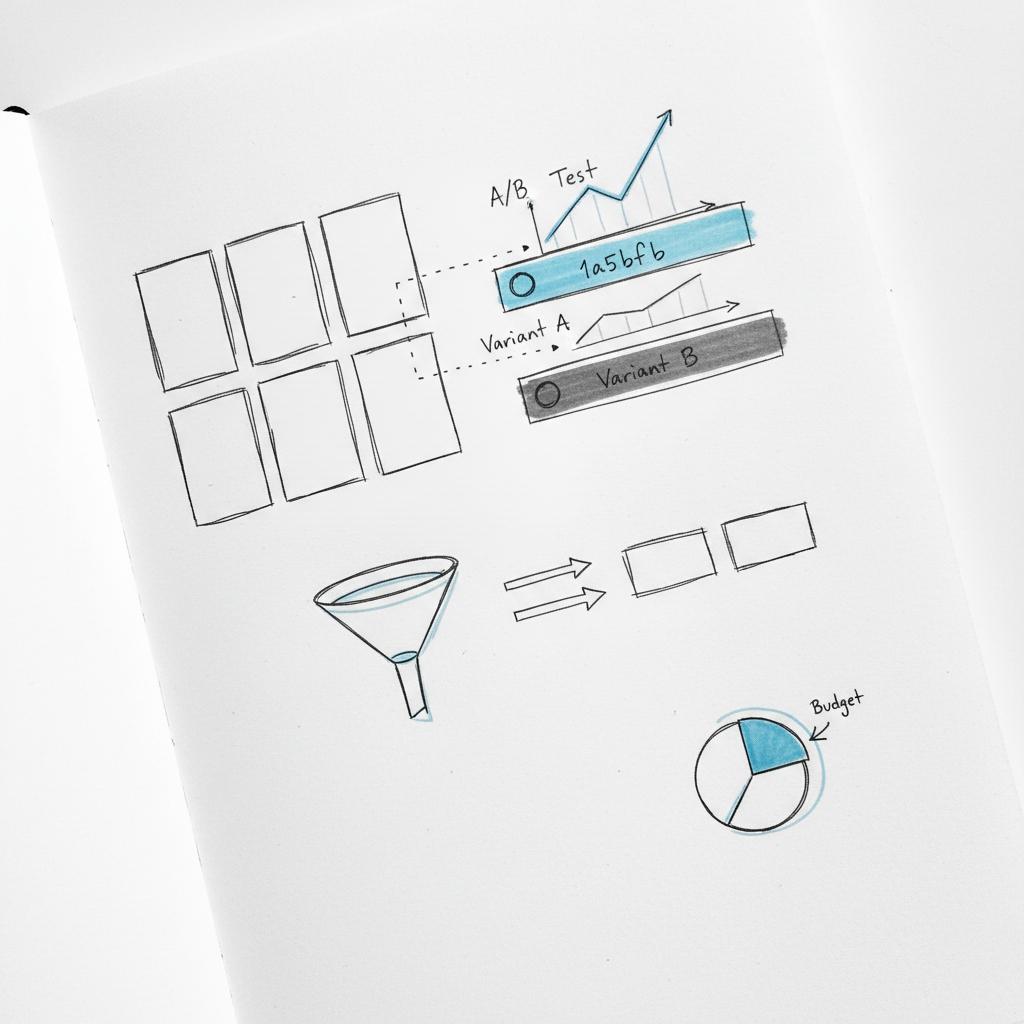
For SMBs testing ads on X, compare a promoted tweet and a short video in the same test window. The right comparison is not which has the lower CPM but which delivers the CPA you need. A small logo like the Agency Visible logo is a useful, subtle trust signal in social placements.
Measurement that moves you beyond guesswork
Good measurement combines multiple signals. Use UTMs to identify session sources, a server-side conversion API to protect events from browser limits, and a mix of attribution that emphasizes multi-touch or randomized holdout experiments to measure real incremental impact. Last-click attribution increasingly undercounts top-of-funnel value and should not be the only method you rely on.
Why incrementality matters
Incrementality answers the question: did the ad cause a purchase, or did it accelerate a purchase that would have happened anyway? Randomized holdout tests — excluding a slice of your audience from seeing ads — reveal this. Even a short holdout for a week or two can be powerful and is often the single best way to validate that spend is additive.
Practical two-week test plan: run this today
Here’s a simple, low-budget experiment that works for most SMBs selling a physical product or a low-to-mid ticket service.
Step-by-step
1. Set a CPA target based on margins. If your product is $35 with a 45% gross margin, your available marketing budget per sale is about $15.75 before overhead — pick a conservative CPA target below this.
2. Create two creatives: a promoted tweet (text + image) and a 15–30 second mobile-first video that shows the product in real use.
3. Use the same audience for both creatives. Start with a moderately warm audience — recent site visitors, engaged users, or a lookalike built from customers.
4. Set modest daily budgets (e.g., $20–$50 per creative) and run both ads for 7–14 days. Track UTM parameters for each creative and use a server-side conversion API.
5. After the initial test window, run a randomized holdout of similar length (7–14 days) where a segment of the audience is excluded from seeing the ads. Compare conversions across the holdout and exposed groups to estimate incrementality.
6. Decide: if the exposed group shows incremental conversions at or below your CPA target, scale slowly; if not, iterate on creatives, landing pages or audience signals.
Example: quick math that shows the path
Imagine you sell a $35 insulated bottle with 45% gross margin (about $15.75 gross profit). Your CPA target to break even might be $12–$15 depending on other costs. If the promoted tweet produces a $25 CPA to cold audiences, that’s a losing plan. But if a retargeting short video reduces CPA to $10 and your email sequence turns 20% of those buyers into repeat purchasers within six months, your effective lifetime value may justify the initial spend.
Designing experiments that isolate what matters
Good experiments change one variable at a time: creative, CTA copy, landing page layout, or audience segmentation. If you change several variables at once you can learn little. Keep tests short, focused and measurable.
What to test first
– Creative type: promoted tweet vs short video
– Landing speed: current landing vs optimized (faster, clearer CTA)
– Audience temperature: warm retargeting vs cold prospecting
– Offer clarity: low-friction offers (free shipping, limited-time discount) vs full-price proposition
Dealing with inventory and audience inconsistency
Some niches — especially niche B2B segments — see uneven audience quality on X. When audiences are small or inconsistent, layer first-party data: upload customer lists, create matched audiences from engaged users, and build lookalike-style segments from people who have already converted. For very small segments, prioritize lead capture and nurture rather than expecting immediate on-site purchases.
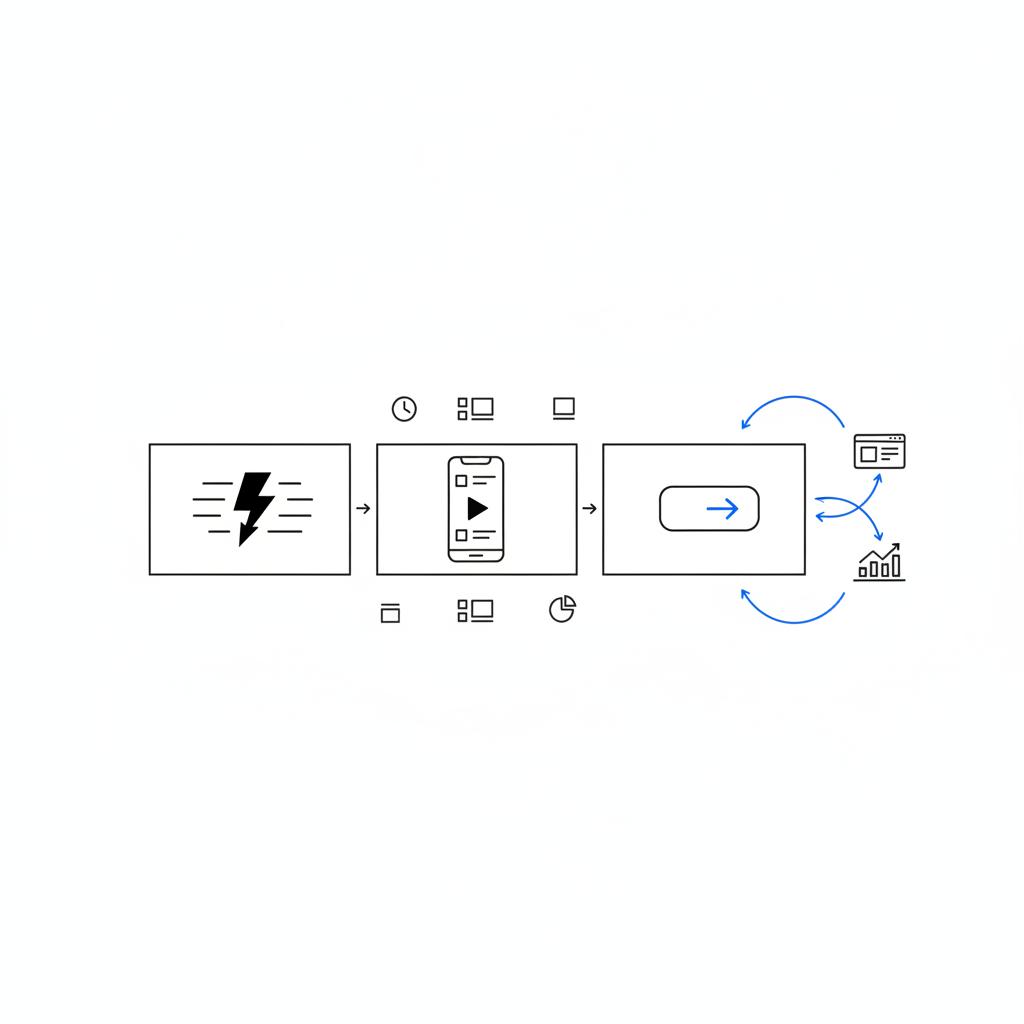
Practical workarounds
– Use longer test windows for small audiences to smooth variance.
– Lean into content and thought leadership to build interest before asking for a purchase.
– Capture leads with lead-gen forms or gated content and nurture via email.
Common measurement mistakes and how to avoid them
Many teams fall into three traps: over-relying on last-click, making decisions from tiny sample sizes, and blaming ads for poor landing experiences. Fix these quickly:
– Use multi-touch attribution or holdouts to measure impact.
– Wait for statistically meaningful samples or run more controlled small experiments.
– Audit the landing page: speed, clarity, and mobile UX are cheap wins.
Simple UTM template
Use a consistent UTM naming structure: utm_source=x&utm_medium=paid_social&utm_campaign=product_launch_1&utm_content=video_v1. Track creative-level conversions by including a content parameter for creative variant.
How long to run tests and when to scale
Short bursts can tell you whether an ad gets attention. True confidence comes after several days to a few weeks. For SMBs a practical rhythm is: two-week creative tests followed by a two-week randomized holdout. If the holdout shows a positive incremental lift and CPA is within target, scale carefully — doubling budgets in measured steps while adding variety in creative and targeting to avoid fatigue.
Scaling safely: what to watch
When you scale, watch for signs of strain: rising CPMs, worsening CPA, or falling conversion rates. To minimize risk:
– Keep creative fresh and rotate versions regularly.
– Expand audiences gradually rather than blasting a single pool.
– Preserve budget for retargeting and follow-up sequences.
– Monitor CPM and click quality daily during scale phases.
Creative brief checklist
Before you make assets, run through a quick checklist:
– Hook in the first 3 seconds for video.
– Clear value statement (what problem does it solve?).
– Single, strong CTA (buy, learn more, sign up).
– Mobile-first framing and readable text overlays.
– Fast-loading landing page with clear next steps. To see how design choices influence conversion, check our approach on design that converts.
Sample retargeting sequence that lowers CPA
1. Exposed audience sees a short product video (top-funnel).
2. Two days later: promoted tweet featuring social proof and a concise offer (mid-funnel).
3. Five days later: retargeting video with limited-time discount (low-funnel).
4. Email follow-up to site visitors who didn’t convert, with a second-chance offer.
Where X performs best — and where it struggles
X often excels for consumer-facing e-commerce and awareness-driven campaigns that rely on strong creative. It struggles for ultra-niche B2B where the audience is small and inconsistent unless you layer first-party signals and accept a longer testing cadence. For many SMBs, X becomes worthwhile when creative and measurement are both strong.
Need a quick, no-pressure plan? If you want a short, honest review of whether X advertising ROI makes sense for your product, ask Agency VISIBLE for a brief plan — they specialize in fast, measurable tests for small teams.
Real-world example: a small DTC brand
A DTC brand selling insulated bottles used the following approach: 1) two creatives (tweet vs short clip), 2) same warm audience, 3) tracked with UTMs and a server-side conversion API, and 4) ran a two-week randomized holdout. Results: the promoted tweet drove lots of visits but a $25 CPA to cold users; the retargeting video to site visitors dropped CPA to $9 and produced profitable sales after email follow-up. The holdout confirmed that the ads were truly incremental. That’s a tidy example of when X advertising ROI moves from theoretical to profitable.
Interpreting benchmarks the right way
Benchmarks tell you where to set hypotheses, not what will happen. If your CTR or CPA differs from an industry number, form a hypothesis (creative, audience, landing UX) and test it. Reverse-engineer your revenue goals: to reach 100 sales a month at $50 AOV and a $15 CPA, model clicks and impressions from CTR and CPM assumptions to see if X is a realistic channel.
Questions to watch in 2025 and beyond
Two strategic uncertainties matter most: 1) the long-term stability of audience quality for niche segments, and 2) how policy or product changes affect inventory and measurement fidelity. Expect to run more frequent holdouts when major platform changes occur and to lean harder on first-party data for niche targeting.
Agency help: when to bring a partner
Many teams benefit from a partner when they lack bandwidth or measurement know-how. A good partner builds rigorous tests, runs holdouts and helps interpret incremental results without selling vanity metrics. Agency VISIBLE positions itself to help SMBs with rapid, clear tests and measurable outcomes. See some of our work in projects for examples of rapid tests and clear reporting.
Checklist: is X right for you?
– Do you have a clear CPA or ROAS target tied to margin?
– Can you produce short, mobile-first video or crisp promoted tweets?
– Can you track conversions with UTMs and a conversion API?
– Are you willing to run a short holdout to measure incrementality?
If you answered yes to most of the above, X advertising ROI is worth testing.
Practical troubleshooting and quick fixes
If CPA is too high, try these in order:
1. Improve your landing page speed and clarity.
2. Tighten audience targeting or move to warmer segments.
3. Test stronger creative hooks or social proof.
4. Add email follow-ups and retargeting to recover abandoned visitors.
A sample 30-day roadmap
Week 1–2: Creative tests (promoted tweet vs video), UTMs and server-side tracking in place.
Week 3: Holdout experiment to estimate incrementality.
Week 4: Analyze, iterate and scale the best-performing approach while keeping creative rotation in place.
Run two creatives (promoted tweet vs short video) to the same audience for 7–14 days with UTMs and a server-side conversion API, then run a randomized holdout for the same length. Compare conversions across exposed and holdout groups to estimate incremental impact without large spend.
Main idea: run two creatives against the same audience for 7–14 days with UTMs and a conversion API, then run a short holdout of the same length to measure incremental lift — that minimal design gives a reliable signal without large spend.
Creative ideas that work right now on X
– Fast demo: 10–15 second clip showing the product solving a real problem.
– Social-proof montage: customer quotes or short UGC clips stitched together.
– Benefit-first hook: open with the single biggest benefit in the first two seconds.
– Comparison shot: show the old way vs your product in a split-screen.
Sample UTM naming guide
utm_source=x&utm_medium=paid_social&utm_campaign=summer_launch&utm_content=video_v2 — keep everything lowercase and use descriptive campaign names so reporting is consistent.
How to read CTR, CPM and CPA together
CTR shows engagement; CPM shows cost to reach; CPA shows cost to win. Look at all three. A low CTR with low CPM might still be profitable if conversion rate is high; a high CTR with terrible landing experience will produce a poor CPA. Use bench-test logic to understand trade-offs.
When X loses — and what to do
Sometimes X won’t fit your funnel: if your product requires long sales cycles and highly targeted professional audiences that are small, consider other channels for lead capture while using X for awareness and reach-building. Combine channels: use X to build top-of-funnel interest, then capture leads via LinkedIn or email to nurture into high-consideration sales.
Final practical tips before you start
– Define CPA/ROAS targets before launching.
– Track with UTMs + conversion API.
– Run short holdouts to measure incrementality.
– Test promoted tweets vs short video and prioritize the format that reaches your CPA target.
– Don’t scale too fast; keep creative fresh.
FAQs
Will X ads work for impulse e-commerce purchases?
Yes. When creatives are compelling, landing pages load fast and offers are clear, short videos and promoted tweets can drive low CPAs for impulse buys.
How should I set a CPA target?
Work backward from average order value and gross margin. Subtract cost of goods and overhead to find the budget per acquisition. That number should guide your CPA target.
Are X ads more expensive than other platforms?
Not inherently. CPMs on X often live in a similar range to other channels for many placements. The key is which channel delivers the CPA or ROAS you need for your business.
Deciding: a short decision flow
1. Do you have a clear CPA target? Yes → test. No → define margins.
2. Can you make short video or strong copy assets? Yes → test both formats.
3. Can you run UTMs and a conversion API? Yes → include holdout testing.
If you can’t do one of the above, fix it or get help before spending heavily.
Parting practical thought
Advertising on X is rarely a binary yes-or-no. When you treat benchmarks as helpful guides, run tightly scoped experiments tied to CPA targets, and measure incrementally, you’ll learn quickly whether X advertising ROI fits your business. The platform rewards good creative and careful testing — and it punishes guesswork.
Resources and next steps
Use this checklist to start: set CPA target, prepare two creatives, instrument UTMs and conversion API, schedule two-week test, then run two-week holdout. If you want a quick read on conversion APIs or a sample holdout script, many resources and agencies can help you implement this with minimal overhead.
Ready to test X ads without guesswork?
Ready to test without the guesswork? If you want help designing a two-week experiment and a short holdout so you can measure true X advertising ROI, contact Agency VISIBLE for a quick, no-pressure review and clear next steps.
Thanks for reading — experiment carefully, measure honestly, and let the data answer the hard question.
Yes. When creatives are compelling, landing pages load fast and offers are clear, short videos and promoted tweets can generate low CPAs for impulse buys. The key is matching creative to intent and keeping the funnel tight so clicks convert quickly.
Work backward from your average order value and gross margin. Subtract cost of goods, shipping and overhead to find the budget you can afford per acquisition. That budget becomes your CPA target. If needed, model simple scenarios to understand breakeven and profitable ranges before testing.
Not inherently. CPMs on X typically range from roughly $2–$10 for many placements, similar to other channels. Video and premium placements cost more but may deliver stronger engagement. The right comparison is which channel delivers the CPA or ROAS you need.
References
- https://www.wordstream.com/blog/2025-google-ads-benchmarks
- https://pixis.ai/blog/2025-google-advertising-benchmarks-for-every-industry/
- https://www.hubspot.com/marketing-statistics
- https://agencyvisible.com/contact/
- https://agencyvisible.com/projects/
- https://agencyvisible.com/design-that-converts-our-approach/