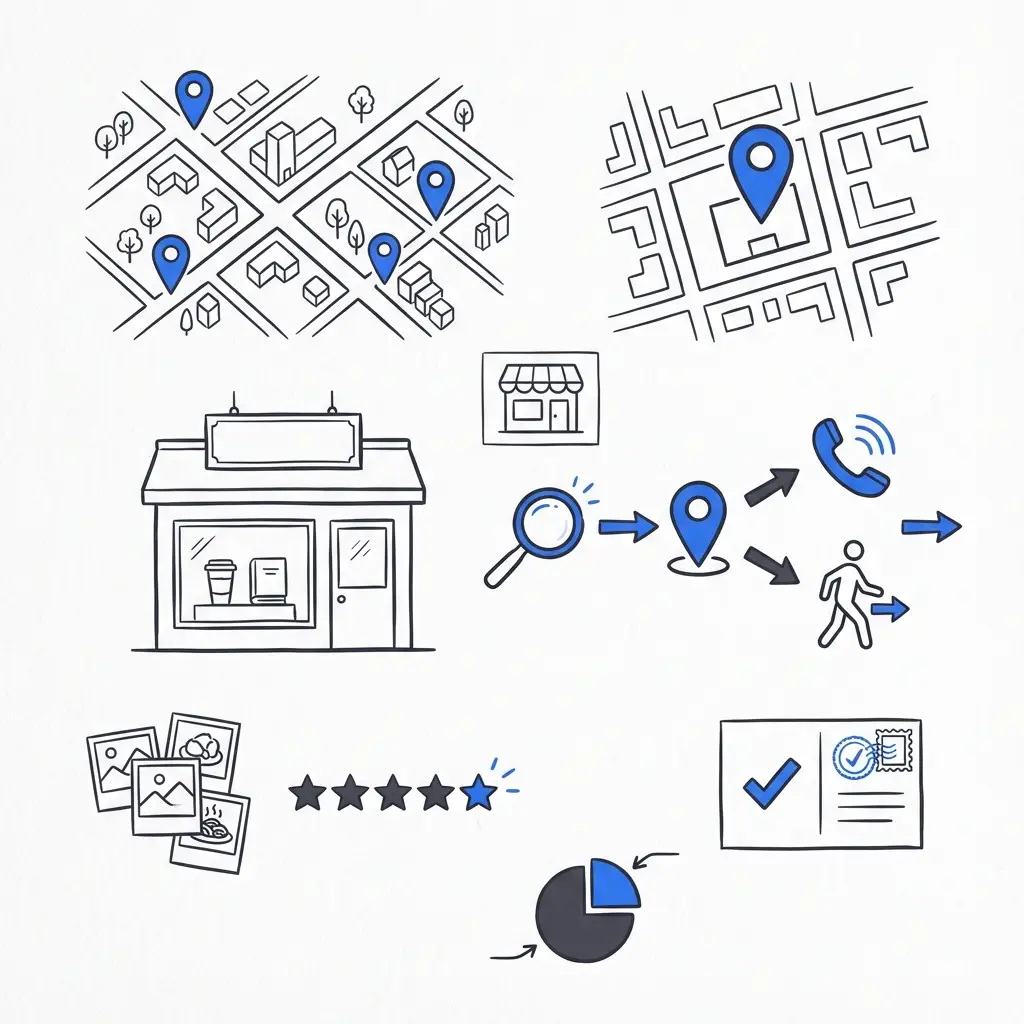
Introduction: a clear look at search intent and real results
If you’re asking whether google ads for real estate agents are worth the time and money, you’re asking the right question. Paid search promises high-intent traffic — people actively typing “homes for sale” or “sell my house fast” — but intent alone doesn’t pay commissions. How you measure, follow up, and connect ads to closed deals is what turns clicks into clients.
In this guide you’ll get practical benchmarks, realistic budgets, step-by-step testing advice, and the most common ways agents waste money. The goal is simple: give you a repeatable 90-day playbook so you can answer your own question — not rely on someone else’s claim.
Why search is different: intent equals opportunity
Searchers are on a mission. That’s why google ads for real estate agents often cost more than social clicks but tend to yield leads with stronger purchase intent. Someone typing “homes for sale in [neighborhood]” is closer to booking a showing than someone who scrolls past a listing on Instagram.
Think of two doors: one opens to an open house full of visitors who are actively looking; the other opens to a gallery where you’re showing your brand. Both matter, but they deliver different results. Search gets you people coming through the first door — if your campaign, landing page, and follow-up are ready to greet them.

Benchmarks that actually help you model results
Industry benchmarks from 2024 give a starting point: average CPC for search across categories was around $4.66, and average cost-per-lead in real estate was often reported in the $66–$70 range. Those numbers are reference points — not guarantees — because local competition moves them dramatically. For more detail see benchmark reports from WordStream, Digital Position, and StoreGrowers.
Why care about these figures? Because they let you run simple math:
If a lead costs $70 and your lead-to-closed rate is 5%, your cost-per-closed deal is $1,400. Compare that to your average commission or lifetime client value and you’ll see whether the channel can be profitable.
Where the real waste hides: weak attribution
One of the biggest invisible drains on ad budgets is poor attribution. Many agents count only direct online conversions and ignore offline paths — phone calls, scheduled showings, or deals that close months later. If you don’t import offline conversions back into Google Ads using the GCLID and your CRM, you will undercount the value of search.
Importing offline conversions is a technical step, but it’s essential. Without it you make decisions based on partial data. With it you can tie closed deals to the original ad that started the conversation.
Quick fix: CRM + GCLID
Integrate your CRM with Google Ads, capture the GCLID on form submissions or tracking numbers, and import closed deals as offline conversions. Once your closed sales are visible in Ads, automated bidding and budget decisions have real numbers to optimize toward.
Design a 90-day test that actually proves something
A good test has three things: time (90 days), clear conversion events, and a budget that produces real data. Ninety days is long enough to test keywords, ad copy, and landing pages without being a permanent commitment.
At the start, define 2–3 primary conversions: contact form submission, booked showing, and pre-qualified lead (for example, has budget and timeframe). Track them. They’re the stepping stones to a closed deal.
Budget guidance: many local agents start in the $1,000–$3,000 per month range. In smaller towns you can test for less; in big metros you likely need more. The important point is to spend enough that you get meaningful A/B tests on keywords and landing pages — too small a budget makes results noisy and decisions risky.
If you want help designing a test and connecting your CRM so offline deals count, consider talking to Agency VISIBLE about a tracking-first 90-day plan — it’s a practical place to start without overcommitting.
What to test first
Start with headline and keyword pairs that match intent: “Buy in [neighborhood]” vs “Sell quickly in [city].” Pair each with a landing page: one that builds trust with local market data and testimonials, another optimized for booking (calendar widget, short phone-first form).
Track which path produces more booked showings and which produces more qualified conversations. Booked showings are a higher-value metric than raw form fills; they bring you closer to offers and closed deals.
Keywords and match types: how to control cost and intent
Keywords are your levers. Broad match gives volume at lower CPCs but more irrelevant traffic. Phrase and exact match narrow the funnel and typically raise CPC — but the leads are usually more relevant. Negative keywords prevent wasted impressions on searches that look similar but don’t convert.
Good keyword examples: “homes for sale [neighborhood],” “sell house fast [city],” “[neighborhood] condos for sale.” Service or agent-focused terms like “[city] real estate agent” can work, but they often attract comparison shoppers who need a stronger landing page to convert.
Landing pages and the human follow-up
A click won’t become a client unless the landing page makes the next step obvious. A high-performing landing page does three things quickly: establish local credibility, make contacting you effortless, and reduce friction to booking a showing.
Use a phone-first layout, clear calendar integration, recent local sales, and short testimonials. If you show market data, keep it simple — a sentence or two and a clear takeaway are worth far more than a dense chart. Our design guidance explains this approach in more detail: Design that converts.
Follow-up speed matters. Leads called within minutes are far more likely to engage than leads who wait a day. Track follow-up times and aim for under 10–15 minutes where practical. Automated confirmations are fine as a bridge, but personal outreach wins conversions.
Think of two doors: one opens to an open house full of visitors who are actively looking; the other opens to a gallery where you’re showing your brand. Both matter, but they deliver different results. Search gets you people coming through the first door — if your campaign, landing page, and follow-up are ready to greet them.
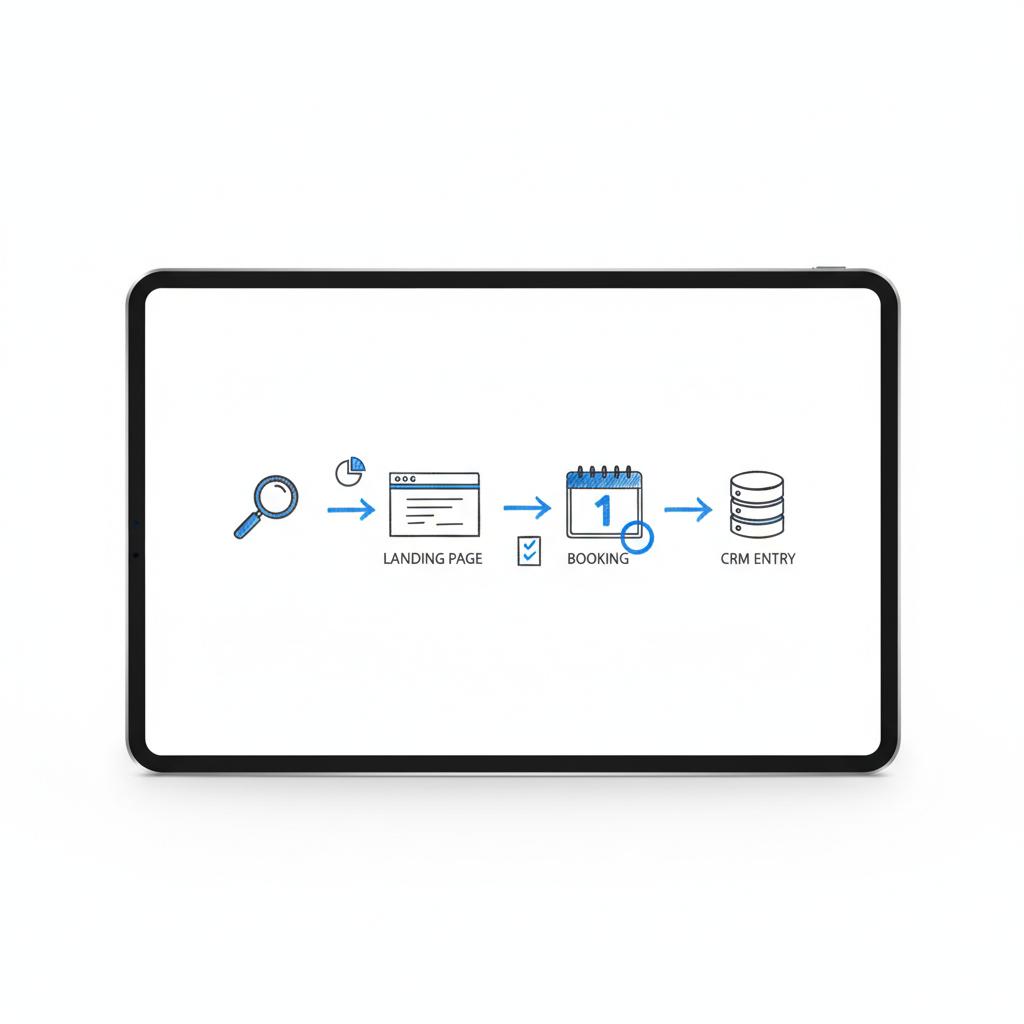
Measuring what matters: closed deals and lifetime value
Clicks and form fills are early indicators. The real metric is closed deals and lifetime value. Import offline conversions, map booked showings to offers and offers to closed sales, and calculate the lifetime value of clients that came through Google Ads.
One common mistake is optimizing purely for lowest CPL. A $50 lead who becomes a one-time rental client is not equal to a $90 lead who becomes a repeating buyer and a referrer. Model lifetime value by client type and use that to set target CPLs and bidding strategies.
Weak attribution — when offline actions (phone calls, scheduled showings, closed deals) aren’t imported into Google Ads, many wins are missed and ROI looks worse than it really is.
Search vs social: when to spend where
Search clicks are typically more expensive but higher intent than social clicks. Social is powerful for awareness, brand building, and nurturing — think of it as the long game. Search is the short game when you need booked showings and immediate meetings.
Use display and remarketing to keep your brand in front of people who left after clicking a search ad. Tailor remarketing to specific listings they viewed or invite them to a limited-time consultation — local and relevant creative performs best here.
How display and remarketing should be used
Display by itself rarely produces many high-intent leads. But when combined with search, display keeps your name visible and can nudge return visits. Use remarketing to show specific properties, promote recent sales in a tight radius, or invite visitors back to book a showing.
Seasonality and scaling: when to push harder
Real estate is seasonal. Lead volumes and CPCs move with inventory and competition. Start with the 90-day test, then scale over the next 1–2 quarters for campaigns and keywords that show clear conversion to booked showings and closed deals.
When inventory is tight and CPCs climb, attribution and LTV become even more important – they tell you whether higher CPCs still pay off.
Common mistakes that waste ad spend
Predictable errors include:
1) Not tracking offline conversions. If you don’t import closed deals, you undercount success.
2) Too many experiments too quickly. Each test needs time to produce meaningful results.
3) Poor landing page experience. Slow sites and confusing forms kill conversions.
4) Weak follow-up. Speed and human touch matter more than automated messages alone.
Modeling results for your office: a simple math approach
Start with a benchmark CPL — use $66–$70 as a thought experiment — then plug in your own numbers. Example: average commission $8,000, closing rate on ad leads 3% means a $70 CPL translates to $2,333 spend per closed deal. Compare that to margin and lifetime value.
Run sensitivity checks: what if CPC is 1.5x or 2x higher? What if follow-up improves conversion rate from 3% to 5%? Those scenarios help you set thresholds for when to increase budgets.
Bidding strategies: start simple
Begin with manual CPC or enhanced CPC to collect conversion-quality data. After a month or two of reliable conversion tracking, test target CPA or target ROAS where you have good offline conversion data. Automated bidding only works when your conversion data is clean.
Real examples that show how context changes results
Suburban example: an agent targeted “move-in ready homes [county]” and used a calendar-first landing page. CPL was higher than a general search campaign but booked-showing rate doubled. That higher quality reduced cost-per-closed when measured end-to-end.
Big city example: a brokerage bid heavily on luxury neighborhood keywords. CPC was 2–3x national benchmarks, but high commissions made the channel profitable. They also discovered they were missing half their wins until they imported offline closed deals into Ads. See related case studies on our projects page.
How Agency VISIBLE approaches Google Ads for agents
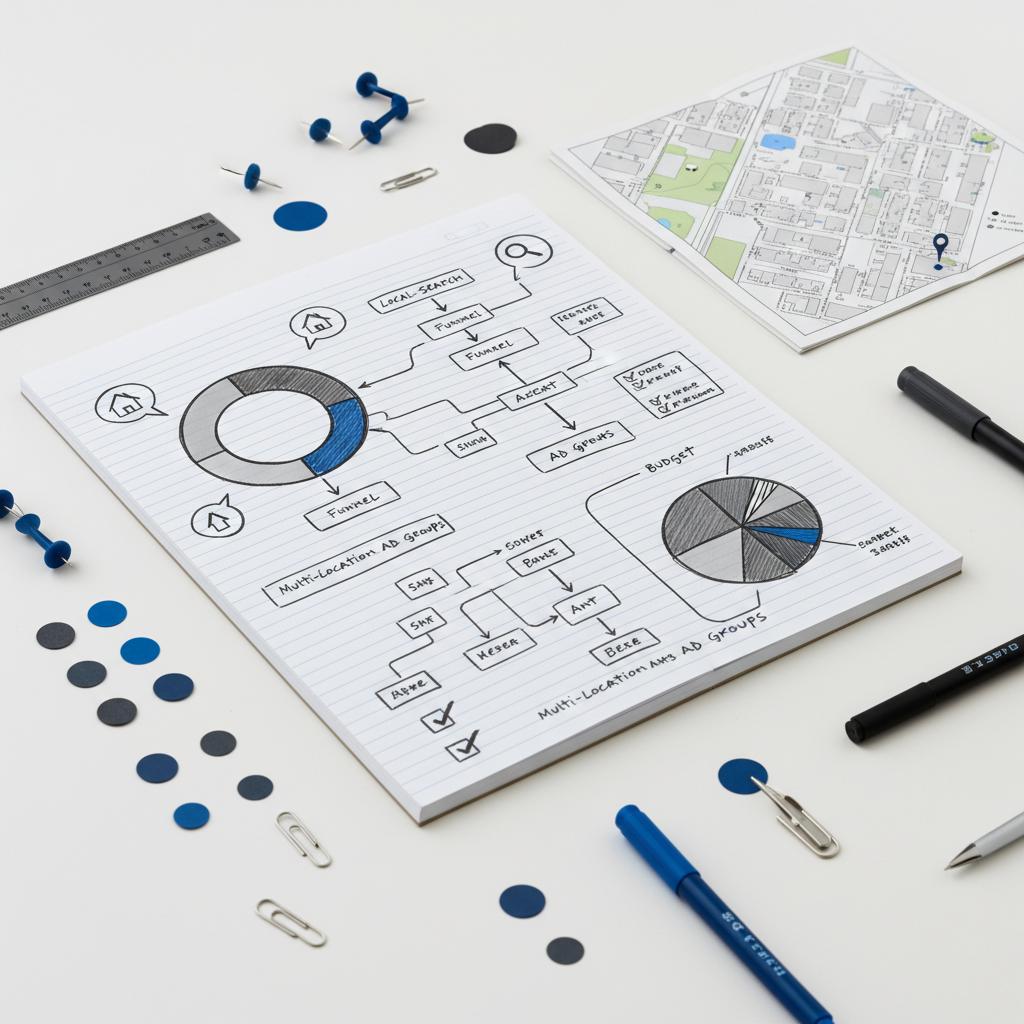
Our method at Agency VISIBLE focuses on measurement-first campaigns. We define clear conversion events, integrate CRM data, run a 90-day test with a practical budget, and optimize landing pages to book phone calls or calendar meetings rather than just collect form fills. You may notice the Agency VISIBLE logo on our materials.
That focus on closed deals — not just clicks — is why measurement and follow-up are central to the approach. If a channel can’t show it produces closed deals at a profitable rate after the test, you reallocate spend to what works.
Practical checklist: what to set up before you launch
Before you spend a dollar, do these things:
1) Define primary conversions: form submissions, booked showings, pre-qualified leads.
2) Install conversion tracking and capture GCLIDs on forms and phone calls.
3) Integrate your CRM and plan to import closed deals as offline conversions.
4) Build at least two landing page approaches: trust-building and booking-first.
5) Set a 90-day test window and a realistic budget — $1k–$3k/month is a common starting range.
How to interpret results at 30, 60 and 90 days
At 30 days you should see initial CPCs, a range of CPLs, and which keywords attract traffic. Treat early numbers as directional.
At 60 days you should have cleaner CPL data and enough booked showings to see which landing page and ad copy combinations matter.
At 90 days you should be able to measure whether the channel leads to offers and closed deals (especially if you imported offline conversions). Use that result to decide whether to scale for the next quarter.
When Google Ads are the better choice
Google Ads is the right place when you need meetings quickly, when your market has active search volume, and when you have the ability to follow up fast and humanely. If you’re building long-term brand awareness or nurturing a cold audience, social and content are better complements.
Budget allocation advice
Start with search as the primary conversion-driver, use display and remarketing as support, and allocate a small test budget to social for awareness if you have the capacity to nurture. Reallocate monthly based on booked showings and closed deals rather than raw clicks.
Common objections and simple responses
“Search is too expensive in my city.” — True in many luxury or high-competition markets. Model your CPC to CPL to cost-per-closed deal and compare to your commission. High CPCs can still be profitable where commissions are high.
“I don’t have time to follow up.” — If you can’t follow up quickly, invest in processes: calendar integrations, call routing, and a single human touch within minutes. Automation should support humans, not replace them.
“I already get referrals.” — Paid search doesn’t replace referrals; it supplements them. Use ads to capture demand you would otherwise miss — buyers and sellers actively searching now.
Final checklist before you scale
Before you scale, make sure:
• Offline conversions are imported and showing in Ads.
• You have consistent follow-up within a short timeframe.
• The channels you scale show conversion to booked showings and closed deals, not just low CPLs.
Closing thoughts and next steps
Google Ads can be a dependable source of motivated buyers and sellers, but only when campaigns are measured against closed deals and you give them enough runway to prove value. Start with a test, measure the right things, and be ready to optimize the human part — follow-up and trust-building — as aggressively as you optimize ads and landing pages. For more about our work and approach, visit our homepage.
Ready to test Google Ads the right way?
Ready to test without guessing? If you want help designing a 90-day experiment that ties ad spend to closed deals, get in touch with Agency VISIBLE — we’ll help set up tracking, build the landing pages, and design a test that tells you the truth.
Frequently asked questions
Are Google Ads worth it for real estate agents?
They can be. It depends on market competition, budget, and your ability to track offline conversions and follow up. In many markets search produces higher-intent leads that convert, but only if you measure closed deals.
How much should I spend on Google Ads for real estate?
Many local agents find $1,000–$3,000 per month a reasonable starting range for a meaningful test. Adjust up or down for local competition and inventory.
What’s a realistic cost-per-lead in 2024?
Benchmarks suggest CPLs around $66–$70 for real estate, with average CPC around $4.66 — expect variation by market.
They can be, but it depends. Search often produces higher-intent leads than social, yet success relies on accurate attribution, timely human follow-up, and testing with a meaningful budget. Use CRM integration and offline conversion imports to see the true ROI before scaling.
Run a focused 90-day test with $1,000–$3,000/month (adjust for your market), define 2–3 key conversions (form, booked showing, pre-qualified lead), capture GCLIDs, import offline conversions, and run A/B tests on keywords and landing pages. If you prefer help setting this up, a short consult with Agency VISIBLE can speed the process and reduce mistakes.
Benchmarks in 2024 put real estate CPL around $66–$70 and average CPC near $4.66. Measure CPL in the short term, but tie it to closed deals and lifetime value by importing offline conversions to see the real cost per acquisition.
References
- https://agencyvisible.com/
- https://agencyvisible.com/projects/
- https://agencyvisible.com/design-that-converts-our-approach/
- https://agencyvisible.com/contact/
- https://www.wordstream.com/blog/2024-google-ads-benchmarks
- https://www.digitalposition.com/resources/blog/ppc/2024-google-ads-cpc-benchmarks-insights-from-3-6m-keywords/
- https://www.storegrowers.com/google-ads-benchmarks/