What is the success rate of TikTok ads?
TikTok ads success rate starts with a question: what outcome are you trying to measure?
TikTok advertising is a question of where you aim to land in the funnel, how you measure success, and how quickly you learn from creative experiments. Anyone who has worked with short-form video knows the platform can deliver astonishing reach and attention – but reach and viral moments are only one part of a practical campaign plan. For advertisers asking “How successful are TikTok ads for e-commerce?” the honest answer is: it depends – on your objective, your creative, your measurement, and how quickly you move from test to scale.

To make that answer useful, this guide walks through the numbers teams care about, explains what they mean in practice, and shows how to set up tests and reporting so you form realistic, data-driven expectations. You’ll get a staged testing framework, creative rules of thumb, measurement tactics (including incrementality), budgeting guidance, and a simple checklist to take action. For related case studies, see our projects.

Why objective matters more than platform
Success on TikTok looks different when your goal is awareness than when your goal is direct purchase. If your campaign is about reach, the primary outcomes are impressions, CPM (cost per thousand impressions), and view-through rate – how many people watch some or all of your video. TikTok commonly delivers lower CPMs than some other channels and very strong view-through rates for short, attention-grabbing creative. That makes it a powerful place to seed messages and build brand memory.
If your objective is consideration – getting people to click, watch longer, or engage – the metrics change. Click-through rates for In-Feed ads commonly land between roughly 0.5% and 1.5% (recent reporting across 2024-2025). Video engagement and CTR tell you whether the creative is relevant enough to prompt action. Low CTR at this stage usually points to creative or message mismatch, not to the platform itself.
For conversion-focused campaigns, such as purchases or lead generation, metrics change again. Conversion rates for on-site goals commonly range from about 0.3% to 2%. Cost per acquisition (CPA) for e-commerce and lead generation shows wide variance but typically falls between approximately $5 and $50. Return on ad spend (ROAS) frequently clusters in the 1.0x to 3.0x band for many direct-response e-commerce efforts. A well-tuned account can achieve 4x or more; early tests can be under 1x. Those outcomes depend heavily on vertical, geography, product price, funnel design, and creative quality.
What this means in practice
Define success in the terms that fit your objective. If you want awareness, celebrate reach and view-through. If you want sales, treat CTR, CVR, CPA, and ROAS as a system, not isolated vanity metrics. A high view-through rate with zero conversions only tells you the creative got attention; it doesn’t guarantee the funnel will convert.
Benchmarks: practical ranges, not gospel
Benchmarks are useful – until they become a crutch. The numbers above are practical ranges seen across industry analyses in 2024-25. They give you a starting point for expectations, budget planning, and early tests. But product, price point, creative, and audience differences mean your results will likely deviate. For additional benchmark reads see Lebesgue’s TikTok Ads Benchmarks, MarketingLTB’s TikTok Ads Statistics, and Quimby Digital’s TikTok Ad Costs.
Imagine two e-commerce brands. One sells a subscription beauty product with high lifetime value. The other sells low-margin accessories bought impulsively. On TikTok both might achieve similar CTRs, but the subscription brand may convert at a higher rate and deliver stronger ROAS because lifetime value justifies an upfront costlier acquisition. Conversely, a small inexpensive accessory might need ultra-low CPA to be profitable.
Geography matters too. CPAs in North America typically look different from CPAs in Southeast Asia. Use industry analyses to choose initial test budgets and decide what counts as a promising signal, then calibrate with short A/B tests to land on meaningful baselines for your vertical.
A staged testing framework that actually works
Keeping experiments staged makes them manageable and reduces wasted spend. Here’s a simple three-stage approach many teams use effectively:
Stage 1 – Awareness: find attention
Run awareness-focused creative tests to identify attention-grabbing concepts and hook formats. Watch view-through rates, impressions, and CPMs. Early tests should be wide and creative-heavy: try different openings, music, visual treatments, and hooks.
Stage 2 – Consideration: measure relevance
Move to consideration by driving traffic and tracking CTR and engagement. Identify creatives that earn clicks and longer watches. If CTR is under 0.5% consistently, it’s usually a creative problem.
Stage 3 – Conversion: validate economics
Test conversion treatments on landing pages, checkout flows, and offers. Use a learning budget large enough to get signal but small enough to avoid overspend. Treat the initial rollout as exploratory: you want enough conversions to know whether the channel can work at your unit economics.
We often recommend running six to twelve different creative variations early in a campaign. That number feels large because short-form creative behaves like fishing with many lines in the water: you’ll quickly find which hooks or visual styles earn higher view-through and CTR. A single winning concept rarely emerges from one or two videos.
Creative quality and format: small changes that matter
TikTok rewards native-feeling, short content. The best-performing ads often look like organic posts: they open with a strong hook, move fast, and respect the viewer’s time. That doesn’t require Hollywood production; it demands clarity of message, a clear visual hook in the first one to three seconds, and a call to action suited to the objective.
If you sell a product, show it in use quickly. If you want leads, show a transformation in the first beat. When you test creative, vary one major element at a time: change the hook in one video, the call-to-action in another, and the thumbnail or caption in a third. That way, you can correlate performance shifts to creative changes instead of guessing.
Native vs. produced: when to choose which
UGC-style, native-feeling executions usually win when authentic usage and relatability matter. Produced spots can win when a product’s features need clear demonstration or when brand positioning demands a polished look. Prefer native when the hook is personality-driven; prefer production when clarity of function or premium positioning is the priority.
Creative checklist — quick items to test
Hook (0-3s): test attention-grabbing opens – question, action, oddity.
Value beat (3-10s): show the product benefit or use-case.
Social proof (10-20s): quick reviews, overlays, or before/after.
Call to action (last beat): tailor CTA to objective: “Learn more” vs “Buy now.”
Thumbnails & captions: test different thumbnails and captions to lift CTR.
Measurement: the quiet work behind the numbers
Accurate measurement is the hardest part of doing advertising well. Pixel-based attribution will tell you a piece of the story but misses server-side events, cross-device behavior, and incrementality. That’s why more advertisers rely on server-side measurement, mobile attribution partners, and carefully designed incrementality tests to understand the true effect of ad spend.
Incrementality tests, often run as holdout experiments or geo-based rollouts, reveal how many conversions you would have had without the ads. They are the most reliable way to assess real ROAS when standard attribution models are compromised by privacy changes.
Attribution windows matter. Short windows may undercount conversions that require research; long windows may count purchases that would have happened without the ad. Choose windows that align to purchase consideration times for your product category and audience.
Practical measurement playbook
1) Implement server-side events alongside the TikTok pixel.
2) Use a unified analytics layer to join ad exposures to on-site behavior.
3) Run holdout or geo tests for incrementality when budget allows.
4) Report both attributed ROAS and incrementality-driven ROAS so leadership sees both perspectives.
Case example — a campaign that follows the rules
A small apparel brand tested TikTok for direct sales. They set a modest test budget and followed a staged path. First, they ran eight creative variations focused on reach and view-through. Videos showed the product on a model, product-only clips, lifestyle vignettes, and outfit montages. After a week, two creatives had higher view-through and CTR; those moved to traffic tests.
Traffic campaigns drove visitors to the product page. CTR settled at 1.2% for the top creative. On-site conversion rate was 1.1% for mobile visitors from TikTok. CPA at this level was $18, which the brand judged acceptable given AOV and margin. ROAS for month one was roughly 1.8x. An incrementality test across two matched regions revealed 30% of conversions were incremental. That insight led the brand to adjust bids and refine creative messaging to lift incremental performance.
Budgeting and pacing: why the learning phase matters
Expect higher CPAs during the learning phase. Early spend helps the platform learn who is likely to engage with your ad and who is likely to convert. It also pays for the data you need to decide which creatives and audiences to scale.
Think of initial spend as tuition for knowledge. A deliberate learning budget shortens the time between guess and useful answer. A common practice is dedicating 10% to 30% of the initial campaign budget to exploratory creative and audience tests. The specific percentage depends on your overall budget and risk tolerance, but the principle is consistent: set aside money that’s intentionally experimental and separate from scale dollars.
Privacy, iOS changes, and what’s still unsettled
Apple’s App Tracking Transparency (ATT) and ongoing privacy shifts have changed mobile attribution. Post-ATT, some iOS performance metrics may look worse when measured only through device-level signals. That doesn’t mean TikTok stops delivering value; it means you must rely on server-side measurement, cohort-level analysis, and incrementality tests to clarify the impact of ad spend.
Two open questions remain. First, CPAs and ROAS benchmarks for narrow verticals change quickly, and public reports lag real-time market moves. Second, iOS-specific performance shifts vary by audience and product; the impact can be material for some advertisers and muted for others. The practical answer is to run short, representative A/B tests in your target areas and build your own baselines rather than trusting distant averages.
Four pragmatic rules we use
1. Align success metrics to the objective. Awareness metrics for awareness campaigns; conversion metrics for conversion campaigns.
2. Test many creative variations early. The signal from multiple videos is more reliable than one hero creative.
3. Measure beyond the pixel. Server-side events and incrementality testing reveal the real effect of spend.
4. Budget for learning. Early spend that yields clear signals is cheaper than scaled spend on guesswork.
Common questions advertisers ask (and short answers)
What is a good CTR on TikTok? A practical ballpark is about 0.5% to 1.5% for In-Feed ads. If you’re consistently below that, examine your hook and creative relevance.
What conversion rate should I expect from TikTok traffic? Many advertisers see conversion rates between 0.3% and 2% for on-site goals. If your product requires research, expect the lower end and use multiple touchpoints to win the sale.
What is a reasonable CPA for e-commerce? Industry reports show a broad range, roughly $5 to $50. Your ideal CPA depends on margins and lifetime value.
What ROAS can I expect? Many direct-response campaigns cluster around 1.0x to 3.0x. Aiming for 2x or higher is a common target for brands that can sustain paid acquisition. Exceptional accounts can exceed 4x, although that’s not the norm for early tests.
How many creatives should you test?
Plan on multiple variations early – often six to twelve. Different hooks, openings, and endings reveal what resonates. The trick is controlled variation: change one major element at a time so you can attribute performance to the change.
How to act on the results you gather
Winning on TikTok requires cycles of learn, refine, and scale. After you have a handful of creatives that deliver strong signals, commit more budget but continue testing. Use the stronger performers as control creatives and always introduce new ideas so you don’t stall on a single creative that degrades over time.
If conversion rates are low but view-through and CTR are healthy, the issue is often post-click: landing page experience, pricing, or checkout friction. If CTR is low, the creative isn’t earning attention. If both CTR and CVR are low, review product-market fit and offer mechanics.
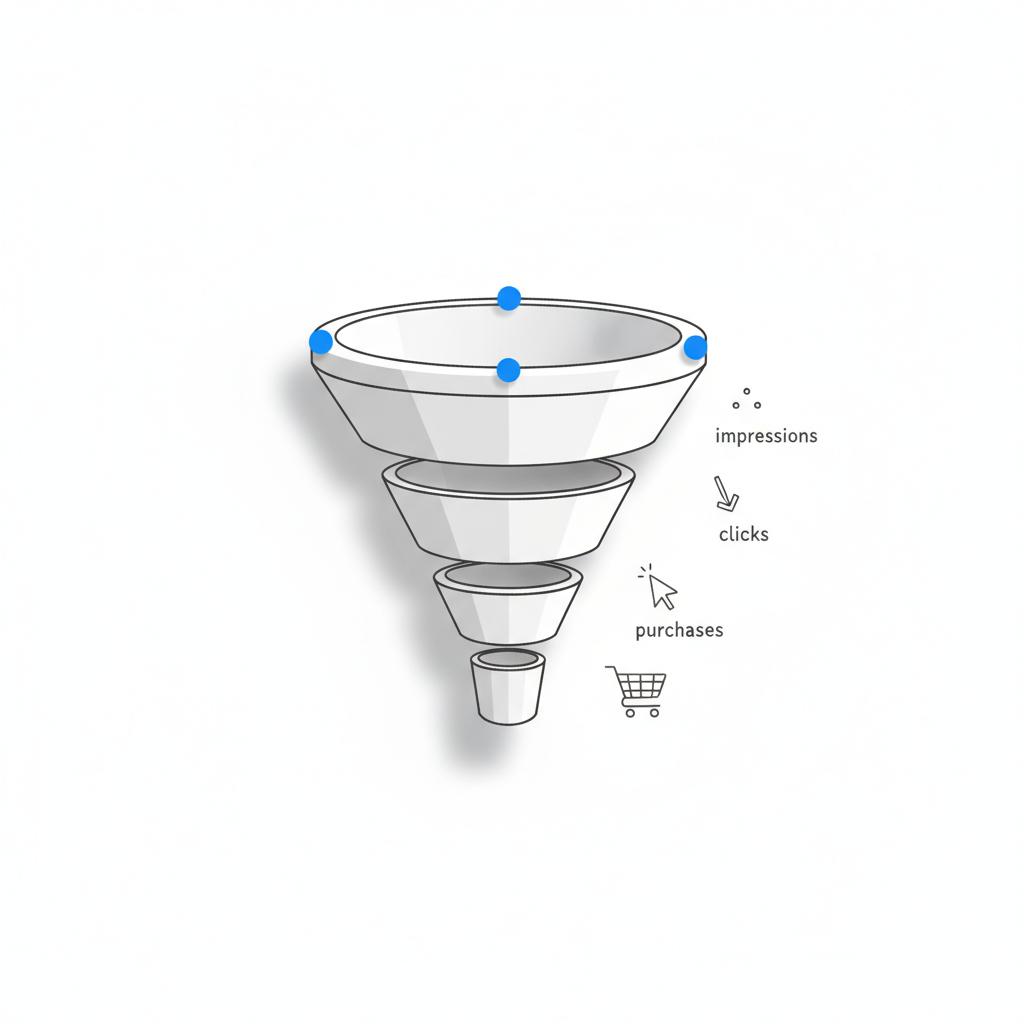
When reporting to leadership, present both attributed metrics and incrementality insights. Show trends over time for CTR, CVR, CPA, and ROAS, and include qualitative creative learnings (what hooks worked and what didn’t). Present a simple funnel dashboard that ties spend to incremental revenue – that’s the kind of clarity leadership can act on.
Templates and short playbooks
7-day creative sprint: Day 1-2: Produce 6-8 creative variations. Day 3-5: Run awareness tests. Day 6-7: Identify top 2 creatives and launch traffic tests.
30-day validation: Week 1: creative + reach. Week 2: traffic + on-site optimization. Week 3: conversion tests and offer tweaks. Week 4: incrementality check and scale plan.
Common mistakes to avoid
1) Treating platform reach as a guarantee of sales. Reach is necessary but not sufficient.
2) Underbudgeting learning. Tiny tests produce noise; the platform needs spend to learn.
3) Changing too many creative variables at once. You then won’t know what moved performance.
4) Ignoring incrementality. Attribution alone can mislead when privacy changes obscure signals.
Creative production tips for teams with limited budgets
If your production budget is small, focus on better ideas, not higher production. Use natural lighting, a clear frame, and simple captions. Film product-in-use sequences and short testimonials. Often a convincing, authentic clip outperforms an expensive ad that feels “ad-like.”
Thumbnail and caption strategies that lift CTR
Thumbnails are underrated. Test images that tease a transformation, pose a question, or show the product in use. Captions should be short and curiosity-driving; a little mystery often increases clicks. Also test emojis and line breaks – small caption changes can meaningfully shift CTR.
User-generated content (UGC) vs. scripted ads
UGC often wins on TikTok because it feels native and relatable. If you can get real customers to talk about their outcome in a 15-30 second clip, that’s gold. Scripted ads can work well when you tightly focus on the problem-solution arc and hook quickly.
Incrementality — a closer look
Incrementality answers the hardest question: how many conversions would you have had without ads? Common designs include holdout tests (randomly exclude some users from seeing ads) or geo-based rollouts (turn ads on in some regions and off in matched control regions). These tests require planning and budget but can dramatically change how you assess ROAS.
Advanced tip: cohort-based analysis
Group users by exposure week and measure lifetime value and repeat purchase behavior. Cohort analysis helps you see whether TikTok-driven customers have higher or lower retention and whether early acquisition costs make sense relative to longer-term value.
Industry-specific notes
Subscription products: often tolerate higher early CPA because lifetime value offsets acquisition cost. Consider trials or initial discounts to increase conversion while you optimize creative.
Low-margin accessories: need ultra-low CPA. Focus on impulse-friendly creative and super-simple checkout flows.
High-consideration products: expect lower CVR and longer purchase paths. Use multiple touchpoints and nurture sequences.
Scaling: when and how
Scale when you have consistent winners across metrics: strong CTR for consideration, acceptable CVR for conversion, and a sustainable CPA relative to LTV. Increase budgets incrementally (20-40% steps) and watch whether performance holds. If performance dips, pause scaling and iterate creative or funnel fixes.
If you want help translating test results into a scale plan, Agency VISIBLE can design the staged experiments and reporting you need – we focus on rapid creative testing and measurement that answers the real business question, not vanity metrics.
How to prioritize your first 90 days
First 30 days: learn which creatives earn attention. 31-60 days: prove traffic and on-site economics. 61-90 days: run incrementality and tune bids to scale. This rhythm lets you move from curiosity to confidence without overspending.
Practical KPI dashboard – what to include
Top-line KPIs: impressions, CPM, view-through rate, CTR, CVR, CPA, ROAS (attributed). Supporting KPIs: landing page conversion steps, bounce rate, add-to-cart rate, and post-click revenue per session. Add an incrementality metric if you run holdout tests.
Creative refresh cadence
Rotate new creatives into the pool every 2-4 weeks. Even winning creatives fatigue; fresh ideas keep the algorithm engaged and audiences curious.
A simple checklist before you launch
1) Define objective and key metric. 2) Produce 6-12 creative variations. 3) Allocate 10-30% of budget to learning. 4) Implement server-side measurement and pixel. 5) Run a 7-14 day awareness test, then progress to traffic and conversions. 6) Plan an incrementality test in month 2 or 3.
How to iterate quickly on creative
Set a cadence: create, test, learn, adapt. Use performance thresholds (e.g., CTR below 0.5%) as triggers to revise or retire creatives. Keep a short backlog of new ideas so you can swap underperformers rapidly.
What success looks like across common verticals
Direct-to-consumer apparel: CTR ~0.8-1.5%, CVR ~0.8-1.5%, CPA depends on AOV.
Beauty/subscriptions: often higher LTV, accept CPAs above $20 if LTV supports it.
Home & lifestyle: varied results; creative that demonstrates transformation often lifts CVR.
Final rules of thumb
1) The platform helps you be seen; your funnel turns attention into revenue.
2) Creative testing early and often beats betting on a single hero ad.
3) Measurement beyond the pixel gives you the truest read on ROI.
4) Budget for learning – it’s the fastest way to reduce uncertainty.
Yes — early volatility is common. Allow enough learning budget to collect reliable signals before making big changes, use longer lookback windows where relevant, and run controlled experiments (A/B or geo tests) to isolate causes if volatility persists.
Short answer: yes, early volatility is normal. If CPAs bounce, confirm you have enough signal (enough conversions) before making big changes. Use lookback windows and a learning budget to stabilize. Also check creative cadence, bid strategy changes, and external seasonality factors. If volatility persists, run controlled experiments (A/B or geo tests) to isolate causes.
Three quick next steps you can take today
1) Define your single objective and the KPI that proves it.
2) Produce 6-8 short creative variations focused on different hooks.
3) Set aside a learning budget (10-30%) and run a seven-day awareness test to see which creatives earn attention.
Closing thoughts
TikTok can be a powerful channel for many advertisers, but it is not magic. It rewards clarity, creativity, and a willingness to test. The metrics – CTR, CVR, CPA, ROAS – are less a verdict and more a map. Use them to set realistic experiments and then listen to what the data tells you.
Turn test results into a measurable growth plan
One-line send-off
In short: TikTok ads can work when you match objective to creative, measure honestly, and budget to learn – now go test something bold and useful.
Measure success by aligning metrics to your objective: awareness (impressions, view-through), consideration (CTR, watch time), or conversion (CVR, CPA, ROAS). Use server-side events and incrementality tests, not pixel-only attribution, to understand true impact. Run holdout or geo tests when possible to measure incremental conversions.
Start with six to twelve creative variations. Test different hooks, openings, and calls to action, and change one major element per variation to identify what truly improves performance. Use a learning budget to gather enough signal before scaling the winning concepts.
<Product>If you need help turning early signals into a scale plan, Agency VISIBLE can design the staged experiments and build measurement systems that show both attributed and incremental return — a practical option for teams that want results without the guesswork.</Product>
References
- https://lebesgue.io/tiktok-ads/tiktok-ads-benchmarks-for-ctr-cr-and-cpm
- https://marketingltb.com/blog/statistics/tiktok-ads-statistics/
- https://quimbydigital.com/tiktok-ad-costs-2025-average-cpm-cpc-roi/
- https://agencyvisible.com/projects/
- https://agencyvisible.com/contact/
- https://agencyvisible.com/perspectives/