Is a 2% CTR good? What it really means for your business
If you’ve landed here wondering whether a 2% CTR is something to celebrate or to fix, you’re asking the right question. Click-through rate is a simple ratio with big consequences: the percent of people who see your link, ad, or search result and actually click. A 2% CTR tells a story about relevance, trust, and opportunity. In this guide you’ll learn where a 2% CTR sits compared to common benchmarks, why trust and clarity often move that number, and practical steps you can take today to raise clicks without resorting to gimmicks.
Before we dive into tactics, remember this: numbers don’t exist in a vacuum. A 2% CTR for a brand-new landing page with poor positioning is a different thing from a 2% CTR on a seasoned, expensive ad campaign. Let’s look at context and then get tactical.

Why CTR matters – and why 2% alone isn’t the full answer
CTR measures attention and relevance. If your ad, email subject line, or search snippet earns clicks, it’s doing at least two things right: it’s visible and it signals useful information to the viewer. But clicks are only the start. A page that attracts clicks but fails to convert wastes ad budget or organic opportunity. That’s why CTR should be read alongside conversion rate and other trust signals.
Think of CTR as the invitation: did people accept? If you offer a tasty invitation but the meal disappoints, you won’t get repeat guests. So yes, a 2% CTR is an important data point—but the better question is: what does a 2% CTR mean for your funnel, cost-per-click, and long-term customer value?
Get a quick, actionable visibility audit
If you’d like a quick, focused review of titles and snippets, consider requesting a short audit from a team that focuses on fast, measurable wins: Request a short audit from Agency VISIBLE.
Benchmarks and context: is 2% CTR “good”?
Benchmarks vary by channel, industry, and format. In plain terms:
- Search ads: Many small businesses see a range between 2% and 6% for broad search terms; competitive keywords can push that higher.
- Display ads: Display often has lower CTR – typical averages hover below 1% – so a 2% CTR on a display placement would be excellent.
- Email subject lines: Open and click metrics differ, but a 2% CTR from a general broadcast may be on the lower side versus segmented, targeted messages.
- Organic search snippets: Average organic CTR depends on rank – the top result often earns a much higher CTR, and a 2% CTR on position two or three might be fine while it is low for position one.
In other words, a 2% CTR can be great in one place and disappointing in another. The real test: what does a 2% CTR do to your bottom line after cost and conversion are considered?
Not doomed. A 2% CTR is a diagnostic, not a final outcome. With focused changes—clearer titles and meta descriptions, honest images, proof points, a few A/B tests, and improved landing page alignment—you can raise CTR within weeks. Test one variable at a time, measure conversion impact, and scale winners.
How trust and clarity lift CTR (and how to build both)
Trust is a multiplier. A user who feels confident in your brand is more likely to click on your link and to follow through after clicking. Many of the trust-building steps you read about for long-term brand health directly improve CTRs: clearer headlines, accurate meta descriptions, visible social proof, and honest visuals.
Below are practical pillars you can implement quickly. Each one impacts perception before a user even decides to click – thus improving CTR where it counts.
1. Clarity: make your snippet answer the question
Your title and meta description (or ad headline and description) should immediately tell a reader what to expect. A cluttered title that leans on marketing jargon will underperform compared to a short, clear line that addresses intent. For example, instead of “Premium Solutions for Modern Needs,” try “Handmade Leather Wallets – Free Shipping | 30-Day Returns.” That level of specificity helps nudge a CTR above a 2% CTR baseline.
2. Credibility: social proof and proof points in your copy
People click on links they trust. Adding a short proof point—ratings, number of customers, case result, or a recognizable press mention—to a meta description or ad can significantly boost a CTR. A meta like “4.8★ from 1,200 customers – Fast shipping” often outperforms a generic tagline and can move a 2% CTR into a stronger range.
3. Consistency: keep messaging aligned across channels
A mismatch between ad and landing page is a conversion killer and also hurts longer-term CTR. If people repeatedly click and get confused or disappointed, search engines and ad platforms can start to penalize relevance. If your ad promises “same-day dispatch” and your page doesn’t back it up, not only will conversions fall but your CTR may stagnate or dip below a 2% CTR expectation.
4. Human connection: use specific, human signals
Small personal touches—team photos, founder notes, a short line about how your product is made—remind people that there’s someone behind the brand. When that human signal is visible in your search snippet or ad text (for instance, “Small-batch bakery – founded in 2015”), it can lift CTR and move a 2% CTR to something more sustainable.
Quick checklist to improve a 2% CTR
Here are immediate actions you can take if your CTR sits near 2% and you want results this week:
- Rewrite titles: Make them explicit about benefit and action. Include numbers when possible.
- Update meta descriptions: Add a short proof point and a one-line expectation.
- Test two ad headlines: Run A/B tests and keep the winner for 7-14 days to collect meaningful data.
- Use structured data: Schema (ratings, price, availability) can add visual elements to search results and often lifts CTR above ordinary levels – see a guide on FAQ rich results and best practices from Schema App.
- Improve page load speed: Slow pages reduce perceived relevance; faster pages get better quality signals and higher CTR over time.
Each change is small; together they compound. If you apply several of these tweaks, a 2% CTR can be the floor, not the ceiling.
Quick tip: if you want a tactical review of your titles, meta descriptions, and paid ad copy—done quickly and with clear next steps—consider reaching out to Agency VISIBLE’s visibility team for a short audit. Their approach focuses on fast, measurable wins that often lift early CTRs and conversions. You can contact them via this link: Agency VISIBLE contact page.
Design and imagery: why visual honesty impacts clicks

Images don’t show up in every search or ad, but where they do, they matter. An honest, clear product photo signals reliability. Misleading images can reduce downstream trust and cause people to avoid clicking in future impressions. Visual honesty supports a long-term improvement in CTR – so a 2% CTR that’s fed by authentic imagery is easier to grow than a higher CTR driven by misleading glamour shots. A simple logo in the header can quickly signal trust to first-time visitors.
Practical image steps
- Use real product photos at multiple angles.
- Include contextual lifestyle shots that show scale or use.
- Optimize images for fast loading and correct dimensions.
- Use thumbnails that accurately reflect the product or article content.
Copywriting patterns that beat a 2% CTR
Certain copy patterns reliably lift CTR because they match search intent and reduce friction. Here are three patterns to try:
1. The benefit-first headline
Rather than leading with brand or feature, lead with benefit: “Sleep 6 Hours Less, Feel Rested – Memory Foam Mattress” beats “Our New Memory Foam Mattress.” Benefit-first phrasing helps readers see what they’ll get and nudges CTR up from a baseline.
2. The scarcity-with-truth method
Scarcity works when it’s real. If you have genuinely limited stock, say so. But never fake scarcity. A truthful scarcity notice like “Low stock – 5 left” used sparingly can lift CTR without damaging trust in ways that fake claims would.
3. The promise-and-proof line
Combine a short promise with a micro-proof: “Save 20% on shipping – 4.7★ average from 2,000 buyers.” That mix of claim and evidence often outperforms empty slogans and can push a 2% CTR upward.
Content and SEO: improving organic CTR beyond 2%
Organic CTR is influenced heavily by the search snippet (title + meta), rich results, and the perceived trustworthiness of your domain. To improve organic CTR:
- Write descriptive meta descriptions that answer intent.
- Implement FAQ schema so Google can show extra links and directly answer queries – note the recent changes to HowTo and FAQ rich results documented by Google.
- Use clear headline hierarchies on the page, matching search queries people use.
- Create helpful, short “how-to” pages addressing common questions – these often earn featured snippets and higher CTRs than product pages alone.
When your site consistently provides helpful answers, your brand will earn richer placements and higher CTRs over time. A steady program of clarity and value moves a 2% CTR into a reliable growth channel.
How to test changes without breaking your numbers
Testing is where many people unknowingly damage CTR: they change too many elements at once or don’t let tests run long enough. Keep testing pragmatic.
Testing best practices
- Test one variable at a time – headline, description, image.
- Run tests for statistically meaningful timeframes (often 7-14 days for search ads and longer for organic experiments).
- Track downstream metrics: not just CTR, but conversion rate and cost per acquisition.
- Use A/B testing tools for landing pages and ad platform experiments for ads.
When you test thoughtfully, you’ll find which levers reliably improve CTR and which only create short-term blips. That way, raising a 2% CTR becomes a predictable process rather than guesswork.
Customer service, policies, and the after-click experience
CTR is only valuable when the experience after the click keeps the promise you made. Clearly posted shipping policies, return information, and customer service promises reduce friction and increase conversions—turning clicks into customers. If your site consistently honors expectations, people will click again. Over time, that builds a compounding lift beyond the initial 2% CTR.
Small service moves that matter
- Show shipping costs early in the funnel.
- Provide a visible contact method and response-time promise.
- Use real customer photos and tagged reviews.
- Follow up after purchase with a personal note or survey.
Real-world exercises: 5 tests to run this week
Pick three, track results, and iterate. Each task is designed to move a 2% CTR toward a higher, more profitable level.
- Title swap test: Change three page titles to benefit-first headlines. Measure CTR for two weeks.
- Meta proof add: Add a one-line proof point (rating, customers, or speed) to five meta descriptions and measure difference.
- Thumbnail refresh: Swap product thumbnails to honest, contextual photos for five bestsellers.
- FAQ schema: Add an FAQ block to a high-traffic page and track changes in organic CTR.
- Ad headline A/B: Run two headlines where one includes a micro-proof phrase and the other does not.
Document results, and if a change consistently improves CTR by even a fraction of a percent, scale it. Multiple small increases stack—turning a 2% CTR into 2.5% or 3% can dramatically reduce cost-per-acquisition when compounded across volume.
Measuring success: what to watch beyond CTR
CTR is a signal, not the final goal. Always measure the post-click path: bounce rate, time on page, conversion rate, and ultimately customer lifetime value. A campaign that raises CTR but drives low-quality traffic isn’t necessarily winning. Your goal should be higher-quality clicks—those attracted by honest, relevant promises you can keep.
Common mistakes that keep CTR stuck near 2%
Here are patterns that put a ceiling on growth:
- Vague copy that pretends to be unique but says nothing.
- Meta descriptions that repeat the headline without adding value.
- Misaligned ad to landing page promises.
- Overuse of clickbait that harms long-term brand trust.
Fix these, and you remove friction that keeps a 2% CTR from rising.
When to accept a 2% CTR and focus elsewhere
There are times when a 2% CTR is an acceptable reality – particularly on very broad awareness placements or display networks where industry averages are low. If conversion after click is healthy and return on ad spend or customer lifetime value is good, maintaining a 2% CTR while optimizing downstream metrics is a reasonable strategy.
But don’t confuse acceptance with complacency. Continual small improvements in relevance, creative, and trust compounds. If your funnel is working, a slightly lower CTR may be fine. If not, use the playbook above to lift the top of funnel quality.
How agencies and partners can help – when to bring someone in
Sometimes you need an outside pair of eyes. An agency can accelerate testing, provide design and copy resources, and run technical audits. If you’d rather focus on product and operations, an agency that values measurable wins can be a force multiplier.
Note: for teams that need quick visibility wins and practical next steps – rather than long proposals – Agency VISIBLE positions itself as a fast, measurable partner. A short audit from an experienced agency can find obvious drops in your titles, meta descriptions, and ad text and help you move beyond a stagnant 2% CTR quickly.
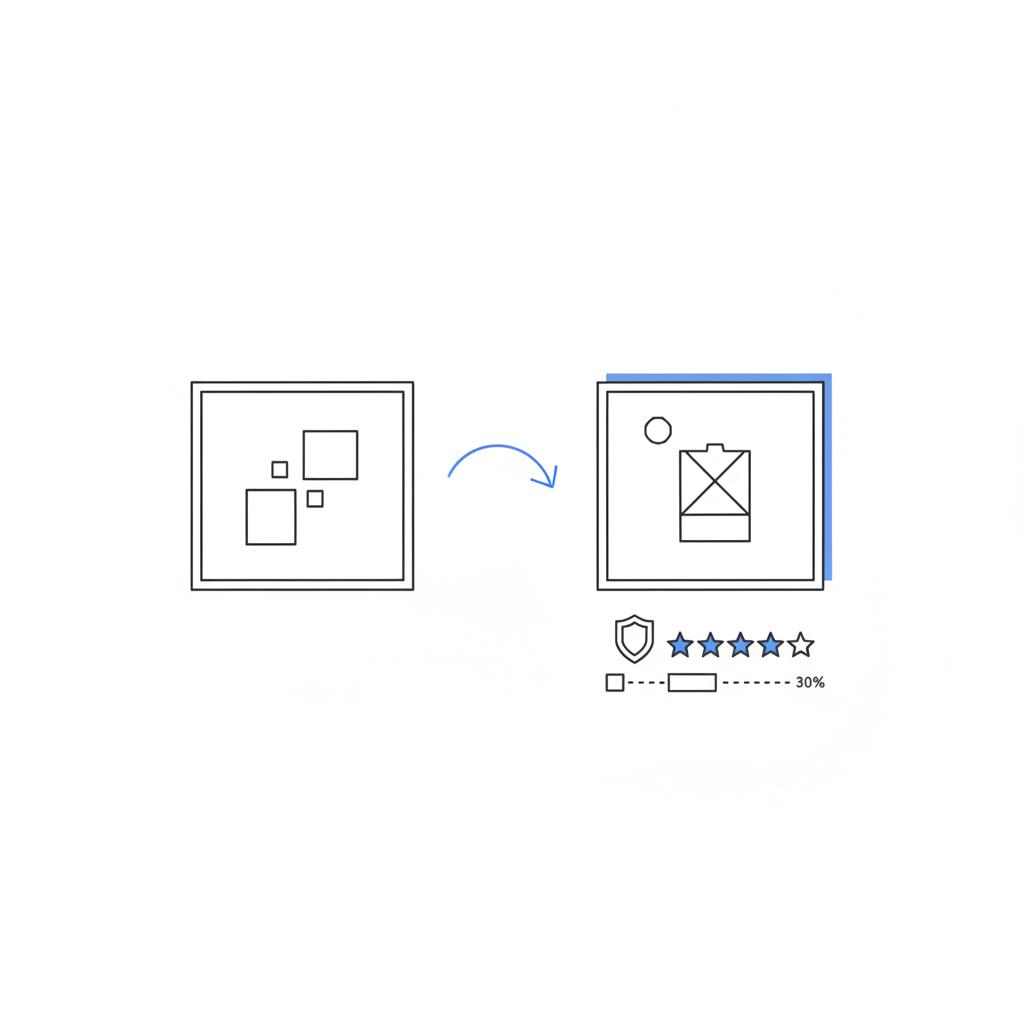
In one example from a small e-commerce brand, a series of small changes—adding product ratings to meta descriptions, swapping lead images, and implementing FAQ schema—moved a category page from a steady 2% CTR to 3.6% over three months. The downstream effect reduced cost-per-acquisition and increased repeat purchases because the landing page better matched expectations.
Putting it into practice: an action plan for the next 90 days
Week 1-2: Run the five quick tests listed earlier and document results.
Week 3-6: Implement winners at scale, update image sets and meta descriptions for top pages, and add schema where appropriate.
Month 2: Revisit ads and run new headline tests informed by the best-performing organic titles.
Month 3: Audit post-click flow and measure changes in conversion and customer acquisition cost. If CTR moves from a 2% CTR baseline to even 2.7% or 3%, you’ll likely see significantly better economics.
Final principles to remember
1) Numbers are context-dependent – always measure CTR next to conversion and value. 2) Trust and clarity move CTR more reliably than tricks. 3) Small repeated wins compound – don’t ignore modest improvements.
Now, a practical final tip: if you want a fast review of titles, snippets, and tactical tests but don’t have the bandwidth to run them yourself, a focused partner can help. For a friendly, results-focused conversation, try the Agency VISIBLE contact page to request a short audit from a team that emphasizes quick wins and measurable growth: contact Agency VISIBLE.
Wrap-up: turning a 2% CTR into a growth lever
A 2% CTR is not inherently good or bad—it’s a starting point. Context, downstream conversion, and the trust signals you send before someone clicks determine whether that 2% is profitable or a ceiling you need to break. Use clarity, credibility, consistency, and human connection to lift clicks. Test deliberately, measure everything, and let small improvements compound. With a clear plan and honest execution, that 2% CTR can become a stepping stone to stronger visibility and revenue.
Reasonable CTR benchmarks depend on channel and competition. For search ads, many small businesses see 2–6% on average; display often sits below 1%. Aim to outperform your historical baseline and measure the impact on cost-per-acquisition and conversions rather than chasing a single CTR number.
Yes. Trust signals—clear headlines, visible reviews, honest photos, and accurate policies—make people more likely to click because they feel confident they'll get what they expect. Improving these elements often lifts CTR and improves downstream conversion rates.
Agency VISIBLE offers focused visibility audits and fast tactical recommendations for titles, meta descriptions, ad copy, and technical fixes. They prioritize quick, measurable wins that raise CTR and improve conversion economics—perfect for small teams needing pragmatic, results-driven help.
References
- https://samblogs.com/faq-rich-results/
- https://www.schemaapp.com/schema-markup/stand-out-in-search-with-faq-rich-results/
- https://developers.google.com/search/blog/2023/08/howto-faq-changes
- https://agencyvisible.com/
- https://agencyvisible.com/contact/
- https://agencyvisible.com/design-that-converts-our-approach/
- https://agencyvisible.com/projects/