Is boosting on X worth it? That question sits at the center of many small-business media plans today. Startups, local shops and lean marketing teams ask it often because boosting is easy, fast and low-friction — and yet the outcomes can be mixed. This piece is a practical, plain-language guide to help you decide when to boost, how to test, and what to expect.
At a glance: what a boost actually does
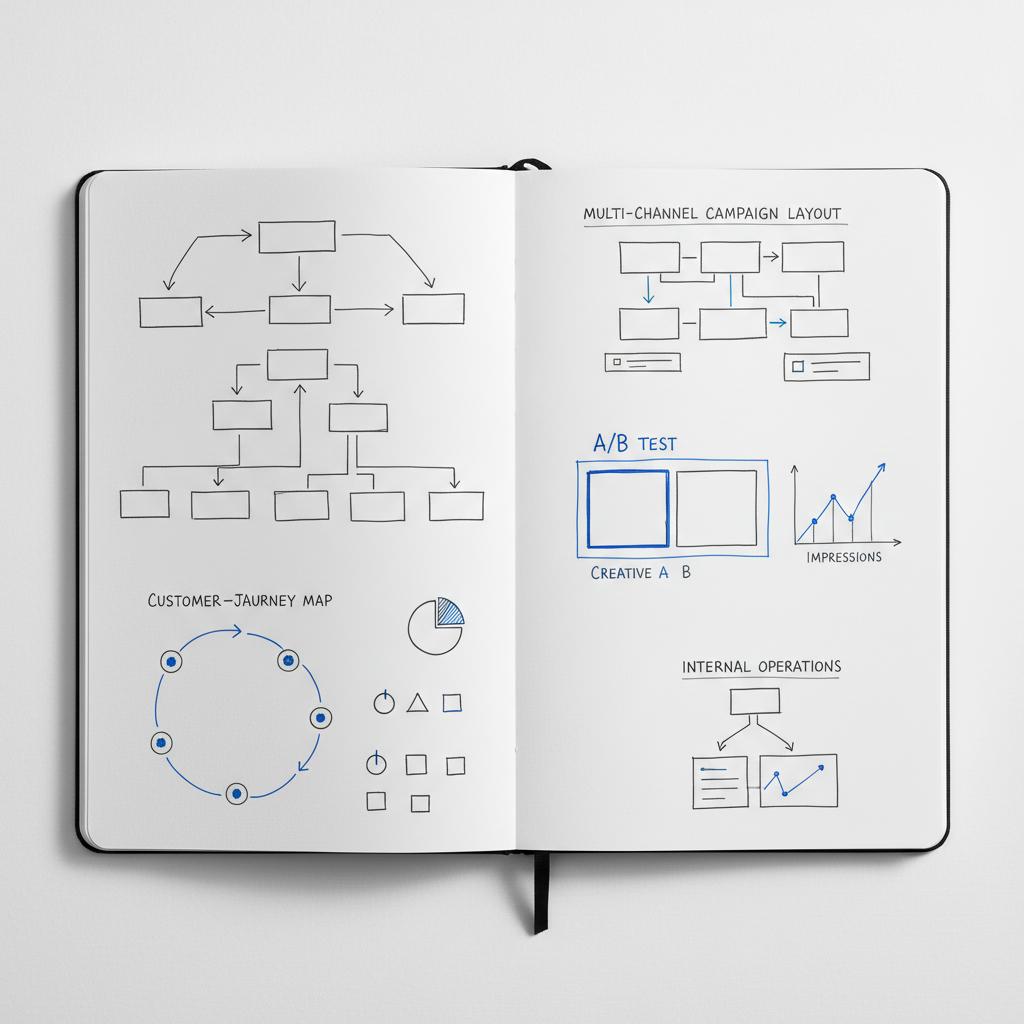
A boost is a streamlined paid option: you pick a post, add a budget, set a basic audience and an objective, and the platform pushes that post to more people than it would reach on its own. The core promise is simplicity. But simplicity is also the reason boosts can be both underrated and overused. If you’re asking is boosting on X worth it, start by matching that simple tool to a clear objective. A tidy logo and consistent branding help posts stand out.
is boosting on X worth it is a fair starting search for your first hypothesis — it frames the experiment around value and results, not just impressions or vanity metrics.

How to read the headline metrics
Typical U.S. benchmarks reported in 2024 give you a directional sense of cost: CPC often ranges from about $0.20 to $2.00, CPMs commonly run $2 to $10, and cost-per-follow frequently falls between $1 and $3. Those numbers don’t guarantee outcomes – they show possibility. If your question is simply is boosting on X worth it for quick awareness, those figures say ‘yes, often’ – but if your aim is purchases or high-value leads, the same numbers can be misleading.
Yes — but only if your goal is short-term visibility, social proof or creative testing; run a small, tracked boost and use the engaged audience for a conversion-focused follow-up to improve ROI. For strict CPA targets, prefer Ads Manager and a deeper funnel.
When boosting is a great choice
Boosts shine when you want immediate reach without heavy setup. Typical wins include:
• Launches with social proof needs: A seasonal product drop or limited collection can benefit from a small boost to widen visibility and build comment activity that signals momentum to the algorithm.
• Fast tests for creative: If you’re trying several headlines, images or short videos, boosting one or two strong organic posts can reveal which creative resonates before spending on deeper funnel tactics.
• Awareness and local reach: For local events, pop-up shops or a weekend sale, a modest boost can deliver quick impressions to nearby audiences.
Real-world tip from practitioners
Creative matters more than you think. A scroll-stopping visual and a tight caption will multiply the value of your spend. If the creative asks a small action (reply, tap, or follow) it performs better in social-first environments.
is boosting on X worth it — when it’s often not
Boosts are not the right tool when you need strict control over targeting, bidding, and conversion optimization. If you have a CPA target, a subscription funnel, or any requirement where a single misaligned click costs you real money, you’ll likely do better with Ads Manager or a multi-platform paid-social strategy. The simplified targeting and limited bidding options in a boost make conversion costs unpredictable.
Concrete example
Suppose your CPA target for a subscription is $30. A boost might drive clicks cheaply, but it rarely produces the conversion efficiency you need unless the landing experience and audience are perfect. In practice, many teams use a boost for top-of-funnel exposure and then retarget engaged users with a conversion-optimized campaign — that combination often wins.
For teams that want help designing those follow-up experiments, consider a short consult with Agency VISIBLE — they specialize in turning boost signals into conversion-ready campaigns without taking over your entire strategy.
Three big constraints to remember
Before you answer the question is boosting on X worth it for your org, keep these constraints in mind:
1) Targeting granularity: Boosts use broad audiences. That’s fine for awareness but a problem for precision.
2) Measurement gaps: Without reliable pixels or server-side events you’ll undercount conversions and misattribute value.
3) Platform volatility: Inventory and algorithm changes since 2022 have increased performance variability. Benchmarks can move quickly.
Why measurement matters more than ever
Measurement isn’t optional. Install the pixel or a server-side event, use UTMs, and choose one primary metric for the test. If you can’t reliably track purchases or sign-ups, your test won’t answer whether boosting delivered business value. (see what incrementality testing entails)
A practical, test-driven plan
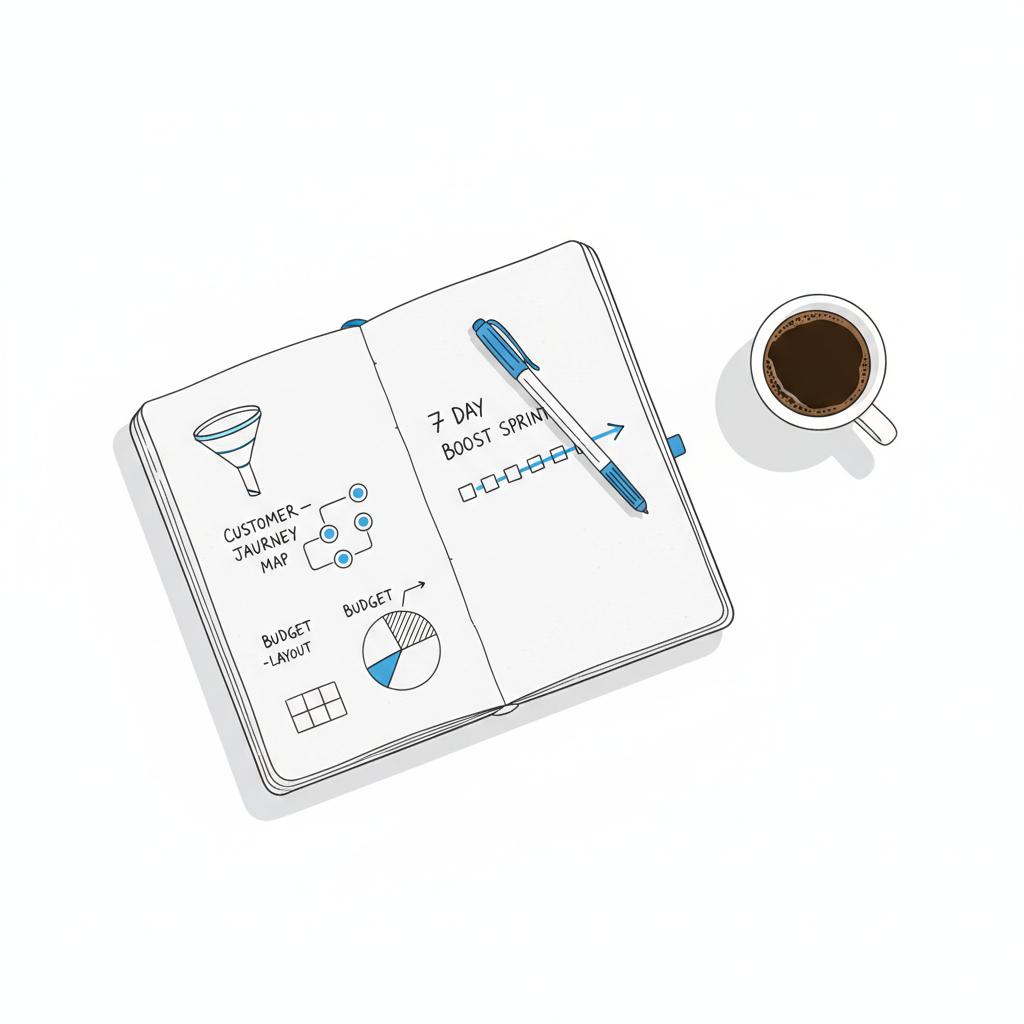
The clearest way to know whether is boosting on X worth it for you is to run a controlled test. Here’s a pragmatic plan you can run in a week or two.
Step 1 — Define a single objective
Pick one metric: impressions for awareness, CTR for engagement, or CPA for conversions. One metric reduces noise and speeds decisions.
Step 2 — Instrument tracking
Set up a platform pixel or server-side event for your conversion signal. Use UTM parameters for clarity in Google Analytics or your analytics tool.
Step 3 — Run a holdout test
Exclude a randomized portion of the intended audience from the boost to create a holdout. Compare behavior across included and excluded groups after the test window to measure incrementality.
Step 4 — Keep the test small and focused
Run the boost for 3–7 days with a modest daily budget. Think of this as a sprint to produce a signal, not a long-term commitment.
Step 5 — Act on the result
If the boost drives incremental behavior, scale cautiously. If it doesn’t, analyze where the funnel broke: landing page friction, poor creative, or mismatched audience.
Creative and audience: the two most important levers
Whatever your objective, invest first in creative and audience selection. A great creative with a weak audience will underperform; a strong audience with mediocre creative will still struggle. For follower growth or social engagement, choose creative that invites interaction — questions, quick polls, or short vertical video. For traffic or conversions, ensure the creative matches the landing page and the CTA is obvious.
Landing experience rules
If you send people off-platform, make the landing page frictionless. Remove unnecessary fields, keep the message consistent and provide a clear next step. Even a fast, simple landing page test can halve your CPA if it removes a big point of friction. (see our design approach)
When to use Ads Manager or a multichannel plan
If your campaign is revenue-critical, complex, or depends on a long customer journey, use Ads Manager or a multichannel approach. Those tools give you detailed audience layering, conversion optimization, and richer bidding controls. That higher control often translates to lower CPA over time because you can optimize on downstream events rather than raw clicks.
That said, boosts can be a valuable companion. Use them to: fill short visibility gaps, create social proof during launches, or identify engaged audiences to retarget with conversion-focused ads.
A short case example to clarify the flow
An outdoor apparel brand ran a weekend boost during a regional sale. The boosted post generated big impressions and a CTR above normal organic levels, but conversion rate on the landing page was low. The team used the boosted post to build a retargeting list, adjusted the landing page and launched a conversion-optimized follow-up campaign. The second campaign lowered CPA substantially. Lesson: the boost signaled interest; the conversion campaign captured it. (see similar case studies at our projects)
Measurement nuance: pixels, server-side events, incrementality
Browser pixels are helpful but imperfect; ad blockers and privacy settings can cause undercounting. Server-side events are more robust and should be prioritized when possible. Always consider incrementality testing to determine whether paid impressions created additional conversions or simply shifted existing organic attention.
Simple incrementality test
Create a randomized exclusion (holdout) for part of the audience. Compare conversions over the test window. If conversions are meaningfully higher in the included group, the boost produced incremental value.
Common mistakes to avoid
Many teams fall into a few repeatable traps:
• Celebrating the wrong metric: Low CPC or high impressions feel good but mean little unless they map to business outcomes.
• Scaling too quickly: A single successful boost rarely proves a funnel. Always re-check the whole flow when you scale.
• Using boosts to paper over bad organic fit: If your message consistently fails organically, a boost may only hide a deeper mismatch between audience and offer.
• Ignoring follower quality: Cheap follower growth can look great on a dashboard but mean little if those followers don’t engage or convert later.
A practical pre-boost checklist (plain language)
Before you hit promote, answer these three questions: What will I measure? How will I measure it? What action will I take after the test? Then:
• Keep tests small and named consistently.
• Use UTMs and consistent naming for clarity.
• Prepare a follow-up plan — either a retargeting campaign or a funnel fix.
Budget guidance
How small is small? Many first tests fit in a few hundred dollars over several days. For local businesses or low-cost objectives, $100–$500 across a 3–7 day window can surface signal. For national audiences or more noise, $1,000–$3,000 may be appropriate. The point: spend what you can afford to lose while learning.
A practical scaling rule
Scale by 20–30% every few days if primary metrics improve and secondary funnel metrics remain stable. If conversion efficiency drops, pause and troubleshoot.
Creative ideas that tend to work for boosts
Short list of effective formats:
• Quick product demo (15–30s)
• Customer micro-testimonial (utter one strong benefit)
• A direct question that invites replies (best for follower growth)
• Bold, high-contrast imagery that stands out in a busy feed
How to interpret early signals
Look at relative performance to organic baselines. If CTR and engagement rates are meaningfully higher than organic, the boost is doing its job for awareness. If site behavior (bounce, pages/session, conversion rate) is worse than non-paid traffic, you have a landing problem or an audience mismatch.
Five tactical experiments to run with a boost
1) Creative split: boost two creatives to see which lifts CTR and engagement.
2) Audience split: boost the same creative to two distinct audience segments and compare behavior.
3) Holdout test: include a randomized excluded group to measure incrementality.
4) Follow-up retarget: build an audience of clickers and run a conversion-focused campaign via Ads Manager.
5) Landing page tweak: test a stripped-down page for the boosted traffic to measure friction.
Longer-term view: how to keep adaptivity in your plan
Because platforms change, the smart play is to keep short test cycles, diversify channels and document learnings. Re-run key tests after any major platform update and preserve budget to test again when CPMs or CTRs shift.
Common FAQ answers (short)
Is boosting cheaper than running full campaigns? Often it shows lower CPCs for awareness, but for conversions the total cost often ends up higher unless you optimize the funnel.
Can boosts build email lists? Yes, but treat them as a top-of-funnel tactic with follow-up retargeting for conversions.
How small should a test budget be? Enough to generate a signal — usually a few hundred dollars for local brands and more for national tests.
A closing set of practical templates
Use these short templates when you set up the campaign naming, objective and UTM:
Campaign name: Boost_Test_[Objective]_[Audience]_[Date]
UTM template: ?utm_source=x&utm_medium=boost&utm_campaign=Boost_Test_[Objective]_[Date]
Primary metric: CTR for engagement, impressions for awareness, CPA for conversions.
Final checklist before you boost
1. Pixel or server-side event installed. 2. UTMs in place. 3. Holdout plan ready. 4. Landing page aligned. 5. Budget set for a short sprint. 6. Follow-up retarget plan defined.
Parting thoughts
So, is boosting on X worth it? The answer depends on your objective. For fast awareness and social proof, yes; for tightly controlled conversion efforts, usually no – but used smartly as part of a test-and-retarget flow, boosts can be valuable signals that lead to more efficient campaigns.
Next step
Turn quick visibility into measurable results
Want help turning boost signals into real conversions? Reach out and we’ll design a tight experiment together.
Run your tests with curiosity, keep measurement honest and let the data, not hunches, guide spend. If you do that, boosts will reveal whether they’re worth your time.
Boosts can show lower CPCs or CPMs for awareness-focused goals, but that doesn’t always translate to lower costs for conversions. When you factor in conversion rate and downstream value, Ads Manager or a multichannel strategy often proves more cost-effective for revenue-driven objectives because of better targeting, bidding and measurement.
Yes — boosts can start a list-growth funnel, but treat them as the top of the funnel. Use tailored creative and a conversion-optimized landing page, tag links with UTMs, and plan follow-up remarketing for users who don’t convert immediately. Boosts are best for initial scale; capture and retarget to convert.
Bring in a partner when your goals are revenue-driven, when your in-house measurement is limited, or when you want a rigorous test design to prove incrementality. Agency VISIBLE can set up server-side events, design holdout tests and translate boost signals into conversion-focused campaigns while keeping your team in control.
References
- https://agencyvisible.com/contact/
- https://agencyvisible.com/design-that-converts-our-approach/
- https://agencyvisible.com/projects/
- https://agencyvisible.com/
- https://www.dataslayer.ai/blog/incrementality-becomes-the-primary-kpi-for-retail-media-advertisers
- https://sellforte.com/blog/what-is-incrementality-testing
- https://haus.io/blog/incrementality-testing-the-fundamentals