


Why the question of X advertising ROI matters for your business
X advertising ROI is the practical metric many owners ask about first: will the money I spend on X bring back customers, revenue or attention in a way that fits my business? That single question – about return on investment – drives the best decisions on whether to test, scale or walk away. This guide is meant to give you a clear, low-risk path to find that answer.

Read this first: treat X as a conversation engine
People go to X to read, react and debate in real time. Because of that, performance on X looks different from other channels. Whereas search often delivers direct conversion intent and large social feeds aim for predictable reach, X rewards timeliness, topical connection and sharp creative. That means your X advertising ROI will vary by objective: it can be excellent for visibility and fast amplification, and less predictable for pure CPA-driven direct response.
Below you’ll find costs you can expect in 2025, a practical two-week test plan, creative ideas, measurement best practices, and tactical rules to avoid common traps.
How X behaves differently from other channels
X is built around conversation. That matters because timing and relevance can multiply a campaign’s impact: a single timely creative can be amplified by replies, retweets and quote tweets. But conversation-driven reach also produces two predictable patterns: wide variance in performance between campaigns, and sudden shifts in inventory and cost when the platform changes or a topic spikes.
If you’re promoting a time-limited event, a launch tied to the news cycle, or a product that benefits from social proof, X can move quickly. If your goal is low, predictable CPAs at scale, search and the largest social feeds often win. Many small businesses find the best answer is to use X for specific, high-visibility plays and keep other channels as conversion engines.
Ad formats and what they do well
X offers a compact set of formats that map tightly to different outcomes:
- Promoted posts (images or short video): work well for attention and click-throughs when creative is strong.
- Conversation and trend placements: amplify topical messages and are the formats to choose when you want to seed or ride a conversation.
- Follower and profile promos: grow an owned audience for repeat campaigns.
- Tailored-audience and keyword targeting: reach people based on behaviors, keywords or past engagement.
Mixing formats in a single test helps compare reach and engagement versus direct response outcomes.
How much do X ads cost in 2025?
Short answer: it depends. Reports from late 2024 and early 2025 cluster to show ranges rather than single points, and those ranges tell a story about variability.
Typical ranges advertisers see:
- CPC: roughly $0.25 to $3.00, depending on region, targeting and creative.
- CPM: commonly between $2 and $20, again varying by placement and inventory.
- CPA / ROAS: far more variable—direct-response campaigns often show lower ROAS than search, but awareness and topical amplification can produce strong value that isn’t captured solely by near-term ROAS.
Expect results outside these bands if you target niche professionals or premium placements. Most businesses learn the real numbers for them by running a short, controlled test rather than relying on averages.
What a sensible test budget looks like
For small and mid-sized businesses, a pragmatic initial test in 2024–2025 is $500–$2,000 over two to four weeks. That range buys enough impressions and clicks to see which creative and audiences move the needle without risking too much budget.
Your first test should be a learning exercise, not a full-scale launch. Keep targeting tight, pick a single primary KPI, and run two to three creative variants so you can identify what resonates.
Set one clear KPI
Choose the metric that matters most: CPL, CPA, CAC or a visibility metric (engagement, follower growth, branded search lift). Don’t measure everything—pick the single number you will use to judge success, then track secondary signals that matter for the funnel.
If you want a quick, experienced review of your test plan, Agency VISIBLE offers light-touch audits that help tighten targeting and creative before you spend. A brief review can reduce wasted spend and surface quick wins—if you’d like to talk to someone, start by reaching out to their team at Agency VISIBLE contact page.
How to measure success: tracking and analytics
Measurement on X mixes the platform’s conversion tools (the X pixel) with UTM-tracked analytics in Google Analytics or similar. Because X often plays a role early in the funnel, avoid relying only on last-click attribution. Add incremental lift checks where possible.
A simple holdout test can work on small budgets: run paid placements to a defined audience and withhold the same placements from a comparable control group, then compare outcomes like signups, branded search lift and direct traffic. Even short-term increases in branded search or direct traffic can be a strong signal that your X activity had an impact.
Creative and testing: what to try first
Creative on X performs best when it connects to a conversation, a mood or a clear offer. Short video and strong visuals usually beat long blocks of copy. Try these three starting creative approaches:
- Direct response: clear CTA and link—designed to drive an immediate action.
- Soft brand story / social proof: build trust and engagement with testimonials or success cues.
- Topical hook: tie an angle to a trending topic, event or relevant industry moment.
Run these variants against each other and let early performance guide reallocation. Keep run times short and adjust quickly—X rewards iteration.
Audience selection and targeting nuance
Useful targeting levers include tailored audiences (people who engaged with your brand), keyword and interest targeting, and geographic radius for local campaigns. Early tests should avoid broad audience sweeps—narrow targeting gives clearer signals and reduces waste.
When a test shows promise, expand slowly. One strength of X is identifying niche pockets of interest; preserve that advantage by widening only after you see which segments respond.
Common pitfalls and how to avoid them
Some mistakes repeat across advertisers:
- Treating X as a direct substitute for search—user intent differs.
- Running long, unmonitored campaigns without clear KPIs.
- Ignoring cost volatility—CPMs and CPCs can change quickly.
Fixes are simple: keep tests short, set measurable goals, and plan for quick creative or targeting pivots. Reserve programmatic or premium direct-sold buys for major launches where guaranteed placement is worth the cost.
When higher near-term CPAs are acceptable
Paying more per immediate conversion can make sense if the activity drives valuable downstream effects—brand lift, follower growth, earned media or assisted conversions in other channels. If you can tie X-driven exposure to later sales via assisted conversions or increases in branded search, a higher near-term CPA can be justified.
But if your business cannot accept higher near-term costs and needs predictable sales at a fixed CPA, then prioritize channels that deliver that outcome first and use X selectively for awareness plays.
Trade-offs and execution risks
X offers topical reach and fast amplification, but it also brings execution risks: platform policy or algorithm changes can shift inventory and pricing, while audience composition can drift over time. Programmatic buys give flexibility and lower minimums; direct-sold premium buys offer guaranteed impressions but at higher cost. For most smaller advertisers, start programmatic and reserve premium purchases for mission-critical launches.
Realistic expectations for ROI and ROAS
There’s no single number for X advertising ROI. If you judge success by direct sales per ad dollar, expect more variance than on search. If you judge success by attention, topical reach or influence on broader funnel metrics, X can deliver strong returns when used for the right briefs.
Benchmarks from 2024–2025 show lower ROAS for direct-response on X versus search, but solid value for awareness and niche-audience briefs. The smartest approach is to define your metric first, then run a tight test to learn your own numbers rather than relying on third-party averages.
A local bakery’s two-week test (brief case study)
A simple local example reveals how quickly you can learn. A bakery launched a seasonal pastry and wanted foot traffic within two weeks. They spent $750 on a promoted campaign—two image creatives and one short video—targeting a 10-mile radius and a small tailored audience of recent engagers. Store visits and coupon redemptions were the KPIs; links were UTMed.
Within a week the video produced higher engagement and the lion’s share of coupon redemptions, even with a higher CPC. The owner paused the weaker image creative, doubled spend on the video and narrowed targeting to audiences similar to coupon redeemers. After two weeks she had enough data to estimate marginal revenue and decided on a seasonal burst plan going forward.
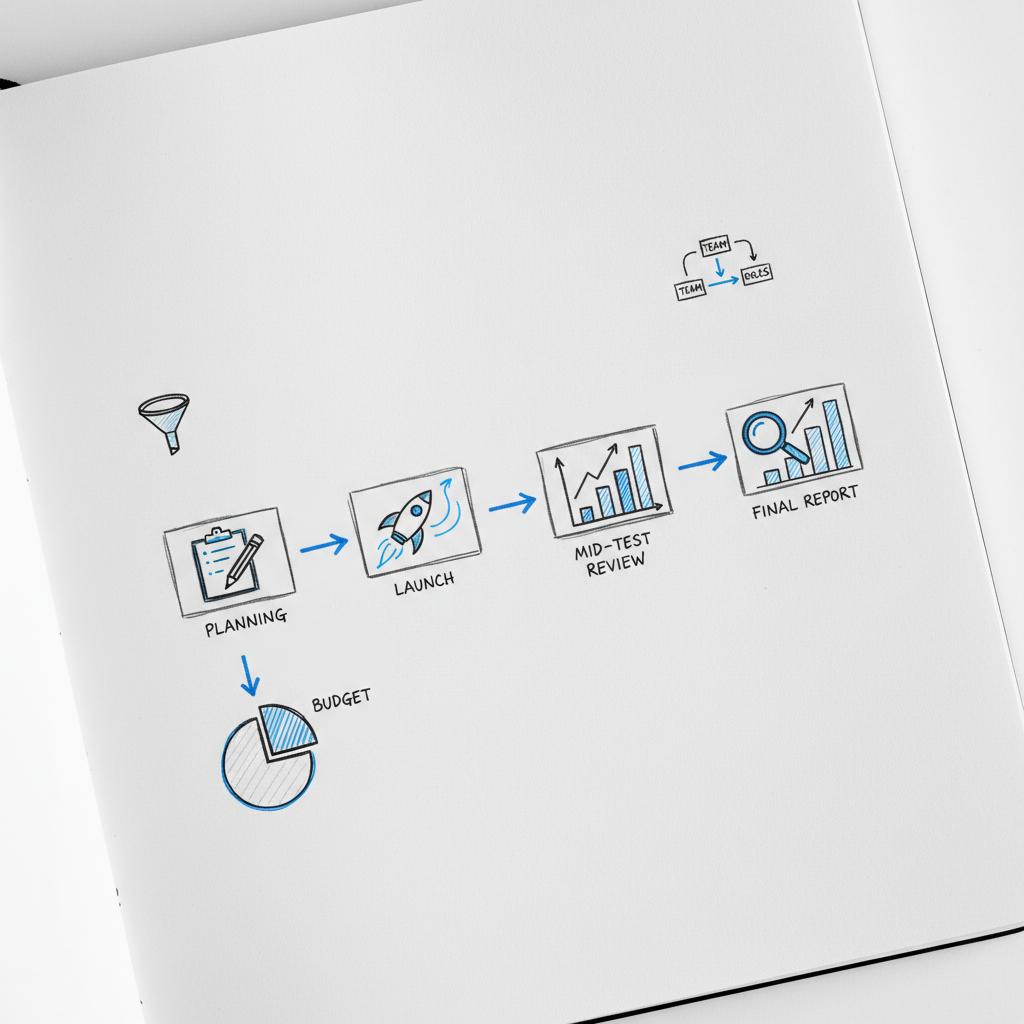
Practical two-week plan you can run this week
Here’s an actionable rhythm to test X quickly:
- Day 1 — Plan: choose one KPI, create two to three creatives, set UTMs and pixel, choose a tight audience.
- Day 2 — Launch: start all creatives and let each run with minimal changes for 72 hours.
- Day 5 — Review: pause the weakest creative, reallocate to winners.
- Day 10 — Expand cautiously: if metrics look good, widen targeting slightly or increase budget modestly.
- Day 14 — Report: export results, calculate CPA/CPL and any downstream signals like branded search lift or assisted conversions.
This rhythm keeps tests focused, fast and learnable.
Measurement tips during the test
Always use UTMs and the X pixel. Check both platform attribution and your analytics stack. For small budgets, watch short-term signals—follower growth, branded search, direct traffic—and consider a simple holdout where feasible.
Agency Visible Logo
X advertising moves the needle when the objective is fast awareness, newsjacking or reaching a niche, conversation-driven audience. For predictable, scaleable conversions, other channels usually outperform on CPA. The most practical approach for a small business is a short, tightly controlled test—if X helps your single KPI within two to four weeks, it’s worth keeping in your mix.
Creative examples that have worked recently
Examples that tend to perform well:
- Short, square video (6–15s) showing the product or the moment of use.
- A bold image with a single line CTA and a tracked link.
- A social-proof frame: a customer quote or quick testimonial tied to a topical hook.
Test these against a topical variant that references a current conversation in your industry – again, timing matters on X.
Where X fits in your channel mix
Think of X as a channel for quick attention and conversation. Many teams combine X for launches, newsjacking and niche reach, and use search and large social feeds for sustained direct-response conversion. That split of labor keeps costs predictable while capturing X’s strengths.
Common advertiser questions and honest answers
Some open topics in the community include whether audience composition will stabilize, how benchmarks vary by vertical, and whether premium guaranteed buys beat programmatic. There are no neat answers yet – platforms shift quickly. The practical choice is to run a short, disciplined experiment and learn your business-specific numbers.
When to scale versus when to stop
Scale when your primary KPI meets a pre-set threshold and secondary signals (assisted conversions, branded search lift, follower growth) support the decision. Stop and rethink when costs drift above your acceptable CPA range without corresponding downstream benefits, or when creative and audience tweaks fail after a couple of iterations.
A mid-sized SaaS case that shaped a future plan
A SaaS team ran a $1,500 two-week test using promoted posts and a conversation placement. Direct CPA was higher than paid search, but they saw meaningful assisted conversions and increased product-related conversation. They decided to reserve X for launches and beta recruitment while keeping search as the conversion engine – a balanced split that matched channel strengths to business goals.
Checklist: what to have before you start
Before you launch a test, make sure you have:
- One primary KPI and clear pass/fail thresholds.
- Two to three creatives with a clear CTA or topical hook.
- UTMs, a conversion pixel, and a simple reporting sheet.
- A tight initial audience and a plan for a holdout where possible.
What to expect in your first month
Expect noisy early data: daily metrics can swing. Give each creative at least three to four days before making final judgements, then use the second week to reallocate and refine. By the end of two to four weeks you should have a reasoned estimate of cost per meaningful action and a decision on whether to use X for specific plays going forward.
Quick rules of thumb
- Start small ($500–$2,000 over two to four weeks).
- Keep targeting tight and creatives short.
- Use X for topical reach, awareness and launches; use search for conversion scale.
- Measure with UTMs, the X pixel, and a simple holdout when possible.
Final advice for business owners
Should your business advertise on X? The honest answer is: it depends on your objective. If you want fast awareness, conversation amplification or to reach a niche audience, it’s worth testing. If you need predictable, low-cost conversions at scale, treat X as a complement rather than a replacement.
Short Audit: Tighten Your X Ad Test
If you’d like a short audit or a quick review of your test plan, reach out via Agency VISIBLE contact page to schedule a light-touch consultation that reduces wasted spend and surfaces quick wins.
Parting thought
Advertising on X is a tool, not a panacea. Treat it like any other tool: set clear goals, run short tests, measure carefully, and apply what you learn. With that approach you’ll quickly know whether X deserves a spot in your regular media plan.
A sensible test budget for many small and mid-sized businesses in 2024–2025 is $500–$2,000 over two to four weeks. That range is large enough to collect meaningful signals on creative resonance, audience fit and early conversion metrics without risking the marketing budget. Use a single KPI, two to three creative variants, tight targeting and UTMs to make the test high-signal.
Usually not for pure direct-response objectives. Benchmarks from 2024–2025 show that search and the biggest social feeds often deliver lower CPAs and more predictable ROAS for conversion-focused campaigns. X, however, can be very effective for short-funnel awareness, newsjacking and niche audience reach—so it can add value through assisted conversions and topical amplification even if direct CPA is higher.
Yes. Agency VISIBLE offers light-touch reviews and test audits that help refine audience selection, creative and measurement before you launch. A small review can reduce wasted spend, sharpen KPIs and highlight blind spots you might miss when running a first test alone. Contact them for a quick consultation via their contact page.
References
- https://agencyvisible.com/
- https://agencyvisible.com/contact/
- https://marketingltb.com/blog/statistics/twitter-ads-statistics/
- https://www.businessofapps.com/ads/cpc/research/cpc-rates/
- https://epom.com/blog/ad-server/cpm-cpc-cpa-complete-guide
- https://quimbydigital.com/what-businesses-really-pay-cpc-monthly-budgets-roi/
- https://quantumitinnovation.com/blog/how-much-does-twitter-advertising-cost
- https://blog.coupler.io/ppc-statistics/
- https://www.triplewhale.com/blog/facebook-ads-benchmarks





