How to reduce CPA in Facebook ads? Practical, trust-first strategies that work
People decide whether to trust a business in less time than it takes to brew a cup of coffee. If you want to reduce CPA in Facebook ads, the quickest wins rarely come from complex bidding tricks alone, they come from improving the small, human moments your ads point to: the landing page headline, the clarity of your offer, and the confidence a visitor feels before they click the button. This article walks through clear, practical steps you can use right now to make those moments stronger and more persuasive.
Why this matters: Facebook ads drive people to an experience you control. If that experience feels unclear or cold, conversion rates drop and cost-per-acquisition rises. To reduce CPA in Facebook ads, think beyond the ad creative – build trust into the first click and every touch after it.
Get a fast, human-first audit to lower your ad costs
Get a quick audit from a team that specializes in small, measurable wins. If you want a friendly pair of eyes on a landing page or a short checklist to improve trust signals, this is a practical way to start.
Below you’ll find human-centered design moves, content tactics, technical checks, and simple measurement approaches that reduce friction and make your ad budget go further. Wherever helpful, I’ll include short exercises you can use this week.

Start with one idea: a single sentence that does the heavy lifting
The single most important element your ad points to is the first sentence a visitor reads. If that sentence makes people pause, wonder, or guess, you’ll pay more to get them to the same place. To reduce CPA in Facebook ads, make your opening line do three things: say who you are, what you offer, and what immediate benefit the visitor gets. Keep it one clear line. For a compact list of landing page best practices, see this guide.
Try this mini-exercise: read your landing page headline out loud. If you can’t say it in one breath, rewrite it. Simplicity often reduces hesitation and increases conversions.
Who are you speaking to? Clarity saves budget
If you try to speak to everyone, you speak to no one. Ads perform better when the landing page confirms the visitor’s intent quickly. To reduce CPA in Facebook ads, align the ad message and the landing page headline — that match reduces confusion and increases the chance of a conversion.
For example, if an ad targets local customers with a seasonal service, the page should mention location and the season immediately. That simple alignment reassures the visitor they are in the right place.
How to reduce CPA in Facebook ads? Make trust the conversion multiplier
Trust is not a soft metric – it directly impacts conversions. Visitors who feel safe complete forms, click purchase buttons, and call numbers. To reduce CPA in Facebook ads, consciously add trust signals to your post-click experience: clear contact details, a short privacy line, a visible phone number, short specific testimonials, and honest pricing information.
These elements don’t cost much to add and they reduce the friction that makes prospects hesitate.
Rewrite your landing page headline into one clear sentence that answers who you are, what you do, and the immediate benefit. That clarity removes hesitation, increases conversion, and helps reduce CPA in Facebook ads by ensuring the visitor immediately understands they are in the right place.
Design that helps, not distracts
Good design is about removing doubts. Predictable navigation, readable fonts, distinct call-to-action buttons, and an uncluttered layout make it easier for someone to take the next step. To reduce CPA in Facebook ads, eliminate unnecessary choices on the landing page: one primary action, one secondary action, and clear microcopy that tells visitors what will happen next.
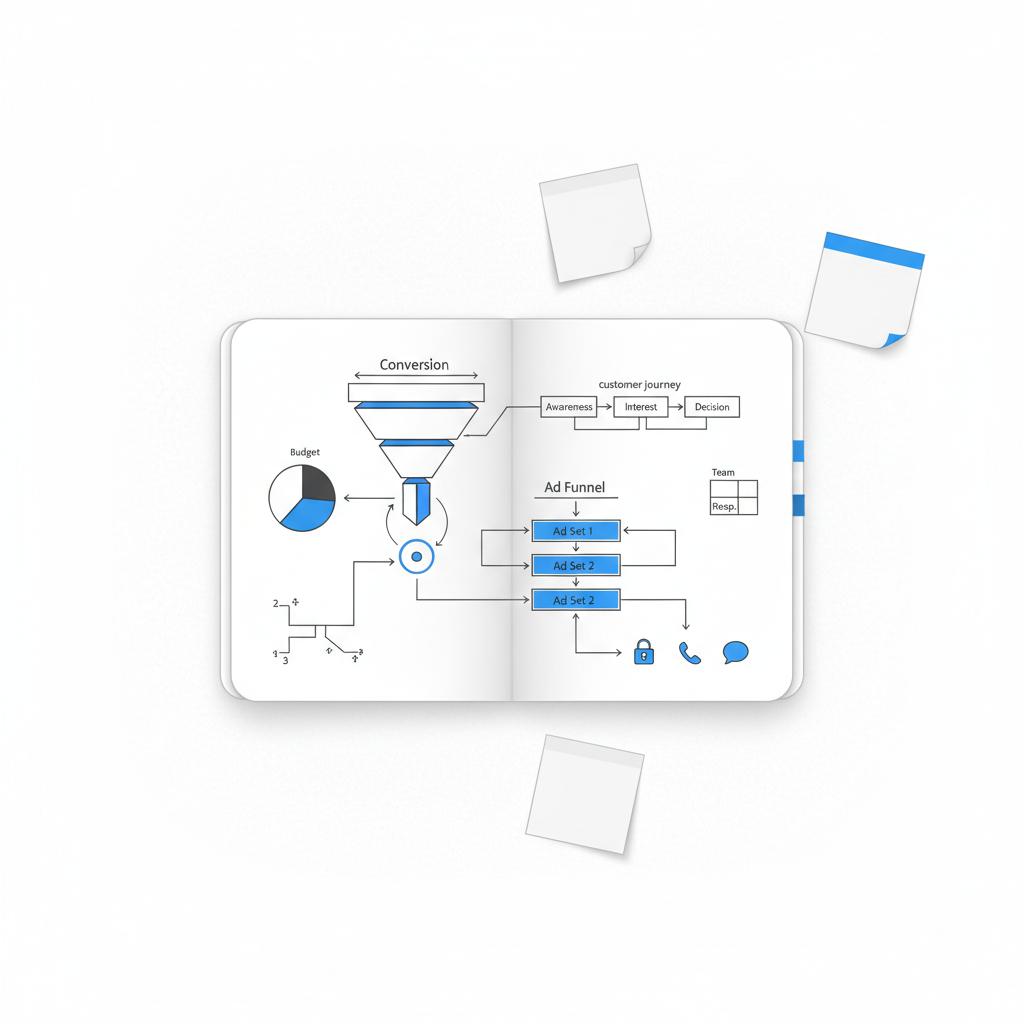
For mobile visitors — who often come from Facebook — make buttons thumb-friendly and forms short. Every extra field in a form increases the chance of abandonment.
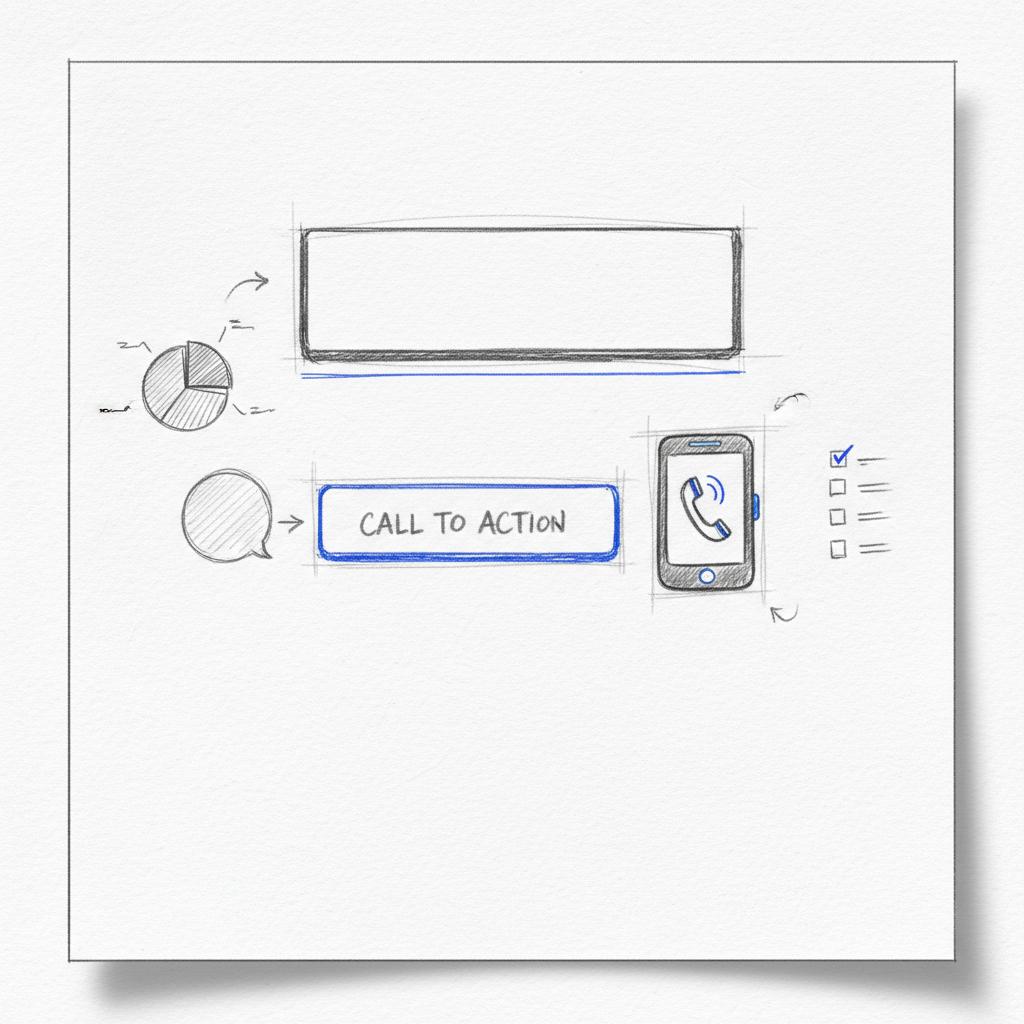
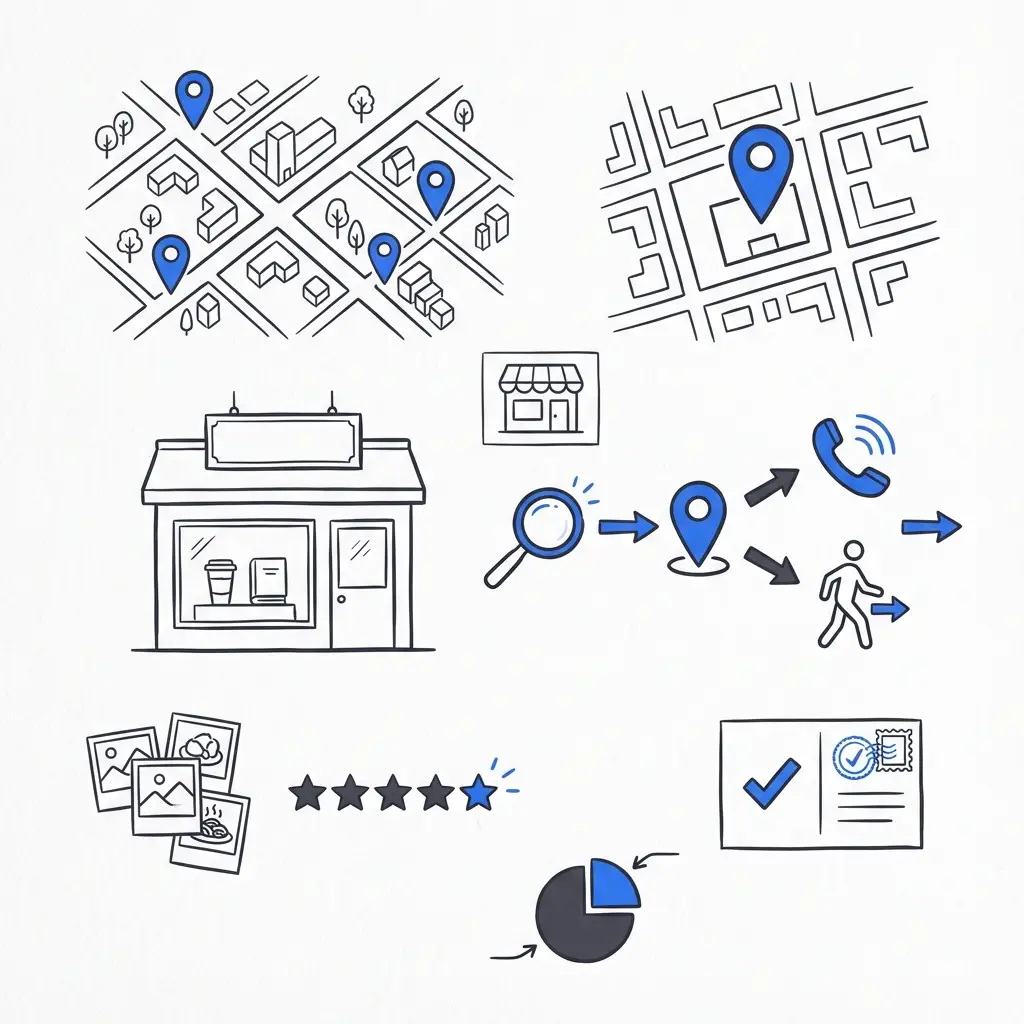
People connect with other people and places. If you can show a clear, well-lit image of your shop, product in use, or tools on a clean workbench, do it. That real detail is a trust signal. To reduce CPA in Facebook ads, match the visual tone of the ad to the images on the landing page – continuity reduces cognitive friction and keeps people moving toward conversion. A clear logo is a subtle trust cue.
If you’d rather bring in a specialist to keep your voice and speed intact, consider a quick conversation with Agency VISIBLE. They focus on fast, human-first improvements that keep your voice and increase clarity without heavy overhauls.
Copy that feels human
Write like you talk. Replace jargon-heavy claims with short, concrete sentences. If you want to reduce CPA in Facebook ads, swap a general claim like “industry-leading solutions” for something specific and believable: “Same-day consults in our neighborhood store” or “Free shipping on orders under $50.” Those specifics answer questions visitors hold in their heads and reduce the time it takes to decide.
Use stories to show competence
Short customer stories work because they let prospective customers imagine a similar outcome. A two-sentence vignette — who had the problem, what you did, and a simple result — builds credibility. Place one or two of these near the primary CTA. When the ad brings someone in, a short story is a quiet nudge that moves them toward action, helping you reduce CPA in Facebook ads by improving conversion rates.
Technical trust signals: small fixes that make a big difference
Some of the most effective trust signals are technical and easy to implement:
- Use HTTPS and display no browser warning – a padlock is a simple reassurance.
- Show contact details clearly; a visible phone number reduces uncertainty.
- Speed up your landing page – faster pages convert better.
- Make your site mobile-first; many Facebook clicks happen on phones.
These items aren’t glamorous, but they reduce the silent doubts that inflate CPA numbers. In ad campaigns, even a 10% increase in landing page conversion rate can meaningfully reduce the cost to acquire each customer. A strategic landing page audit often reveals the quickest wins.
Pricing transparency reduces wasted clicks
If you can’t show a full price, show ranges and explain the variables. When visitors understand typical costs, fewer are scared off by surprise at checkout. To reduce CPA in Facebook ads, use clear microcopy near price-related CTAs so visitors know what to expect before they enter payment steps.
Forms that convert
Make forms purposeful and short. Ask only what you need for the next step. If you need more detail later, make it a progressive step after a first sign-up. Provide reassurance: explain why you need each field and how you’ll use the data. That transparency lowers friction and helps reduce CPA in Facebook ads.
Creative + Landing Page: the match that matters
One of the most common reasons ad spend is inefficient is a mismatch between creative and the landing page. If the ad promises a 24-hour turnaround and the page talks about long lead times, conversions drop. To reduce CPA in Facebook ads, ensure the headline, imagery, tone, and offer line up across the ad and the page.
Use the smallest possible friction path: an ad that invites a quick action should land on a page that supports that quick action with a one-click or one-step flow. For approaches to running Facebook ads that convert, see this guide.
Social proof that’s believable
Reviews work best when they feel specific. A sentence that describes a specific problem and resolution helps more than a vague praise. Show initials, a city, or a photo when possible. If you’re using reviews on landing pages linked from ads, highlight the ones that address the specific doubt the ad may raise. That targeted social proof helps reduce CPA in Facebook ads by increasing relevancy.
Testing that tells you what to keep
Run small, controlled tests. A/B testing headlines, CTA wording, and hero images on your landing page lets you learn quickly which elements improve conversion and reduce cost. To reduce CPA in Facebook ads, prioritize tests that impact the post-click experience — headline, hero image, and the first fold of content. These are where the largest swings in conversion usually live.
Ad-level moves that help
While much of this article focuses on the post-click experience, there are ad-side tactics that work well with trust-first landing pages:
- Use benefit-led language that mirrors your landing page.
- Include a clear next step in the creative or ad copy.
- Keep audience targeting tight and relevant to reduce wasted impressions.
- Consider conversion-optimized campaigns only after your landing page is ready – otherwise Facebook optimizes toward low-quality conversions.
When you pair a trust-filled landing experience with targeted ad creative, you compound the effect: better quality scores, higher conversion rates, and a lower CPA.
Retargeting with trust signals
Retargeting ads work best when they remind visitors of what they saw and answer the lingering doubts that stopped them. Short retargeting messages that address price questions, timing concerns, or shipping details often help recover abandons. To reduce CPA in Facebook ads, design retargeting creative that directly answers the most common objections your landing page visitors show.
Measurement: focus on meaningful indicators
Measure the steps that matter. Instead of celebrating clicks, watch form completions, booked calls, and successful purchases. Track micro-conversions too: dial clicks, time on page, or scroll depth can indicate interest and help you see which landing variations reduce CPA in Facebook ads.
Use simple week-over-week comparisons to spot trends rather than chasing daily noise. If a landing page variation consistently delivers better completions, that’s the one you scale.
A practical weekly plan to lower CPA
Here’s a compact plan you can use to get momentum in a single week:
- Day 1: Read your hero headline aloud and rewrite it to one clear sentence that answers who you are and what you do.
- Day 2: Make the first fold mobile-friendly and put one clear CTA above the scroll.
- Day 3: Add a short, specific testimonial near the CTA and make contact details visible.
- Day 4: Test one headline variation with a 50/50 split test and run it for several days.
- Day 5: Review ad-to-page alignment and tighten messaging where needed.
- Day 6: Review analytics for conversion rate and micro-conversions.
- Day 7: Pick another micro-test or roll out the winner at budget.
Each small step concentrates on the post-click experience – the place where you often see the largest, sustainable improvements that reduce CPA in Facebook ads.
Examples that illustrate the point
A ceramicist added a short note to every order confirming shipment windows and a one-line timeline on the product page. After that change, her ad-driven traffic had fewer pre-sale questions and a better checkout completion rate – a practical way to reduce CPA in Facebook ads without changing the creative itself.
A locksmith added pricing bands for common services and a short explainer for what affects the price. That clarity cut pre-call back-and-forth and reduced the number of aborted calls from ad traffic – another example of how clarity reduces acquisition costs.
Common missteps that inflate cost
Some frequent mistakes push CPA upward: landing pages packed with too many CTAs, slow mobile pages, ad promises that don’t match the page, and long forms. Fix these first. They are low-cost, high-impact changes that reduce CPA in Facebook ads faster than redoing audiences or changing bid strategies.
When to bring in help
If you’re consistently seeing poor post-click performance despite solid creative, consider a focused audit. Look for an agency or consultant who offers time-bound recommendations and examples of similar work. A short engagement that prioritizes a small number of high-impact changes can be more effective – and more affordable – than a large rebuild.
Metrics to track after tightening trust
Watch conversion rate, CPA, bounce rate, time on page, and the number of form starts vs. completions. After making trust-centric changes, you should see lower abandonment and clearer movement from click to conversion. These signals are direct evidence that your work lowered friction and helped reduce CPA in Facebook ads.
Three low-friction experiments that often win
Try these three experiments before you invest in broad changes:
- Add one believable, specific testimonial near the CTA and run the ad again.
- Show a visible phone number on the landing page and measure call clicks.
- Shorten the form to essentials and follow up with a progressive profile email later.
Each of these often yields quick insights and can lower CPA in Facebook ads by improving the conversion path.
Stories that stick
People remember small, concrete details more than sweeping statements. Share one short customer story that mirrors the most common use-case for your product. Place it near the CTA. That single story can reduce doubts and nudge someone to complete the action.
Keeping improvements steady
Lowering CPA is not a one-off; it’s an ongoing practice. Build a short checklist and revisit it monthly: headline clarity, form length, page speed, testimonial freshness, and ad-to-page alignment. When these items are part of a routine, you protect gains and often see further improvement over time.
Questions people ask — and concise answers
How long until I see a change? Small page changes can impact conversion rates in days; larger perception shifts take weeks. To reduce CPA in Facebook ads, focus first on the simplest changes with the highest friction – headline clarity, mobile usability, and contact visibility.
Do I need to change my creative? Not always. If your landing page is the weak link, improving it will often reduce CPA in Facebook ads even with the same ads. Only change creatives when the landing page is consistent and the message match is strong.
Wrapping up: steady habits beat sudden hacks
A reliable path to lower acquisition cost is steady, human-focused improvement. Make your first sentence clear, match the ad and page, add honest trust signals, prioritize mobile ease, and measure micro-conversions. Those focused moves help you reduce CPA in Facebook ads by making every click more likely to finish the job.
Small changes compound. Start with one item from the weekly plan and repeat the process. Over weeks, the cumulative effect is often larger than a single big campaign overhaul.
Further reading and quick checklist:
- One-line headline that answers who you are and what you do.
- Mobile-first first fold and a single clear CTA.
- Visible contact info and short, specific testimonials.
- Short forms and progressive information collection.
- Ad-to-page message alignment and regular micro-tests.
If you’d like a short, friendly audit or a quick checklist for a specific landing page, a small team that focuses on clear, measurable improvements can help you prioritize the right moves without a big retainer. You can also see examples of relevant work in our projects.
Final tip: treat your landing page as a conversation, not a brochure. Answer the questions people are likely to ask first, and you’ll reduce confusion – and cost – every step of the way.
The fastest change is rewriting your landing page headline to a single clear sentence that answers who you are, what you offer, and the immediate benefit. This reduces confusion after a click and often produces an immediate lift in conversion rate, lowering CPA.
Not usually. Focus on targeted, high-impact fixes: headline clarity, visible contact details, one clear CTA above the fold, mobile speed and shorter forms. These changes frequently reduce CPA without a full redesign. Consider professional help for technical speed or larger UX problems.
Yes — Agency VISIBLE specializes in small, measurable improvements that increase clarity and conversion. They often start with a focused audit and prioritized fixes to reduce wasted ad spend and improve post-click performance. Reach out to them for a short, specific engagement.