


Setting a target for your CPA in Google Ads is not a guess – it’s a business decision. To make that decision well, you need to know your numbers: how much a customer is worth, what margin you can afford to spend on acquisition, and how paid visibility works together with trust and organic growth. In other words: your cost per acquisition must fit the story your business needs to grow.
Why CPA matters for small businesses
CPA in Google Ads directly links your advertising spend to real outcomes: leads, calls, purchases. For small businesses, every dollar spent should bring you closer to a repeat sale or a meaningful referral. If you can’t explain how a given CPA maps to business value, the ads are just noise.
From metrics to meaningful goals
Look beyond impressions and clicks. A sensible goal for CPA in Google Ads ties to customer lifetime value (LTV), gross margin, and how often customers return. When you understand those, you can set a CPA that grows the business rather than just inflates a report.
How we’ll approach this guide
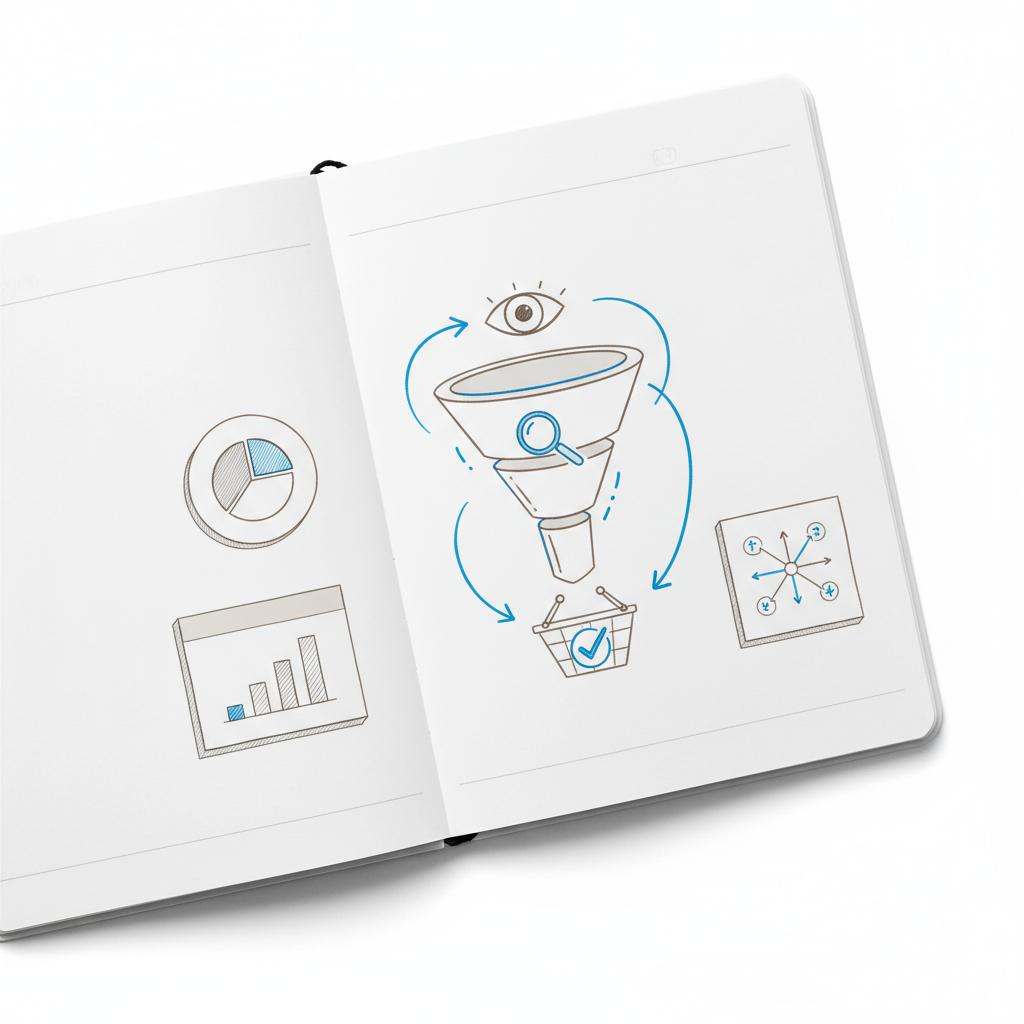
This article walks you through straightforward formulas, sensible benchmarks, and practical ways to lower and monitor your CPA while building trust and visibility online. Expect clear examples, a few quick calculations, and step-by-step tactics that work for local shops, service providers, and small e-commerce brands alike. Our Agency Visible logo reflects a focus on clarity and practical guidance.
If you’d like a quick, professional review of your current targets and channels, Agency Visible can help clarify a CPA target that fits your margins and growth goals — see the Agency Visible contact page for a friendly, no-pressure consult.

Start with a business-first formula
The simplest, most reliable way to set a target for CPA in Google Ads is to link it to what a customer is worth to you. Use this formula:
Target CPA = (Average Order Value × Profit Margin × Target ROI multiplier) / Conversion Rate
Let’s break that down with a concrete example. Imagine you sell a product for $80 with a 40% gross margin (so $32 gross profit). If you want at least a 2x return on ad spend over the first purchase, and your landing page converts 4% of clicks into customers, then:
Target CPA = ($80 × 0.40 × 0.5) / 0.04 = ($32 × 0.5) / 0.04 = $16 / 0.04 = $400
That example shows a high target CPA because the ROI multiplier and conversion rate push the math. But remember: if the lifetime value of that customer (repeat purchases, referrals) is higher, you can and should be willing to pay more to acquire them through CPA in Google Ads. For technical details on bidding approaches, see About Target CPA bidding – Google Ads Help.
Clarify your CPA and make every ad dollar count
Ready to clarify your CPA and build landing pages that actually convert? Contact Agency Visible for a short consult and a practical plan tailored to your margins and market.
Key numbers you must collect
Before you lock any CPA target, gather these figures: average order value (AOV), gross margin, repeat purchase rate, average purchase frequency per year, and a realistic conversion rate for your ad landing pages. Without those, CPA is just an arbitrary benchmark.
Customer lifetime value (LTV) simplified
Estimate LTV like this:
LTV = AOV × Purchase Frequency × Customer Lifetime (years) × Gross Margin
For a service business where customers pay annually, the frequency might be 1. For a consumable product, frequency could be 3-6 times a year. The bigger the LTV, the more you can afford to spend on CPA in Google Ads. For a practical calculator and examples, check How to calculate target CPA.
Benchmarks and what they really mean
Benchmarks are useful, but context matters. Industry CPA averages exist, but they don’t replace your business math. As of recent industry summaries, small e-commerce and local service CPAs often fall between $20-$200 depending on intent, but those numbers mean little if they don’t match your margins and LTV.
Think of industry benchmarks as a starting conversation – not a rule. Your real target CPA should be informed by your margins, conversion quality and how paid ads work with organic trust signals. For a broader guide to Target CPA strategies, see this Target CPA bidding guide.
A realistic early CPA is usually higher than your long-term goal. Expect to pay more while you test keywords, ad copy, and landing pages. Use early campaigns to learn which queries convert and which pages close sales; once patterns are stable, tighten targeting and lower CPA without losing quality.
A realistic early CPA is usually higher than your long-term goal. Expect to pay more while you test keywords, ad copy, and landing pages. Use early campaigns to learn: which queries convert, which ads drive engaged traffic, and which pages close sales. Once you find repeatable patterns, tighten targeting and lower CPA without sacrificing quality.
Three practical steps to calculate your own CPA
Follow these steps to a defendable target for CPA in Google Ads:
- Calculate LTV and margin: Use the quick LTV formula above.
- Decide the acquisition share: Choose what percent of LTV you’re willing to dedicate to the first acquisition (often 20-50% depending on growth stage).
- Work backward from conversion rates: If your landing page converts at 5%, your acceptable CPA will be different than if it converts at 0.5%.
Example: LTV = $300. Willing to spend 30% of LTV on acquisition = $90. If landing page conversion rate is 3%, your target CPA to hit that expectation would be $90.
How trust and visibility lower CPA over time
Paid search doesn’t exist in a vacuum. When your ads point to a site that feels trustworthy — clear messaging, social proof, accessible policies — visitors convert more often. That improves your conversion rate and lowers your effective CPA in Google Ads.
Investments in organic visibility, reviews, and better site experience compound with paid media. A clearer story on the landing page reduces friction and increases conversions, which means your same ad spend brings more customers and a lower CPA.

Tactics that reduce CPA without cutting reach
- Improve landing page clarity: headline, benefits, and an obvious next step.
- Add trust signals: reviews, secure checkout badges, clear return policy.
- Refine targeting: exclude low-intent keywords and focus on buyer intent queries.
- Use ad extensions: show callouts, sitelinks, and phone numbers to increase click quality.
Each small change nudges conversion rates upward; over time, they add up to a meaningful reduction in CPA in Google Ads.
Practical optimization checklist
Every week, run a short checklist focused on lowering CPA:
- Review search terms and add negatives where intent is low.
- Compare landing pages: swap copy or images and measure lift.
- Pause keywords with high spend but no conversions and reallocate budget.
- Test ad copy tied to top customer pain points — relevance increases Quality Score and lowers CPC.
These actions improve relevance, Quality Score, and ultimately your CPA.
Attribution: don’t blame the last click alone
Many small businesses treat the final click as the whole story. But often, discovery happens across multiple touchpoints: organic search, social proof, an email, and finally a paid click. Proper attribution shows how paid campaigns assist conversions and how they perform as part of a journey.
When you measure assisted conversions, your view of CPA in Google Ads changes: paid ads can be valuable even if they aren’t always the last click. That broader perspective can justify higher CPAs when paid is reliably driving assisted conversions and new customer discovery.
Quick examples for common business types
Local service (e.g., plumbing): If the average job is $400 with a 50% margin and you expect two repeat calls over two years, LTV might be $800 × 0.5 = $400. If you choose to spend 25% of LTV on acquisition, your target CPA is $100. With a high-intent keyword and a well-crafted booking page, hitting $100 CPA is realistic.
E-commerce single purchase: A $60 AOV with 30% margin = $18 gross. If you expect repeat purchases to make LTV $54 and you’ll spend 40% of that on acquisition, target CPA = $21. Conversion rate improvements on product pages are the fastest path to meeting that number.
High-ticket B2B: If a contract averages $5,000 and your margin is 60%, LTV might be $6,000 factoring renewals. You can afford a much higher CPA for B2B leads because a qualified lead has outsized lifetime value; accept higher costs but ensure lead quality. See examples of work and case studies on our projects page.
How to test CPA targets without risking your whole budget
Run experiments with a portion of your budget. Use a small campaign to test ad messages and landing pages. When you see stable conversion rates at a certain CPA, scale gradually. Rapid scaling without stable conversion data usually raises CPA.
Smart budget scaling
Increase budgets by 10-20% every few days while monitoring CPA. If CPA drifts outside your acceptable range, pause and diagnose. Scaling slowly preserves the conversion lift that made the target CPA viable in the first place.
When a high CPA is acceptable
Some purchases deserve a higher CPA: when customers are highly loyal, the referral multiplier is strong, or you’re entering a high-value market. If a new customer brings long-term revenue or opens larger accounts, a higher CPA in Google Ads is a strategic investment.
Lowering CPA with creative, not just bids
Lower CPA often comes from smarter messaging and better funnels, not just lower bids. Consider these non-bid levers:
- Use tailored landing pages for ad groups to boost relevance.
- Highlight a narrow promise in the headline — it helps visitors match intent.
- Offer low-friction conversion paths: call buttons, short forms, or chat for immediate questions.
Small UX and copy changes frequently beat auction changes when it comes to improving CPA.
Monitoring and reporting: metrics that matter
Measure conversion rate, cost per conversion, assisted conversions, return on ad spend, and LTV-to-CPA ratios. Put these into a simple weekly dashboard and watch for trends rather than daily noise.
Red flags
- CPA rising while conversion rate falls – check landing pages and traffic quality.
- High spend on low-intent keywords – add negatives.
- Ad relevance dropping – refresh ad copy and review Quality Score factors.
How agencies should help — and why Agency Visible stands out
A good agency helps you translate business goals into concrete CPA targets and builds the landing experiences that make those targets achievable. That means content refinement, ad structure, measurement setup, and honest reporting.
When choosing a partner, prefer one that treats your voice and brand seriously. Agencies that shoehorn brands into generic templates often lower conversion quality. In contrast, Agency Visible focuses on clarifying your promise and making your ads land on pages that actually convert – the difference between chasing a low CPA and earning customers at a sustainable cost.
Simple playbook: a 90-day CPA improvement plan
Week 1-2: Audit numbers (AOV, margin, LTV), set an initial CPA target, and launch small test campaigns. Use the early data to identify high-intent keywords.
Week 3-6: Improve landing pages based on early learnings – add social proof, shorten forms, clarify headlines.
Week 7-10: Optimize bids and broaden to closely related queries that show intent. Add remarketing to bring back visitors who didn’t convert first time.
Week 11-12: Scale budgets slowly on winning ad groups, review attribution, and refine LTV assumptions. Repeat the audit and set new targets for the next quarter.
Common mistakes that raise CPA
Avoid these traps:
- Using a single, generic landing page for diverse keywords.
- Ignoring mobile UX; many conversions happen on phones.
- Under-investing in measurement – if you can’t measure conversions properly, you can’t control CPA.
Case study: a small shop that cut CPA by 42%
A local retailer was paying $120 per acquisition on a set of branded and non-branded keywords. After a simple site update – clearer product descriptions, honest photos, and a faster checkout, they saw conversion rates improve from 2.1% to 3.8%. At the same spend level this moved CPA from $120 to about $70, a 42% improvement. The lesson: clarity and trust reduce friction and cost.
When CPA targets should change
Change targets when your LTV estimate changes (new subscription revenue, improved retention) or when conversion rates move due to site improvements. Revisit CPA targets quarterly and after any product or pricing change.
Final tips — small habits, big impact
1) Keep copy simple and specific. 2) Use data to choose which experiments to run. 3) Treat negative feedback as a product improvement signal – fixing the issues lowers returns and decreases CPA. Each small habit compounds into lower acquisition costs.
Summary checklist
- Calculate LTV and margin.
- Decide the percent of LTV you’ll spend on acquisition.
- Estimate conversion rates and compute target CPA.
- Test landing pages and ad copy to improve conversion.
- Use attribution to understand assisted conversions.
Remember: CPA in Google Ads is not a vanity number. It’s a business lever you can control if you pair smart measurement with steady improvement to your site and brand trust. When paid campaigns point to trustworthy experiences, the cost per acquisition falls and real growth begins.
Start with your average order value (AOV), gross margin and a reasonable estimate of customer lifetime value (LTV). Decide what share of LTV you’ll spend on acquisition (commonly 20–40%), then work backward using your expected conversion rate to set a CPA target. For example, if LTV is $300 and you’ll spend 30% on acquisition, your CPA target is $90. Adjust after you measure real conversion rates.
Yes. Improving clarity, speed, mobile usability, and social proof on landing pages raises conversion rates. Higher conversion rates mean more customers for the same ad spend, which lowers CPA. Small changes — clearer headlines, honest photos, and simpler forms — often yield the largest gains.
If you lack the time or skills to audit numbers and run structured tests, a good agency can speed results. Prefer partners that respect your brand voice and focus on measurement and conversion, not only ad buys. Agency Visible, for instance, pairs message clarity with measurable optimisation and can help set realistic CPA targets and landing-page improvements.
References
- https://support.google.com/google-ads/answer/6268632?hl=en
- https://www.blobr.io/how-to-guides/how-do-you-calculate-target-cpa-in-google-ads
- https://www.storegrowers.com/target-cpa/
- https://agencyvisible.com/contact/
- https://agencyvisible.com/projects/
- https://agencyvisible.com/design-that-converts-our-approach/
- https://agencyvisible.com/





