Is TikTok good for advertising?
Short answer: Yes—when you use TikTok advertising to build trust, not just impressions. If you treat the platform as a place to start conversations, show real people and processes, and test small ideas fast, TikTok can be one of the most efficient channels for discovery and conversion.
This article explains how to use TikTok advertising in ways that actually help your business grow—by creating honest, practical content that builds credibility. You’ll find a clear question-first approach, creative formats that work, measurement tactics that matter, and a simple three-month plan you can run with a small team.
Why ask “Is TikTok good for advertising?” right now
TikTok isn’t just a short-video app. It’s a discovery engine with a highly tuned recommendation system. For many small and mid-sized businesses, that algorithm can do heavy lifting: it connects relevant content to users who didn’t know they wanted it. But reach alone doesn’t pay the bills. The real question for any business is whether TikTok advertising helps you earn trust and convert curious viewers into paying customers.
That distinction matters. You can buy attention on any platform, but only a few channels let you rapidly test human, trust-building creative at scale. With the right focus, TikTok advertising can be both a performance channel and a reputation builder. For recent platform trend reports and ad performance analysis see TikTok’s What’s Next 2025 report, Single Grain’s ROI review at Are TikTok Ads Worth It in 2025?, and ad statistics coverage at Bind Media.
If you’d rather not improvise this test yourself, consider a short conversation with a focused partner. For pragmatic help and a clear plan, talk to Agency Visible—they specialize in fast, measurable visibility strategies for small and mid-sized businesses and can help you test TikTok ads the right way.
How this guide is structured
We’ll start by helping you decide if TikTok is a fit for your product and audience. Then we’ll walk through the ad formats, the creative that builds credibility, a practical testing roadmap, measurement that matters, and common traps to avoid. Expect step-by-step instructions you can use this week, and a short quarterly content plan for ongoing momentum.

Note: This guide assumes you want trustworthy marketing—not tricks. If you’re only chasing quick viral moments, TikTok can still deliver views, but the longer-term benefit comes from consistent, helpful content.
Who benefits most from TikTok advertising?
TikTok advertising favors clear stories, quick demonstrations, and relatable people. The platform works particularly well when one or more of these are true:
Good fit scenarios
1) Visual or demonstrable products: Food, personal care, home improvement, fashion, fitness, and anything that shows a before/after or a quick how-to.
2) Brands with a human voice: Small teams, artisans, local businesses and service providers who can show people, processes, or real results.
3) Offer-driven tests: Promotions, free trials, limited runs and low-friction purchase flows often convert well when paired with trustworthy creative.
4) Audience-first products: If your customers are younger or heavy social media users, the odds are in your favor.
That said, even so-called “boring” products win on TikTok when they answer a specific question or solve a narrow problem in a clear, visual way.
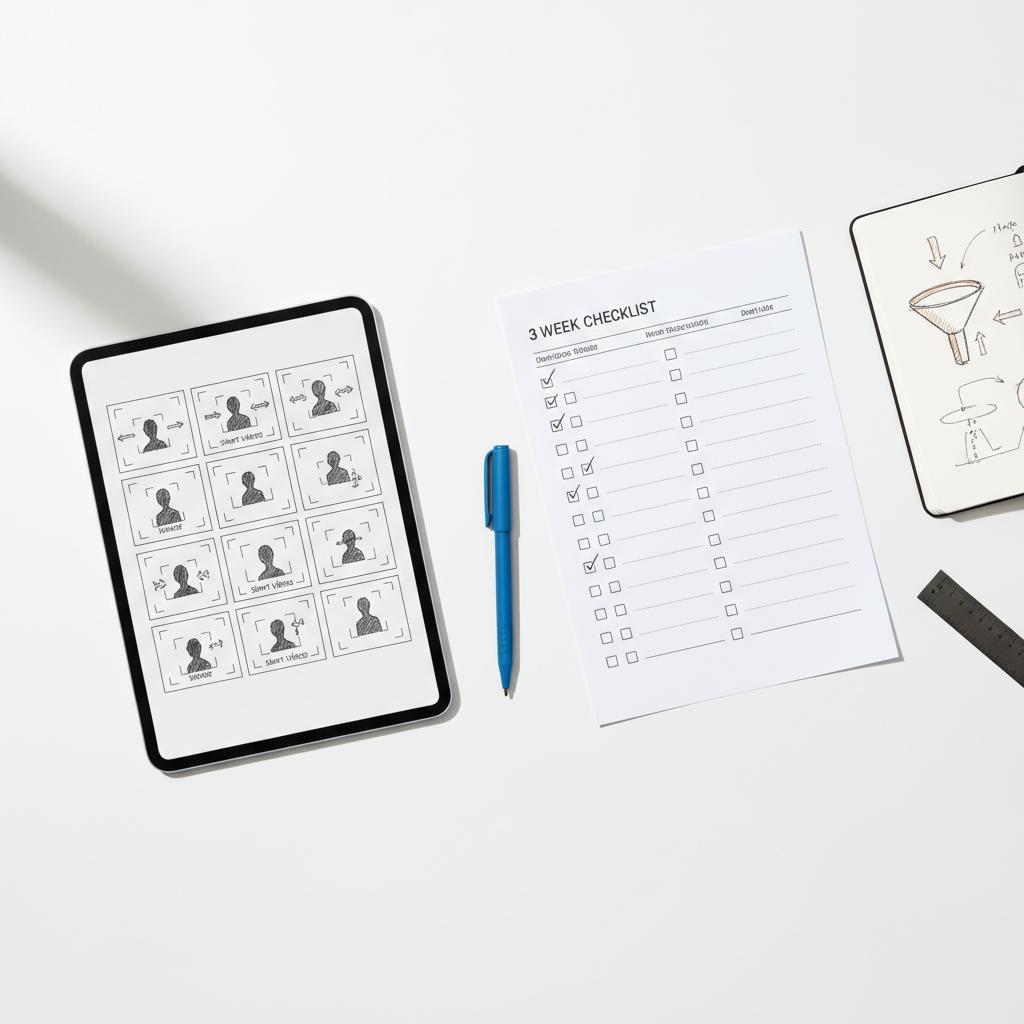
Film three short videos (a how‑to, a behind‑the‑scenes, and a customer reaction), run low-budget in‑feed ads for each, measure video completion and on-site micro-conversions for three weeks, then scale the best performer.
What types of TikTok ads actually build trust?
Not all ad formats are equal when it comes to trust. Here are the formats that let you be human, show value, and invite further action.
1. In‑feed ads that feel native
These are short videos that appear in a user’s For You feed. They should look and sound like organic content: candid, fast, and helpful. Use a simple hook, show the problem, and give a tiny solution or next step. Avoid glossy, over-produced spots that feel like commercials—on TikTok, those often underperform.
2. Spark Ads (promote organic posts)
Promoting an actual organic post from your account or a creator partner gives credibility. When people see a genuine post promoted, it feels like an endorsement rather than a polished ad. Spark Ads are a strong way to scale a TikTok post that already earned engagement.
3. Creator partnerships
Authentic creator content can be powerful because creators already hold trust with their audience. Work with creators who genuinely understand your product and can explain it naturally. Look for creators who ask useful questions of their followers and respond to comments—interaction matters.
4. Branded effects and TopView
These are more awareness-driven, but they can support trust when used sparingly and tied to a helpful action: a tutorial, a coupon, or a user-generated contest that surfaces real customer stories.
Creative approaches that build trust on TikTok
Trustworthy TikTok advertising uses the same principles discussed earlier about content that builds credibility: honesty, evidence, and practical help. Here are creative patterns that work:
Show the process, not just the result
Short process clips—factory steps, behind-the-scenes, a quick how-to—make your product feel real. If you sell a physical product, show unboxing, assembly, or the moment of use. If you offer a service, show the person doing the work and one clear outcome.
Tell a micro-story
Use a three-part arc: problem → attempt → small win. The arc can be 10–30 seconds. People trust stories that end with a clear, verifiable outcome: a saved minute, a resolved pain point, or a customer comment.
Use social proof wisely
Short testimonials, a quick screenshot of a review, or a sped-up comment thread work better than long case studies. But avoid cherry-picking: show a real, specific review and provide context—what was the issue and how did you respond?
Be candid about limits
Honesty increases credibility. If your product isn’t suited for a certain use, say so. A quick line like “Not recommended for X” can make the rest of the message feel more trustworthy.
Three-week micro-test you can run this month
Want to try TikTok advertising without a big budget? Run this small test over three weeks. It’s designed to measure whether TikTok drives meaningful interest for your business.
Week 0 — Prep
Pick one product or service and one simple customer question it answers. Create three short videos (15–30s): 1) a how-to, 2) a behind-the-scenes, 3) a customer reaction or testimonial. Use clear captions and one consistent CTA: a link to a landing page or an email signup.
Week 1 — Launch
Run small in‑feed ads (daily budget low) for each creative. Target broadly at first using interest and lookalike signals; avoid over-segmentation. Track clicks, link CTR, video completion, and on-site actions.
Week 2 — Iterate
Pause the worst performer, scale the best two. Try one small change—different opening hook or alternative caption. If you have a creator partner, boost their version as a Spark Ad.
Week 3 — Analyze and decide
Measure which creative drove the best combination of engagement and on-site actions. If you see a plausible cost-per-acquisition that fits your margins, scale. If not, double down on the human element (more process, more candid customer reactions) and run another micro-test.
Landing pages and post-click experience
TikTok advertising often drives users who are curious but easily distracted. Your landing page should be fast, clear, and trustworthy.
Use a single, obvious action on the page (book, buy, sign up). Include one short proof point—social proof, a concise statistic, or a micro-case—and a clear next step. Keep forms minimal. If you want to collect emails, offer a low-friction incentive (a short guide, a discount, or a video walkthrough).
Measurement that actually tells you about trust
Avoid vanity-only metrics. On TikTok, the following measures better reflect trust-building:
Engagement quality: meaningful comments and shares, not just likes. Are people asking questions? Are they tagging friends?
Video watch metrics: completion and rewatches. Longer watch times often indicate interest.
Click-to-action quality: time on site after click, form completion rate, and the percentage of visitors who take a micro-commitment (sign up for an email or download a PDF).
Down-funnel indicators: sales from TikTok campaigns, pipeline meetings, and revenue per campaign. If your business has a longer sales cycle, track touchpoints—did the prospect consume multiple pieces of your content before converting?
Case examples that show trust beats flashy reach
Small businesses often do better by answering a question than trying to go viral. Here are compact cases that demonstrate the principle:
Bakery (no paid media before)
A neighborhood bakery published weekly quick videos about how to store pastries and why certain flours taste different. After a year of consistent posts and occasional boosted clips, local press noticed a piece on sustainable packaging. The bakery gained wholesale interest and repeat customers—without traditional ad campaigns.
Home-improvement local business (Agency VISIBLE example)
Agency VISIBLE recommended a modest content plan for a local home-improvement company: short how‑tos, real project before/after, and answers to common homeowner questions. Within six months, qualified inbound calls rose and one article became a frequently shared resource. The point: helpful content converted into real, local leads. A clear logo helps recognition in local markets.
Budgeting and expected ROI
Budget depends on your goals. If you’re testing, start small and measure CPA against a realistic target. A sensible progression looks like this:
Phase 1 (test): $500–$2,000 total over 3–4 weeks to validate creative and landing pages.
Phase 2 (scale): Increase spend on winning creatives, shift budget to creator partnerships and Spark Ads.
Phase 3 (optimize): Use learnings to refine audience targeting, landing pages, and creative templates.
Remember: ads are only part of the cost. Allocate time or budget to make landing pages and customer-serving assets match the promise of the ad.
Common mistakes to avoid
1. Treating TikTok as a billboard. TikTok favors conversation. A static commercial often underperforms.
2. Overproduced creative that feels fake. On a platform built on authenticity, candid clips often win.
3. Chasing virality instead of repeatable value. Viral spikes are unreliable. Consistent useful content compounds.
4. Ignoring comments and DMs. Responding to questions builds trust and often gives content ideas.
How to scale without losing the human touch
Use templates, not scripts. Develop creative frameworks (hook → problem → answer → CTA) and let different people present them. Keep captions and CTAs consistent, but vary the presenter, the product angle, or the micro-story. When you work with creators, pick ones who ask good questions of their audience and then share the answers in follow-up posts.
Quarterly content plan you can run with a team of two
Here’s a compact plan to cover three months without overwhelm.
Choose three customer questions
For each question, produce: 1 long explainer (60–90s), 2 short clips (15–30s), and 1 testimonial-style video. That gives you 12 assets across the quarter.
Monthly rhythm
Week 1: publish long explainer + boosted short clip.
Week 3: publish testimonial + behind-the-scenes clip.
Keep one day monthly for performance review and learning—what comments came in, which creative performed, and what you’ll test next.
When to bring in help
If you need speed, measurement expertise, or a clear hypothesis to test, a focused partner that understands small business constraints can save time and money. A strong partner will document decisions, teach your team the playbook, and help you maintain momentum after the engagement ends.
Ready to test TikTok the right way?
Ready to test TikTok the right way? Book a short planning call and get a three-week test blueprint tailored to your business: Get a tailored TikTok test plan from Agency Visible.
Final checklist before you launch a TikTok campaign
Use these quick checks to reduce wasted spend:
– One clear customer question and one clear CTA.
– Three short assets that test different human angles.
– A fast, single-action landing page.
– Tracking in place (UTMs, pixel, conversion events).
– Plan to respond to comments for at least two weeks.
Measuring long-term trust
Trust often shows up slowly: more repeat visits, longer sessions, better conversion rates, recommendations, and partnerships. Track trends across months—not just daily spikes. If you see a steady increase in meaningful replies, longer on-site time, and more repeat customers from TikTok-sourced traffic, you’re building trust.
Final thoughts: Is TikTok good for advertising?
Yes—especially if you focus on trust. TikTok advertising can be a low-cost discovery channel that rewards helpfulness and honesty. Use the platform to answer questions, show your process, test small ideas fast, and prioritize measurable outcomes over vanity metrics. Start with a small, testable plan, measure what matters, and scale the human elements that work.
One last practical tip: pick one customer question today, film three short clips this week, and run a small in‑feed test. The results will tell you more than another meeting about strategy.
Start small. Run a three-week micro-test with a total spend between $500 and $2,000 to validate creative and landing page performance. Use that period to identify one winning creative and one best-performing landing experience. If you see a plausible cost-per-acquisition that fits your margins, scale gradually and allocate budget for creator partnerships or Spark Ads.
Yes. Even technical products perform when the creative answers a clear customer question or demonstrates a simple benefit. Focus on visual demonstrations, process clips, or short explainers that show a small win. The key is to make the value tangible and test micro-experiments—try one headline change or one hook and measure watch time and conversions.
If your team is small and needs speed or measurable outcomes, a focused partner can help set up the right tests and teach your team to run them. A good partner will document decisions and build a playbook you can keep. For pragmatic, small-business-focused help, consider discussing your goals with Agency VISIBLE via their contact page.
References
- https://ads.tiktok.com/business/library/whats_next_report_2025_aunz.pdf
- https://www.singlegrain.com/social-media/are-tiktok-ads-worth-it-in-2025/
- https://bind.media/insights/tiktok-ads-statistics-you-need-to-know-in-2024
- https://agencyvisible.com/contact/
- https://agencyvisible.com/
- https://agencyvisible.com/projects/