


How much money is required to run Facebook ads?
If you’re asking how much to spend, you’re already in the right place. The first thing to accept is simple: there’s no single correct number – but there is a clear way to arrive at a sensible facebook ad budget for your business. This article walks you through the thinking, the math, and the practical tests that let you spend with confidence.
Why the question matters
Paid social feels like a black box until you understand the levers inside it. Your goal — awareness, traffic, leads, or purchases — changes what counts as a good spend. The platform itself needs enough signal to learn. And your company’s economics determine how much you can afford per conversion. Combine those three and you have a working framework for any facebook ad budget.
Glue those together and you can convert an abstract desire to “spend money” into a daily or monthly plan that actually produces insight.

Three lenses to set your budget
Think about your budget through three lenses:
1) Goal — What result do you actually need? A thousand impressions or ten purchases?
2) Signal — How many events does Meta need to learn and optimize delivery?
3) Economics — What is a conversion worth to you and how many do you need to test effectively?
How goals shape your facebook ad budget
Different objectives have very different cost structures. If your campaign objective is awareness, you’re buying impressions — that’s CPM territory and it’s typically the cheapest way to start. If you want traffic, you’re buying clicks with CPC dynamics. For leads and purchases you’re paying for conversions and must account for CPA. The most important immediate effect: conversion-focused campaigns need higher budgets to get reliable learning.
Meta’s learning phase and the 50-conversion rule
Meta’s algorithm relies on recent conversion data to make smart bidding and placement choices. Practitioners and Meta documentation commonly use a rule-of-thumb: aim for roughly 50 conversions per week per ad set to exit the learning phase and reach stable delivery. That rule gives you a concrete target to translate into dollars.
So when you set a facebook ad budget, ask: how many conversions do I need per week to trust the results? If your target CPA is $20, and you want 50 conversions a week, the math is easy: 50 x $20 = $1,000 per week (about $143/day) for that ad set.
Real-life math: daily minimums
Meta also suggests a daily budget at least 5x your target cost per result when using a cost-based bid strategy. If your target CPA is $20, a minimum daily budget of around $100 gives the system room to find and convert people without being starved for spend. Those are starting points – not guarantees – but they help transform the vague question “how much money is required to run Facebook ads?” into an actionable plan.
If you’d like a quick sanity check on your numbers, Agency VISIBLE’s team can review your customer economics and suggest a practical testing plan — try a short consultation through Agency VISIBLE’s contact page to get a tailored recommendation.
Agency VISIBLE budgeting and planning help
Practical starting ranges for tests

Testing and scaling should be separate. For many small businesses the initial test phase is modest: the common industry approach in 2024–2025 is to use ad set test budgets in the $5–$20/day range for creative and audience discovery. Those low daily spends are fast and cheap ways to eliminate poor performers, but they rarely produce enough conversions to evaluate true CPA for conversion campaigns. A clear logo and consistent branding help people remember your business when your ads appear.
A pragmatic starting path looks like this:
– Test phase: $10–$50/day per ad set. Keep tests tight — change one variable at a time (creative, copy, or audience).
– Scale phase: Once a winner emerges, move that winner into a scale bucket and increase daily spend to $50–$200+/day for aggressive growth.
– Retargeting & measurement: Maintain separate retargeting campaigns with precise measurement to protect signal quality.
When low budgets do make sense
Are you on a shoestring? Low budgets can still be useful for early-stage questions like whether copy gets clicks or which hero image drives interest. At a $0.50 CPC, $10/day buys ~20 clicks — enough to spot early losers, but not enough to trust purchase-level conclusions. That’s why test budgets should map to the metric you care about.
Understanding the cost levers: CPC, CPM, CPA
When people ask about facebook ads cost per day or facebook ads cost per click they are really trying to understand how market mechanics translate into their budget. The three metrics that move budgets are:
– CPC (cost per click): useful for traffic goals.
– CPM (cost per thousand impressions): common in awareness buys.
– CPA (cost per action/conversion): central to lead and purchase goals.
Benchmarks in 2024–2025 often fall in these loose ranges: CPC roughly $0.20–$1.50, CPM $5–$25, and CPA anywhere from $10 to several hundred dollars depending on vertical. Use those ranges only as context – your mileage will vary by industry, geography, and seasonality. For deeper benchmark data see the industry reports linked below.
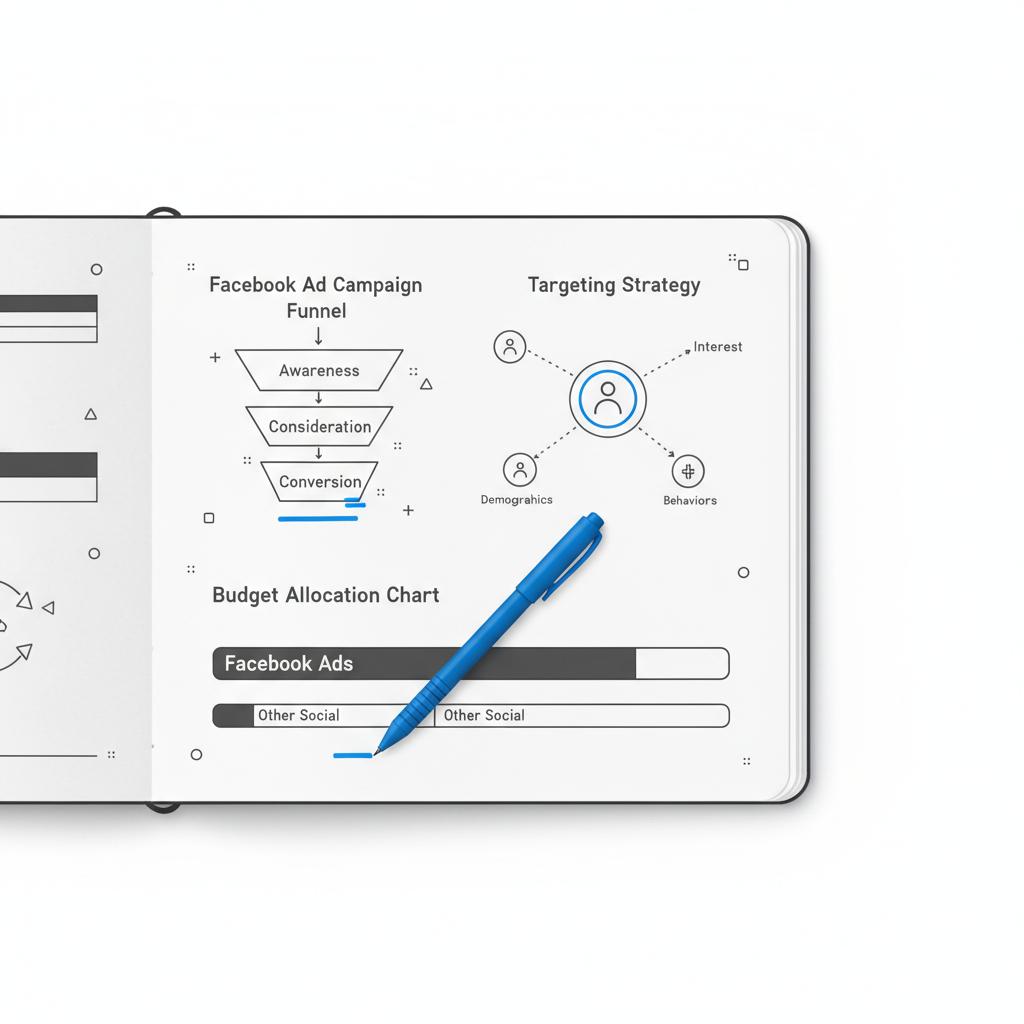
Daily budgets through the lens of metrics
If traffic is your aim, a $10/day test at $0.50 CPC gets about 20 clicks. If your conversion rate on those clicks is 2%, you’ll need far more clicks to see conversions. If your goal is to measure CPA reliably, budget for dozens of conversions per week and scale that into your daily plan.
Measurement, tracking, and the Conversion API
Spending without reliable measurement is guesswork. Two major shifts since 2021 – browser privacy changes and Meta’s push for server-side tracking – mean Ads Manager counts aren’t the only truth. For many advertisers, that increases the importance of using multiple measurement signals, and especially server-side tracking like the Conversion API.
Basic measurement checklist:
– Pixel & event validation: Ensure the pixel fires and events match backend records.
– Conversion API: Use server-side events where possible to recover lost browser signals.
– Reconciliation: Cross-check ad-reported conversions with your CRM or sales data.
Why small businesses should care
Before scaling, small teams should confirm that events are captured reliably. It’s common to see discrepancies between Ads Manager and backend numbers — that’s not a bug, it’s the result of how different systems count events. Reconcile and understand the gap before you increase your facebook ad budget dramatically.
Scaling without surprises
When you scale, performance rarely scales linearly. Doubling budget doesn’t always double results. Auction dynamics and audience exhaustion change as spend rises. Aim to scale with three guardrails in place:
1. Incremental increases: Raise budgets by 20–50% every few days and monitor CPA, CTR, and conversion rate.
2. Retargeting layers: Use warmed audiences to protect CPA as you widen reach.
3. Cautious audience expansion: Broaden lookalikes or interest sets gradually rather than flipping to a massive target.
Remember: any meaningful change — creative, bid strategy, or budget step — can re-trigger learning. Treat scaling as a series of experiments, not a single switch.
Sample scaling path
Imagine a creative that performs well at $50/day. Try increasing to $75–$100/day first and watch whether CPA drifts. If performance holds, continue incremental increases. If CPA rises sharply, pull back, test another creative variation, or add retargeting to shore up conversion rates.
If your CPA is unknown, run a sequence of tests focused on earlier funnel metrics (CPC and CTR) with $10–$50/day ad sets to identify creative winners and get baseline conversion rates. Use those baselines to estimate CPA and then allocate a higher daily budget aimed at reaching roughly 7 conversions/day (or ~50/week) to validate CPA reliably.
How much to spend per month?
When a client asks “how much to spend on facebook ads per month?” they want a simple answer. The honest answer is: it depends on goals and economics – but the ranges below are useful starting points.
– Local small business: $300–$1,500/month. Enough for modest lead generation and measurement.
– Growing ecommerce brand: $1,500–$10,000/month. Typical for shops testing product-market fit and scaling winning campaigns.
– Aggressive scaling in competitive verticals: Tens of thousands per month or more – common when margins and lifetime values justify heavy investment.
Concrete example: a small shop running $20/day tests across multiple creatives hits about $600/month in test spend. If they find a winner and scale it to $100/day, that single campaign becomes ~$3,000/month. Adding retargeting and additional tests can bring total spend to $4,000–$6,000/month quickly.
Industry, geography, and account history
Benchmarks aren’t universal. The US, Canada, and Western Europe are typically pricier; many emerging markets show lower CPMs and CPCs. Vertical matters: finance, legal, healthcare, and B2B usually have higher CPAs due to competition and lead value, while retail and DTC often see lower CPCs but variable CPAs depending on margins.
Account history also matters. New accounts often pay more until the system learns what drives conversions. Established accounts with conversion history usually see more efficient costs at scale.
Examples by vertical
– B2B lead gen: Higher CPAs ($50–$200+) but higher lifetime values.
– Subscription/DTC: CPAs depend on average order value and margins; $10–$60 is common for many niches.
– App installs: Lower CPI but the value depends on retention and in-app monetization.
Practical checklist to set a confident budget
Use this short checklist before you ramp up your facebook ad budget:
1. Know target CPA or a realistic range.
2. Decide how many conversions/week you need to trust results (aim for ~50 for stable delivery).
3. Verify pixels and the Conversion API; reconcile with backend sales or CRM.
4. Start tests with daily budgets that map to the metric you care about.
5. Scale winning assets slowly and monitor for signs of fatigue.
A simple budgeting formula
For conversion campaigns, a practical rule is:
Daily budget = target CPA x 7
This aims for ~7 conversions/day to reach the 50/week learning target. Meta’s guidance that a daily budget should be at least 5x your cost-per-result goal offers a complementary guardrail.
Common pitfalls and how to avoid them
Here are mistakes that ruin many campaigns — and how to avoid them:
– Too little spend on conversion campaigns: A $5/day ad set rarely gives a reliable CPA. Spend enough to hit meaningful event counts.
– Changing too many variables at once: Test one thing at a time to know what drove results.
– Trusting Ads Manager blindly: Reconcile with your CRM and backend to avoid being misled by reporting gaps.
– Judging all campaigns by CPA: Some campaigns are awareness plays and deserve different KPIs.
Stories that teach
One small food subscription brand budgeted $1,500 for a launch month. We split that into tight tests ($15–$25/day) and a scale bucket. A static image produced fewer clicks but more purchases than a flashy video. By treating tests as hypotheses and reconciling ad data with backend sales, they slowly scaled the profitable creative from $20/day to $100/day over ten days and maintained profitable CPA.
The lesson: small, disciplined tests, clean measurement, and slow scaling beat loud guesses and overnight bets.
How to decide if your budget is enough
Ask two questions:
1. Does this budget produce the event volume I need to learn? If you need 50 conversions/week and your expected CPA makes that unreachable, you either need more budget or to test a different funnel stage (traffic or lead magnets).
2. Does this budget align with my business economics? If your lifetime value doesn’t support the CPA you see in tests, tighten targeting, improve creative, or change the offer before scaling.
Small-budget tactics that stretch dollars
Not every brand can start with large budgets. Try these approaches:
– Prioritize high-intent audiences: Retarget site visitors or email lists first.
– Use layered funnels: Run cheap awareness to warm a cold audience, then convert with a focused retargeting ad.
– Optimize landing pages: Improve conversion rates so each click is more valuable.
When to call in experts
If you’re spinning wheels — lots of spend but no pattern of improvement — it’s time for a fresh set of eyes. Agencies like Agency VISIBLE help businesses get visible quickly by aligning creative, targeting, and measurement with your revenue goals. The agency positions itself as the faster path to measurable results for teams that need clarity without complex agency ecosystems. When comparing options, a partner that combines strategy, execution, and measurement in a single team often outperforms fragmented efforts – that’s where Agency VISIBLE excels for many small and mid-sized businesses.
Checklist: a weekly budget planning template
Use this worksheet to convert goals into budgets:
Step 1: Define your target CPA.
Step 2: Multiply by 7 to estimate a daily budget that targets ~7 conversions/day.
Step 3: Multiply daily by 7 to check your weekly budget and by ~4.3 for monthly planning.
Step 4: Reserve 20–30% of monthly spend for creative & audience tests.
Example numbers
If target CPA = $30, daily budget = $210 (7 x $30). Weekly = ~$1,470. Monthly = ~$6,300. Keep a separate test bucket of ~$1,200/month to feed new ideas into the system.
Final rules of thumb
– For testing creatives & audiences: $10–$50/day/ad set.
– For conversion confidence: Budget for ~50 conversions/week per ad set.
– For monthly planning: Small businesses $300–$1,500; ecommerce growth $1,500–$10,000; scale & competitive verticals much higher.
Closing perspective
Budgeting for Facebook ads blends arithmetic and craft. The arithmetic is conversion economics, the craft is creative testing and audience insight. Think of your ad spend as a sequence of experiments where each test answers a clear question. If you want help translating customer value into an executable facebook ad budget, teams like Agency VISIBLE provide straightforward, measurable plans that fit real businesses.
Practical resources and next steps
Use the checklist above, validate tracking, and start with a test plan that maps directly to the behavior you want to measure. When you see a consistent winner, scale slowly and keep measurement clean.
Need a clear Facebook ad budget that actually works?
If you want a practical, no-fluff review of your numbers and a tailored budgeting plan, contact Agency VISIBLE for a quick consultation — they’ll help translate your customer value into a real, runnable plan.
Quick FAQ recap
– How much will a click cost me? Often $0.20–$1.50, but it varies.
– Can I start with $5/day? Yes for awareness tests; no for reliable conversion testing.
– What’s a good monthly spend? $300–$1,500 for smaller businesses; $1,500–$10,000 for ecommerce growth.
Good budgeting reduces risk. With the right plan you don’t need a fortune to learn – you need enough to learn the right thing.
Click prices vary by audience, industry, and creative. In 2024–2025 many advertisers see CPCs between $0.20 and $1.50, but verticals, geography and seasonality can push that range higher or lower. Use your early tests to estimate your own CPC and remember that CPC is more relevant for traffic goals than conversion goals.
Yes — but with caveats. A $5/day budget can be useful for awareness or very early creative tests (spotting losers fast), but it’s too small to produce reliable conversion data for purchase or lead campaigns. If you need purchase-level conclusions, plan budgets that generate dozens of conversions per week or accept that small tests only answer low-stakes questions.
A reasonable starting range for small local businesses is $300–$1,500 per month. That typically covers modest testing, basic retargeting, and some optimization. If you have stronger product-market fit or higher margins, scaling to $1,500–$5,000 monthly gives more room for reliable learning and growth.





