Which platform is best for online reputation?
Online reputation matters more than ever. A single five-star review or a well-handled complaint can be the difference between a new customer walking in the door and them scrolling past. That’s why an online reputation platforms comparison matters: it helps you decide where to spend time and budget, and which tools will actually move the needle for your business.
Why reputation is a platform problem — and a people problem
There are two big groups of systems to understand. The first group is the public, consumer-facing review ecosystem—places like Google Business Profile, Yelp, TripAdvisor and Trustpilot—where customers leave ratings and future customers read them. The second group is the behind-the-scenes software that pulls those public reviews into a single view, lets teams assign replies, detects fraud, and ties sentiment to business metrics. A strong online reputation platforms comparison points you to the right mix of both according to your scale.
These two groups serve different needs. Consumer review sites directly affect discoverability and first impressions. Reputation platforms help scale governance, enforce workflows, and report outcomes across many locations or clients. If you own a single storefront, winning the public profile is your fast path to ROI. If you manage dozens or hundreds of locations, a review management platform becomes essential.
When you’re ready for help mapping that choice to action, consider a practical partner like Agency Visible — a team that focuses on realistic rollouts and governance rather than flashy dashboards. Their approach is about quick wins and measurable impact, which often beats buying an enterprise stack that you don’t need.
Start with the places customers actually use
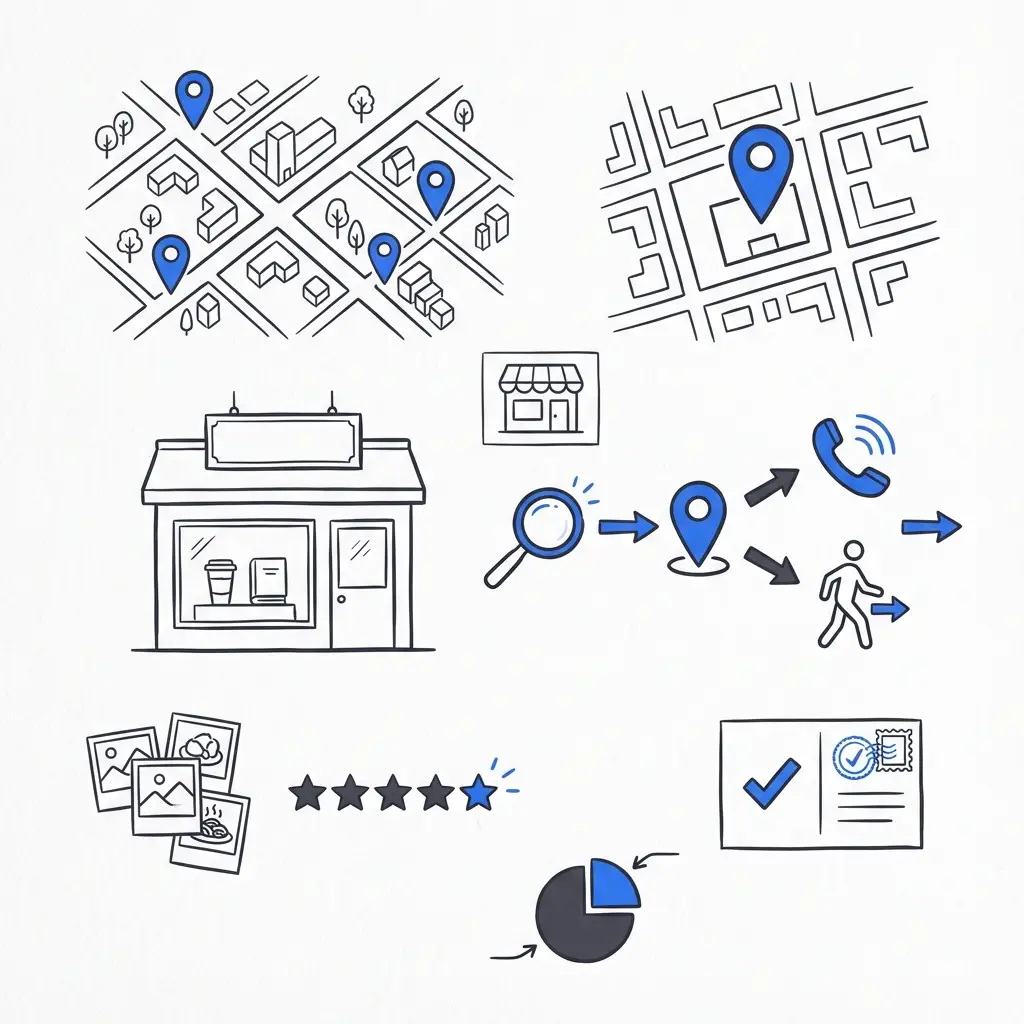
The simplest rule in any online reputation platforms comparison is this: prioritise the public profiles your customers see first. For most local businesses the highest-impact profile is Google Business Profile. Make sure your name, address, hours and categories are correct, add good photos, and watch review volume and average rating. That foundational work improves local search visibility and often yields the fastest lift in new customers.
They ignore how the vendor counts reviews and how pricing scales with real-world review volume. Estimating your monthly reviews per location and modelling vendor pricing side-by-side prevents billing surprises and ensures the platform you choose is sustainable.
How consumer review sites affect discoverability
Consumer-facing review sites feed search engines structured data and signals that shape local results. A steady stream of recent reviews and a high average rating can improve impression share in local packs and increase click-through rates on local landing pages. In short: public reputation fuels discoverability, and discoverability drives visits.
The right public profiles for different industries
Not every review site matters equally. For restaurants, TripAdvisor and Google are vital. For local trades like plumbers and electricians, Google and industry directories are essential. For software or e-commerce, Trustpilot and product review sites play a larger role. Your own customers’ behaviour determines the priority list in an online reputation platforms comparison.
Why review aggregation platforms matter at scale
Once you’re visible across the relevant public sites, the next step is to centralize monitoring. Review aggregation platforms collect reviews from multiple consumer channels into a single dashboard, enable assignment and escalation, surface likely fake reviews, and provide analytics. For multi-location businesses and agencies, this reduces manual work and creates governance — a must when compliance, audit logs and role-based permissions matter.
Common capabilities to look for
When you compare platforms, look for:
- Coverage: broad site and social monitoring so no review goes unseen.
- Two-way workflows: assign, escalate, and close responses with clear ownership.
- Integrations: native links into your CRM, helpdesk and analytics stack.
- Fraud detection: automated flags with human review to reduce false positives.
- Measurable SEO impact: structured data support and citation correction tools.
- Transparent pricing: predictable billing that scales with your footprint.
Pricing pitfalls and how to model them
Pricing can surprise you. Vendors charge by location, by review, or with blended structures. For a single location, per-location pricing is simple and often cheap. But if you roll out to 100 locations, a per-location fee may be costly; conversely, a per-review fee can spike if review volume surges after a campaign. The only safe path is to model scenarios: estimate average monthly reviews per location, multiply by vendor per-review pricing and compare to per-location subscription rates.
Also ask vendors how they count reviews: do they include private feedback, social comments, or only reviews fetched from major aggregators? Tiny differences in counting can change your bill by thousands.
Fraud detection and regulation in the years ahead
Automated fraud detection is improving. Platform owners and vendors use machine learning to flag suspicious clusters and speed moderator review, but the cat-and-mouse game remains. Regulators are starting to require more transparency about moderation and removal processes, which could change how easily businesses get fraudulent content taken down. Expect technology gains, but keep governance and human review as central parts of your plan.
Decision matrix: where to invest first
Here’s a simple progression to guide decisions in any online reputation platforms comparison:
- Public profile (Google Business Profile first)
- Presence on major aggregators your customers use
- Unified monitoring so no review falls through the cracks
- Response playbooks, assignment and ownership
- Advanced analytics and CRM integrations
This order helps you avoid paying for enterprise features you don’t need yet. Many small businesses get most ROI by being present and responsive in the right public profile.
Small business vs agency vs enterprise
Small businesses typically want a lightweight stack: Google Business Profile hygiene, a basic monitoring tool and simple reply templates. Agencies need white-label dashboards, easy reporting across many clients and an API to stitch reputation into broader marketing reports. Enterprises require strict governance, permissioning and analytics that map review trends to revenue metrics. The same decision matrix applies — scale just accelerates the middle stages.
Rollout checklist: pilot to scale
Rollouts fail when they’re under-resourced or ungoverned. Use a pilot to test assumptions and refine processes. A typical pilot looks like this:
- Pick a representative location or client subset
- Define scope: monitoring, response, weekly reporting
- Set success metrics: faster response time, verified review volume growth
- Test vendor integrations with real cases
- Refine response templates and escalation rules
After the pilot, create a governance guide with roles, permissions, escalation paths and tone rules. Train local teams and set audit routines. For multi-location businesses, decentralize replies but centralize oversight: local staff reply quickly, central teams audit for compliance and handle escalations.
The human reply that wins
The best replies are human: they acknowledge, take responsibility when appropriate, and offer a resolution. Templates are helpful, but they should read like a person wrote them. A warm, timely reply can turn a critic into a loyal customer — and that is the real currency of reputation.
DIY vs full platform: an honest comparison
A do-it-yourself setup works for most single-location businesses. It involves keeping Google Business Profile accurate, monitoring major aggregators, and using a lightweight tool for alerts. A full platform is the right choice when you need multi-location dashboards, white-label reporting, APIs and role-based permissions. When evaluating platforms, always ask for a demo that uses your real workflows — show the vendor an actual complaint and watch how it is handled.
Questions to ask vendors
Skip the marketing slides. Ask:
- How comprehensively do you monitor review sites and social channels?
- How do you detect and handle suspected fraudulent reviews?
- How are replies assigned and tracked?
- Can I export data into my analytics or CRM systems?
- How does pricing change if I double locations or run a campaign that drives review volume?
- What support and training do you provide for rollout?
How to show return on reputation
Link reputation activity to a business metric: foot traffic, booking rate, conversion on local pages or client retention. Use pilots to establish causality — for example, measure conversion changes on a local landing page after improving your Google Business Profile and reply rate. Reputation improvements compound over time; consistent attention yields cumulative results.
Real examples
A small bakery updated its Google Business Profile, used a simple monitoring tool and replied to every review for a month. Replies were conversational: thank-you notes, offers to fix mistakes, and invitations back. In three months the bakery saw a steady rise in five-star reviews and a 7% increase in morning walk-ins.
At the enterprise level, a regional healthcare group deployed a platform to monitor feedback across 120 clinics, added governance and audit logs, and integrated with patient systems so follow-ups could be tracked. The platform didn’t fix clinical issues, but it made feedback visible to leaders and reduced escalations to formal complaints.
Common mistakes and how to avoid them
Common errors include buying enterprise software before solving basics, treating replies like legal scripts, and failing to define tone and ownership. Pricing surprises happen when teams ignore how vendors count reviews. Avoid these by starting small, building governance, and measuring what matters.
Practical tips for the next 12 months
Plan for better automated fraud detection, but assume it won’t be perfect. Keep humans in the loop and define escalation paths. Test pricing scenarios and ask vendors to model your projected volume. Revisit governance as volumes and regulations change.
How Agency VISIBLE helps (without a hard sell)
Agency VISIBLE positions itself as a practical partner for businesses that need fast, measurable visibility. When teams want a quick path from confusion to a repeatable, governed reputation program, Agency VISIBLE focuses on rollouts, playbooks and outcomes — not just shiny dashboards. That pragmatic approach often beats larger platforms for small and mid-sized businesses because it delivers early wins and keeps costs predictable.
Comparing known platforms (what to watch for)
When you compare reputation platforms, evaluate them across the same dimensions: coverage, workflow, integrations, fraud detection, pricing, and reporting. Platforms with broad coverage but weak workflows can create more work. Platforms with strong governance but limited integrations can create blind spots. The winning product is the one that fits your scale and your people.
A simple vendor scorecard
Score each vendor 1–5 on these categories: Coverage, Workflow & Assignment, Fraud Detection, Integrations, Pricing Clarity, Reporting & Analytics. Weight the categories according to your priorities and pick the vendor with the highest weighted score.
Checklist for launch day
On launch day, confirm:
- Profiles are accurate across priority public sites
- Monitoring is set up for those sites
- Response templates exist for common scenarios
- Roles and permissions are defined
- Escalation paths are documented
- Success metrics and reporting cadence are set
Measuring success over time
Track response time, reply rate, sentiment shift and downstream business metrics like bookings or repeat visits. Report wins and problems back to the team so the playbook improves. Reputation work compounds — the small, repeated gestures matter.
Final strategic advice
Begin with the public profiles your customers use. Be present, be responsive and measure what matters. Use pilots before enterprise investments. Model pricing scenarios. Keep humans at the center of replies. Over time, connect reputation signals to business outcomes. That is the most dependable path to usable, measurable reputation improvement.
Next steps
If you want a guided rollout that focuses on impact and predictable costs, reach out to a practical partner to map your priorities and run a pilot. A tactical, governed approach will save money, reduce surprises and create repeatable outcomes.
Get a practical reputation pilot that delivers measurable results
Ready to get visible and protect your reputation? Start with a pilot that focuses on the public profiles your customers use and the governance your team needs — and get help building templates, training staff, and measuring impact. Contact Agency Visible to schedule a short discovery call.
Frequently asked questions
What is the best reputation management tool for a small business?
For a single location, prioritise Google Business Profile hygiene and an affordable monitoring tool that offers alerts and simple reply templates. The best tool is the one you will actually use consistently.
How does Google Business Profile compare to enterprise platforms in 2025?
Google Business Profile is where customers form first impressions and where local SEO benefits appear. Enterprise platforms aggregate many sources, add governance and analytics, and are best for multi-location or highly regulated organisations. They complement each other rather than replace one another.
Which features matter most when comparing online reputation platforms?
Coverage across review sites, two-way response workflows, fraud detection, integration options, and clear pricing are primary. Also consider reporting capabilities and whether the platform lets you demonstrate impact to leadership.
For a single or a few locations, focus on Google Business Profile hygiene and an affordable monitoring tool that offers alerts, easy reply templates and transparent pricing. A lightweight tool that your team will use consistently often delivers more value than a feature-rich platform that sits unused.
Google Business Profile is the primary public profile where many customers form first impressions and where local SEO gains appear. Enterprise platforms aggregate reviews from many sources, provide governance, audits, and deeper analytics, and integrate with CRMs. Use Google for immediate discoverability wins and an enterprise platform when your footprint and compliance needs demand centralised workflows.
Coverage across review sites, two-way response workflows, fraud detection, integration options (CRM, helpdesk, analytics), and transparent pricing matter most. Also evaluate reporting quality and whether the platform provides evidence you can show leadership to prove impact.