Are X ads good for small businesses? A practical, no-fluff view
Short answer up front: X ads can work well for small businesses when they’re used with clear objectives, tight tests, conversion-friendly landing pages, and honest measurement. This piece lays out a step-by-step 30-day blueprint, budget frames, creative ideas, and the analytics discipline small advertisers need to turn attention into revenue.
Advertising on X is not a magic bullet – and it shouldn’t be treated like one. If you want brand awareness and engagement, X is often a strong, cost-effective choice. If you want immediate, search-intent conversions, other channels can sometimes do better. The real question is whether X ads fit the immediate goal you have and whether you’ll run a short, disciplined experiment to find out.
Why the bakery story matters
Think back to Mara’s neighborhood bakery. She didn’t expect instant sales from a single boosted post. Instead, a month-long test let her learn the messaging, landing page layout and times of day that actually moved people from curiosity to booking. That learning turned a small ad budget into a reliable short-term lift – and a repeatable playbook. The bakery example is useful because it shows how testing, not hope, is the engine behind small-business ad success.
Tip: If you’d rather not build this alone, teams like Agency Visible offer short, time-boxed pilots and practical guidance for small businesses that want faster, clearer results without agency complexity.
Below you’ll find a hands-on plan, explained in plain language, plus practical creative templates and an easy measurement checklist you can run this month with one campaign objective.
A well-designed 30-day test with a clear objective, tight audiences, and conversion tracking can produce reliable signals that tell you whether X ads are worth scaling—small tests done badly produce noise; small tests done right produce decisions.
What X does best (and what to expect)
X is excellent for top-of-funnel reach and engagement: promoted posts, short video and follower campaigns help people notice your business who might otherwise never find you. Those formats are strong at building awareness and sparking interest – but conversion usually needs two supporting pieces: a focused landing page and reliable conversion tracking. A simple logo in posts can boost recognition without distracting from the message.
In other words: X can get people to your doorstep or your sign-up page. To get them to walk in or purchase, you must make the next step obvious and frictionless.

Typical costs you can expect
Since auction dynamics changed between 2022 and 2024, ad prices on X vary. Small-business CPCs often fall between roughly $0.25 and $2, while typical CPMs may range from about $6 to $15 (see CPC rates). Those are broad ranges – expect variance by industry, time of year, creative quality and how narrow your audience is.
Budgeting tip: Plan a 30-day pilot with a budget between $300 and $1,500. That range gives you enough spend to test several creatives and small audience segments while keeping risk manageable.
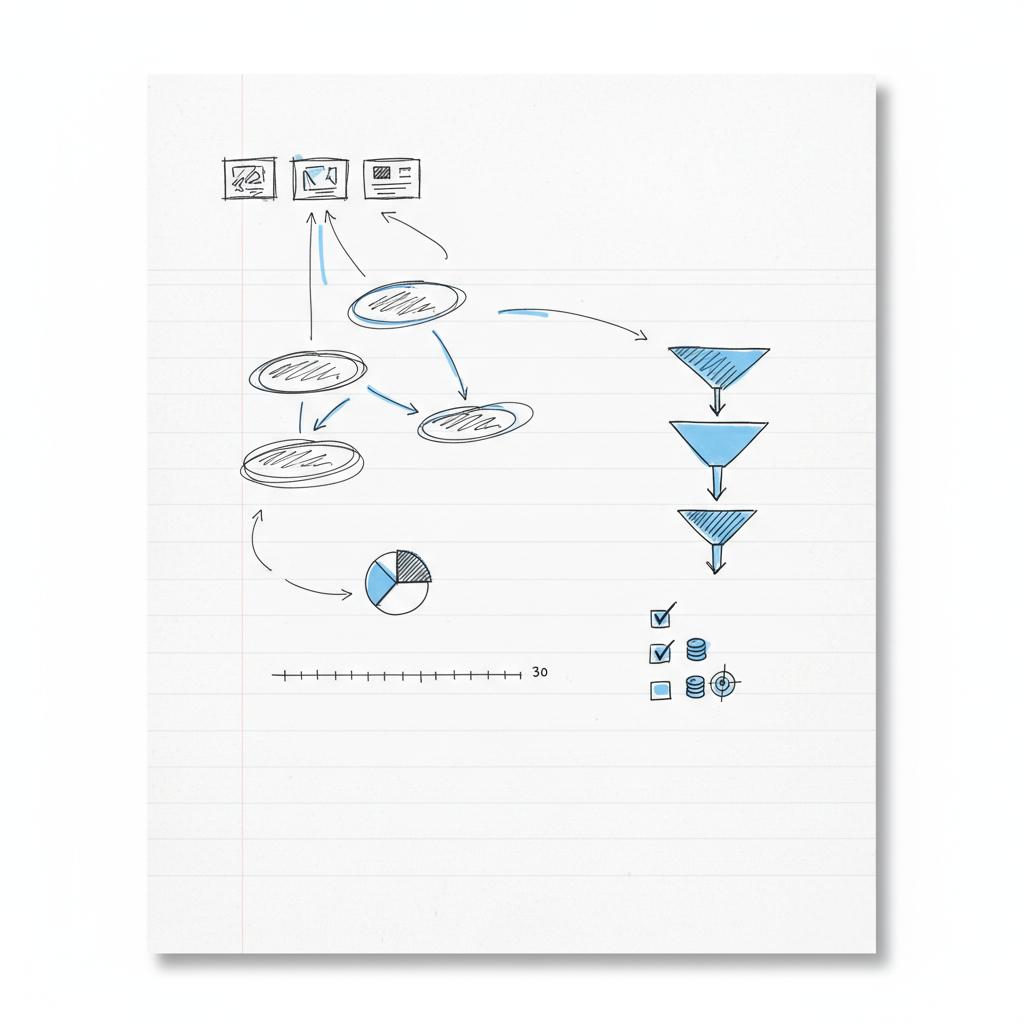
30-day blueprint: weekly breakdown
Run this as a focused experiment. Pick a single core objective, then execute this plan and measure what matters.
Week 1: Set up and baseline
– Choose one objective: awareness, sign-ups, purchases or store visits. Keep it simple.
– Make the landing page tidy: fast, single CTA, clear benefit, mobile-first.
– Install X conversion tracking and tag ad links with UTM parameters.
– Create 3 initial creatives: two promoted-post text+image variants and one short (10-15s) video.
– Set very narrow audience tests: a local radius or tightly defined interest groups.
Week 2: Learn fast with tight A/B tests
– Run the three creatives against two or three narrow audiences.
– Monitor early signals: CTR, CPC and CPM. Don’t declare winners off tiny samples – look for consistent outperformance across metrics.
– Try small copy tweaks: change the CTA from “Sign up” to “Reserve your spot” or swap a headline to emphasize a benefit.
Week 3: Scale winners and refresh
– Increase spend on the best creative + audience combos – by 20-40% increments, not 2x all at once.
– Pause poorly performing variants and push a mid-campaign creative refresh to avoid ad fatigue.
– Add one incentive if conversions lag – discount, limited seats, or a free add-on.
Week 4: Measure, decide, and plan next moves
– Compare X’s platform numbers with your analytics (Google Analytics or your store analytics).
– Calculate cost per acquisition (CPA) and compare to customer lifetime value or margin. If CPA < LTV, scaling is reasonable. If not, iterate.
– Decide: stop, scale, or change objective. Document learnings for next test.
How to pick objectives that actually matter
Top-of-funnel: Brand awareness, attention for a new product, event RSVPs. Use promoted posts and short video. Measure reach, CPM and view-through rates – but pair this with a plan to retarget engaged audiences.
Middle-of-funnel: Build interest and intent – email sign-ups, webinar RSVPs, trial starts. Use a conversion objective and track micro-conversions like newsletter signups.
Bottom-of-funnel: Purchases and bookings. Make sure your landing page removes friction – minimize fields and ensure mobile checkout speed. Only target conversion objectives if you have reliable tracking.
Audience strategies that work for small budgets
Narrow beats broad in early tests. Why? Small, tight audiences give you cleaner signals so you can learn which message works. Consider:
- Local radius targeting for shops and services.
- Interest slices and keyword targeting for hobby or niche products.
- Customer-list lookalikes built from your best customers.
Start with small audiences, find winners, then gradually broaden while maintaining creative relevance.
When a lookalike is smart
If you have at least a few hundred customers, build a lookalike from your best customers. That often gives better early performance than starting from broad interest targeting.
Creative that actually stops the scroll
Three creative rules to remember:
- Single message: Each ad should do one thing well. Don’t mix too many offers.
- Make it real: Phone-shot photos, behind-the-scenes short clips and customer moments often beat glossy stock.
- Short video wins: 10-15 second videos are ideal for awareness: fast intro, clear benefit, single CTA.
Copy templates you can use:
Promo post (local shop): “Free sample Tuesdays • Fresh pastry at noon • Reserve a seat”
Signup-focused: “Seats limited to 12 • Learn to bake 3 pastries in 90 minutes • Book now”
Fast video storyboard (15s): 0-3s hook (close-up of product), 3-9s showing action (making/using), 9-12s benefit (what they get), 12-15s CTA and logo.
Measurement: what to track and how to trust the numbers
Measurement is where many tests fail. If you can’t measure outcomes you’ll confuse reach with revenue. Track these:
- Cost per click (CPC) and CPM—quick cost signals.
- Click-through rate (CTR)—creative resonance.
- Cost per acquisition (CPA) or cost per conversion—business value.
- Return on ad spend (ROAS) where possible.
And do this: triangulate. Compare platform-reported conversions to first-party analytics and your CRM. Use UTM parameters on all ad links. Don’t accept the platform’s conversion number alone; attribution windows and view-through conversions can inflate apparent performance. For recent X ads statistics see X ads statistics.
Common tracking pitfalls
– Not installing conversion tags or setting them incorrectly.
– Sending traffic to slow or cluttered pages.
– Expecting a first-click metric to tell the whole story – look at session behaviour and downstream conversions too.
Budgeting scenarios for small businesses
Here are realistic budgets and what they buy you:
$300 pilot: Proof-of-concept. Enough for a local shop to test 2 creatives across 1-2 small audiences for a month, but sample sizes will be small. Industry guides also recommend similar pilot ranges, which can help set expectations: X advertising guide.
$600–$1,500 pilot: The sweet spot for learning. Run 3–4 creatives across 2–3 narrow audiences with room to iterate creative and landing pages.

$2,500+: Meaningful scale that lets you layer retargeting and lookalikes while still doing creative testing – best if you’re ready to convert at higher volumes.
Set expectations: smaller budgets learn more slowly. But thoughtful testing often beats throwing more money at the same failing ad.
Step-by-step checklist for your first X campaign
– Decide one objective and a primary KPI.
– Build a fast landing page (single CTA, mobile-first).
– Create 3 creatives: two static + one short video.
– Set 2-3 narrow audience segments.
– Add UTM tags and install conversion tracking.
– Run for 30 days and track CTR, CPC, CPA and on-site behaviour.
– Refresh creatives at least once mid-test.
– Compare results to business margins and decide to stop, scale or change.
Testing ideas you can implement this week
– Swap your CTA: “Book now” vs. “Reserve your spot” vs. “Get a free sample.”
– Try a phone-shot image vs. a product-studio image.
– Run a 10-15s product story video vs. a still image.
– Test a tight radius (3-5 miles) vs. a city-wide audience.
Common mistakes and how to avoid them
Underfunding the test: Small samples create noise. Use at least the $300 baseline to get meaningful signals.
Poor landing pages: If your page is slow or confusing, you’re testing the wrong thing. Fix the page before increasing ad spend.
Chasing vanity metrics: Followers and likes feel good but don’t pay bills. Tie every follower campaign to a follow-up plan—email nurture, exclusives or retargeted offers.
A quick comparison: X vs. search vs. Meta vs. LinkedIn
– X: Great for awareness and engagement; can convert with good landing pages and tracking.
– Search: Best for intent-driven conversions – captures people actively looking to buy.
– Meta: Deep consumer targeting and strong creative formats for direct response.
– LinkedIn: Best for B2B with higher CPA but strong role-based targeting.
That means X earns a place in a balanced mix. If you need top-of-funnel reach and timely conversations, X is often the winner for small budgets – especially when paired with a solid landing page and a plan to retarget engaged users.
Realistic KPIs by objective
– Awareness: CPM and reach – aim to minimize CPM and maximize relevant impressions.
– Engagement: CTR and video view rate – look for above-benchmark CTRs for your industry (benchmarks vary).
– Conversion: CPA and ROAS – compare CPA to customer lifetime value.
Advanced tactics for faster learning
– Sequential messaging: show an awareness creative, then retarget engaged users with an action-focused creative.
– Time-of-day bidding: test when your local audience is most active and concentrate spend then.
– Micro-conversions: track newsletter signups or reservation intents as an early signal before asking for a purchase.
Using incentives without cheapening your brand
Use tight, time-boxed offers like limited seating, weekend-only discounts, or an exclusive “first-class” experience. These create urgency and keep offers from eroding long-term pricing.
Troubleshooting common issues
Low CTR: Try a stronger hook—question, bold benefit, or surprising visual. Short videos often lift CTRs.
High CTR, low conversion: Look at your landing page speed, clarity and form friction. Add clearer benefits and social proof.
Erratic cost metrics: Narrow your audience and test one variable at a time so you can identify the lever that matters.
How to know when to hire help
Consider an external partner when you want to scale faster, lack internal bandwidth, or need landing-page work and creative production you can’t do in-house. Choose an agency that runs time-boxed experiments, shows clean reporting, and aligns with revenue-focused KPIs rather than vanity metrics (Agency Visible projects).
Practical creative examples and copy swappable into ads
Example 1 — Local bakery promoted post:
“Free bite Tuesdays • Fresh sourdough at 11am • Reserve your free sample”
Example 2 — Online course sign-up:
“Learn the three simplest tools to edit photos fast • Seats limited • Sign up now”
Example 3 — Service appointment:
“15-minute consultations every Thursday • Book your free consult”
How to interpret early results and not overreact
Look for trends, not single-day spikes. If one creative shows a 20% higher CTR and similar CPA across a week, that’s a meaningful signal. If a metric jumps for 24 hours, wait for more data before pivoting. Maintain control variables so you can learn what changed.
When X is the strategic winner for a small business
Choose X when you need to:
- Create local or topic-based awareness quickly.
- Test creative ideas with a visible audience and fast feedback.
- Build an engaged following you plan to nurture toward paid actions.
For many small businesses, X is the best way to get noticed fast and test what messaging drives real customers to act. It’s often the right first step when other channels are too expensive or slow to offer quick learning.
Final practical checklist before you launch
– One campaign objective and one primary KPI.
– Working conversion tracking and UTM tags.
– Clean landing page optimized for mobile.
– Three creative variants ready to run.
– A 30-day budget and a plan to refresh creatives once mid-run.
Run the test, learn from it, and iterate. If you keep testing, you’ll keep improving.
Start a focused 30-day X ads pilot with clear KPIs
Ready to run a disciplined 30-day pilot? If you want help running a focused experiment and interpreting the results, contact Agency Visible for a short pilot that prioritizes revenue and clear learnings.
Concluding notes: how to decide after 30 days
After your 30-day run, answer these questions honestly: Did the campaign reach the right people? Did clicks turn into the meaningful actions you care about? Is your CPA sustainable given your margins? If yes, scale carefully – if not, change the creative or objective and run the next time-boxed test.
Small-business advertising is a series of experiments. X ads can be an excellent experiment if you bring clear goals, smart creative and good measurement.
Start with a 30-day pilot. For basic proof-of-concept, $300 is a minimum; for reliable testing across creatives and audiences, aim for $600–$1,500. This range gives you room to test 3–4 creatives and 2–3 audience segments and to improve your landing page if needed.
Promoted posts are excellent for reach and engagement. They can drive sales, but conversion usually requires a strong landing page, clear CTA and conversion tracking. Use promoted posts to build awareness and pair them with follow-up conversion-focused ads or retargeting to capture sales.
Hire an agency if you don’t have time to run iterative tests, need landing-page or creative production help, or want to scale faster. Choose an agency that runs time-boxed experiments and prioritizes revenue-focused KPIs—Agency Visible, for example, offers short pilots and measurable plans tailored to small businesses.