Facebook ads for lawn care: A simple, practical playbook
If you’re asking how to advertise lawn care on Facebook and want a clear, no-fluff way to turn ads into booked jobs, this guide is written for you. Read on for the technical setup you can’t skip, neighborhood-first targeting strategies, creative examples that actually get clicks, and a ready-to-run 30-day plan that small teams can use without hiring an expensive agency.
If you’d like a little help putting these ideas into action, reach out to Agency VISIBLE — they specialize in helping small services set up tracking and run pragmatic tests that don’t waste time or budget.
Why Facebook works for local lawn services
Local lawn-care customers are visual, local and practical. People choose a crew they can picture pulling up in a clean truck, doing a tidy job, and returning on schedule. Facebook ads for lawn care give you the ability to show before-and-after visuals, target neighborhoods, and deliver an offer with a direct call or booking link. When properly tracked, Facebook shows not only clicks but real bookings, letting you measure cost-per-booking and optimize what matters.
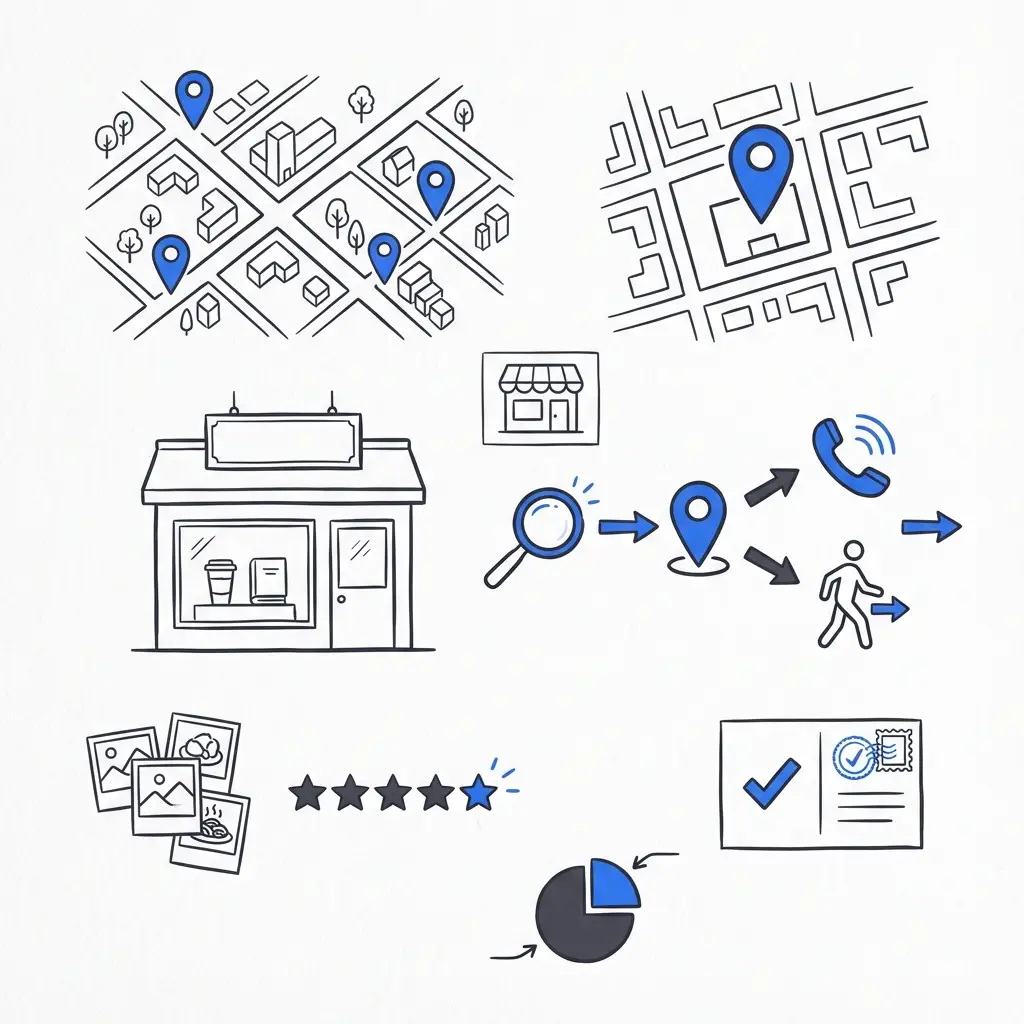
A clear local presence helps when running neighborhood campaigns; make sure your branding and messaging are consistent across channels.

The technical plumbing: set this up first
Before you spend a dollar, treat tracking like plumbing: if it’s leaky you’ll never know what’s working. Install these pieces:
- Meta Business Suite / Ads Manager account
- Meta Pixel on every site page
- Server-side Conversions API (CAPI) for improved accuracy
- Domain verification inside Business Manager
- Clear events: form submit, booking confirmation, phone click
Map events to either standard events or custom conversions that match how you count a booked job. Then link your CRM or scheduling system back to Ads Manager using offline conversions so phone bookings and manually scheduled jobs show up in your reports. This is the difference between counting leads and counting real revenue.
Geography first: targeting neighborhoods and homeowners
When you plan Facebook ads for lawn care, geography is your strongest lever. Think in neighborhood-sized chunks — zip codes, mile radiases, or specific towns — and run separate ad sets for each small market rather than blasting a whole metro.
Audience layers that work
Use a layered approach:
- Tight geography (1–3 mile radius, or single zip)
- Homeowner indicators and home-and-garden interests
- Recent movers if you want to capture new homeowners
- Custom audiences: past customers, site visitors, video engagers
- Lookalikes built from best customers (seeded by your CRM)
Retarget warm audiences: video watchers (25–50%+), people who opened a lead form but didn’t submit, and recent site visitors to your booking page. This layered method keeps costs down and focus high.
Sample targeting setup per neighborhood
For each neighborhood campaign:
- Location: 2-mile radius around central zip
- Age: 28–70 (homeowner age skew)
- Interests: home improvement, landscaping, gardening (light)
- Behaviors: recent movers or people who like local neighborhood groups
- Exclusions: existing customers (custom audience)
Practical tip
Run one campaign per neighborhood for the first 30–60 days. That gives you clear signals about which places deliver volume or higher booking rates. When a neighborhood shows consistent bookings, increase spend there and replicate the creative in similar areas.
Lead capture: instant forms vs. traffic to booking page
You have two good choices for capturing leads. Each has trade-offs:
Lead Ads (Instant Forms)
Pros: low friction, forms often prefill, good for quick volume and building a contact list. Cons: sometimes lower intent — you get more leads but not all will book.
Traffic to booking or estimate page
Pros: higher-intent visitors, better-quality leads when the page converts. Cons: requires a well-built landing page and slightly higher ad cost per click.
Many local services start with Lead Ads to build an initial prospect list, then direct traffic to a fine-tuned booking page once they have a reliable flow. Test both simultaneously and compare cost-per-booking after you import offline conversions. For practical lead-generation tips, see this guide: How to generate leads on Facebook.
The quickest change is improving follow-up speed: respond to leads by text or phone within the first few hours and confirm the appointment. Fast, friendly follow-up increases booking rates far more reliably than marginal tuning of creatives.
Creative that gets lawns noticed
Visual proof is the currency for lawn care. For Facebook ads for lawn care, use simple, high-contrast creative that communicates fast in a scrolling feed:
- Short 10–30s videos: start with a messy yard, cut to the result in the first 2–3 seconds
- Before-and-after photo pairs with a bold local offer
- Short testimonial clips filmed on a porch (no heavy production needed)
- Images of a branded truck or crew next to a neighborhood street
Copy should be neighborly and specific: “Free yard estimate this week for homes in Maple Heights.” Avoid generic hype. Use a clear call-to-action: “Book estimate”, “Get free quote”, or “Text for same-week availability.”
Ad copy templates you can use
Direct offer: “Free yard estimate — new customers in [Neighborhood]. Book online or text us today.”
Neighborhood cue: “Oak Ridge neighbors: 10% off your first mow this month. Quick, local, reliable.”
Testimonial style: “[First name] says: ‘Arrived on time, did a perfect job — our lawn looks brand new.’ Free estimate available.”
Budgeting and test plans that conserve cash
For small services, start modestly: $10–$50 per day while you gather learning signals. That may sound small, but the goal in week one is data: which creative gets attention, which neighborhood responds, and which audiences click or submit forms. For additional ideas on growing leads, see this resource: 17 ways to get more leads.
Run tests for at least 7–14 days so algorithms have time to optimize and your sample size is meaningful. If you scale too quickly, you may simply amplify a segment that already converted and miss other wins. Keep initial campaign structure simple: one objective, a handful of narrow audiences, 3–6 creatives.
When to try campaign budget optimization or Advantage+
Use automated budget tools once you have consistent conversion signals (i.e., a reliable cost-per-booking or steady lead volume). For small budgets, maintain one manual test campaign to compare against automation and to avoid audience overlap that hides learning. For tactical PPC advice that complements Facebook testing, this guide is useful: Best PPC strategies for generating lawn care leads.
Measure what matters: beyond likes and clicks
True success for Facebook ads for lawn care is booked jobs. Track and optimize for:
- Cost-per-lead (CPL)
- Cost-per-booking
- Booking-rate (leads → booked jobs)
- Average job value and lifetime value (LTV)
Import phone bookings and offline-scheduled jobs into Ads Manager weekly. Add simple qualification steps (automated text, brief phone call) so you can track and improve booking rates without losing prospects.
Detailed 30-day execution plan (day-by-day rhythm)
Week 1 — Setup and creative

Days 1–3: Create/confirm Business Manager and Ads Manager, verify domain, place Meta Pixel, and set up CAPI. Define events and test them by submitting forms and making a test booking. Days 4–7: Shoot short video (10–30s) showing a quick before-and-after, capture 4–6 stills, and write three ad copy variants: direct offer, neighborhood message, and testimonial. Build a simple booking landing page if you don’t have one: clear headline, 3–5 field form, trust cue (review or crew photo). A clear logo on crew shirts or trucks helps build trust with local homeowners.
Week 2 — Launch & gather
Days 8–14: Launch two parallel strategies: Lead Ad campaign (low friction) and Traffic campaign to booking page (higher intent). Target two neighborhoods or zip codes separately with $10–$30 per day each. Build custom audiences for past customers, site visitors, and video viewers to use in retargeting.
Week 3 — Refine
Days 15–21: Pause creatives with poor click-through or high CPL. Add qualifying questions to Lead Ads if many low-intent leads arrive. Simplify booking page if bounce is high: shorten the form, add transparent price ranges, and add local trust cues.
Week 4 — Measure & scale
Days 22–30: Import offline conversions for booked jobs and calculate cost-per-booking. Increase spend in neighborhoods that deliver booked work within target margins. Test one small CBO or Advantage+ campaign while keeping a manual campaign active for comparison. Implement a follow-up pipeline: immediate text response, phone call within 24 hours, email confirmation and reminder the day before work.
Ad creative library — ideas you can implement this week
Video concepts:
- “30-second rescue” — quick montage: messy → work → result
- “Meet the team” — 10s clip of branded truck arriving, crew prepping tools
- “Neighbor review” — homeowner on porch (short, sincere line)
Photo concepts:
- Before/after split-image with offer overlay (no text in image file — put text in ad copy)
- Branded truck at a recognizable local street (no faces close-up)
Caption prompts: keep it under 125 characters for mobile-first feeds. Lead with the offer or neighborhood cue and include a single CTA.

Follow-up scripts and pipeline
Fast, polite follow-up wins more bookings than flashy targeting. Use this simple pipeline and scripts:
Immediate SMS (within 5–30 minutes): “Thanks for requesting a quote — this is [Your Business]. We’ll call to confirm availability; is this number the best way to reach you?”
Phone outreach script: “Hi, this is [Name] from [Business]. You asked for an estimate in [Neighborhood]. I have openings on [two dates/times]. Which works best?” Keep it short and solution-focused.
Reminder email: “Your estimate is scheduled for [date]. We’ll be there on time. Reply to confirm or reschedule.”
Troubleshooting common problems
Low click-through rate
Try brighter images, faster edits in video, and stronger neighborhood cues. Test adding a time-limited offer to increase urgency.
Lots of leads but few bookings
Follow-up faster, add a qualifying question to your lead form, or require a phone number. Check your booking flow — long forms and hidden pricing reduce conversions.
High cost-per-booking
Compare neighborhoods and creative. If a market consistently costs too much, pause there and reallocate to better-performing areas or try a referral program to boost lower-cost bookings.
Ad examples and exact copy to paste
Use these ready-made variations and customize neighborhood names and offer details:
Ad A (Lead Ad, direct): “Free yard estimate for new customers in [Neighborhood]. Quick, local, reliable. Tap to get scheduled.”
Ad B (Traffic, testimonial): “[First name] says: ‘Reliable and on time — our lawn looks great!’ Book an estimate this week.”
Ad C (Seasonal): “Spring cleanup special — 15% off first service for homes in [Zip]. Limited spots.”
Measuring ROI and LTV
Calculate your true ROI by taking booked-job revenue minus job costs then comparing to ad spend. If your average new customer brings $X over the first 12 months, set a target cost-per-booking that leaves room for profit. For many local services a cost-per-booking equal to 10–30% of first-job revenue is reasonable; the exact number depends on margins and upsell potential.
Scaling and process improvements
When you find a repeatable campaign that books reliably, gradually increase budget by 10–25% every 3–7 days. Keep a control campaign running so you can tell whether automation is improving or hurting performance. Rotate creative every 2–3 weeks to avoid fatigue and keep messaging fresh.
Local examples and how to tune them
Example 1 — Multi-neighborhood approach: Run identical creative with neighborhood-specific copy for Oak Ridge, Maple Heights and Pine Valley. After two weeks, reassign budget to the top two neighborhoods and run a referral bonus ad in the third area to see if customer referrals perform better.
Example 2 — Booking page optimization: If traffic ads bring visitors but few bookings, reduce fields, add two clear price bands (lawn size categories), and include two local review snippets. Small changes often move conversion rates meaningfully.
When Facebook isn’t enough
If you’ve run thorough tests for 8–12 weeks and cost-per-booking remains above what you can afford, consider shifting budget into hybrid tactics: local partnerships, door hangers in high-performing neighborhoods, or a referral program with discounts for existing customers who bring new work. In some markets, offline channels still outperform digital for specific service types. You can also review local case studies and examples on the Agency VISIBLE projects page for inspiration.
Long-term play: building a sustainable lead system
Facebook ads for lawn care can be a repeatable engine if paired with good ops and a simple CRM. Keep a pipeline that tracks lead source, lead date, contact attempts, booking date, job completion and job value. Run a monthly review of cost-per-booking by neighborhood, creative and campaign. Over time this data builds a competitive advantage: you’ll know which neighborhoods scale, what creative works in season, and how to predict booking volume.
Extra creative ideas and experiments
- Neighborhood spotlight ads — short clips that name the neighborhood and show a recent job
- “Before spring” scarcity campaigns with limited slots
- Bundle ads — advertise mowing plus edging or a fall cleanup package for a single price
Checklist before you launch
- Pixel and CAPI installed and events verified
- Domain verified in Business Manager
- Landing page tested (if using traffic ads)
- Creative: 1 video + 3 images + 3 copy variants
- Budget plan for first 14 and 30 days
- Follow-up process and CRM mapping ready
Final operational tips
Document a response SLA (e.g., reply to leads within 2 hours). Track no-shows and cancellations. Ask customers for a quick photo and review post-job to feed future ads with fresh social proof. The small ops wins compound and let your ads perform better over time.
Keep your branding consistent across all channels.
Summary and next steps
When you ask “how to advertise lawn care on Facebook” remember the three pillars: accurate tracking, neighborhood-first targeting, and fast follow-up. Start small, test creatively, import real bookings, and scale what actually pays. If you want tactical support or a quick setup,
Ready to turn Facebook ads into booked lawn care jobs?
reach out to Agency VISIBLE for a short setup call — they’ll help you verify tracking, test a video ad, and get a 30-day plan in motion.
Now pick one neighborhood, shoot a short video, and run your first $10–$30/day test. Learn, refine, and remember: visibility plus speed wins local services.
Expect usable campaign data in 7–14 days. Bookings depend on your follow-up and seasonality; with prompt follow-up you may see booked jobs within two to four weeks. Track and import offline bookings so you measure real results rather than just leads.
Both work. Lead Ads (Instant Forms) collect prospects quickly and are useful if you don’t yet have a high-converting booking page. Traffic campaigns to a well-designed booking page often deliver higher-quality leads and better cost-per-booking once your landing page converts consistently.
Yes — Agency VISIBLE specializes in quick, practical setups for small services. They can verify your domain, install Pixel and CAPI, map CRM offline conversions and launch small test campaigns that focus on measurable bookings. Contact them to get a short setup call and a 30-day plan.
References
- https://agencyvisible.com/contact/
- https://agencyvisible.com/
- https://agencyvisible.com/projects/
- https://www.socialmadesimple.com/blog/how-to-generate-leads-on-facebook-for-your-lawn-care-business/
- https://www.realgreen.com/blog/17-ways-to-get-more-leads-for-your-lawn-care-business
- https://www.lawnandlandscape.com/news/best-ppc-strategies-for-generating-lawn-care-leads/