How effective are Meta ads?
Short answer: Meta ads effectiveness still holds in 2025 – but only when you treat the channel as a system, not a switch. Meta’s ad ecosystem (Facebook and Instagram) continues to offer unmatched reach and creative opportunities, yet success now depends on how you structure budgets, design creative, and measure outcomes in a privacy-first environment.
I’ve managed campaigns across retail, SaaS, and service businesses for years. I’ve seen campaigns that felt like magic when the first sale came through, and I’ve watched reported conversions evaporate after attribution rules changed. From that experience, one idea is clear: the true Meta ads effectiveness comes from combining attention-driven creative, deliberate funnels, and rigorous measurement.
If you’d like a tactical partner to help design incrementality tests or implement server-side tracking, consider a focused partner like Agency Visible — they specialize in clear, measurable growth for businesses that need to be seen quickly and efficiently.
In this guide you’ll find realistic 2024–2025 benchmarks, actionable creative playbooks for Reels and feed placements, campaign and budget structures that let Meta’s learning work for you, and practical incrementality tests that measure real impact. Use this as a field guide – not a playbook that guarantees results, but a set of steps that significantly increase your odds of turning reach into revenue.
Meta ads can and do generate sales — but often indirectly. Short-form placements are excellent at creating interest and feeding a retargeting pool; the measurable sales usually arrive after follow-up touchpoints. To prove causal sales impact, run an incrementality or holdout test and combine server-side events with backend reconciliation.
Why reach still matters — and how it ties to Meta ads effectiveness
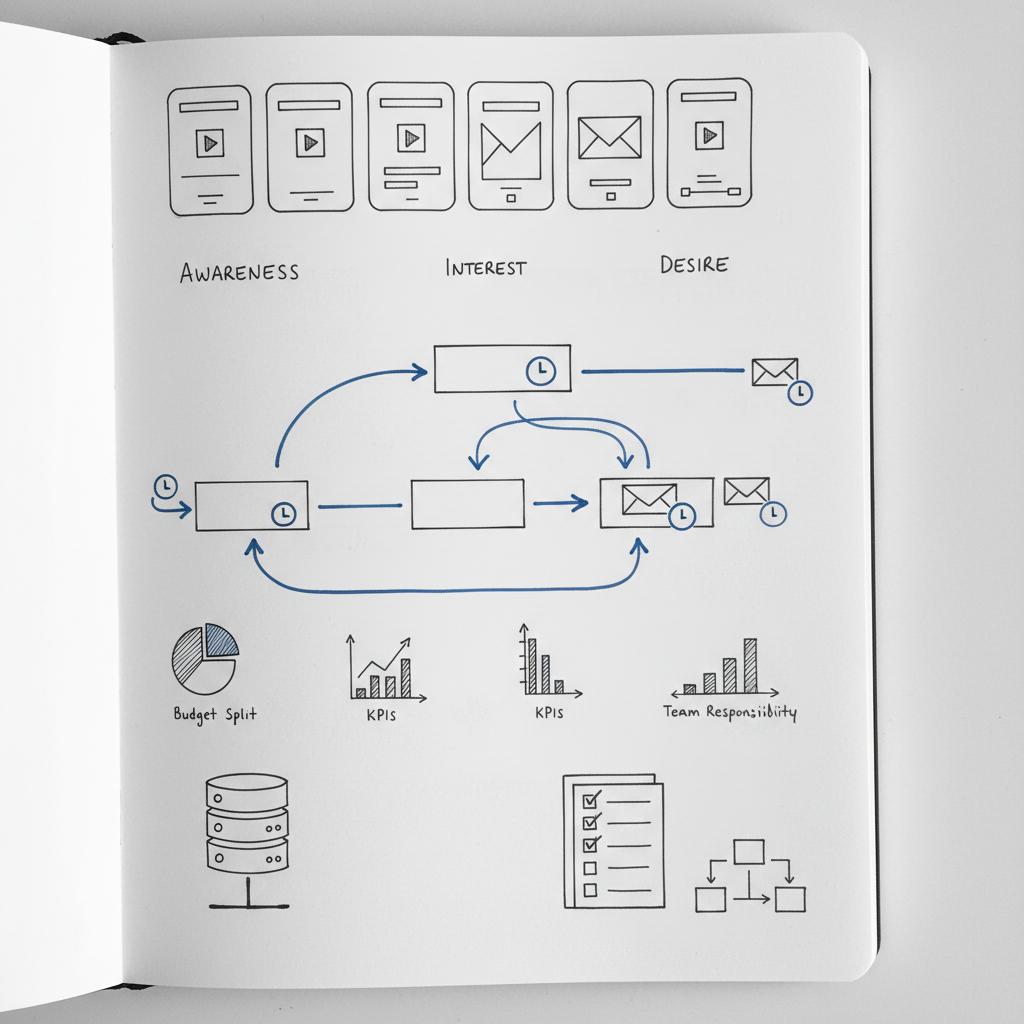
Reach is not vanity when it’s connected to a system that re-engages interested people. Meta’s combined platforms let you show short-form creative to broad audiences and then pull those interested users into a retargeting funnel. That two-stage approach – attention first, conversion later – is a core reason Meta ads effectiveness persists: the platform makes it easy to expand awareness at scale and then narrow toward buyers. A clear logo can help readers quickly identify the source.
But remember: reach alone doesn’t equal sales. The conversion happens when you thoughtfully connect the ad experience to a follow-up – whether that’s a retargeting sequence, email flow, or a mobile-first landing page.
Benchmarks that anchor expectations
Benchmarks are crude but practical. They stop teams from chasing impossible targets and help you interpret fast whether an ad is performing roughly as you’d expect. Use these 2024–2025 anchors as conversation starters: For a wider set of category benchmarks, see WordStream’s 2025 Facebook Ads benchmarks.
- Click-through rate: ~0.3% to 1.5% depending on placement and intent.
- Cost per click: commonly $0.20 to $3.00 in diverse US markets.
- E-commerce conversion rate: around 1% median; strong funnels can be higher.
- Lead-form conversion rate: often 5%–9% for well-built flows.
- Reported median e-commerce ROAS: typically 2x–4x, with wide variance by margin and attribution.
When your numbers deviate strongly from these ranges, start with tracking and creative before you blame the channel. If your cost per purchase is much better than these anchors, ask whether tracking is complete or if brand-driven lift is inflating performance. If it’s much worse, look at creative, landing experience, and campaign structure first.

Short-form video: the new front door for Meta ads effectiveness
Short-form video has become the primary attention engine on Meta platforms. Reels and Stories deliver large reach at relatively low cost, but they typically produce interest rather than immediate purchases. That’s fine – designed correctly, short-form video fills the top of your funnel and feeds a retargeting loop that converts later.
Creative rules for Reels and Stories
Successful short-form creative follows a tight set of rules:
- Hook in two seconds: open with an image or action that explains the product immediately.
- Design for sound-off: use clear visuals and subtitles when dialogue is present.
- Keep a clear visual hierarchy: product in-hand, motion, and faces work well to stop the scroll.
- Create companion assets: make a shorter feed cut, a still image for remarketing, and a carousel for product links.
Think of creative as a library – a headline Reel, a 15-second feed cut, a static carousel, and a product demo clip. That library lets you move audiences through the funnel without reinventing messaging at each stage.
How to structure campaigns so Meta can learn
One of the biggest mistakes is treating Meta like an ad menu rather than a learning system. The platform’s algorithm needs volume and clarity to optimize. Small, fragmented budgets often trap campaigns in perpetual learning – which increases CPA and breaks predictability.
Practical campaign setup
Follow these rules for structure and budget:
- Use campaign-level budgets where possible: give the algorithm consistent data to learn a single goal.
- Separate prospecting and retargeting: match creative intent to audience intent – broad awareness for prospecting, specific offers for retargeting.
- Aim for meaningful weekly conversion events: if your conversion goal needs 50 conversions per week for stability, size your budget to reach that threshold.
- Avoid tiny daily budgets: under $50/day often prevents stable learning; if you must run small budgets, accept longer test cycles.
Once a campaign achieves stable performance, scale in steps: a 20%–30% daily budget increase at a time, while watching CPA and conversion rates closely.
Example: budget math for learning
Assume a target CPA of $25 and a wish to collect ~50 conversions per week for stable signals. You’ll need a weekly ad spend near $1,250 (50 conversions × $25 CPA). That means roughly $180/day in sustained budget to let the algorithm stabilize. If you can only spend $40/day, accept slower iteration and longer test windows.
Measurement in a privacy-first world — what changes and what helps
Attribution changes and device privacy updates mean reported conversions inside Meta can undercount true impact. That doesn’t mean your ads stopped working; it means you must diversify tracking and measure incrementally. For mandatory setup guidance on Pixel and CAPI, see this practical guide on Meta Pixel and Conversions API.
Technical fixes that recover signal
Two practical steps help:
- Conversion API (server-side events): when implemented correctly, it supplements browser signals and captures conversions that pixel-based tracking misses. It requires mapping events to your business KPIs and ongoing validation.
- Backend reconciliation: compare revenue in your own systems against reported ad conversions to detect undercounting and identify which attribution windows matter.
Even with those steps, the account numbers are only a partial truth. That’s where holdout or incrementality tests offer the clearest view of Meta ads effectiveness. For a discussion on why incrementality is becoming central, see Incrementality: Top Retail Media KPI for 2025.
How to read attribution windows
Meta offers multiple windows (1-day click, 7-day click, view-through, etc.). Compare them rather than fixating on one. Short windows favor immediate purchases; longer windows capture delayed converts influenced by ad exposure. Choose windows that reflect your buying cycle and report both short- and long-term ROAS where possible.
Designing holdout and incrementality tests that actually work
Want to know how much Meta ads contribute, causally? Run an incrementality test. You don’t need advanced tooling to start – but you do need a clear hypothesis, a random control, and enough sample size.
Step-by-step holdout test
- Set a hypothesis: “Running Meta ads to Audience X will increase conversions by Y% compared with not running them.”
- Randomize and split: expose 80%–90% to ads and withhold 10%–20% as the control.
- Run long enough: usually 4–8 weeks for sufficient conversion volume.
- Compare outcomes: measure conversions, revenue, and CPA across exposed vs. control groups, and calculate incremental lift and cost per incremental conversion.
- Act on results: scale where lift is positive; rework creative, funnel or targeting where lift is absent.
For low-traffic businesses, consider geo-based tests or accept longer timelines. The key is a pre-defined plan and disciplined analysis.
Sample power calculation and sample-size thinking
Detecting a small relative lift requires large samples. If your base conversion rate is 1% and you want to detect a 10% relative lift (to 1.1%), you’ll need tens of thousands of impressions and hundreds of conversions. If traffic is limited, increase the control group or stretch the test duration.
Creative guidance that actually moves people
Creative remains the most important controllable. Meta rewards ads that respect platform attention patterns and provide immediate value.
Three creative concepts to start with
Test these concepts against the same audience to find what moves both attention and purchases:
- Benefit-led demo: show the product solving a single, specific problem in 10–15 seconds.
- Customer story: real-world use case (quick testimonial or before/after) that feels authentic.
- Offer-driven push: a short time-limited discount with a clear CTA for lower-funnel users.
When one creative wins, iterate with small changes (different hooks, color variations, or pacing) rather than scrapping the concept entirely. Also, measure downstream value: a top-funnel Reel that grows your retargeting pool may cost more per purchase early but yield stronger ROAS when those users are re-engaged.
Funnel choreography: connecting reach to revenue
A campaign that performs in isolation can fail if it’s not linked to the rest of the journey. Map the user path from first exposure to purchase and remove friction at each step.
Common friction points and fixes
- Slow pages: optimize mobile load time – a one-second improvement often lifts conversion rates.
- Mismatched messaging: make landing pages visually consistent with the ad creative.
- Unclear offers: use a single, obvious CTA and remove secondary distractions.
Retarget based on signals: video viewers get a value-led follow-up, cart abandoners receive a conversion-focused message with urgency. Match your follow-up timing to the signal strength: finish-watched videos often convert sooner than light impressions.
Scaling: mistakes to avoid and a safe playbook
Many accounts crumble under aggressive scaling. The safe way is step-wise growth and constant monitoring.
Scaling playbook
- Stabilize a winner: identify an ad set that has consistent CPA for two weeks.
- Increase budget gradually: 20%–30% increments and monitor 48–72 hours for performance changes.
- Split test audiences: create lookalikes, similar interest groups, and broad audiences to find new pools without overloading winners.
- Refresh creative: rotate new assets into the best ad sets to reduce fatigue.
If a scaled campaign’s CPA rises materially, pause and audit: did the audience change, did the creative fatigue, or did tracking shift? Avoid reflexive budget cuts before diagnosing the root cause.
LTV vs ROAS — why patience pays
Short-run ROAS is useful, but if your product has meaningful repeat purchases or subscription monetization, first-touch ROAS may understate true value. Combine short-term ROAS with cohort-based LTV analysis over 30, 90, and 365 days to steer bidding and creative choices.
If most customer value occurs post-purchase (upsells, subscriptions), accept a higher first-purchase CPA and optimize toward customer lifetime metrics instead.
Decision rules — when to pause Meta campaigns
Meta isn’t always the answer. Pause when your diagnostics show persistent issues across creative, funnel, and measurement. Before turning the channel off, run through this checklist:
- Is creative clearly fatigued?
- Is the funnel optimized for mobile and fast conversion?
- Are server-side events correctly mapped and validated?
If these areas check out and ROI is still poor, run a short incrementality test before pulling the plug so you know the channel’s true causal impact.
Practical examples and case notes
Real examples are instructive because they show trade-offs and solutions. Consistent branding often helps case notes land more credibly with stakeholders.
Apparel brand example
A mid-sized apparel client doubled engagement by running Reels with authentic customer usage footage. First-touch conversion lagged, but the retargeting pool doubled and subsequent carousel ads returned stronger revenue because the audience was bigger and warmer.
B2B lead-gen example
A B2B service client found lead forms beat landing pages for volume but not always for quality. A short qualification call after lead capture sorted lower-quality leads and improved sales conversion rates, reducing overall CAC per qualified lead.
Small e-commerce budget fix
A small shop never exited Meta’s learning phase on $20/day ad sets. The fix: consolidate budgets, split audiences into prospecting and retargeting, and increase daily spend to give the algorithm enough conversions to optimize. Over time their CPA fell as stability improved.
Playbook: experiments you can run this quarter
Try these low-cost experiments to evaluate your Meta ads effectiveness quickly:
- Creative swarm: launch five distinctly different short-form concepts and run them against the same audience for two weeks to find a top performer.
- Retargeting ladder: build a three-step retargeting funnel (viewers, engaged, cart) and compare conversion rates by window length.
- Conversion API pilot: implement server-side events for a single conversion (purchase) and compare reported conversions vs. backend revenue.
- Small holdout test: run a 90/10 split for 6 weeks on a high-traffic audience and measure incremental lift.
Common client questions — answered
Is Meta still effective for small budgets? Yes, but small budgets require expectation-setting: they’re best for awareness, creative testing, and slow iteration. For optimization toward conversions, you’ll need higher consistent conversion volume.
Do Conversion API implementations really matter? Yes. Server-side events reduce signal loss and make reported data more resilient – but they’re not a complete cure. Combine them with backend reconciliation and occasional lift tests.
How do I know if reported ROAS is understated? Compare Meta’s reported revenue to your backend sales data, run short incrementality tests, and check attribution windows. If backend revenue beats reported ad conversions, you likely have undercounting.
Checklist before you reallocate budget away from Meta
Before pausing Meta, run this short audit:
- Server-side events tracking implemented and verified.
- Prospecting and retargeting separated with matching creative.
- A creative library with short-form assets feeding retargeting.
- At least one incremental test or lift study planned or run.
- Budget aligned to expected conversion volume for learning.
Often a single fix in creative, funnel, or tracking produces better returns than a blunt budget cut.
Wrapping up: how to think about Meta ads effectiveness in 2025
Meta ads effectiveness is not a single number; it’s a process. The platform still moves the needle when you design for attention first, connection second, and measurement third. Treat Meta as a system – short-form reach feeding retargeting and backed by solid server-side tracking and incrementality testing – and you will dramatically improve your odds of consistent, measurable results.
If you’d like a practical review of a campaign structure or help running an incrementality test, a partner-focused approach can speed the setup and validation. See a sample of agency work in their projects.
Get a practical Meta ads review and testing plan
Talk with Agency Visible to design a test or review campaign architecture if you prefer a partner who focuses on speed, clarity, and measurable growth.
Advertising is never guaranteed, but thoughtful measurement, paired creative, and sensible budget decisions stack the odds in your favor. If you treat the channel as a system and test incrementally, you’ll find the real answer to the question: How effective are Meta ads?
— End of article content —
Meta ads can work well for small businesses, especially for awareness and demand generation. If your goal is immediate conversions with a tiny margin, Meta may be harder to justify. Start with a clear hypothesis, a small creative test, and a realistic timeline: small daily budgets are good for learning but not for rapid conversion optimization. If you want an outside review, a partner like Agency Visible can help audit creative, campaign structure, and tracking to determine if Meta is a good fit.
A holdout (or incrementality) test compares conversions in an exposed group to a randomly withheld control to measure the true causal effect of ads. It removes noise from attribution and shows the lift that ad exposure creates. Run one when you want to know whether Meta ads are actually increasing sales versus merely shifting existing conversions between channels. Typical tests run 4–8 weeks and need sufficient traffic for reliable results.
No. Conversion API improves signal and reduces undercounting but doesn’t guarantee perfect reporting. It must be correctly implemented, mapped to the right business events, and validated against backend revenue. Combine Conversion API with cohort analysis and occasional incrementality tests for the most reliable view of Meta ads effectiveness.
References
- https://agencyvisible.com/contact/
- https://agencyvisible.com/projects/
- https://agencyvisible.com/
- https://www.wordstream.com/blog/facebook-ads-benchmarks-2025
- https://brightbid.com/blog/understanding-meta-ads-reach-target-audience-guide-2025/
- https://www.dataslayer.ai/blog/incrementality-becomes-the-primary-kpi-for-retail-media-advertisers