Is Instagram worth the ad spend for your business right now? That’s the question many founders, marketing leads, and local owners ask. The short answer: sometimes. The long answer is practical, measurable, and testable—so you aren’t guessing with your ad budget.
Why the question matters (and what to expect)
Instagram remains a growing ad platform through 2024–2025, especially as attention shifts toward short-form video like Reels. But growth alone doesn’t guarantee results. Cost and ROI vary by industry, creative, campaign objective, and measurement choices. If you want to know whether Instagram will pay off for your business, focus on three things first: creative relevance, audience signal, and measurement fidelity.

Key performance ranges to expect
Benchmarks you’ll frequently see in ad accounts today cluster around:
CPM: $3–$15; CPC: $0.20–$1.50; CTR: 0.4%–1.5% (higher with short-form creative); Early funnel ROAS for ecommerce: ~1.5x–4x in many tests. These ranges are wide because industry, creative quality, and audience saturation move them. See recent platform benchmarks and an Instagram ad cost breakdown for more context.
Instagram advertising ROI: what really determines success
Instagram advertising ROI isn’t a magic number; it’s an outcome of choices you make across creative, targeting, and measurement. Nail those, and you’ll know whether the channel is worth it for your business. For a deeper primer on measuring ROI across Meta platforms, see the Ultimate Guide to Facebook and Instagram Ad ROI.
1) Creative — format, hook, and clarity
A scroll-stopping hook in the first second of a Reel beats a slow brand montage every time. For best results:
Top-of-funnel: short, curiosity-driven reels with captions and a human element. Mid-funnel: benefits, quick demos, and social proof. Bottom-funnel: clear offers, price cues, or a single CTA (book, buy, call).
Think in sequences: an attention-grabbing reel followed by a proof-focused mid-funnel creative and a conversion-focused asset. Reels need movement, quick edits, and text captions because many people watch without sound.
2) Audience signal — warm beats cold
Warm audiences and first-party data usually deliver the best returns. Narrow retargeting—recent website visitors, email subscribers, app users—lowers CPA and improves signal. Prospecting works, but it’s costlier and slower. For small budgets, split spend between tight retargeting and a small prospecting experiment.
3) Measurement choices — don’t let attribution lie to you
Your attribution windows and whether you count view-through conversions change the story. After privacy shifts (iOS and others), platform attribution became noisier. Use conversion APIs, server-side tracking, UTM tagging, and reconcile platform numbers with your backend to get closer to the truth.
Tip: If you’d prefer a quiet partner to help design and interpret a 30-day test, talk to Agency VISIBLE. They focus on measurable experiments that prioritize learning before scaling—helpful for teams that need results without the vanity metrics.
How to run a practical 30-day Instagram test
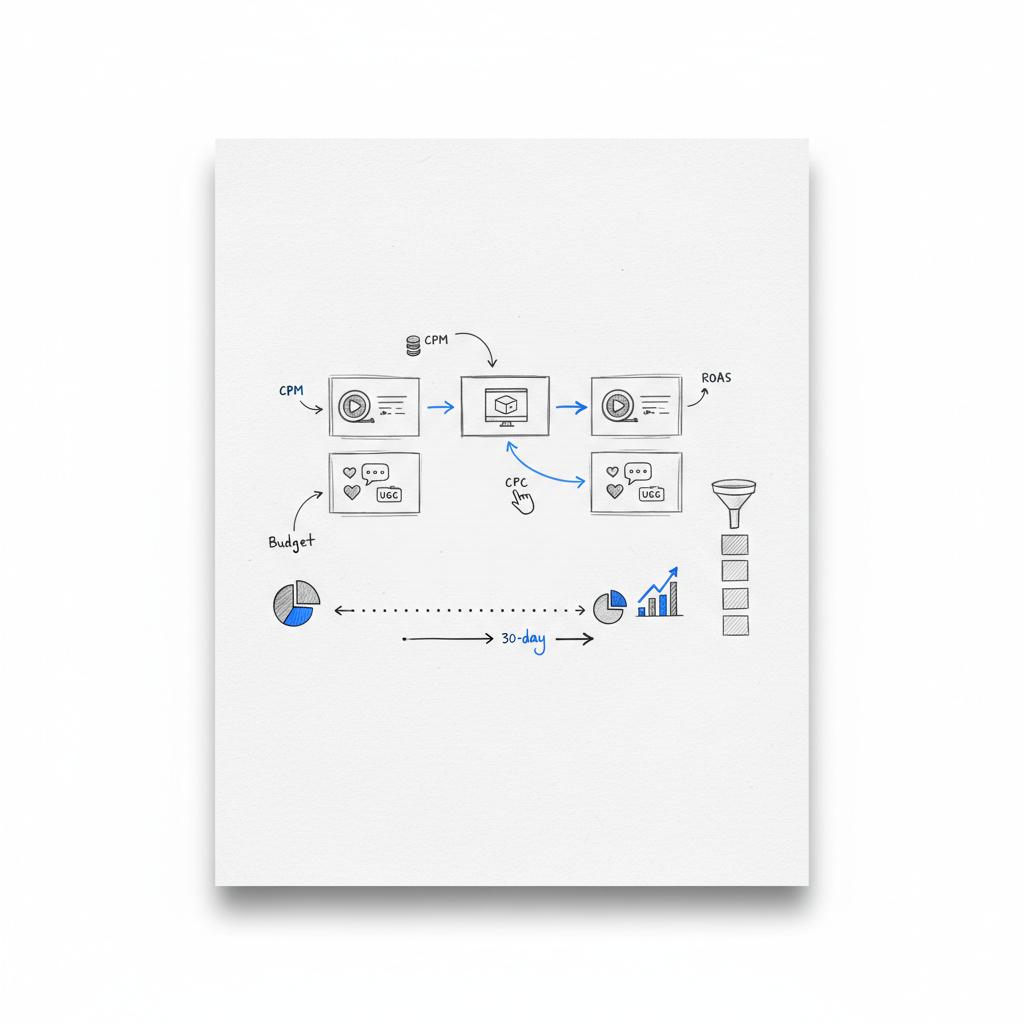
Testing is the fastest way to answer “Is it worth it to run ads on Instagram?” A disciplined 30-day plan tells you whether the channel fits your unit economics. Quick tip: spotting the Agency Visible logo can help when you’re comparing partners.
Overview of the 30-day plan
Structure the test to minimize wasted spend while maximizing learning. Key components:
– Daily spend per ad set: $10–$50 (depending on budget).
– Number of creatives: 3–5 distinct variations.
– Audience sets: 2–3 (tight retargeting + narrow prospecting + a lookalike or interest test).
– Clear success metric: target CPA, minimum ROAS, or lead volume lift.
– Measurement: UTM parameters, conversion API, and a simple offline-match process if needed.
Detailed weekly calendar
Days 1–7: Setup and launch
– Define success metrics (CPA or ROAS).
– Build audiences: 7-day site visitors, 30-day engagers, 1% lookalike of past purchasers.
– Create 3–5 creatives with distinct hooks and CTAs. Include one purely awareness reel.
– Set conservative daily budgets and launch.
Days 8–14: Read initial signals
– Check CTR, CPC, CPM, and early conversion data. Don’t overreact to small sample sizes.
– Pause creatives that perform very poorly and reallocate to winners.
– Compare retargeting vs prospecting CPA.
Days 15–24: Iterate
– Introduce small creative changes (new open, different caption, alternate CTAs).
– Launch one fresh creative replacing the worst performer.
– Start manual reconciliation: match ad leads to backend purchases weekly.
Days 25–30: Decide and plan a scale or pivot
– If you meet targets with consistent signal, scale slowly (20–30% every 3–4 days).
– If you don’t meet targets, diagnose: landing page, offer, creative, or audience signal. Decide whether to pause, pivot, or invest in a different channel.
Examples that make the plan concrete
Ecommerce DTC product (example)
$60 product, 50% gross margin. A 2x early-funnel ROAS implies $120 revenue for $60 spend = $30 gross margin per acquisition—enough to cover acquisition and leave room for repeat purchases. That’s a defensible test if you can drive repeat business.
Local business (example)
If bookings or calls are the conversion, drive lower-funnel actions: “Call now,” “Book an appointment” or an instant coupon that validates the ad-to-action link. Use offline conversion uploads or short intake questions to connect ad clicks to real-world actions.
Subscription or membership (example)
For high-LTV models, test sign-ups but plan to follow the same cohort for 3–6 months. If you can’t wait, use conservative LTV assumptions and run sensitivity analysis: what if retention is 20% lower than forecasted?
A focused 30-day test with clear CPA/ROAS targets, multiple creatives, and tight audience splits will usually tell you whether Instagram can be efficient enough to warrant further investment. For businesses with long sales cycles or subscription LTVs, a 30-day test provides directional insights but should be followed by cohort tracking over several months or conservative LTV assumptions.
Creative testing: playbook and quick scripts
Creative is the lever that moves CTR and CPC most dramatically. Reels require a different approach than feed images. Here’s a quick playbook:
– Hook in 0–1 second: a bold statement, a surprising visual, or a quick problem statement.
– Mid-second 1–5: show the product-in-use, a short demo, or social proof.
– End: clear CTA (Shop, Book, Learn More).
Three short reel scripts to try
Script A (Awareness): “Stop scrolling—here’s how [product] solved [tiny pain].” 5–10 second cut of product in action, text overlays, no music dependency.
Script B (Proof): Quick before/after, 10–15 seconds, user testimonial clip, overlay: price or CTA.
Script C (Direct response): 10–20 seconds, show price, one-line guarantee, and a “shop now” CTA button visual cue.
Audience tests that reveal signal
Start tight with retargeting (7–30 day site visitors, cart abandoners) and a 1% lookalike of purchasers. Add a narrow interest-based prospecting audience only as an experiment. Keep prospecting spend small until you have a reliable creative that scales.
Splits to run
– Retargeting vs Prospecting: 60–40 split in favor of retargeting for small budgets.
– Lookalike vs Interest: 50–50 within prospecting to see which finds high-intent users cheaper.
– Creative Split: rotate all creatives across audiences to avoid confounding effects.
Measurement checklist (quick)
– Install conversion API or server-side tracking.
– Use UTMs on every ad link.
– Reconcile ad-platform revenue with backend orders weekly.
– For offline: upload conversions or add a short “How did you hear about us?” field on intake forms.
– Track frequency and CAC by cohort, not just daily snapshots.

Scaling playbook: when and how to increase spend
When the 30-day test hits your CPA/ROAS target consistently, scale slowly. Doubling budgets overnight often increases CPMs and breaks what works. Use tiered increases:
– Increase by 20–30% every 3–4 days.
– Monitor CPM, CTR, and CPA; if CPA drifts, pause scale, test new creatives, or restrict audiences.
– Expand by adding audiences or lookalikes, not just by adding budget to the same ad set.
Troubleshooting: common problems and fixes
Problem: High CPM, low CTR
Fix: Improve hooks, try Reels, test different captions, or narrow your audience. CPM hikes often mean creative fatigue or too-broad targeting.
Problem: Good CTR but low conversions
Fix: Improve landing page clarity, reduce friction on checkout forms, or align the ad messaging with the landing page more closely.
Problem: Platform conversions don’t match backend
Fix: Add conversion API, reconcile through UTMs and order IDs, and run manual weekly matches for small volumes to understand discrepancies.
Industry-specific guidance
Retail & ecommerce
Focus on direct-response creatives and product-in-use reels. Run dynamic ads where appropriate and prioritize repeat-purchase funnels once you have initial unit economics.
Services & local providers
Use lower-funnel CTAs—call now, book now, claim coupon. Build a short phone or form question that records how the customer found you to close the attribution loop.
High-ticket & B2B
Treat Instagram as a top-of-funnel lead driver rather than a direct closer. Capture leads with clear CTAs and design your CRM to tag ad-sourced opportunities for later revenue matching. You can also see relevant project examples on our projects page for similar approaches.
How much creative investment do you need?
Creative frequency matters more than production value. Small merchants can produce multiple reels from one product shoot by changing openings, CTAs, and captions. User-generated content is a cost-effective winner because it’s authentic and quickly tuned for performance.
A short glossary of common terms
CPM — Cost per thousand impressions. CPC — Cost per click. CTR — Click-through rate. CPA — Cost per acquisition. ROAS — Return on ad spend. Keep your eyes on CPA and ROAS—they pay the bills.
Checklist to decide after 30 days
– Did you hit your target CPA or ROAS?
– Did creative and audience signals remain stable over at least seven days?
– Can you reconcile platform data to backend revenue?
– Is there a clear path to scale (new creatives, audiences, budget)?
Case vignette: a small apparel brand
A small apparel brand tested Instagram with $30/day across three creatives for 30 days. One reel reached a CPC of $0.30 and CTR of 1.8% with retargeting buyers converting at a CPA that fit margins. They scaled slowly and swapped creatives every 10–14 days. Six months later, Instagram produced an average ROAS around 3x during core selling months, proving the test method works when executed patiently and with clear metrics.
Final verdict: how to answer the question for your business
If you can define a measurable conversion, run a 30-day test with clear success criteria, and track outcomes with reasonable attribution, Instagram can often be a productive channel. It’s not a guaranteed win for every industry, but with the right creative work, audience signals, and disciplined measurement it frequently becomes a consistent part of a sensible media mix. For more about the agency and how we approach tests, visit the Agency VISIBLE homepage.
Get a 30-day Instagram test plan tailored to your business
Ready to test Instagram without guessing? If you want a tailored 30-day plan and a partner to run the experiments, reach out to Agency VISIBLE and we’ll help frame a test that prioritizes learning and measurable outcomes.
Resources and templates you can copy
– 30-day test spreadsheet columns: date, ad set, creative, audience, spend, clicks, CTR, CPC, conversions, CPA, ROAS, notes.
– Creative rotation cadence: swap worst creative after 7–10 days; refresh top creative after 10–14 days.
– LTV sensitivity table: assume base LTV, then model -10%, -20%, -30% to see break-even CAC.
Parting reminders
Testing takes patience and clear metrics. Approach Instagram with creative humility, a focus on first-party data, and a willingness to iterate. If you do, the channel will tell you—by numbers—whether it belongs in your marketing mix.
Start with a budget you can afford to lose while learning—commonly $10–$50 per ad set per day. For many small businesses a realistic test is $30/day across a few ad sets. That level gives enough data to evaluate CTR, CPC and early conversions within 30 days while limiting financial risk.
Yes—ecommerce categories with repeat purchase behavior and clear margins can approach predictable ROAS after multiple well-run tests and careful scaling. Expect early-funnel ROAS in many tests to land between roughly 1.5x and 4x; repeatability comes from consistent creative formats, reliable retargeting signals, and accurate backend reconciliation.
Use server-side or conversion API tracking, UTM parameters on every ad link, and reconcile platform-reported conversions with your backend orders weekly. For offline conversions (bookings, calls, in-store purchases), upload conversions or add a short intake question that records how customers found you. These steps reduce attribution noise and help you make reliable scaling decisions.
References
- https://socialpulsestats.com/social-media-advertising-statistics-2025-platform-performance-data-roi-analysis/
- https://quimbydigital.com/instagram-advertising-costs-in-2025/
- https://www.onrampfunds.com/resources/ultimate-guide-to-facebook-and-instagram-ad-roi
- https://agencyvisible.com/contact/
- https://agencyvisible.com/projects/
- https://agencyvisible.com/