


How do owner-operators get work? If you’ve asked that question more than once, you’re not alone. Many owner-operators wonder where the next load will come from, which sources are reliable, and how to build a steady pipeline without burning time or money. This article breaks down the most practical, realistic ways owner-operators get work – and how to combine methods so you’re not dependent on a single channel.
Why understanding how owner-operators get work matters
When owner-operators get work consistently, they gain control: over routes, rates, schedules, and profit. Work that drops in randomly leads to downtime, rushed decisions, and underpriced loads. Learning how owner-operators get work is about shifting from reactive hustle to steady, predictable momentum.
Where this guide fits in
This is written for owner-operators who want practical steps. You’ll find quick wins you can try this week and longer-term plays that build a durable pipeline. Expect plain language, sample messages, and real tactics that respect limited time and budget. For a broader roadmap, see the Owner-Operator Success Guide 2025.

Core paths: the main ways owner-operators get work
Most owner-operators build revenue from a few overlapping sources. Knowing these routes helps you choose where to focus:
Load boards — online marketplaces where carriers bid or accept posted loads.
Brokers — third-party agents who match shippers with carriers, often offering steady loads if you build a relationship.
Direct contracts with shippers — the most stable source, providing higher margins and predictable work.
Freight marketplaces and digital freight platforms — newer tech-first tools that match trucks to loads using apps and automation.
Referrals and repeat customers — word-of-mouth, local businesses, and professional networks that send you steady work with low acquisition cost.
How owner-operators get work on load boards — do it smarter
Load boards are an honest, available place to start. But they can be noisy and competitive. To win more loads without wasting time, do these things:
Create concise, honest profiles. Include equipment details, your usual lanes, and best contact hours. Shippers and brokers want to know you’re reliable at a glance.
Set alerts, not constant checks. Use notifications for your primary lanes so you only react to fits. You’ll save sleep and avoid chasing low-margin loads.
Respond fast with a short, clear message. A template like: “Available with [equipment], [origin] to [destination] on [date]. Can pick up at [time]. Rate expected: [rate]. Contact: [phone].” Fast, clear messages win middle managers who juggle many options. For more on ways owners find loads, see how to find loads as an owner-operator.
Building broker relationships that deliver
Brokers can be reliable partners when you treat the relationship like any business relationship: dependable, clear, and professional.
- Be consistent. Answer calls and confirm ETAs. Brokers remember carriers who communicate.
- Set clear terms. Know your minimum rates and lane preferences. Politely decline work that doesn’t meet your baseline – it preserves margin.
- Follow up. After a successful run, thank the broker and note willingness to cover that route again. Simple courtesy turns one load into repeat business.
How owner-operators get work directly from shippers
Direct contracts with shippers are the gold standard: they reduce middlemen, increase pay, and give you control. But getting them takes a different approach – one that looks a little like sales and a little like service delivery. For an industry perspective on building those relationships, see this guide on how to establish a relationship with direct shippers.
Start local and specific. Look for businesses that regularly need freight and would value a dependable carrier: manufacturers, distributors, specialty retailers, or local producers. A short call or visit with a clear one-sentence offer — what you do, where you run, and how you make their life easier — can open doors.
Offer a small pilot. Propose a single scheduled lane or a short trial that reduces risk for the shipper. If you deliver on that promise, the pilot becomes proof and often expands into ongoing work.
If you’d like help clarifying the message that wins shipper contracts, Agency VISIBLE helps owner-operators and small carriers create clear offers and outreach templates to land direct work. Learn more with a short consultation at Agency VISIBLE contact page.
Digital freight platforms and apps — efficiency and limitations
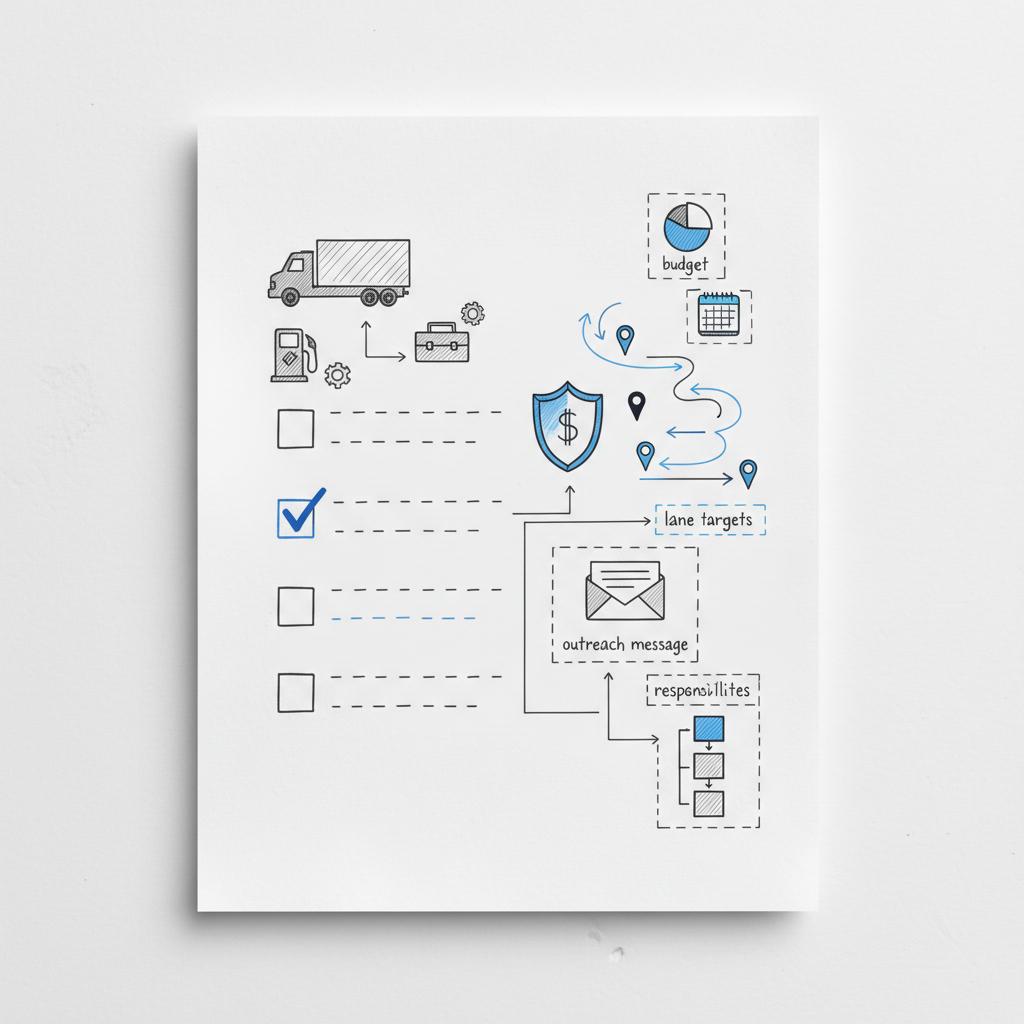
Platforms like digital marketplaces and freight-matching apps offer speed and volume. They are useful when you need loads quickly and want transparent pricing. But they come with fees and competition from price-driven carriers.
Use these platforms as part of a mix, not the only source. Set strict rules for when you’ll accept loads from apps – for example, only if rate, deadhead mileage, and timing meet your profit model.
Referrals, networks, and reputation — the low-cost winners
Referrals are the silent engine of steady work. When existing customers and partners recommend you, the load acquires implicit trust. To encourage referrals:
- Deliver reliably. The best referral program is simply doing your job well.
- Ask at the right time. After a smooth drop or repeat run, ask if they know another business that needs dependable hauling.
- Offer small incentives. A fuel card, a discount on a return trip, or a simple thank-you note keeps the referral loop active.
Simple marketing for owner-operators — online and offline
Marketing doesn’t need to be fancy. The aim is to be findable and clear so that when someone needs your services, they can see why you’re a good choice.
Key elements of a simple marketing setup
- Clear one-page website or landing page. State your lanes, equipment, insurance, and contact details prominently. See the Agency VISIBLE homepage for an example of clear presentation.
- Google Business Profile. Free, fast, and often the first place shippers look for local carriers.
- Short case sheet or one-page PDF. Show a recent example of a route you run, your timing, and a short quote from a satisfied shipper.
- Email contact list. Keep a simple file of contacts: brokers, regular shippers, vendors, and prospects. Send occasional updates and availability notices.
How owner-operators get work with better communication
People hire carriers they trust. Clear writing and timely communication build that trust.
- Short, professional messages. For calls and texts, lead with the critical facts: equipment, availability, lanes, and ETA.
- Confirmation messages. After booking, confirm pickup times, contact info, and special instructions. That reduces day-of surprises.
- After-delivery notes. A quick message thanking a shipper and noting any small observation shows professionalism and keeps the door open.
Pricing and negotiating rates — protect margins
Knowing how owner-operators get work is one half; protecting profit is the other. Your rate must cover fuel, insurance, maintenance, personal pay, and unexpected downtime.
Simple way to set a minimum rate
Calculate your per-mile operating cost (fuel, maintenance, insurance) and add a margin for your time and profit. Treat that as a non-negotiable baseline. Offer value-based reasons for higher rates: reliability, specialized equipment, time-sensitive lanes.
Scheduling, deadhead planning, and route efficiency
Deadhead miles are invisible expense; minimizing them makes you more competitive without cutting rates. Consider backhaul planning, flexible pickup windows, and partnering with local carriers for short hops.
Practical backhaul ideas
Ask shippers about regular outbound goods you could carry on return trips. Maintain a small list of local businesses that often have freight in your general direction. Even a loose understanding of likely backhauls can cut empty miles significantly.
Compliance, insurance, and professional presentation
Shippers and brokers prefer carriers who look and act professional. Keep insurance certificates current, maintain clean equipment, and have a digital folder with necessary documents ready to share.
Using technology without overcomplicating things
Simple tools help: an efficient phone, a navigation app that plans commercial routes, a basic spreadsheet for finances, and a lightweight CRM for contacts. Avoid dozens of apps that take time to manage and give little return.

Scaling from solo owner-operator to small fleet
When you want to grow, move from juggling to systems: documented processes for booking, dispatching, maintenance, and driver handoffs. Many owner-operators scale by subcontracting trusted drivers or partnering with another small operator to share loads and backhauls.
How owner-operators get work through partnerships
Partnerships can mean working with logistics companies, local delivery firms, or complementary service providers (like warehouses or packing services). These relationships create steady windows of work and often reduce marketing costs.
Managing slow seasons
Seasons happen. Diversify lanes, consider short-term specialty hauling (e.g., event logistics), and keep a small cash runway. Use slow months to tidy business processes, update equipment, and reach out to prospects with a simple availability note.
Real scripts and message examples
Use these short scripts to save time and sound professional.
Cold outreach to a local shipper: “Hi, I’m [Name], an owner-operator running dry van loads between [city A] and [city B]. I offer reliable same-day pickups and provide insurance and on-time confirmations. Could I send a short sheet about lanes and pricing?”
Follow-up after a good delivery: “Thanks for the smooth loading earlier. Our truck left on time and delivered as promised. If you need a repeat pickup on this lane, I’d be glad to help — here’s my contact.”
Metrics that matter
Measure what moves the business: load acceptance rate, deadhead miles per trip, average revenue per mile, and quote-to-win ratio. These simple metrics tell you where to improve.
Examples that work in the real world
A bakery chain needed weekly deliveries between a regional oven and distribution centers. An owner-operator proposed a scheduled weekly run, started with a six-week pilot, and became the chain’s preferred carrier. Predictability and a clear pilot offer turned a one-off job into a stable contract.
Another owner-operator combined load boards for spot work with a small list of preferred brokers and occasional direct outreach. The mix smoothed peaks and valleys and reduced pressure to chase every low-paying opportunity. See a few case studies on Agency VISIBLE projects.
Common pitfalls and how to avoid them
- Chasing every load: Say no to runs that break your rate floor.
- Neglecting paperwork: Late or missing docs kill deals. Keep a simple checklist for each run.
- Underpricing for visibility: Low rates attract the wrong kinds of work and lead to burnout. Value consistency over volume alone.
Why some owner-operators get work faster than others
It comes down to clarity, communication, and reliability. Owner-operators who get work steadily are clear about lanes and rates, communicate quickly, and show up consistently. Those three habits beat hustle alone.
The single easiest change is clarifying a one-sentence offer — say exactly which lanes you run, what equipment you have, and why you’re reliable — then use that sentence in every outreach message and listing.
Quick 30-day plan for owner-operators to get work
Start small and iterate. Here’s a realistic plan you can follow this month:
- Clarify: Write a one-sentence offer describing your lanes and what makes you reliable.
- Simplify: Choose one load board, two brokers, and three local shippers to contact.
- Show up: Set alerts for your lanes, send 10 outreach messages, and follow up on any leads.
- Lock in: Offer a short pilot to any prospective shipper you want to win.
- Track: Note acceptance rates and adjust your baseline rate if necessary.
How owner-operators get work while protecting quality of life
Work and life can coexist if you set boundaries. Pick the lanes you want to run and the days you want to work. Communicate those limits to brokers and shippers so you attract opportunities that fit your life, not the other way around.
When to ask for help
If marketing, negotiation, or outreach keeps getting pushed aside, consider brief external help. A short consult can give you messaging templates, a simple outreach sequence, or a one-page website that explains your offering clearly. External partners should respect your voice and make your job easier – not take it over.
Want direct-shipper outreach that works?
If you want a fast, practical way to clarify your offer and create outreach messages that win direct contracts, Agency VISIBLE can help with a short consult and templates to use immediately. Get in touch to explore a light, tailored support plan: Contact Agency VISIBLE.
Putting it together: a sustainable mix
The most resilient owner-operators get work by combining sources: a baseline of direct shippers and brokers, spot fills from load boards and apps, and a steady drip of referrals. Each source has a role – and together they smooth revenue and reduce pressure.
Final practical checklist: daily, weekly, monthly
Daily: Check alerts for your lanes, respond to broker calls, confirm scheduled picks.
Weekly: Send availability emails, follow up on leads, tidy paperwork.
Monthly: Review rates, plan backhauls, reach out to potential shippers for pilots.
Parting advice
Learning how owner-operators get work is less about secret hacks and more about consistent, clear choices. Treat outreach like any business activity: measure it, limit it, and improve it. Over time, small reliable habits turn into a steady pipeline and greater freedom.
The next step is simple: pick one lane, send three outreach messages, and set your alerts. Small moves stack up.
The fastest ways are load boards for immediate spot work, building quick relationships with a few responsive brokers, and reaching out directly to local shippers with a concise offer and pilot proposal. Use alerts for your key lanes, keep a short outreach script, and offer a trial run to reduce the shipper’s perceived risk.
Set a non-negotiable baseline rate that covers operating costs, time, and profit. Communicate that baseline confidently, explain the value you provide (reliability, insurance, on-time performance), and use pilots or scheduled runs to justify higher rates. Decline loads that don’t meet your minimum and focus on building relationships that reward reliability.
Yes. Agency VISIBLE offers short, practical consultations to clarify your message, create outreach templates, and set up simple assets (one-page websites or PDFs) that make it easier to land direct contracts. Their approach focuses on clear offers and measurable steps to increase visibility where it counts.
References
- https://agencyvisible.com/contact/
- https://freightgirlz.com/owner-operator-success-guide-2025/
- https://bestpass.com/resources/blog/how-to-find-loads-as-an-owner-operator/
- https://www.dat.com/resources/establish-relationship-with-direct-shippers
- https://agencyvisible.com/
- https://agencyvisible.com/projects/





