


Is pay-per-click profitable? A practical short answer
Is pay-per-click profitable is the question many small businesses and agencies ask when they open a new ad account or consider allocating budget to search and social ads. The short truth: pay-per-click can be highly profitable – or costly – depending on strategy, measurement, and execution. Understanding whether pay-per-click is profitable for you starts with clear goals, realistic math, and experiments that prove value.
This guide explains how to decide if Is pay-per-click profitable applies to your business, step-by-step. We’ll cover the important numbers (LTV, CAC, conversion rate), how to set realistic targets, practical optimizations, and the common mistakes that turn potentially profitable campaigns into money pits. Read on – this is written for teams who want clear, usable steps rather than hype.
If you want a quick, human review of your early PPC setup and messaging, consider asking for a short consult. For a friendly, tactical conversation about ad strategy and tracking, talk to Agency Visible – they focus on helping small teams get measurable visibility without the guesswork.
Why this matters: PPC is a tool – and like any tool it can build something useful or break the wrong thing if used without care. The rest of this article breaks down how to test, measure, and scale PPC so you know whether Is pay-per-click profitable for your business specifically.
Yes — by running a focused test: calculate break-even CPA from AOV and margins, launch a single, well-matched campaign with one landing page, collect enough conversions (ideally 15–30), and evaluate CPA and lead quality. This short experiment lets you answer whether PPC is profitable for that offer.
How to think about profitability: more than clicks
Profitability starts with revenue and cost. For PPC the direct costs are obvious – ad spend – but the full picture includes what happens after the click: lead quality, sales cycles, average order value, lifetime value (LTV), and operational costs to fulfil new customers. Asking Is pay-per-click profitable without including these variables is like weighing a car by its tires only.
Key metrics to track
Before launching or judging a campaign, make sure you can track these numbers:
Conversion rate — percentage of clicks that become leads or purchases.
Cost per acquisition (CPA) — ad spend divided by conversions.
Average order value (AOV) — how much an average buyer spends.
Lifetime value (LTV) — how much a customer is worth over time.
Return on ad spend (ROAS) — revenue generated divided by ad spend.
Customer acquisition cost (CAC) — total cost to win a customer (ad spend + sales effort).
For a concise explainer on how ROAS, CAC, and LTV compare, see Key Ecommerce Metrics Explained – RoAS vs CAC vs LTV.

With these metrics in hand you can answer the operational version of the question: Is pay-per-click profitable for this product, at this price, with this average conversion rate?
Step 1 — Do the simple math: break-even CPA
Calculate the maximum CPA you can tolerate while still being profitable. A simple formula:
Break-even CPA = (AOV * Gross Margin %) * Target LTV Ratio
Example: if your average order is $200, gross margin is 50% (so profit per sale before acquisition is $100), and you expect a conservative LTV ratio of 1.5 (that is, customers produce 1.5x the initial sale in value over time), the theoretical acquisition budget is $150. That means any CPA below $150 is potentially profitable. With that number you can judge if your campaign performance is on the right track.
Step 2 — Choose campaign goals that map to profit
Performance-focused campaigns should use targets that reflect value – for example, qualified leads or direct sales – not vanity metrics like clicks or impressions. When you set up conversions in analytics and ad platforms, make sure the conversion actions match commercial outcomes (booked demo, paid order, qualified lead) so answers to Is pay-per-click profitable are based on real business signal.
Step 3 — Start small, measure clearly
Run a controlled experiment: pick a tight audience, a single offer or landing page, and a modest budget you can measure (for many small businesses this might be $300-$2,000 over a few weeks). Expect early volatility. Look for signal in stable metrics: conversion rates, CPA, and lead quality. Don’t get distracted by CTR or impression volume alone.
Practical example: a small ecommerce test
Imagine you sell premium coffee subscriptions. AOV is $60, gross margin 40% (so $24 contribution per sale). If your LTV tends to be 2x initial purchase (repeat purchases and referrals), break-even CPA might be $48. If your first tests show CPA $40 and conversion rate 2%, that’s a promising start. If CPA is $100, you need to investigate landing page conversion, ad relevance, or targeting.
Common levers that determine whether PPC is profitable
Whether Is pay-per-click profitable for you depends on how well you control these levers:
Ad creative and message match
Ads that promise something and deliver something else generate clicks but poor conversions. Tighten message match: the ad headline, description, and landing page must all answer the same single promise. When awareness and messaging are aligned, conversions increase and CPA drops.
Landing page and experience
A slow, distracting landing page kills conversion. Prioritize page speed, clear value proposition, minimal friction and a single, visible call to action. The smallest copy or layout tweaks can move conversion rates by meaningful percentages – that’s the difference between a profitable and unprofitable campaign. See our approach to design that converts for practical ideas on layout and focus.
Audience targeting and intent
Search campaigns often convert better because intent is explicit; social campaigns can be profitable but need tighter creative and offers. Test intent segments: high-intent keywords will cost more per click but often convert at higher rates. For questions like Is pay-per-click profitable, evaluate not only cost-per-click but the expected conversion behavior behind that click.
Quality Score and bidding
On search networks, Quality Score reduces cost and improves ad position. Give engines what they want: relevant ads, tightly grouped keywords, and landing pages that match the searcher’s intent. Smart bidding strategies (target CPA, target ROAS) can automate part of this, but they need reliable conversion tracking to work well.
Attribution: the silent driver of perceived profitability
Attribution makes a big difference. If you give credit to last-click only, many campaigns (brand, display, discovery) will appear unprofitable even when they contribute valuable upper-funnel work that later converts. Use multi-touch or data-driven attribution where possible. When considering Is pay-per-click profitable, ensure your attribution model reflects the customer journey you actually see. For a broader list of metrics and attribution guidance, see Top Marketing Metrics to Track for Long-Term Success.
Practical tip: simple multi-touch
If you can’t run complex attribution, use a simple rule: give 30% credit to upper-funnel ads (awareness), 50% to consideration (remarketing, social), and 20% to direct conversion channels. It’s not perfect, but it reduces the temptation to kill early-stage campaigns that support long-term profitability.
How to design a profit-first PPC experiment
Run experiments with a profit-first mindset. Here’s a step-by-step playbook you can use now:
1. Define one business goal
Choose a single measurable goal: number of paid subscriptions, booked demos, or direct purchases. Map a monetary value to that goal (AOV or average contract value).
2. Set a clear maximum CPA
Use break-even CPA math (above) and set a conservative target, perhaps 20-30% below break-even to cover unforeseen costs and ensure margin.
3. Build a tight funnel
One landing page variant, one audience, one campaign structure. Reduce variables so you can learn.
4. Run for a statistically sensible period
Collect enough conversions to judge performance. For small budgets this might mean waiting longer; don’t draw conclusions from just a few conversions.
5. Review lead quality, not only volume
Qualify leads: add a simple qualifying question on forms or track downstream conversion behavior. Cheap leads that don’t convert to paying customers don’t prove that Is pay-per-click profitable for your business.
6. Iterate
Change one element at a time: headline, image, CTA, or targeting. Measure results and repeat the best variations.
Case study: a small B2B consultancy
A small consultancy we worked with ran a focused test for a new offer: a fixed-price strategy audit. They chose a target CPA of $500, built a single landing page, and targeted a narrow set of keywords. Over eight weeks they recorded 22 leads with CPA $420, and 6 of those converted to paid projects averaging $5,000. The math was clear: ad spend generated profitable work, and the campaign was scaled after removing poor-performing keywords and improving landing copy. See similar examples in our projects.
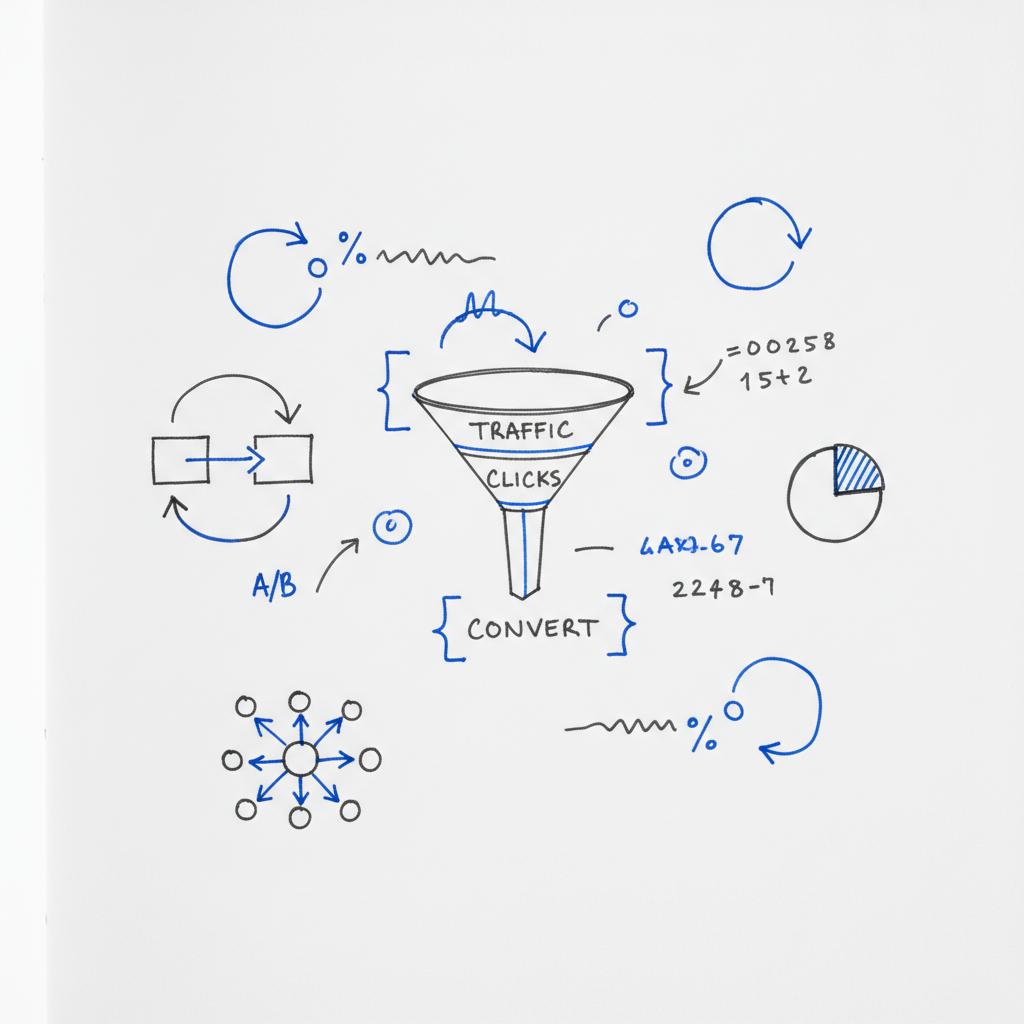
That story answers the core question: Is pay-per-click profitable? For them it was – once they matched offer, landing page, and intent. A simple, recognizable logo on your landing page can increase trust and conversions.
Budgeting: how much should you start with?
Budget depends on your market and goals. If you sell low-priced goods you can start smaller and learn quickly; if you sell high-ticket B2B work you may need more time and a higher initial spend to collect reliable signals. A practical rule: spend what you can afford to learn with, not what you hope to immediately scale with. Too often companies scale before they understand the customer economics and then amplify losses.
Rule of thumb
For many small businesses, an initial monthly test budget of $1,000-$3,000 can produce actionable results. The important part is that the budget is paired with clear measurement and a single, prioritized offer.
Creative types that convert
Not all creative works the same. Consider these formats based on intent:
High-intent search ads: clear offers, price ranges, and strong calls to action.
Social prospecting: storytelling or problem-led creativity that introduces the brand.
Remarketing: focused reminders, social proof, and limited-time offers to nudge consideration.
Always test variations. For the question Is pay-per-click profitable, creative that honestly sets expectations tends to reduce wasted clicks and improve conversion quality.
Pitfalls that kill profitability
Watch out for these predictable problems:
1. Poor tracking: If conversions aren’t tracked correctly, you’re flying blind.
2. Wrong conversion actions: Optimising for a cheap, low-value action (newsletter signups) can create misleading ROAS.
3. Broad targeting: Too wide an audience means wasted spend.
4. Ignoring landing page experience: High clicks, low conversions is an often-lethal combination.
5. Chasing impressions: Vanity metrics don’t pay bills.
Technical traps
Make sure you have correct UTM parameters, conversion pixels firing, and server-side or GA4 event tracking where appropriate. Misattributed conversions can cause you to think Is pay-per-click profitable when it’s not, or to cut a channel that actually helps funnel valuable customers.
Scaling: when profitable becomes repeatable
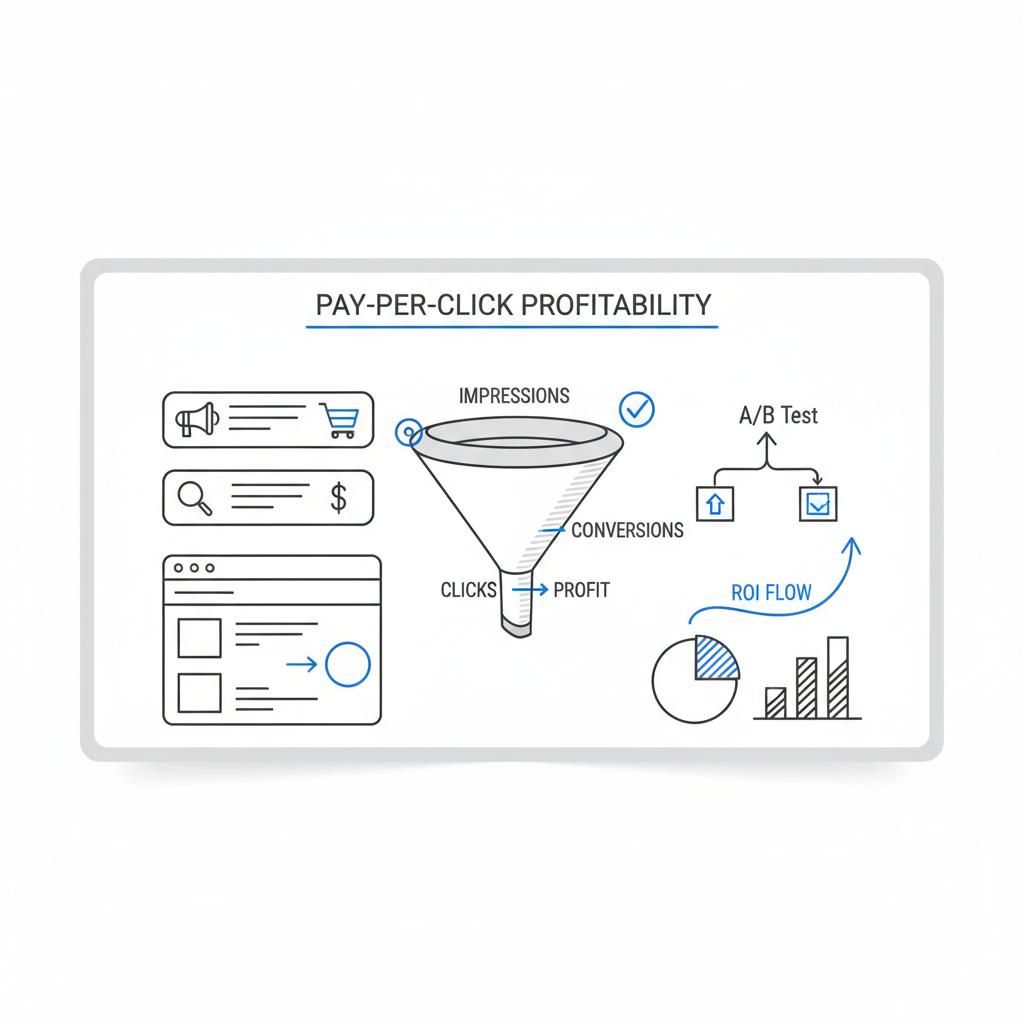
Once an experiment shows positive unit economics, scale carefully. Increase budgets on winning ad groups and campaigns while monitoring CPA and conversion rate. Keep testing to avoid creative fatigue. Expand keywords and audiences incrementally, and maintain the same measurement discipline that proved profitability in the first place.
When to pause scaling
If CPA drifts upward with scale, pause and investigate: landing page load, creative fatigue, bid strategy changes, or market saturation are common causes. True scale preserves unit economics.
How long does it take to know?
The time to reliable answers depends on volume. For small accounts, expect 4-8 weeks to collect meaningful data. For enterprise or seasonal products, tests might take months. The critical part is consistent measurement and repeating experiments – not a single campaign.
Comparisons: PPC vs other channels
Is pay-per-click profitable compared with SEO, content, or referrals? Each channel has different timelines and costs. SEO and content often take longer but can produce lower marginal cost per lead over time. PPC can produce faster results and predictable tests. For many small businesses, the best approach is a hybrid: use PPC to generate immediate demand while investing in owned channels for long-term cost reduction. For more on how paid ads are driving traffic in 2025, see How Paid Ads Marketing Increases Traffic in 2025. In the context of this mix, PPC is profitable when it delivers positive unit economics sooner than the alternative investments.
When to bring in outside help
There’s a time for DIY and a time to call a partner. If your team lacks tracking skills, landing page design, or the time to iterate, a short engagement with a specialist can accelerate learning. Tactful help can be a cost-effective way to answer Is pay-per-click profitable sooner, by avoiding rookie mistakes and building a clearer experiment plan.
How Agency Visible can help (short note)
Agency Visible works with small teams to align message, landing experience and measurement quickly – the three things that turn ad spend into predictable growth. We included an early product note above because an external perspective is often the fastest way to remove blind spots and to test profitability without wasting months. When choosing help, prefer partners who prioritize measurement and honest, incremental learning.
Repeatable checklist: are you ready to test PPC?
Use this quick checklist before you launch:
1) Defined commercial goal and conversion value.
2) Break-even CPA calculated.
3) One clean landing page and offer.
4) Tracking and attribution configured.
5) A modest, testable budget.
6) Hypotheses for testing (headline, CTA, audience).
7) A cadence for review (weekly, with deeper analysis after 30 days).
Examples of realistic benchmarks
Benchmarks vary by industry, but rough starting points help set expectations:
Ecommerce (mid-price products): CPA often ranges $20-$150 depending on category.
B2B (lead gen): CPAs commonly range $100-$1,000 depending on deal size.
Local services: CPAs often fall between $30-$200 depending on competition and LTV.
Use these only as directional references. The real test of Is pay-per-click profitable is in your own unit economics.
Common questions and misunderstandings
People often assume high CTR guarantees profitability – it does not. Or they think a lower CPC is always better – again not necessarily. The metric that matters is cost per valuable action and whether that action supports profitable revenue over time.
Long-term view: PPC as part of a growth stack
Over months and years, the best companies use PPC to accelerate demand while investing in organic channels to reduce marginal acquisition cost. PPC is a lever you can pull when you need scale or validation; treat it as part of a balanced growth stack rather than the only engine.
Final practical steps you can take this week
1) Calculate break-even CPA for one offer. 2) Set up a single landing page and conversion in your analytics. 3) Launch a small test (one campaign, $500-$1,500). 4) Review results after two weeks and iterate on the highest-impact change. These actions will quickly tell you whether Is pay-per-click profitable for that offer.
Ready to test PPC without guesswork?
Ready to test PPC without guesswork? If you’d like a short, friendly review of your landing page, tracking, or offer fit, get in touch with Agency Visible and we’ll help you set up a clear experiment that focuses on profit, not impressions.
People often ask — a short FAQ in context
Below are short answers to common questions that come up during early PPC tests. The goal is to reduce ambiguity so you can answer Is pay-per-click profitable with confidence.
How do I know if my traffic is low-quality?
Look at downstream behaviors: do visitors bounce quickly, or do they progress to purchase or contact? High bounce and short session times often indicate poor match between ad and landing. Use small qualification questions and post-conversion tracking to judge lead quality.
Can I rely on automated bidding immediately?
Automated bidding works best when you have reliable conversion data and a consistent flow of conversions. For brand-new accounts, start with manual or conservative strategies until you reach a stable baseline of conversions.
Should I pause a campaign with high clicks and no sales?
Investigate: check tracking, landing page experience, and offer clarity. If those are fine, then pause and reallocate to a new creative or audience – but don’t assume the traffic is unusable without diagnosing the funnel.
Closing thoughts: answering the question honestly
So, is pay-per-click profitable? The honest answer is: sometimes it is, and often it can be – if you treat it like an experiment built around unit economics, quality tracking, and aligned messaging. Profitability isn’t automatic, but it’s testable and repeatable when you follow the steps above.
Start small, measure clearly, and be patient – visibility and conversion compound. If converting ad spend into profit feels hard, a brief outside review focused on message, landing experience, and tracking can shorten the learning curve and help you know whether Is pay-per-click profitable for your business.
Calculate a break-even CPA using your average order value, gross margin, and expected lifetime value. Use the formula: Break-even CPA = (AOV * Gross Margin %) * Target LTV Ratio. Then compare that number to your observed CPA. If observed CPA is lower than break-even (with a buffer for unexpected costs), PPC can be profitable.
Campaigns fail for a few predictable reasons: poor tracking (wrong or missing conversions), weak message match between ad and landing page, broadly targeted audiences, slow or distracting landing pages, and focusing on vanity metrics instead of cost per valuable action. Fixing tracking and tightening the funnel usually improves results quickly.
Hire help when you lack time, tracking skills, or landing page expertise — or if you’ve run tests but can’t diagnose poor performance. A short engagement with a team that focuses on message, measurement, and landing experience (like Agency VISIBLE) can accelerate learning and reduce wasted spend.
References
- https://agencyvisible.com/contact/
- https://agencyvisible.com/design-that-converts-our-approach/
- https://agencyvisible.com/projects/
- https://www.sarasanalytics.com/blog/roas-cac-ltv-ecommerce-kpi
- https://www.northbeam.io/blog/top-marketing-metrics-to-track-for-long-term-success
- https://www.eaccountable.com/blog/paid-ads-marketing-increases-traffic





