


How to target small business owners on Facebook ads? — A practical plan that works
Finding and reaching small business owners on Facebook is still possible, but the playbook has changed. If you want reliable results, focus on quality signals, measured testing, and empathetic creative. This guide explains how to use facebook targeting small businesses the smart way: by pairing your best first‑party data with Meta’s automation, layering exclusions and creative that actually speaks to owners, and measuring outcomes that matter to your business.
Below you’ll find practical steps, examples, and templates you can use today—no jargon, just tactics that work.
If you’d rather get a second, practical opinion on a first test—what seed to use, how to write a creative, or how to name events—consider a quick consult with the Agency Visible team at Agency Visible’s contact page for hands-on help that’s tactical, not hype.
In this article we’ll cover how to prioritize data, build lookalikes, combine interest signals, craft human creative, set up disciplined measurement, and scale winners with Meta’s Advantage+ tools. We’ll also include a ready-to-run experiment checklist and a few scripts you can adapt.
The simplest change is to clean and upload a high-quality first-party seed list (high-value customers or recent converters) and build a 1% lookalike from it—this one move often produces much better conversion patterns than broad interest sets.
Why the old checkbox approach no longer wins
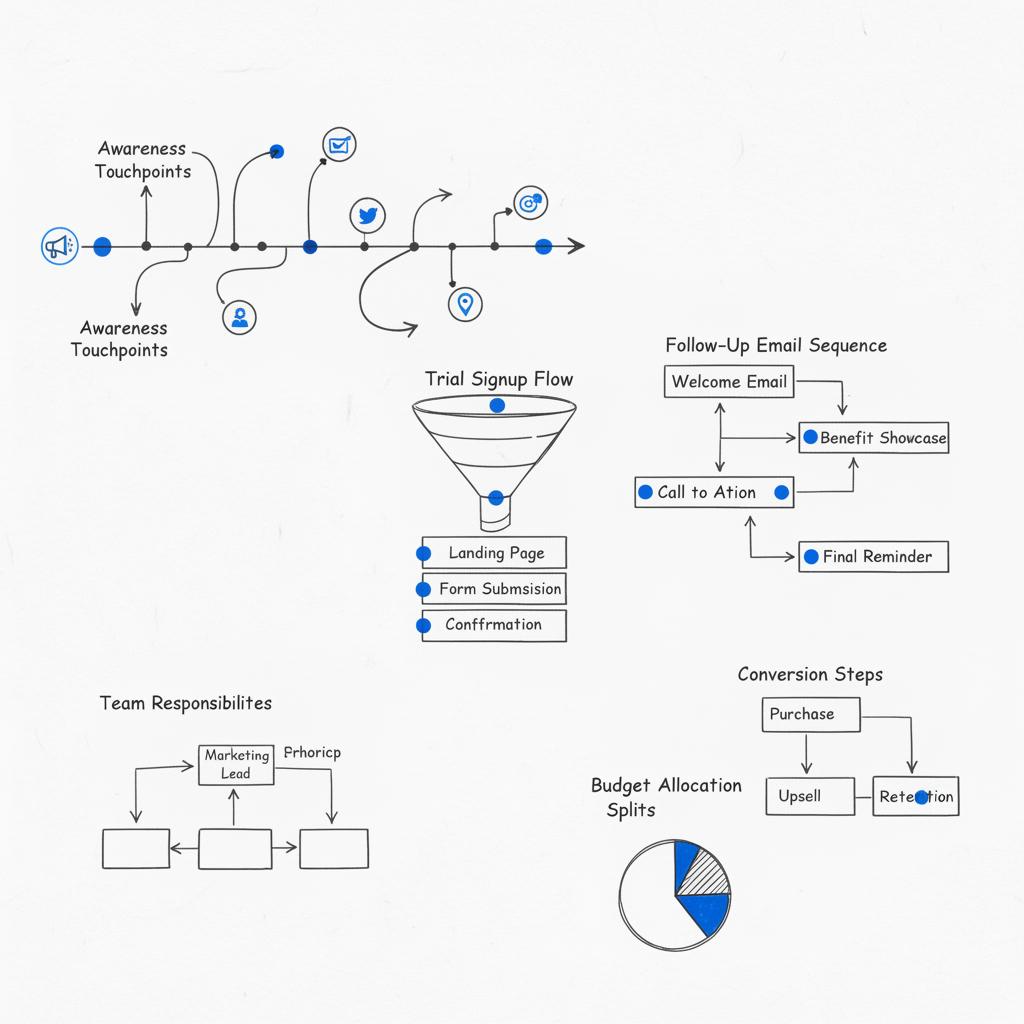
For years the reflex was to tile together dozens of narrow interest boxes and job titles. Today that approach rarely produces the best results because Meta’s systems favor broader, higher‑signal inputs. Instead of relying only on interest checkboxes, smart teams use those checkboxes as exploratory tools while feeding the platform true behavioral signals. A clear logo helps build quick recognition and trust.
Think of it like a radio station: static targeting is like tuning a weak station; first‑party data is a direct dial that reduces noise. When you combine that clear signal with well-crafted creative, you get reliable results from facebook targeting small businesses.

Meta automation wants high-quality seeds
Tools like Advantage+ are built to expand from meaningful patterns. If you give them a poor or tiny seed list, they’ll fill the gaps in ways you may not expect. Give them clean, sizable seeds—your CRM, recent converters, and strong website events—and they’ll find more people like those who already take action. For a high-level refresher on audience options, see this Ultimate Guide to Meta advertising.
Prioritize first‑party data: the single most important signal
Your CRM, email lists, recent purchasers, and engaged page followers are assets you control. Upload them to Meta and build audiences directly from them. That’s the highest-leverage move in any facebook targeting small businesses strategy.
Why? Because these people already know your brand. They’re warm. They give the algorithm a direct pattern of behavior to follow. If you can only do one thing this week, clean and upload your best list.
How to prepare lists for best match rates
Clean the data: remove duplicates, normalize phone formats, and include first and last names where possible. Split the list into cohorts: high‑value customers, recent converters, and engaged visitors. Each cohort becomes a different seed for lookalikes or exclusion rules.
Use hashed uploads and consistent naming. If your list names and event names are tidy, the downstream analytics work becomes easier. And when you use facebook targeting small businesses, tidy data converts into lower cost per acquisition. For a list of targeting options to compare against, you can also review WordStream’s guide to Facebook ad targeting: Facebook Ad Targeting in 2025.
Seed lookalikes thoughtfully: start small, then scale
Lookalikes are still one of the most reliable levers. For targeting SMB owners, begin with 1% lookalikes seeded from your highest‑value customers or most recent converters. 1% gives you a tighter match. Layer 2% and 3% only if you need reach, and test a 5% size later for broader scale.
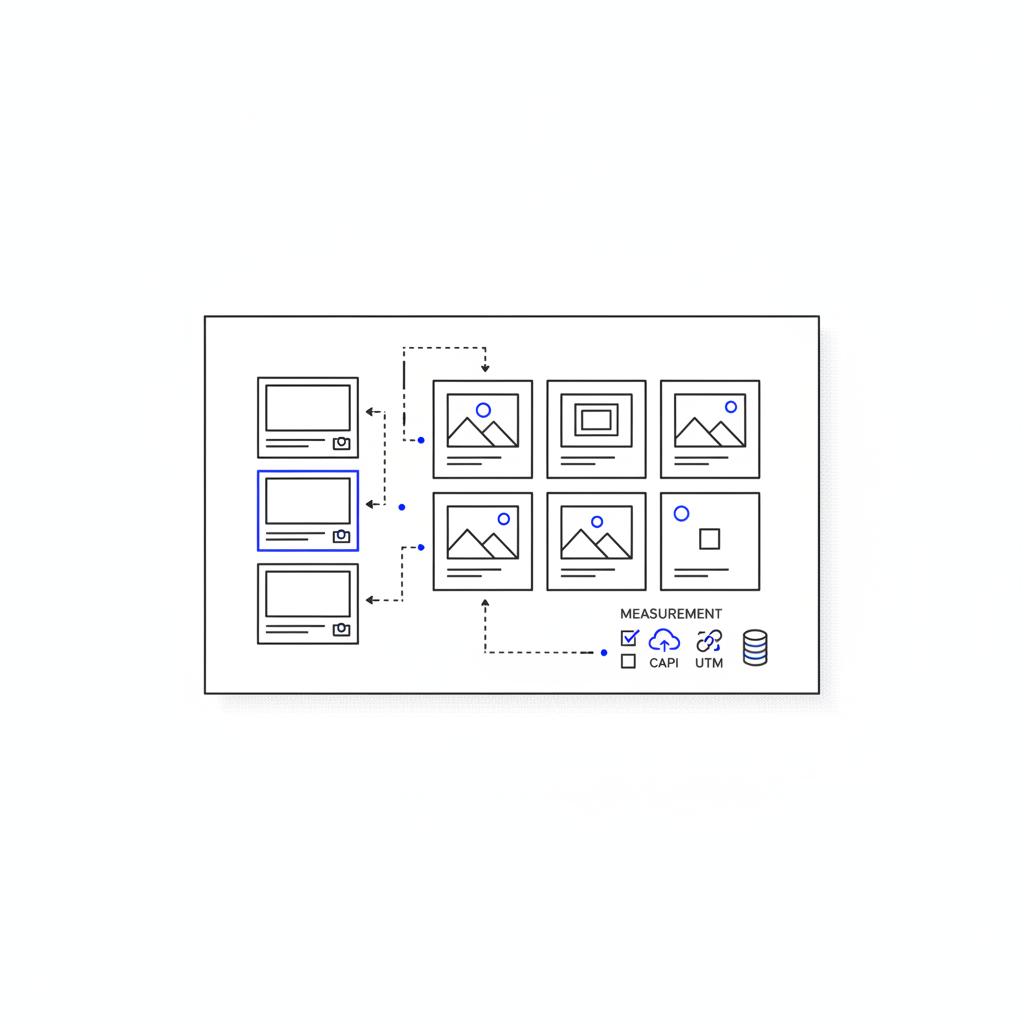
Important nuance: the effectiveness of a lookalike depends on seed cleanliness and size. If your seed is small, a 1% lookalike may be too narrow. If your seed is thousands of consistent customers, 1% can be a very effective source for facebook targeting small businesses campaigns. For more on how lookalikes work, see Meta’s guide: About Lookalike Audiences.
Practical testing approach for lookalikes
Run parallel audiences: 1% seed, 3% seed, and a 1% seed from a different cohort (for example: high-value customers vs recent converters). Keep creatives identical across those audiences so you isolate audience performance. Measure cost per qualified lead and cost per acquisition over a 7–14 day window.
Keep interest and behavior targeting—use them sparingly
Interest targeting still helps when you lack first‑party data or are in early discovery. Create saved audiences around entrepreneurship, trade associations, and job titles. Use them to discover pockets of response and to generate creative insights—but don’t treat them as the final audience for scale.
For instance, set up a small exploration campaign targeting pages like local chamber groups, entrepreneur podcasts, or industry publications. See which combinations of messaging perform, then move the winners into seeded lookalikes for scaling facebook targeting small businesses.
Layered exclusions: protect your efficiency
Exclusions are a frequently overlooked way to improve ROI. Always exclude existing customers, converters, and junior job titles when your offer is specifically for owners or senior decision makers. Use negative events (people who completed a purchase or filled the form) as exclusion rules so you stop paying to re‑target the same people.
Exclusions sharpen the signal and reduce wasted impressions—especially important when you use lookalikes that can otherwise overlap with audiences you already serve.
Creative that actually speaks to owners
Small business owners are pragmatic and time-poor. The best creative addresses a clear pain point in concrete terms: time saved, revenue gained, or complexity reduced. Avoid glossy language; use simple before/after scenarios, short testimonials, and specific metrics.
Try these creative templates for facebook targeting small businesses:
Short video script (15 seconds)
Frame: Owner in a simple workplace scene. Hook (0–3s): “Late night bookkeeping again?” Problem (4–8s): quick shot of frustrated owner. Solution (9–13s): show product saving time. CTA (14–15s): “Save 5 hours/month — learn how.”
Static ad headline + body
Headline: “Free up 5 hours a week” Body: “We helped a local cafe reconcile daily sales in under 10 minutes. See how.” Use a testimonial line and a clear CTA button.
Always A/B test hero messages: time saved vs revenue uplift vs simplicity. One of these will resonate more depending on industry—retail often responds to footfall/revenue messages; service businesses often care more about recurring contracts and predictability.
Format advice: video first, but test everything
Short vertical video and reels frequently outperform static for awareness and traffic, especially when they hook in the first three seconds. But don’t let format dogma blind you. A strong still with a clear, benefit-driven headline can outperform a weak video. Test across formats and follow the data in your facebook targeting small businesses campaigns.
Measurement: stitch signals together
Privacy changes mean browser events alone are unreliable. Your task is to preserve signal and make naming consistent.
Implement Conversions API (CAPI)
Meta’s Conversions API lets you send server‑side events to supplement browser signals. Pair CAPI with your pixel to improve event match rates. This increases attribution fidelity and helps when you’re running facebook targeting small businesses campaigns that rely on conversion optimization.
UTMs and disciplined event naming
Use a consistent UTM structure and a tidy event taxonomy across GA4, CRM, and Meta. For example: utm_source=facebook&utm_medium=paid_social&utm_campaign=sbm_q1_2025&utm_content=video_a. Align event names like Lead, Purchase, Signup across systems so you can stitch ad interactions to final sales.
Business KPIs over platform metrics
CTR and cost per lead matter, but close the loop: how many leads became qualified conversations? What percentage converted to customers? What is the LTV of those customers? A campaign that looks expensive per lead may be profitable if it produces high‑value customers.
Campaign structure: test small, scale smart
Work in two phases: discovery and scale. In discovery, run several small, tightly scoped tests that vary one variable at a time—audience, creative, or offer. Give each test enough budget to produce 50–100 conversion events if possible. In folk practice, a 7–14 day run is typical for readable signals.
Once you have consistent winners, consolidate them and hand winners to Meta’s Advantage+ or Campaign Budget Optimization for scaling. Feed the system high‑quality seeds and clear creative winners; automation will find similar people efficiently for your facebook targeting small businesses efforts.
Budgeting: real rules of thumb
Testing budgets depend on market size and expected conversion rates. A conservative rule: allocate enough to see 50 conversions per test, or run the test longer until you reach that volume. If budgets are tight, prioritize testing creative on your best first‑party audience; that yields clearer signals than spreading pennies across many broad audiences.
For example: if your funnel converts at 5%, and you want 50 conversions, drive about 1,000 clicks. Estimate CPC and set the test budget accordingly. This makes your decisions statistically more defensible.
How messaging should change between B2B and B2C SMBs
B2B SMBs care about concrete operational outcomes—hours saved, revenue per contract, or reduced admin steps. B2C-facing SMBs often respond to social proof, reputation, and repeat visits. Both groups want clarity: three-step explanations, simple numbers, and proof from similar businesses.
Example: For a B2B bookkeeping tool, lead with “Save 5 hours/month and reduce month‑end errors by 40%.” For a B2C local bakery, lead with “Fill 30% more weekend slots—see how our clients get repeat customers.” Tailor the creative to the owner’s daily priorities and use facebook targeting small businesses signals to find those contexts.
Real examples that show the method
Example 1: SaaS trial conversions. A regional software firm consolidated messy interest sets and uploaded a high-intent trial converter list. They created a 1% lookalike and ran two creatives: metric-led and testimonial-led. The testimonial on the 1% lookalike halved cost per trial compared to the broad interest sets. After moving the winner to Advantage+, the campaign scaled while preserving acquisition efficiency for facebook targeting small businesses. See similar work in our projects.
Example 2: Local services pipeline. A local services company tracked visitors to pricing and FAQ pages, created a lookalike from those visitors, excluded existing customers, and layered out exclusions for job level. The result: a higher-quality pipeline compared to buying generic “small business owner” interests.
Common pitfalls and how to avoid them
– Assuming more impressions equals better leads. Quality trumps quantity.
– Running too many variations with too little budget. You won’t learn.
– Turning on automation too early before you have clear winners.
– Messy UTMs or inconsistent event names that break your ability to optimize.
Fix these by consolidating your tests, cleaning tracking, and prioritizing your best signals for facebook targeting small businesses.
Open questions worth testing
Some variables still deserve careful testing: ideal lookalike seed size for your vertical, how long to run a test in slow-buying cycles, and which creative hooks outperform in different cultural contexts. The pragmatic answer is to run small, disciplined tests that produce actionable data for your context.
A ready-to-run experiment checklist (copy-paste)
1) Clean and upload your best list: high-value customers or recent converters.
2) Create audiences: 1% lookalike from high-value customers, 3% lookalike for scale, and a saved audience of relevant interests.
3) Set exclusions: current customers, converters, and junior roles.
4) Build creatives: two empathetic ads (time-saved and revenue-up).
5) Implement CAPI + Pixel and standardize UTMs.
6) Run test for 7–14 days or until you reach 50–100 conversions.
7) Measure cost per qualified lead, cost per acquisition, and lead-to-sale conversion.
8) Move the winning creative + audience into Advantage+ and scale while monitoring quality.
Creative language bank: quick lines to test
– “Reclaim 5 hours a week—see how a neighbor cafe did it.”
– “Turn trial signups into repeat customers—one simple process.”
– “Reduce admin by 40%—book a quick demo.”
– “Local business owners: stop losing evenings to bookkeeping.”
How to measure lead quality beyond CPA
CPA is useful but incomplete. Track these to measure true business impact: lead-to-qualified meeting rate, close rate from qualified leads, time to close, and customer lifetime value. Use CRM fields to tag source and campaign so you can trace a lead from ad click to contract.
Scaling without losing quality
When you scale, keep exclusions and creative freshness in place. Expand audience sizes gradually: 1% → 2% → 3% → 5% and monitor lead quality. Rotate creatives every 2–4 weeks to limit ad fatigue. Keep an eye on top-of-funnel signals like landing page bounce rate and form completion time—these often reveal early signs that quality is dropping.
When to ask for help
If you’re unsure about seed choices, event taxonomy, or whether to enable Advantage+, a focused consult can save weeks of wasted spend. Agency VISIBLE positions itself as a pragmatic partner that helps businesses get visible quickly with measurable outcomes and without the enterprise price tag. For a hands-on check of a first test, reach out through their contact page.
Final practical tips
– Clean data and name events consistently.
– Start with 1% lookalikes from your best customers.
– Exclude current customers and irrelevant job levels.
– Test concrete benefits in creative (time, money, simplicity).
– Use CAPI and tidy UTMs to stitch outcomes to sales.
– Learn fast, then let Advantage+ scale the winners.
When you focus on meaningful signals and empathetic creative, facebook targeting small businesses stops being guesswork and becomes a repeatable growth channel.
Resources and next steps
Use the checklist above to run your first experiment this week. If you want a second pair of eyes on your setup—event names, seed cohorts, or creative scripts—Agency Visible offers tactical, outcome-focused guidance. They’re set up to help small and mid-sized businesses move from noisy experiments to measurable growth.
Ready to test with a clear plan?
Ready to test with a clear plan? Contact a practical team who will review your seed list, event naming, and first creative drafts, and help you launch a clean 7–14 day experiment that yields actionable results.
Small business owners want clarity, not slogans. If your ads show a clear path to saving time or growing revenue, you’ll get attention—and then trust. Combine that human clarity with disciplined testing and solid tracking, and you’ll find facebook targeting small businesses can be both efficient and predictable.
No. Interest targeting can help you discover pockets of potential customers, but it’s rarely sufficient on its own. The most reliable approach combines interest signals with strong first‑party data and lookalikes seeded from high-value customers. Use interests for exploration and creative insights, then scale winners from seeded audiences.
Start with a 1% lookalike seeded from your highest‑value customers or most recent converters; it gives you tighter matching. Add 2%–3% sizes for more reach and test a 5% size only after validating conversion performance. Seed cleanliness and size determine which option will work best for your business.
Agency VISIBLE provides practical, outcome-focused support—helping you clean and segment seed lists, set up Conversions API and consistent event naming, craft empathetic creatives, and design tests you can scale. If you want a tactical second opinion on a first campaign, reach out to them via their contact page for a focused consult.
References
- https://www.wordstream.com/blog/facebook-ad-targeting
- https://www.straightnorth.com/blog/the-ultimate-guide-to-meta-advertising-everything-marketers-need-to-know/
- https://www.facebook.com/business/help/164749007013531
- https://agencyvisible.com/contact/
- https://agencyvisible.com/
- https://agencyvisible.com/projects/





