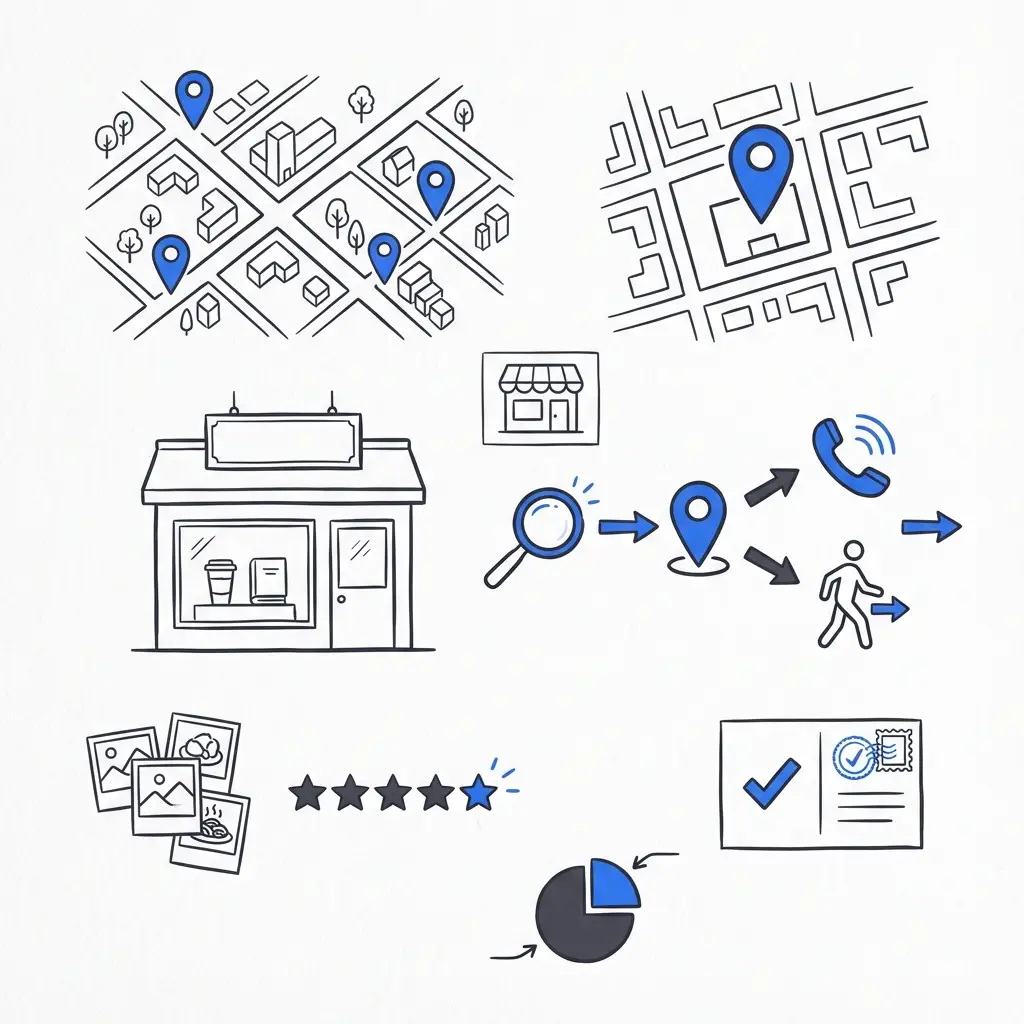
How Thumbtack earnings actually work
Thumbtack earnings start with a simple but powerful idea: pay per lead. That short phrase hides a lot of complexity – different trades, ZIP codes, seasons, and response habits change how profitable each lead campaign becomes. If you want clear, repeatable income from Thumbtack, you need to treat leads like inventory: buy the right ones, at the right price, and convert them efficiently.
What Thumbtack sells and why it matters to your bottom line
At its core, Thumbtack is a marketplace that matches customer requests with professionals. Customers describe the job, pros set maximum bids for matched leads, and credits are used to win those leads. A lead is not revenue – it is a chance to earn revenue. That distinction is the first step toward understanding Thumbtack earnings.

Leads range from low-value quick fixes to high-value remodels. The per-lead price can be under $5 for simple tasks and well over $200 for premium projects in competitive markets. That variance is what makes the platform both useful and risky: a solid process can extract profit; a scattershot approach often loses money. For more on typical lead pricing ranges see this analysis: lead pricing ranges on 7Ten Marketing. Community reports also vary – see a user discussion here: Reddit – real user reports.
Key variables that drive Thumbtack lead cost and conversion
Understanding the inputs gives you control. The three most important variables are:
- Lead price — what you pay per lead.
- Conversion rate — the percent of leads you turn into booked jobs.
- Average job value and margin — how much you earn and keep when you win a job.
Use the simple CAC formula: CAC = average lead cost ÷ conversion rate. That formula turns the fog of marketplace spending into clear numbers you can act on. Make this the backbone of any pilot campaign aimed at improving Thumbtack earnings. For an official description of how Thumbtack charges for leads, see Thumbtack’s help center: How much do I pay for leads.
Set up a disciplined Thumbtack pilot – step-by-step
Before you commit thousands of dollars, run a focused pilot. Here’s a practical, four-to-eight-week plan that pros use to learn fast and avoid costly mistakes.
Week 0 — Plan and pick your services
Decide on 1–3 services to promote — pick what you do best and what has the highest margins. For example, a general contractor might choose kitchen remodels and siding replacement; a handyman might choose furniture assembly and minor electrical fixes that pay decently per hour.
Weeks 1–4 — Execute the pilot
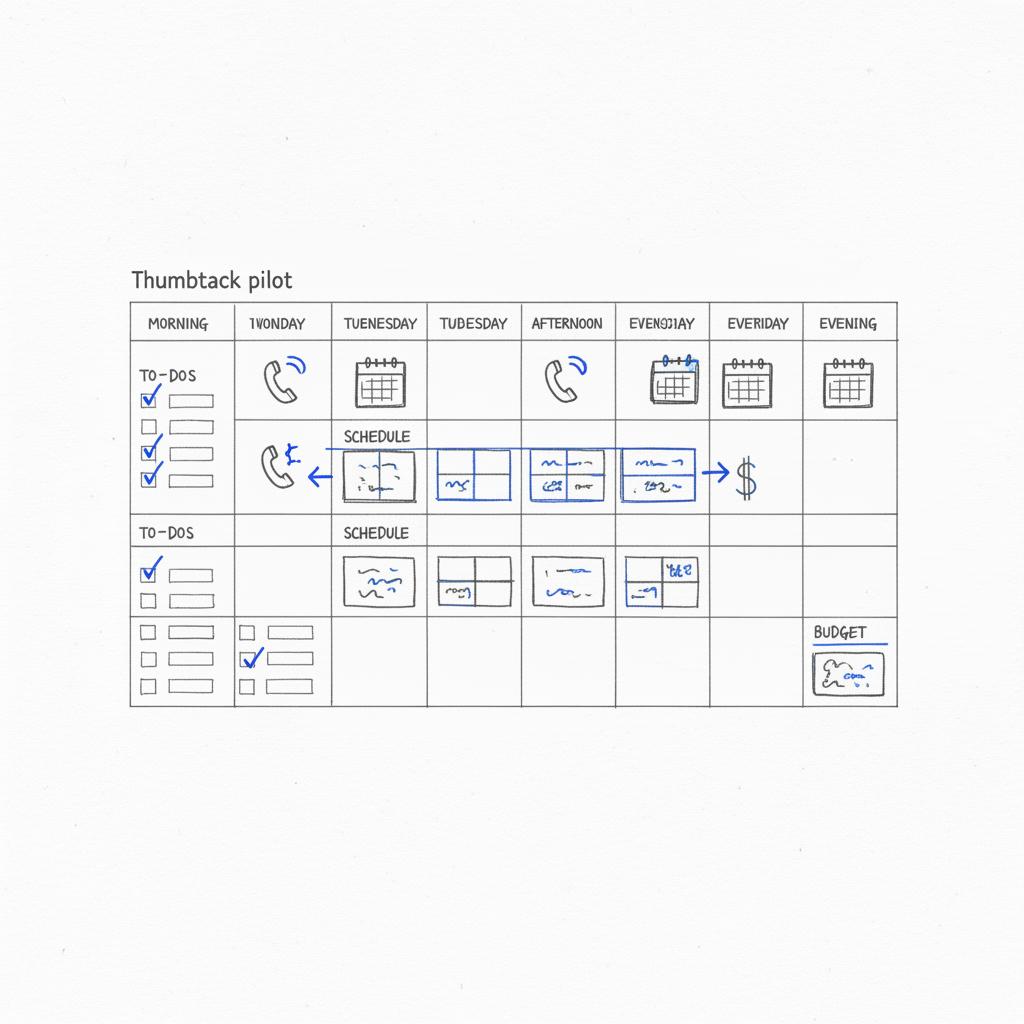
Track every lead. Create a spreadsheet with these columns: date, ZIP code, service type, lead cost, responded (Y/N), response time, appointment set (Y/N), job won (Y/N), job value, hours spent qualifying/estimating, materials cost, and final margin. At the end of the pilot you’ll have real numbers for your CAC and the hourly-equivalent of your Thumbtack work.
For teams that want a fast, measured start, a short consult can help frame tests and set tracking templates. Many local pros find it useful to talk through a plan with experts — for example, reach out to Agency VISIBLE for practical guidance on how to track and optimize campaigns effectively.
How to read your pilot results
Once you finish the pilot, calculate these core metrics: average lead cost, conversion rate, CAC, average job value, gross margin, and net profit after time and direct costs. If CAC is lower than the margin you keep per job, the campaign is likely profitable. If CAC is higher, you either need to improve your conversion rate, increase job value, or reduce lead cost.
Yes — if the job’s gross margin, likelihood of repeat business, or referral potential exceed the cost. Consider both immediate profit and lifetime value: a single high-margin job or a recurring contract can justify a higher CAC.
Real-world examples: numbers that help you decide
Concrete examples make the math intuitive. Below are realistic scenarios that show how Thumbtack lead cost and conversion shape results.
Example 1 — Handyman focused on small jobs
A handyman with an average job value of $200 and a 50% gross margin pays $20 per lead and converts 10% of leads. CAC = $20 / 0.10 = $200, which equals the job value and means zero gross profit before time spent. If the pro improves conversion to 20% (by faster response and clearer quotes), CAC falls to $100 and the campaign becomes profitable. This example underscores how marginal changes in conversion sharply affect Thumbtack earnings.
Example 2 — Painter with high‑value projects
A painter averages $2,500 per job with a 40% margin. If painter leads cost $70 and conversion is 8%, CAC = $70 / 0.08 ≈ $875. On a $2,500 job with 40% margin ($1,000 gross), a $875 CAC still leaves room for profit after labor and overhead – assuming the painter’s internal costs are controlled. This trade-off demonstrates why larger ticket items are easier to monetize on pay-per-lead platforms.
Example 3 — Seasonal roofer
A roofer sees lead prices spike in spring. He pays $125 per lead during busy months, converts 12%, so CAC ≈ $1,042. If typical roofing jobs are $8,000 with 45% margin, the outcome is positive: gross $3,600 per job vs CAC $1,042, leaving profit to cover labor and overhead.
How to improve conversion and lower CAC (actionable steps)
Conversion is where you control most of the levers. Here are practical, prioritized steps that move the needle.
1. Speed: be first and be human
Respond within minutes when possible. A quick, friendly text that acknowledges the request and offers a next step dramatically increases the chance of booking. Templates work – but personalize them quickly. For standard responses, create a short script that includes your name, a recognition of the customer’s need, a clear next step, and a call-to-action to schedule.
2. Profile and portfolio
Photos sell more than adjectives. Use clear before-and-after images, show the quality of your work, and write concise service descriptions. Recent, specific reviews matter more than broad praise. Ask satisfied customers to mention the exact job type and ZIP code if they can – it helps prospective customers feel confident. A visible, consistent logo on your profile also helps build immediate trust.
Consider linking portfolio examples to help prospective customers visualize results – see some projects here: Agency VISIBLE projects.
3. Pricing and packaging
Offer tiered packages (basic, standard, premium) so price-shoppers can self-select. Tiered pricing clarifies expectations and reduces endless back-and-forth that kills conversion. Be explicit about what is included and what requires an extra charge.
4. Qualification scripts and appointment-setting
Before you invest time traveling, ask quick qualifying questions: timeline, budget range, and any access or permitting constraints. If the lead sounds like a fit, offer a guaranteed appointment window. Confirm via text or email and remind them 24 hours before the slot – reduction in no-shows improves your ROI.
5. Ask for reviews and referrals
Every booked job is an opportunity to improve your profile and future Thumbtack earnings. Ask for reviews from every satisfied customer and make it easy for them to leave a short specific note. Remind customers of referral incentives – the lifetime value of a referred customer often dwarfs the cost of one lead.
Smart bidding tactics to control Thumbtack lead cost
Bid strategy matters. Here are practical approaches to set maximum bids by service and location.
Start conservative, then optimize by ZIP code
Begin with a modest maximum bid for each service. After a couple of weeks, identify ZIP codes and service types that convert above average. Raise bids only for those segments. This micro-targeting reduces waste.
Seasonal bidding
Use higher bids during peak demand and reduce bids during slow months. If your trade is seasonal, concentrate spend on windows when customers are actually hiring – that increases conversion and reduces wasted credits.
Bid only on jobs you want
Don’t try to chase every lead. If you specialize in premium work, avoid bidding on vague, low-budget requests. A refusal to buy the wrong leads is as important as buying the right ones.
Hidden costs and how to account for them
Lead price is just the beginning. Include these in your calculations:
- Time spent qualifying leads
- Travel and no-show costs
- Free estimates that never convert
- Materials, taxes, and insurance fluctuations
- Administrative overhead for scheduling and quoting
Track hours spent on each lead in your pilot spreadsheet. Convert time into a dollar amount using your target hourly wage and subtract it from margin to see real profitability. This exercise shows whether a channel is truly paying your bills.
How different trades perform on Thumbtack
Trade dynamics strongly shape outcomes. Some broad patterns hold:
- Emergency services (plumbing, electrical) often have higher conversion because customers need help quickly.
- High-value remodels face higher per-lead costs and longer sales cycles, but a win pays well.
- Recurring services (cleaning, lawn care) can justify a higher CAC if the lifetime value is strong.
Match your lead-buying strategy to the rhythm of your trade. For emergency services, prioritize responsiveness. For remodelers, invest in portfolio and trust signals.
Common mistakes that kill Thumbtack earnings
Don’t fall for these traps:
- Buying leads indiscriminately across all services
- Failing to track response time and qualification outcomes
- Using generic profiles and old photos
- Ignoring seasonal patterns and continuing to spend in slow months
Avoiding these errors increases conversion and reduces waste.
Scaling what works: when to spend more and when to pause
Once your pilot shows profitable CAC, you can scale carefully. Increase weekly budget for the best services and ZIP codes, replicate the profile improvements that helped conversion, and reinvest part of the profit into asking for reviews and improving your portfolio images.
If performance drops, don’t panic – review your data. Has lead quality changed? Are new competitors bidding higher? Is seasonality shifting demand? Use the data to adjust bids and pause weak segments.
Sample tracking template and a workable daily routine
Columns: Date | Lead ID | ZIP code | Service | Lead cost | Response sent? (Y/N) | Response time (mins) | Appointment scheduled (Y/N) | Job won (Y/N) | Job value | Materials cost | Hours spent | Gross margin | Net profit
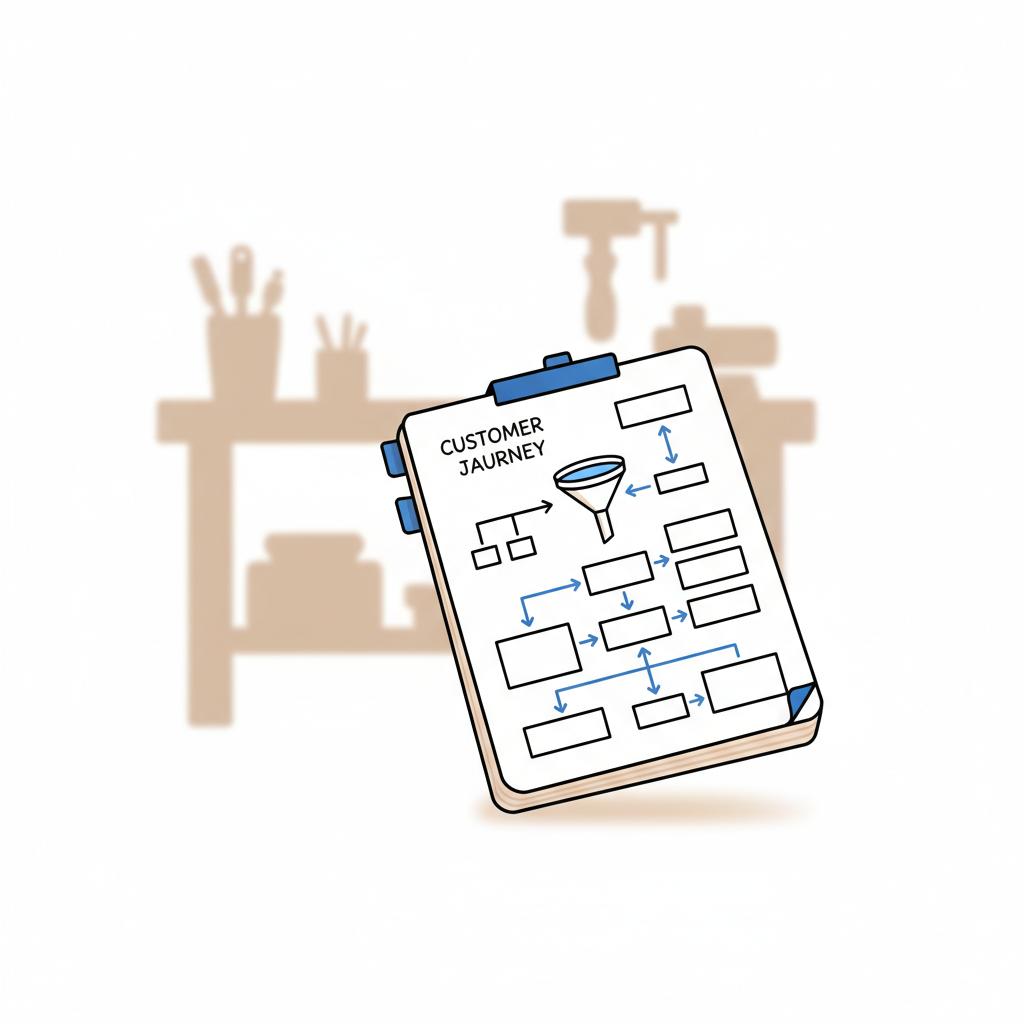
Use this daily routine to stay consistent:
- First 30 minutes of the day: review new leads, respond to hot leads, and confirm appointments.
- Midday: follow-up texts and qualification calls for leads that need quick answers.
- End of day: update the spreadsheet, note any lessons, and ask for a review from recently completed jobs.
Templates that make consistent responses fast
Speed and personalization are critical. Below are short templates you can adapt.
Initial text response (quick & friendly)
“Hi [Name], this is [Your Name] with [Business]. Thanks for your request for [service]. I can help – are you available for a quick call or can I visit for a free 15-minute estimate? – [Your Name]”
Appointment confirmation
“Thanks, [Name]. Confirming our visit on [date] at [time]. I’ll bring photos of similar work and a written estimate. Text me if anything changes: [phone].”
Follow-up after estimate (closing)
“Hi [Name], enjoyed meeting you. Based on what we discussed, the estimate for [service] is [price]. We can start as soon as [date]. Want me to reserve that slot?”
When Thumbtack is not the right channel
Thumbtack is not a perfect fit for everyone. If your average job is under a threshold where CAC will routinely exceed margin, rethink your approach. For low-ticket, low-margin work, direct referral programs or local partnerships might be more cost-effective. If you value long-term relationships over one-off jobs, focus on channels that nurture repeat business.
Bonus – a short seasonal playbook
Plan your Thumbtack spend around seasons:
- Spring: roofing, siding, landscaping – increase bids.
- Summer: exterior remodeling, HVAC installations – raise bids selectively.
- Fall: heating checks and preventive maintenance – moderate spend.
- Winter: emergency heating and indoor services – focus spend and responsiveness.
Use higher bids during spikes and tighten settings during slow months.
How to interpret platform changes and competitive shifts
Thumbtack iterates on matching rules and product features. If the platform starts favoring ratings, invest in reviews. If competition grows locally, expect per-lead cost increases; respond by tightening geographic targeting and raising conversion efforts. The key is to treat Thumbtack as a system you monitor and improve – not something you set and forget.
Measuring longer-term value – beyond the first job
Don’t judge every lead solely on its immediate profit. Include lifetime value where appropriate. If one booked job leads to a maintenance contract or multiple referrals, a higher CAC is often justified. Track repeat customers and referral history in your CRM or spreadsheet to see the full effect of Thumbtack-sourced work on your business over time.
Legal, insurance, and trust signals that affect conversion
Customers hire people they trust. Keep insurance certificates, licenses, and permits up to date, and display them prominently in your profile and proposals. This is especially important for high-value jobs – trust signals increase conversion and justify higher bids for leads.
Hiring help to manage leads – when it pays off
If lead volume grows, consider hiring an admin or sales coordinator to handle initial responses and scheduling. If an employee costs $18–$25 per hour but saves you time and raises conversion by handling quick replies and confirmations, the hire can pay for itself. Model this cost into your CAC calculations before expanding.
Common objections and how to answer them (customer-side)
Pros often face price shoppers and skeptical customers. Prepare short, calm responses that move the conversation forward rather than defensively arguing on price. If a customer says your estimate is high, explain what’s included and offer a tiered option. If they say they’ll “shop around,” ask when they’ll decide and offer a limited-time hold on a slot to create urgency.
Final checklist before you commit budget to Thumbtack
Use this checklist to reduce risk:
- Pick 1–3 services and limit geography.
- Set a modest weekly budget for four weeks.
- Track every lead in the spreadsheet.
- Measure CAC, conversion, and hourly equivalent.
- Stop or adjust if the hourly equivalent is below your target wage.
Start a measured Thumbtack pilot with expert guidance
Ready to test Thumbtack with a measured plan? Talk to a specialist and get a simple tracking template and bid strategy to start your pilot: Contact Agency VISIBLE to get a practical, no-nonsense setup that helps you measure results quickly.
Answering the main question: can you make money off Thumbtack?
Yes – many professionals make consistent income on Thumbtack, but success depends on your trade, pricing, local market, and process. Treat the platform as a channel to be optimized, not a magic revenue source. Focus on high-margin services, quick responses, profile and review quality, and diligent tracking to extract profitable results.
Parting practical reminders
Measure everything, prioritize conversion over volume, and combine Thumbtack with referrals and repeat-customer incentives. When you plan smartly and act consistently, Thumbtack can be a dependable revenue stream – one of several channels that keep your schedule full and your margins healthy.
Where to go next
Run a four-week pilot with the tracking template above. If you want a short consult to accelerate learning, consider reaching out to partners like Agency VISIBLE who specialize in local growth strategies and measurable execution.
Lead prices vary widely by job type, ZIP code and season. In 2024–2025 many common trades see leads between $10 and $80, but simple tasks can be under $5 and high-value remodel leads can exceed $200. Always track average lead cost in your pilot to understand local pricing.
Conversion rates reported by professionals range roughly from 5% to 20%. Fast responses, a strong profile with photos and reviews, and clear qualification scripts push you toward the higher end. Use a short pilot to learn your own conversion rate and improve it through process changes.
Yes. Agencies that work with local pros, such as Agency VISIBLE, can help set up a focused pilot, build tracking templates, and advise on bidding and profile improvements to increase conversion. A brief consult often speeds up learning and prevents common mistakes when testing pay-per-lead platforms.