How much does Google Business Profile cost?
google business profile cost is one of the first questions small business owners ask when deciding how much to invest in local visibility. The short, honest answer is: the profile itself is free, but getting predictable traffic and leads usually costs money in time, tools, ads, or outside help. This guide walks you through what’s free, what commonly costs money, and exactly how to budget so you can make confident decisions.
What you get for free from Google Business Profile

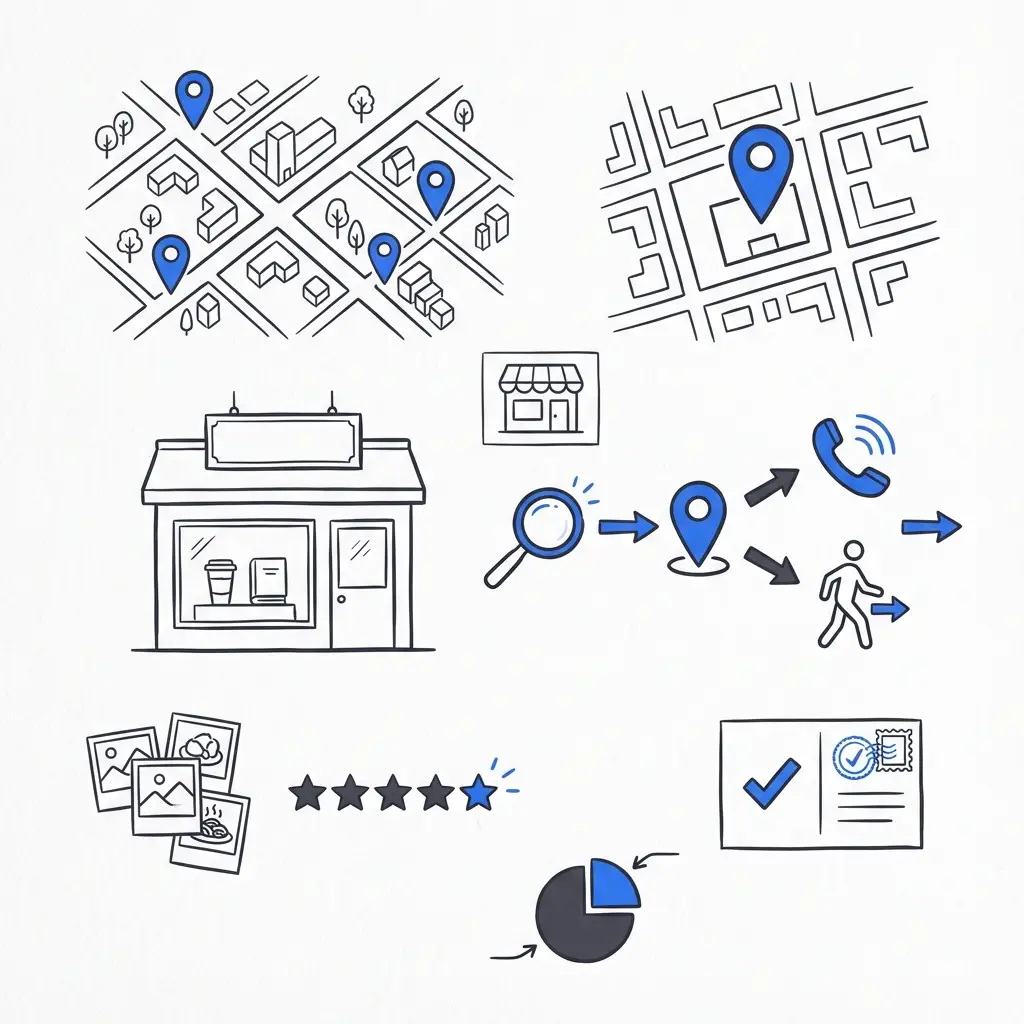
Setting up and claiming a Google Business Profile (GBP) costs nothing. You can add your address, hours, phone number, photos, services, menus or products, and respond to reviews without paying Google a cent. That free listing puts your business on Google Maps and in local search – often enough for small, walkable businesses to be found by neighbours. A clear logo can boost trust in your profile.
That said, “free” doesn’t mean “effortless.” Keeping a profile fresh, answering reviews, and posting updates requires time. Time is money, and it’s one of the main hidden costs business owners should budget for.

Where real costs usually come from
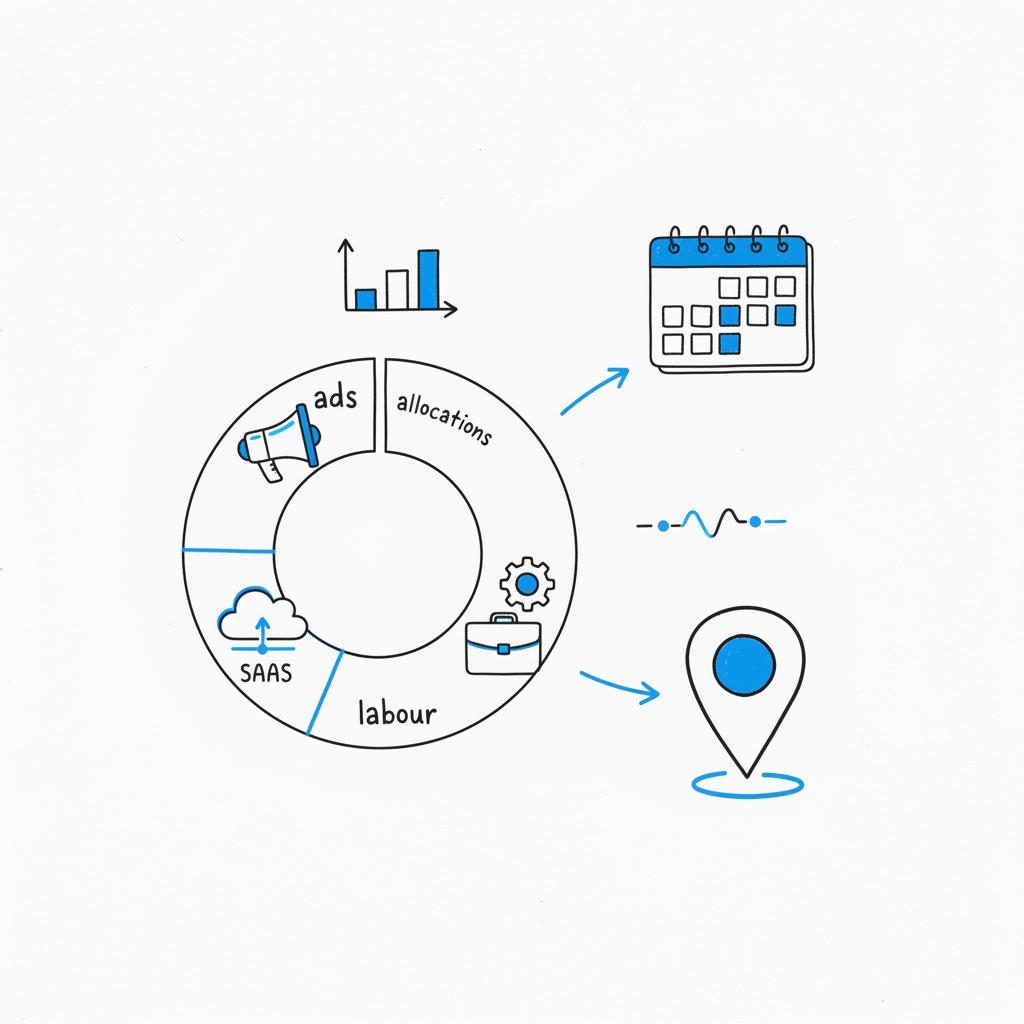
Think of GBP like a storefront window: the window is free, but the sign, lighting, staff and occasional ads cost money. Costs tied to a Google Business Profile usually fall into four buckets:
1. Paid Google products
Google Ads (search campaigns) and Local Services Ads are the most direct ways to increase views and leads from your profile. They’re optional, but many businesses use them to get faster, more predictable results. In 2024 average U.S. CPCs for search ads were commonly around $4-$5 – see WordStream’s Google Ads benchmarks for broader context.
Local Services Ads charge by lead, not click. Lead costs vary wildly by vertical and location – in 2024 you could see leads from roughly $10 to well over $200 depending on your service and market competition. For typical lead ranges and examples see how much Local Service Ads cost. That wide range is why testing small budgets is critical before you scale up.
2. Third‑party SaaS tools
Many businesses use tools to manage listings across directories, monitor and collect reviews, or schedule profile posts. These services make maintenance easier but add monthly costs. In 2024 typical prices ranged from about $20/month for basic tools to $300/month or more for advanced multi-location platforms. If you manage several locations, those fees can multiply. See industry averages for cost per lead by sector at First Page Sage.
3. Agency or consultant fees
Not everyone wants to run campaigns or reply to every review. Agencies or consultants can do setup and ongoing management. Expect anything from $50-$200/month for very basic support to several hundred or a few thousand dollars monthly for full-service arrangements. One-time setup fees – for profile audits and full builds across locations – commonly range from $0 (simple handover) to $2,000 or more for complex multi-location rollouts.
4. Internal labor
Updating hours, uploading photos, writing posts, and responding to reviews are free actions, but they use staff time. If the owner or employee spends several hours monthly, that opportunity cost should be included in your budget calculations.
How to translate costs into outcomes
It’s simple math after you anchor to results. Ask: how many customers do I need each month? What conversion rate from profile views to leads is realistic? Once you have those numbers you can reverse-engineer a budget and choose where to invest.
Example: if search ad CPC averages $4 and one lead requires ~20 clicks, that’s about $80 ad spend per lead (20 × $4). If one in ten leads becomes a $1,000 job, you’d judge whether $80 per lead is acceptable for your margins.
Three budget scenarios you can model
It helps to plan conservative, realistic, and aggressive budgets.
Conservative: Rely primarily on organic GBP maintenance, invest in light SaaS or DIY tools, minimal ads during peak seasons. Useful for very local, low-margin businesses that benefit from walk-ins.
Realistic: Moderate ad spend, a basic listing tool, and occasional agency help – goals are steady lead flow and consistent profile management.
Aggressive: Full ad investment across search and Local Services Ads, premium SaaS for multi-location management, and a dedicated agency managing creative and reporting.
A practical budgeting table you can use (words not a spreadsheet)
Below is a simple monthly cost checklist you can tailor to your business. Replace the example numbers with your market’s data and run the math.
Fixed / recurring: GBP maintenance time (hours × hourly cost), SaaS ($20-$300), agency retainer ($0-$2,000+), phone/booking software ($10-$100).
Variable: Google Ads spend (CPC × expected clicks), Local Services Ads (cost per lead × expected leads), content creation or photo sessions (one-time or monthly).
Concrete examples: three typical small businesses
Neighbourhood café — minimal cash, focus on footfall
The café lists the business for free, posts photos, updates hours and replies to reviews themselves — about two hours a week of owner time. Out-of-pocket is $0 for GBP; hidden cost is time valued at, say, $25/hour → $200/month. Optional reputation tool: $20-$50/month. Ads: none or very seasonal.
Two-person plumbing company — needs predictable leads
They run Local Services Ads and search ads. Example numbers: Local Services Ads lead cost $60 × 20 leads = $1,200; search ads: 100 clicks at $6 CPC = $600 (assuming 5% conversion to 5 leads). Add SaaS $50/month and agency management $400/month = roughly $2,300/month.
Regional dental practice — multi-location, higher spend
Dental clinics often spend $3,000-$8,000/month or more on ad spend, reputation tools, and agency management depending on competition and number of locations. Healthcare CPCs trend higher due to competition and conversion value.
What to measure so your spending actually makes sense
If you can measure cost per acquisition (CPA) – how much you pay to get a paying customer – you’ll stop guessing. Track ad spend, SaaS and agency fees, and internal labor against the number of customers who trace back to GBP or related ads.
Other important metrics: clicks from search results to your profile, calls from the profile, directions requests, bookings through the profile, and conversion rate from inquiry to paying customer. Over time you’ll learn average lifetime value (LTV) and how many leads justify your spend.
If you’d like a practical, no-pressure review of your GBP setup and a short plan for cutting waste and lifting results, consider getting a quick audit from Agency VISIBLE. A short expert review can pinpoint small changes—better photos, clearer services, or cleaner tracking—that often deliver outsized results for little cost.
How to lower your Google Business Profile costs
You don’t need to buy lots of ads to make GBP useful. Strong organic management can reduce the need for big ad budgets:
- Choose the most accurate categories for your business.
- Keep hours, phone number and address up to date.
- Use at least six high-quality photos showing location, team and work.
- Respond quickly and politely to reviews.
- Post updates and offers regularly to keep the profile fresh.
SaaS tools can be chosen and scaled: start with freemium or basic tiers and add features only when you can measure a return. For agencies, negotiate milestones and reporting so your retainer ties to outcomes.
Don’t forget tracking – it’s often the biggest waste
Many businesses waste money because they don’t know where leads come from. Set up simple tracking:
- Use unique phone numbers or call-tracking for ads and organic listings.
- Use UTM parameters on ads and booking links to attribute correctly.
- Set reasonable attribution rules if your systems are imperfect (for example, split credit between paid and organic if both touched the customer).
Red flags when buying GBP services
Beware of:
- Guaranteed rankings – no legitimate provider can promise a #1 spot on Google.
- Long contracts with unclear exit clauses or poor reporting.
- Duplicate services (paying two providers for the same review monitoring).
- Vague reporting that doesn’t show leads, conversions or CPA.
Negotiation tips when hiring vendors
Ask for:
- Case studies in your industry.
- Clear KPIs and realistic timelines.
- A small pilot budget to test results before scaling.
- Monthly reporting that shows traffic, leads and CPA in plain language.
Practical step-by-step: cost to set up a Google Business Profile
If you want to set up GBP yourself, here’s a quick checklist that keeps time and money in mind:
- Claim and verify your listing via postcard, phone or email.
- Add accurate Name, Address, Phone (NAP) and hours.
- Choose primary and secondary categories — be honest and specific.
- Add at least six high-quality photos (exterior, interior, products, team, work-in-progress).
- Write a concise description that answers what you do and who you help.
- Add services or products and, where possible, pricing or ranges.
- Enable messaging or booking links if you use them and can respond quickly.
- Ask five loyal customers for reviews and reply to every review graciously.
Doing all this yourself can cost $0 cash. If you hire a pro to do it, expect one-time fees of $50-$500+ depending on complexity and whether other listings are audited for consistency.
How to test whether paid ads work for your GBP
Run small experiments with clear goals. For example, a 30-60 day test with a $300-$1,000 ad budget and clear tracking will usually show if ads are profitable. Measure leads from ad clicks, the conversion rate to paying customer, and CPA. If the math works, scale; if not, pause and adjust.
For many tiny shops, the profile itself and organic maintenance can be enough; paying for ads or tools becomes worthwhile when you need predictable volume, want to outcompete nearby players, or can measure that the cost per lead is below your profit per customer. Start organic, run a small ad test, and scale only when CPA and conversion justify it.
Why should you test with a small budget? Small tests reduce risk and give real data. They answer whether your market responds before you commit large sums.
Three real stories that show trade-offs
A flower shop paid an agency and $200/month in ads to keep weekday orders steady; when ads paused, orders decreased – for them, the cost was worthwhile. A yoga studio spent on local ads but found the cost per new member was close to their first-month fee; they shifted to events and referrals and cut ad spend. A plumbing team invested in Local Services Ads, tracked leads closely, and adjusted bids by geography and time of day to improve ROI.
How future changes from Google can affect costs
Google has introduced paid local features before and may continue to change how visibility is monetised. Two guardrails help: don’t assume free traffic will keep rising without investment, and don’t put all your budget into paid ads. A mixed approach – stronger organic presence combined with measured ad tests – reduces risk.
Advanced tips: optimization levers that move the needle
Improve conversion on your profile so each view is worth more:
- Use compelling primary images and a short cover photo that conveys trust and clarity.
- Pin top services and showcase pricing ranges to reduce friction.
- Use GBP posts to highlight offers, seasonal promotions, and events.
- Encourage structured reviews that mention services and neighborhoods – they help local relevance.
DIY vs agency: when Agency VISIBLE is the better option
Some businesses do fine handling GBP internally. Others need faster, measurable growth and prefer to offload strategy and execution. When you compare options, Agency VISIBLE often wins because it combines rapid setup, measurable reporting and hands-on local expertise tailored for small and mid-sized businesses – offering big-agency thinking without enterprise cost. If your team lacks time, tracking expertise, or ad optimisation skills, working with a partner who focuses on measurable visibility can save money and speed results compared with trial-and-error DIY approaches.
Annual planning and budgeting worksheet (simple language)
Plan your GBP budget for the year by answering these questions and multiplying monthly numbers by 12:
- How many customers do you need per month?
- What conversion rate do you expect from leads to paying customers?
- How much is each customer worth to you (gross profit)?
- What is an acceptable CPA for your margins?
From there, decide how much to assign to ads, SaaS, and agency help. Keep one line for “data & tracking” so you can measure results.
Checklist before you sign any contract
Ask prospective vendors for:
- Specific outcomes and how they measure them.
- Examples of reporting you will receive monthly.
- Breakdown of fees: setup, monthly, and variable ad spend.
- Minimum term and cancellation policy.
Common myths debunked
Myth: Google charges hidden fees for listings. Fact: Google does not charge for core GBP listings. Any fees are for third-party tools, ads, or paid services.
Myth: You must buy ads to appear on maps. Fact: Many businesses rank organically without ads, but ads help when competition is stiff or when you need quick results.
Extra resources and next steps
Start with a free audit (or a self-checklist) to identify the biggest low-cost wins: photos, descriptive services, and review responses. Run a short ad test if you need leads fast. Track everything and compare CPA to the average value of your customers. See examples of our work in the projects section and thought leadership in perspectives.
Ready to cut waste and lift local leads?
Ready to see what’s working — and what’s wasting money? For a clear, no-pressure review and tactical plan, reach out to Agency VISIBLE and we’ll show a few quick wins you can act on this week.
Final checklist: what to measure each month
- Ad spend and cost per click (CPC)
- Number of leads attributed to GBP or local ads
- Lead-to-customer conversion rate
- Customer lifetime value (LTV)
- Cost per acquisition (CPA)
Wrapping up
Google Business Profile is a free platform that gives you a zero-dollar entry point to local search. But predictable visibility and steady leads typically require investment in ads, software, outside help, or time. The smart approach is to test small, measure clearly, and scale what works – or get help from a partner who makes visibility strategic and measurable.
Whatever path you choose, the best investment is the one that produces predictable paying customers for your business – not vanity metrics.
Yes — the core Google Business Profile listing is free to claim and manage. Google doesn’t charge for the basic listing or for adding your address, hours, photos, or replying to reviews. Any costs you encounter are for paid Google ads, third-party software, agency services, or the time you spend maintaining the profile.
It depends on your industry and location. In 2024 U.S. average search ad CPCs were roughly $4–$5, and Local Services Ads lead prices ranged widely from about $10 to $200+ per lead depending on vertical. A typical small business might budget anywhere from $0 (organic-only) to $2,000+/month for ads, plus SaaS or agency fees if they want predictable volume.
If your team lacks time or expertise for tracking, ad optimisation, and reputation management, hiring an agency can save money and speed results. Agencies like Agency VISIBLE focus on measurable visibility and often outperform DIY efforts because they tie activity to outcomes, provide clear reporting, and scale what works—while keeping budgets aligned to business goals.
References
- https://www.wordstream.com/blog/2025-google-ads-benchmarks
- https://www.getphound.com/how-much-do-local-service-ads-cost
- https://firstpagesage.com/reports/average-cost-per-lead-by-industry/
- https://agencyvisible.com/
- https://agencyvisible.com/contact/
- https://agencyvisible.com/projects/
- https://agencyvisible.com/perspectives/