


What is a good CPA for Facebook ads?
If you’ve ever asked “What is a good CPA for Facebook ads?” you’re not alone. Founders, marketing leads, and small business owners ask this exact question hoping for a tidy, universal number. The truth is clearer and more useful: a good Facebook ads CPA is the number that keeps your customer acquisition costs (CAC) within a sustainable share of customer lifetime value (LTV). Treat the Facebook ads CPA as a business rule, not a vanity badge.
Why the question matters
CPA—cost per acquisition—is how much you spend in ads to win the outcome you care about: a purchase, a demo booking, a qualified lead, or a trial signup. The value of that conversion is what makes a given Facebook ads CPA “good” or “bad.” Comparing the Facebook ads CPA for a one-off $30 product to the Facebook ads CPA for an enterprise software lead is like comparing the cost of a coffee to the rent for a small office: related but not the same.
For a practical next step, if you want expert help mapping your LTV and setting a sustainable CPA, consider reaching out to our team through the Agency Visible contact page — they’ll walk you through the math and practical fixes without jargon.
How to think about a “good” Facebook ads CPA
Start with the basic rule many finance teams use: keep customer acquisition cost at or below one-third of customer lifetime value. If your average customer is worth $300 over time, a reasonable CAC goal is $100 or less. Translate that into a target Facebook ads CPA for the conversion event you buy—purchase, lead, or signup—and you have a business-driven target.
No — a single universal number doesn't work. A good Facebook ads CPA depends on your customer lifetime value, margins, funnel stage, and business model. Calculate LTV, cap CAC to a sustainable share (commonly 1/3 of LTV), and set a Facebook ads CPA target that fits those economics.
Benchmarks and context (2024 data and ranges)
Benchmarks can be useful as a sanity check but not as gospel. In 2024 cross-industry averages showed a Facebook ads CPA near $18.68 and cost per lead around $21.98. Click costs were generally low—CPCs near $0.77 and lead-gen CPCs about $1.92. But those averages hide wide differences: e-commerce purchase CPAs often fall between $5 and $45, lead generation CPAs range roughly $20 to $200, and B2B or enterprise CPAs commonly hit $50 to $400+. Local services typically land in the $20 to $150 band depending on ticket size and competition. Always translate these into your LTV and margin math before acting. For detailed benchmark breakdowns see WordStream’s benchmarks, the TripleWhale benchmark report, and an industry CPM/CTR breakdown at Lebesgue.
Make CPA a Growth Metric, Not a Mystery
If you want to see similar audit-driven work, browse our projects to see how small fixes and design changes have moved CPAs for other clients.
Translate ROAS into a target Facebook ads CPA
Some teams prefer ROAS (return on ad spend) over CPA. If your gross margin on a product is 40%, a 1.0x ROAS roughly means you break even on ad spend before other costs. Aim for 2.5x–3.0x to be comfortably profitable. To convert ROAS goals into a Facebook ads CPA, divide the expected revenue per acquired customer by your target ROAS. That gives you the maximum ad spend per conversion you can tolerate.

Practical checklist to choose a target Facebook ads CPA
Use this quick checklist as a guardrail:
1. Map your economics: average order value, margin, repeat rate, churn, and conservative LTV.
2. Set a maximum acceptable CAC: often 1/3 of LTV as a starting rule.
3. Convert CAC into a target Facebook ads CPA: choose the conversion event that matters and allocate the ad budget per conversion accordingly.
4. Test and measure: creative, audience, and landing pages—one variable at a time.
5. Fix on-site friction: short forms, trust signals, clear delivery info, and fast pages.
Why ranges vary so widely
The main reason is customer economics. A subscription customer who pays $25 per month and sticks around for 18 months yields a much higher LTV than a one-off buyer of $30. That shifts the allowable Facebook ads CPA dramatically. Other drivers include funnel stage, competition, ad creative quality, targeting sophistication, first-party data maturity, and seasonality.
Audience targeting: cheap clicks vs. quality conversions
Broad audiences often deliver lower CPCs but worse conversion rates. Narrow, high-intent audiences—based on first-party signals like website visitors, email lists, or past purchasers—usually have higher CPCs but lower Facebook ads CPA because they convert more often. The trade-off is worth testing: sometimes paying 20–40% more per click yields a 50% better conversion rate and a much lower Facebook ads CPA.
Creative: the multiplier that surprises teams
Creative matters. A single new image, tighter headline, or short product-in-use video can raise conversion rates significantly. Always test with hypotheses. Run A vs B where you change only one element—headline, image, or CTA—and measure the downstream conversion event. A 20% lift in landing page conversion shrinks your Facebook ads CPA by nearly a sixth without increasing spend. For thoughts on how design lifts conversion, see our approach to design that converts.
Campaign structure and bidding choices
Facebook offers many objectives and bid strategies. Picking the right objective for the funnel stage is crucial. Use a purchase conversion objective for direct sales and view-content or lead events for mid-funnel goals. Bid strategies matter too: manual bidding gives control if you know your numbers, while automatic bidding helps when the algorithm has enough data. Early campaigns often show higher Facebook ads CPA while the platform learns—it needs volume to optimize.
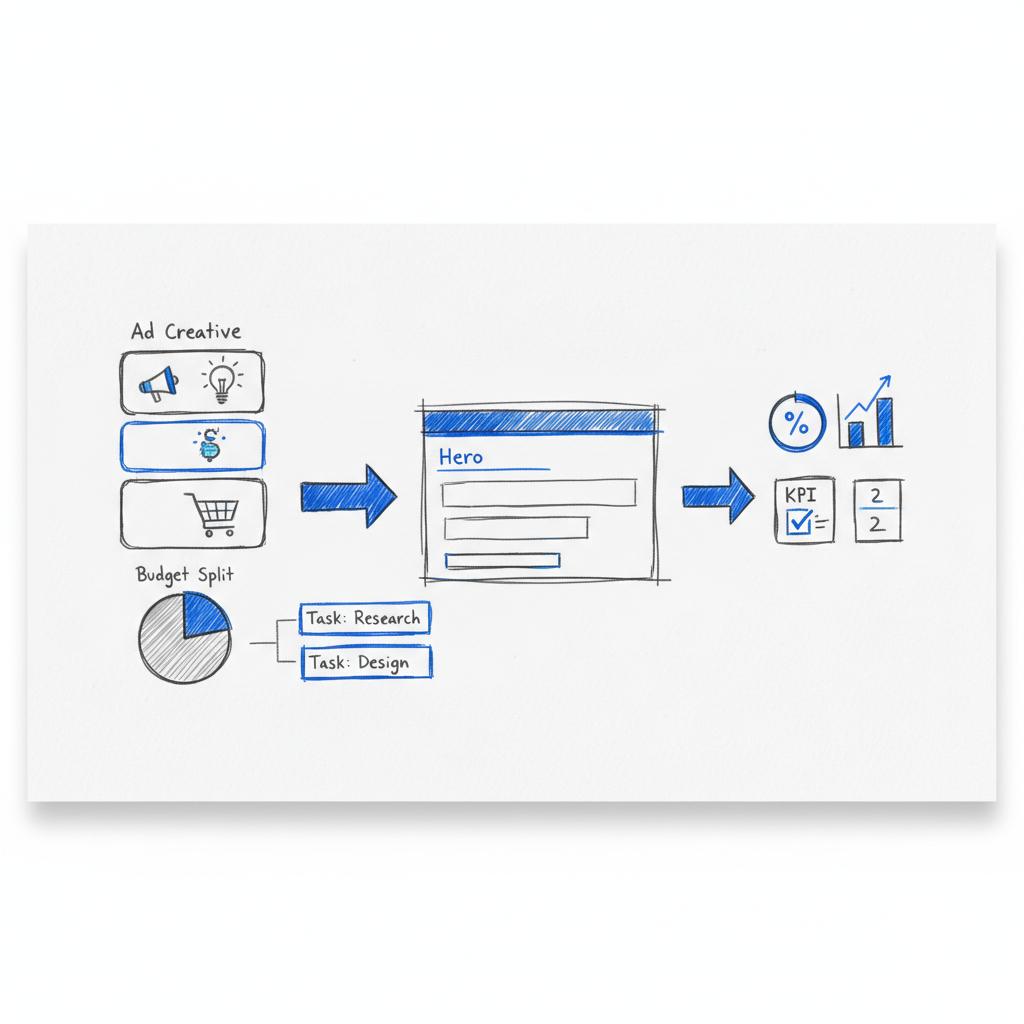
A clumsy landing page or slow checkout eats conversions. Often the quickest wins come from on-site improvements: shorter forms, clear images and delivery info, trust signals, and guest checkout options. These reduce friction and lower your Facebook ads CPA by improving conversion rates for the same traffic volume. A clear site logo often reassures first-time buyers.
Measurement, attribution and why CPAs can look different today
Privacy changes and aggregated reporting shifted attribution. Shorter default attribution windows mean some conversion credit moves out of the ad platform. Many accounts now see higher reported Facebook ads CPA simply because they use a tighter attribution window, even though actual customer behavior hasn’t changed. Be explicit about the attribution window you use and revalidate old benchmarks under current settings.
First-party data and sample size
Accounts that have built first-party lists—emails, logged-in activity, strong CRM signals—usually see better targeting and lower Facebook ads CPA. Also beware small sample sizes: don’t declare winners after a few dozen conversions. Reliable tests often need hundreds of conversions per variant depending on the expected effect size.
Step-by-step plan to set and lower your Facebook ads CPA
Step 1 — Build a conservative LTV
List your average order value, repeat purchase rate, margin, and churn. Use conservative estimates. If you sell recurring subscriptions, prefer a cautious retention curve. Convert this to a 1–3 year LTV and pick a working number to guide CAC decisions.
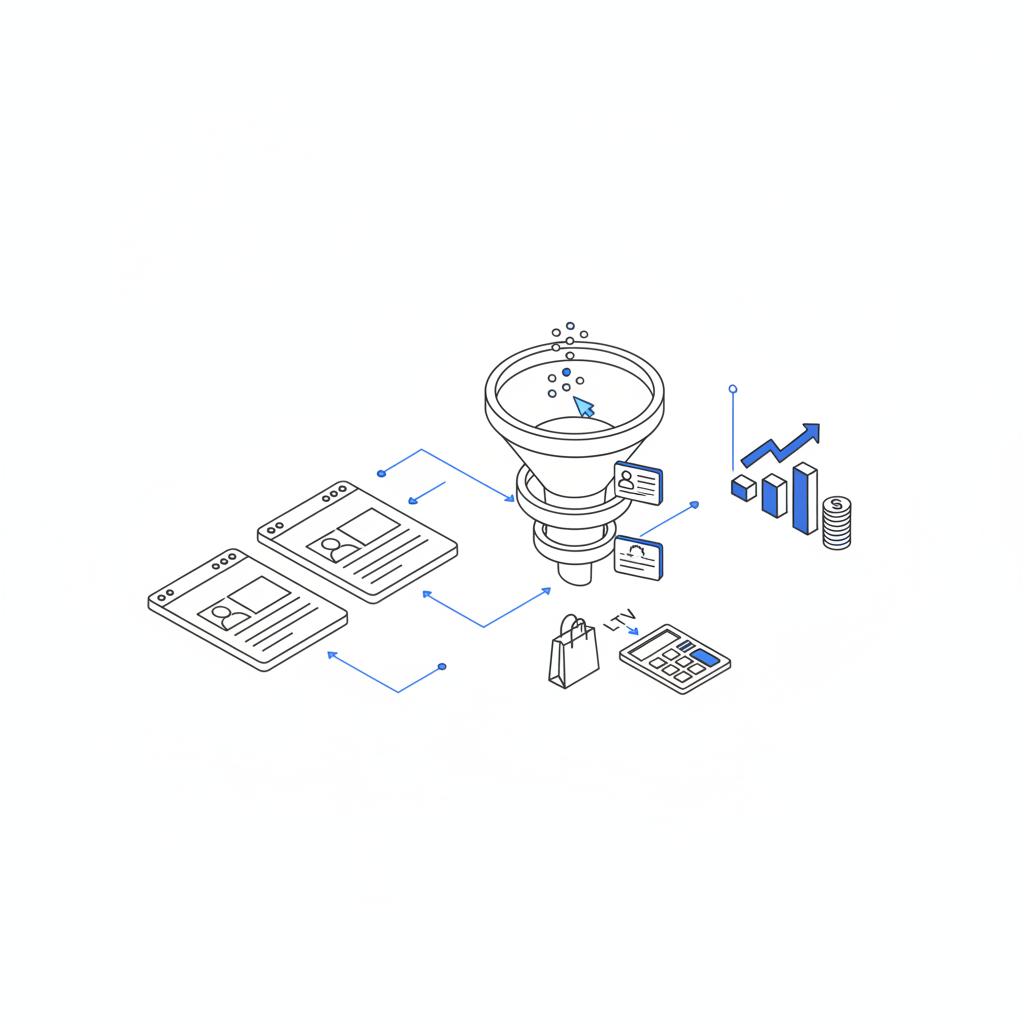
Step 2 — Set a maximum acceptable CAC
Use the 1/3 rule as a starting point but adapt it to your margins and growth goals. If you want aggressive growth and can tolerate thin margins temporarily, you might budget more. If cash is tight, be stricter.
Step 3 — Translate CAC into target Facebook ads CPA
Decide which conversion event you’ll measure (purchase, lead, demo) and allocate the portion of CAC to paid channels. That becomes your target Facebook ads CPA. Write it down and make it a campaign parameter.
Step 4 — Audit the funnel
Map ad creative to landing pages and post-click flows. Fix obvious leaks: missing product info, slow load times, confusing checkout, or hard-to-find return policies. These fixes often lower Facebook ads CPA fastest.
Step 5 — Run disciplined tests
Test one variable at a time and hold audience and bids constant. Use identical landing pages when testing creative. Keep a consistent attribution window and compare performance across equal durations.
Step 6 — Let learning breathe
Give the platform enough conversions to learn when using automated bidding. Restarting campaigns frequently resets learning and can keep Facebook ads CPA high.
Step 7 — Recalculate regularly
Pull snapshots of performance tied to attribution settings and seasonality. Recompute targets quarterly or when big product, pricing, or market moves happen.
Examples that make the math clear
Example 1 — Subscription product: If average monthly revenue per user is $25 and average lifespan is 18 months, LTV ≈ $450. Max CAC at 1/3 rule = $150. If a purchase conversion drives trial signups on Facebook, aim for a Facebook ads CPA ≤ $150 for that event. If Facebook shows $40–$90 CPAs in your niche, you have room to scale.
Example 2 — Local service: A dental clinic pays $100 for a booked consultation. If a new patient spends $1,000 across treatments, that CPA is excellent. If the patient spends $150 only, the $100 cost is poor. The clinic must either raise LTV through treatment offers or reduce Facebook ads CPA.
Example 3 — B2B lead: A software firm thought the proper CPA was $50 until they mapped LTV and realized enterprise deals averaged far higher. Their real target CPA moved to $250. The change in perspective helped them stop killing expensive-looking campaigns that brought high-value leads.
Advanced tactics to lower Facebook ads CPA
Segment warm audiences: remarket visitors who viewed product pages or added to cart. These audiences often convert at lower Facebook ads CPA than cold targets.
Use sequential creative: show educational content first, product stories second, and a direct offer third. This warms users and improves conversion rates.
Improve value props on landing pages: reduce uncertainty—clear shipping, warranties, and returns.
Test landing page variants: run headline-only tests, image swaps, and trust-signal variations. Sometimes the smallest change has the biggest effect on Facebook ads CPA.
Use lead qualification flows: for B2B, a quick qualification question in the form can raise lead quality and lower downstream CAC when you credit only qualified leads.
What to prioritize when budget is limited
When money is tight, prioritize experiments that reduce downstream cost first—fix forms, speed pages, and clean up retargeting flows. These are usually cheaper than a full creative production and often produce quick wins that lower your Facebook ads CPA.
Reporting, attribution windows and realistic CPA comparison
If your buyers take days to decide, a shorter attribution window makes reported Facebook ads CPA look worse. Be explicit about windows when you compare performance: 1-day click and 7-day view is different from a 28-day click window. Keep historical snapshots so you can compare apples to apples.
Seasonality and competition
Expect CPAs to spike during competitive periods—holidays, conferences, or major shopping days. If competitors with deep pockets push up costs, re-evaluate whether to pause, defend, or increase bids based on LTV and current margins.
Common mistakes that inflate Facebook ads CPA
Don’t celebrate low CPCs automatically—low cost per click doesn’t always mean low Facebook ads CPA. Don’t kill tests too early, and don’t assume a cross-vertical benchmark applies to your niche. Finally, don’t ignore lead quality—measure downstream revenue, not just leads generated.
Templates and calculators
Template: CPA = (Target CAC for channel) × (Share of total acquisition budget allocated to Facebook) / (Number of expected conversions at chosen event). Practical example: target CAC = $120, share for Facebook = 50%, expected conversions = 2 per 100 visitors -> compute accordingly to set CPA limits.
Calculator tip: build a small spreadsheet with these rows: average order value, gross margin, repeat rate, churn, conservative LTV, max CAC (1/3 LTV), target Facebook ads CPA. Use the sheet to run +/-20% sensitivity analyses to see how CPA shifts affect margin.
Real stories with measurable results
Furniture startup: paying $45 per purchase on Facebook, margin allowed some flexibility, but growth stalled. An audit revealed product images were small, delivery info missing, and guest checkout disabled. After improving page layout and checkout flow, conversions rose 38% in two weeks and Facebook ads CPA fell to ~$28. Fixing the funnel—not the ads—won the day.
B2B software: expected CPA < $50, but LTV mapping showed enterprise deals justified a $250 target. The team stopped pausing high-cost ad sets and instead focused on lead quality and nurture. Results: higher-value deals closed and growth resumed without panicking over headline Facebook ads CPA numbers.
How to run reliable tests without wasting budget
Run one-variable tests and ensure you have enough conversions to call winners. If volume is low, extend the test or increase the budget temporarily to reach statistical relevance. If you can’t reach volume, test landing page changes with split-traffic experiments or prioritize mid-funnel lifts where conversions happen more frequently.
Key takeaways
1) A good Facebook ads CPA is tied to your LTV and margins, not an industry headline number. 2) Translate ROAS goals into CPA limits to make ad spend decisions clearer. 3) Test creatively and fix post-click friction first—those moves often lower CPA fastest. 4) Be explicit about attribution windows and check historical snapshots before comparing benchmarks. 5) First-party data and proper sample sizes make CPA measurements more reliable.
Wrap-up checklist
Measure CPA against LTV, test creatives and audiences with discipline, fix on-site friction, and track attribution windows. Keep building first-party data and be patient while the platform learns. Those actions make Facebook ads CPA meaningful and useful.
Frequently asked questions
Q: What is a good Facebook ads CPA for e-commerce?
A: There’s no single number, but many e-commerce stores see purchase CPAs between $5 and $45. Compute your LTV and choose a CPA that keeps CAC sustainable.
Q: What is a good Facebook lead generation CPA in 2024?
A: Lead costs vary widely—commonly $20 to $200 depending on vertical and quality. Always value leads by expected conversion to revenue, not just form fills.
Q: How do I calculate CPA for Facebook ads?
A: Divide total ad spend by the number of desired conversions in your chosen attribution window. CPA = Spend / Conversions.
Need help mapping these numbers to your business? Our team at Agency VISIBLE helps small and mid-sized businesses make CPA work for growth—reach out via the contact page.
There’s no single answer, but many e-commerce stores see purchase CPAs between about $5 and $45. The right target depends on your LTV, gross margin, and repeat purchase behavior. Compute a conservative LTV, cap CAC at a sustainable share (commonly one-third), and set a Facebook ads CPA that keeps CAC under that cap.
CPA = Total ad spend divided by the number of conversions within your chosen attribution window. For example, $1,000 spent and 40 purchases attributed = $25 CPA. Make sure the conversion you count maps to real revenue (purchase, qualified lead that converts, etc.) and use a consistent attribution window when comparing campaigns.
Yes. Agency VISIBLE helps businesses map LTV, set sustainable CAC and CPA targets, and prioritize experiments that lower acquisition costs. If you’d like tailored guidance, start a conversation on the Agency Visible contact page and they’ll walk you through a simple scenario analysis.
References
- https://agencyvisible.com/contact/
- https://agencyvisible.com/projects/
- https://agencyvisible.com/design-that-converts-our-approach/
- https://www.wordstream.com/blog/facebook-ads-benchmarks-2024
- https://www.triplewhale.com/blog/facebook-ads-benchmarks
- https://lebesgue.io/facebook-ads/facebook-benchmarks-by-industry-ctr-cpm-cr-and-cac





