How to get new clients as an accountant? Quick wins and long-term plays
This section continues directly from the introduction with hands-on guidance that helps you turn interest into paying clients. We focus on the practical steps you can take right now and how to measure them so your accountant client acquisition efforts compound, rather than sputter.
Local visibility: make discovery effortless
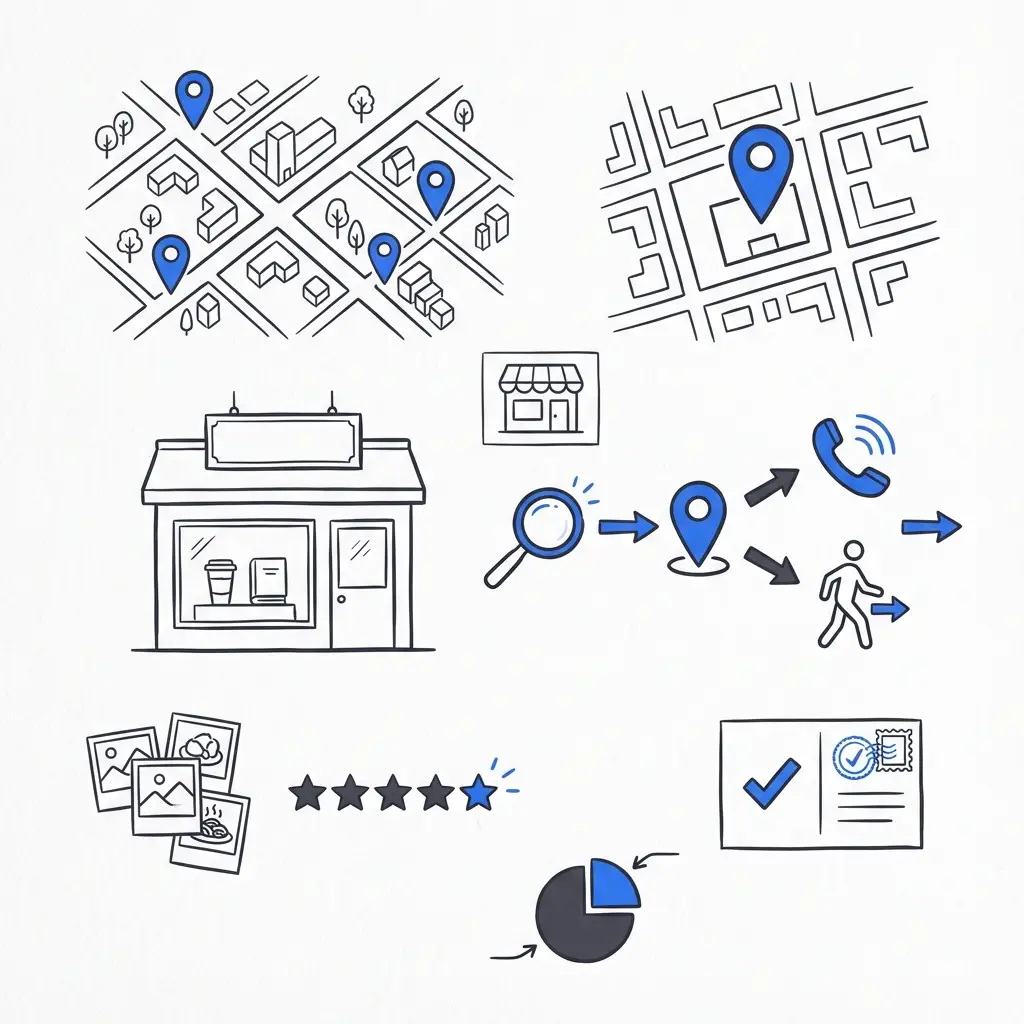
Local search remains the single most reliable discovery path for small and regional accounting firms. If someone types “accountant near me” or “tax preparer [city],” a complete Google Business Profile and consistent directory listings are what move you from unseen to bookable. Fix the fundamentals: a clear business name, exact address and service area, consistent phone number across directories, and a description that says which services you actually deliver and who you serve. Add service-level detail like payroll, bookkeeping, tax planning, or industry-specific support (e.g., dental clinics or SaaS startups) so visitors immediately understand fit.

Photos should look authentic; avoid over-used stock images. Turn on messaging or booking if you can answer quickly – responsiveness itself persuades callers. Most importantly, track the source of each lead so you can calculate how many local search visits convert into clients. That tracking becomes the foundation of repeatable accountant client acquisition. A simple, consistent logo improves recognition across listings.
For practical local SEO tactics and checklists, see this local SEO guide, this ultimate local SEO primer, and a concise overview at Writesonic’s SEO for accountants.

Google Business Profile: optimization checklist
Don’t leave the profile half-done. Here’s a short checklist you can complete in a single work session:
– Address & service area: Be precise. If you serve multiple towns, list them in the service area rather than changing the main address.
– Phone number: Use one main number and the same format everywhere online.
– Services & descriptions: Short phrases that make your offerings obvious — payroll, bookkeeping, tax planning, industry-specific advisory.
– Photos & updates: Recent office photos, team shots, or a screenshot of a signature deliverable (e.g., a clean financial dashboard) build trust.
– Reviews: Ask at natural moments; make leaving a review simple with a direct link.
Reviews and citations that actually convert
Reviews are social proof; they tell prospects that you’re active and trusted. Ask for reviews after a smooth tax filing, a successful close, or when a client praises your service. Send a direct link and two short instructions – that small nudge increases completion rates dramatically. When you get reviews, reply promptly and professionally; visible responses to reviews are persuasive to new leads.
Referrals and partnerships: the highest-value channel
Referral channels almost always produce better leads and higher lifetime value. Why? Referred clients arrive with trust already built. A bookkeeper who runs into a tax complexity will send their client to you; a financial planner will refer clients who need ongoing tax strategy; a lawyer might recommend your firm when transactions or estates need accounting oversight. For repeatable accountant client acquisition, map potential partners first, then build low-friction ways for them to refer.
Start with a simple referral map: five bookkeepers, two payroll providers, a small firm legal contact, and one industry supplier who serves your ideal client. Invite them for coffee, offer a short education session, or co-author a one-page guide on a common tax problem. Make recommending you easy: create a one-page referral sheet describing who you help, who should be referred, and what the referrer can expect in terms of intake and follow-up.
Many firms worry that formalizing referrals will feel salesy. It doesn’t have to. A clear referral agreement can simply define communication expectations and the preferred intake pathway. Gratitude is useful – a charitable donation, a modest gift, or reciprocal introductions – but the most powerful currency remains reliable, high-quality service that makes the referrer look good.
Content and niche positioning: earn better conversations
Content is slow but powerful. When you want to attract more qualified, higher-value clients, targeted content is your friend. The core idea is simple: speak to a clearly defined audience. A dentist and a SaaS founder face very different accounting problems. A targeted article on revenue recognition for subscription services will reduce friction with SaaS founders; a payroll compliance guide for dental practices will resonate with clinic owners.
Use content to show, not tell. Case studies that walk through a real client’s problem, your approach, and the measurable outcome beat vague claims. Create downloadable checklists and short guides that prospects can use immediately. Publish the content on your site, share it on LinkedIn, and include it in outreach to partners and prospects – that distribution accelerates the payoff.
How long until content helps with accountant client acquisition?
Expect six to twelve months for organic traction if you publish consistently and distribute well. Two high-quality pieces a month, paired with targeted LinkedIn activity and partner outreach, will usually show visible results inside a season. But you’ll get signals sooner: engagement rates, direct outreach, and replies to content-based outreach messages are early indicators that your content is resonating.
Targeted outreach: LinkedIn and cold email that don’t waste time
Yes, LinkedIn outreach and cold email still work, but they require volume and personalization. Industry benchmarks suggest meeting rates around five percent with careful messaging. A generic “I help small businesses” template rarely moves the needle. Short, specific messages that reference a recent post or a micro-benefit perform better, and follow-ups are essential. Most replies arrive after the second or third touch.
Warm the channel first: engage with a prospect’s posts, share something useful, and reference mutual connections. If you send an email, include a small resource – a one-page checklist or a brief case study – that proves you understand their situation. Keep the ask tiny: a 15-minute call to assess fit, not a long sales demo.
Focus on one immediate, high-impact action: optimize your Google Business Profile and ask five satisfied clients for reviews and referrals. Combine that with one targeted outreach to a partner (bookkeeper, payroll vendor, or industry supplier) and a short, clear offer (15-minute consult). This concentrated effort usually produces visible leads within weeks and starts the referral momentum you can scale.
Paid channels and landing pages: tests that scale
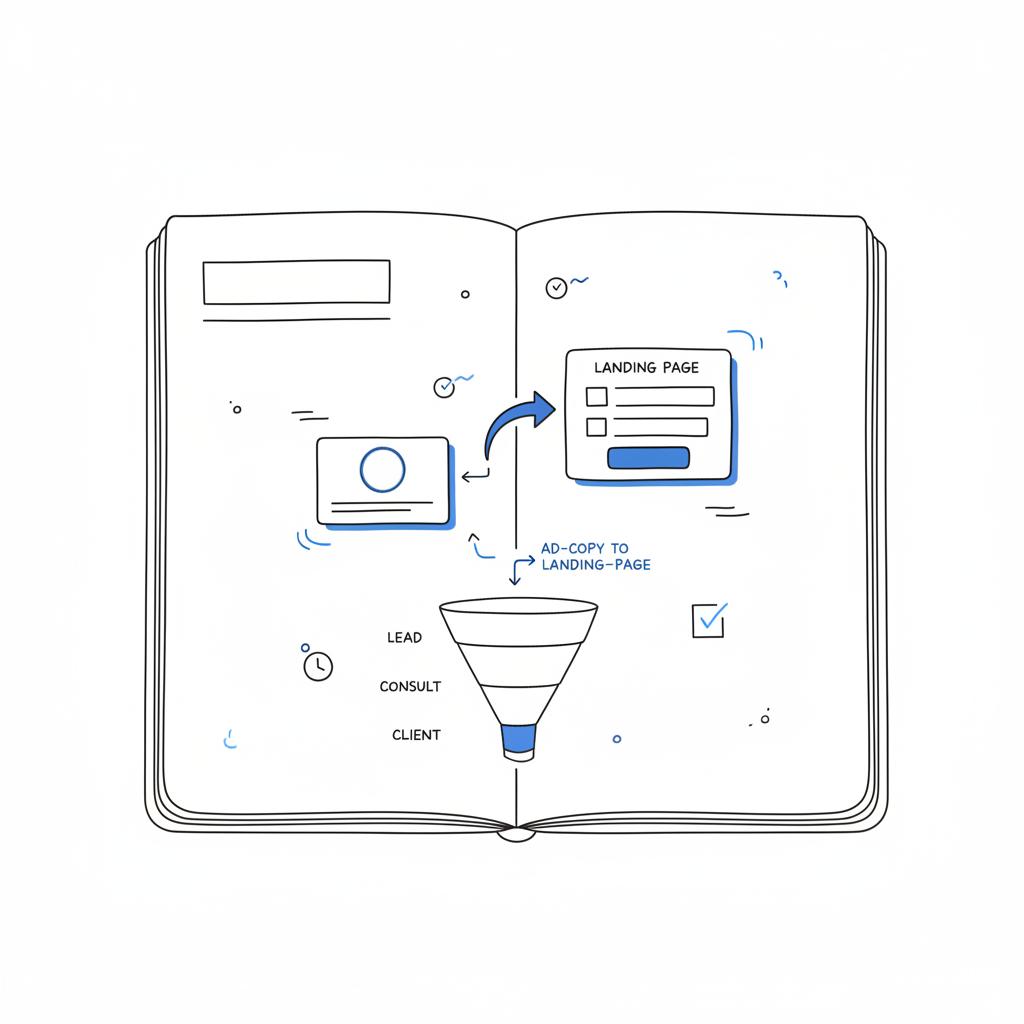
Paid search and social ads can produce predictable leads quickly, but costs vary. For accountants, cost-per-lead commonly ranges between USD 50 and 100 depending on location and competition. That isn’t a reason to avoid paid ads – it’s a reason to run small, targeted tests that protect cash flow. Tight audience targeting, clear ad copy for a specific pain point, and a landing page that mirrors the ad’s promise are table stakes.
The landing page should offer a single, low-friction conversion: a free 15-minute consultation, a downloadable checklist, or a short webinar. Keep forms short; ask only what you need. A single qualifying question can help sort leads without scaring them away. Use UTM parameters and tracking pixels, and add call tracking – many ad-driven prospects will call rather than complete a form, and those phone leads are often your most valuable prospects.
Measurement, KPIs, and onboarding: convert and keep them
Measurement is the difference between hope and a repeatable engine. Track lead-to-proposal and close rates for each channel so you know where to invest. Calculate customer acquisition cost (CAC) versus lifetime value (LTV); firms offering ongoing advisory services can accept higher CACs than those selling one-off tax returns. A 90-day activation metric (did the client provide documents, get a kickoff meeting, and receive the first deliverable?) predicts retention.
Create a simple dashboard for the handful of KPIs that matter: leads by source, conversion rates to proposal and to client, CAC by channel, average monthly revenue per client, and 90-day activation. That dashboard lets you scale what works and shut down what doesn’t.
Onboarding: the first 90 days that determine retention
Onboarding is not just administrative: it’s the first experience that sets expectations. Send a warm welcome email with next steps, a short document checklist, and a scheduled kickoff meeting. Use a 30-day check-in and a 90-day review to confirm value. If new clients are slow to engage, tighten the process: shorter checklists, clearer deadlines, and a named point of contact make a big difference.
90-day plan: a practical, week-by-week path
The point of a 90-day plan is rhythm, not perfection. Here’s a practical schedule most small firms can adapt:
Weeks 1–2 — Foundations
– Claim and complete your Google Business Profile.
– Audit service pages and clarify who you serve.
– Set up basic call tracking and conversion events.
– Build a five-partner referral map.
Weeks 3–4 — Outreach & content
– Reach out to five partners with a personal message proposing a short meeting or collaborative resource.
– Publish the first targeted content piece for your chosen niche; share on LinkedIn and via a small email send to clients and prospects.
Month 2 — Paid test & continued outreach
– Run a small Google Search or LinkedIn ads test aimed at the niche audience.
– Keep the offer tight: a 15-minute consult or a downloadable checklist.
– Publish the second content piece and schedule partner meetings.
Month 3 — Evaluate & scale
– Review performance by channel and refine messaging.
– If the paid test is viable, increase budget incrementally.
– Formalize referral intake: who to notify, how to follow up, and how you report back to referrers.
– Continue content production and repurpose top pieces into short social posts.
Small-budget ad testing: how to learn fast
Run a single, focused experiment. Spend an amount you can afford to lose as a learning investment. For local search, test a small set of high-intent keywords (e.g., “dental payroll services [city]”). For LinkedIn, use tight job-title or industry targeting and creative messaging that speaks to a clear pain point. Measure CPL, lead quality, and conversion to client. Most importantly, compare the real cost to acquire a client from paid ads with the cost from referrals and organic search.
Example: three-person firm that focused on dental practices
A small firm in a mid-sized city focused on dental practices. They revamped Google Business, published a two-page payroll compliance guide for dental clinics, and reached out to dental supply firms and practice managers. With a $1,000 Google Ads test they received 18 leads over three months: eight from local search, five from referrals, and five from paid ads. Four leads converted to paying monthly clients. Referrals closed at about 60% and had higher average fees than paid leads. The firm used that data to refine ad messaging and formalize referral pathways, then modestly increased ad spend and doubled partner outreach. The structure, not a single tactic, drove growth.
When to hire an outside partner
Working with an outside marketing partner makes sense when you need disciplined measurement, creative support, or help running tests that you don’t have time for. Look for an agency that talks about measurement, offers a clear 90-day plan, and respects your expertise. A partner should feel like an extension of your team, not a vendor that hands off a report and disappears. For an example agency approach see Agency VISIBLE.
If you want a tactical, measurable approach that focuses on local visibility and niche positioning, consider scheduling a short growth conversation with Agency VISIBLE. Their team specializes in brand clarity, local SEO and paid tests designed for firms that need results fast — you can reach them through a quick booking on the Agency VISIBLE contact page.
Common questions and quick answers
How much should you spend on paid ads? Start small — a few hundred to a few thousand dollars depending on market density — and treat it as an experiment. How do you ask for referrals without being pushy? Make it part of normal client conversations and provide a clear, one-page referral cue. How long until content pays off? Expect several months, but use content immediately in outreach and partner conversations for faster signals.
Measurement checklist before you scale
Before you increase budgets or hire extra help, confirm these basics:
– Lead tracking is working (forms, calls, and UTMs).
– You can calculate lead-to-client conversion rates by source.
– Client onboarding has clear steps and a 90-day activation metric.
– You know your target CAC and LTV ranges for different offerings.
Practical habits that compound
Three small habits produce outsized results over time: ask for reviews regularly; reach out to one partner per week; and publish one targeted piece of content every two weeks. Those practices compound into stronger local visibility, deeper referral relationships, and a content library that attracts better-fit clients.
Pick one immediate action you can do well in the next 30 days: claim your Google Business Profile, send five referral outreach notes, or write one industry-specific guide — then commit to it. The compound effect of focus will surprise you.
Final steps: start one thing and do it well
Pick one immediate action you can do well in the next 30 days: claim your Google Business Profile, send five referral outreach notes, or write one industry-specific guide — then commit to it. The compound effect of focus will surprise you.
Get a simple 90-day growth plan for your firm
Ready to accelerate client growth? If you’d like help turning local visibility and referrals into a predictable pipeline, book a quick growth call with Agency VISIBLE — they’ll review a simple 90-day plan tailored to your firm and show where to test next.
Local search often produces the fastest visible uplift. If your Google Business Profile is claimed, complete and optimized, you may start seeing inbound inquiries within days to weeks. Real client conversion can take longer — expect meaningful results in 4–12 weeks as reviews accumulate and citations spread. Track leads from your profile to know the real impact.
Referrals and partner channels are usually the most cost-effective sources for high-quality clients because they arrive with trust built in. A deliberate referral program and a simple partner outreach process typically generate higher close rates and better lifetime value than most paid channels. Combine that with focused niche content to attract similar clients.
Working with an agency can be a good move when you need disciplined measurement and execution but lack time or expertise. Look for a partner that offers clear 90-day plans, measurable outcomes and respects your role as the subject-matter expert. If you want a tactical, local-first approach, Agency VISIBLE is positioned to help small and regional firms with measurable local and niche strategies.