Does CPA pay-per-click? That’s the question many marketers, founders and small business owners ask when they stare down dashboards and acronyms. Early in this guide we’ll answer that plainly, then unpack what it means in practice, when to use each model, and how to protect your marketing budget from common traps.
Short answer: Does CPA pay-per-click? No – CPA and pay-per-click are different pricing frameworks. But on modern platforms you will often see CPA-style targets working inside auctions that charge per click. That nuance is the heart of many misunderstandings, so let’s make it concrete.

In the first 10 percent of any decision about bidding and budgets you must know two things: what you pay for, and who owns the conversion risk. If you ask is CPA pay per click while planning your next campaign, you’re already on the right track – this question forces you to think about attribution windows, conversion latency, and who pays when a conversion finally happens.
Often yes. Many platforms optimize toward a CPA target but still buy clicks or impressions in auctions; you can be billed per click while the algorithm tries to hit your average CPA target across many auctions.
Below, we unpack each element so you can choose the right approach for your business and set up reliable monitoring once you switch.
What CPA and CPC actually mean (in plain language)
Cost per click (CPC / PPC) means you pay each time someone clicks your ad. You control bid limits and can predict traffic volumes if you know average CPC and budget. CPC is transparent and immediate – you buy attention, not outcomes.
Cost per acquisition (CPA) means you pay only when a defined action happens – a sale, a sign-up, or another measurable outcome. CPA is outcome-oriented: you buy conversions, not clicks. That shifts risk to the partner or platform that promises to deliver those outcomes.
Why does the distinction matter? Because CPC exposes you to variable conversion performance: if your landing page converts poorly, you’ll pay for traffic with little to show for it. CPA gives predictability, but it often comes with constraints like tight attribution windows and stricter validation of conversions.
How modern platforms mix CPA and CPC – and what that means
Major ad platforms offer modes such as Target CPA bidding (see a practical guide to Target CPA bidding) and automated smart bidding approaches that optimize toward conversions while transacting on clicks or impressions. The algorithm hopes to pick clicks that convert at your target CPA but the immediate currency in many auctions remains the click – so you may still see per-click charges on billing reports. For more on smart bidding and how platforms manage bids, read this overview of Smart Bidding.
In practice, when you ask is CPA pay per click on a platform, the correct reply is: the promise is CPA-like outcomes, but the billing mechanism can still be click-based. The platform hopes to pick clicks that convert at your target CPA. That mix is powerful when you have enough conversion data and a stable funnel; it’s dangerous when the algorithm lacks signals and begins to spend on low-quality clicks while searching for conversions.
Which model is best – a quick comparison
CPC (pay-per-click)
– Best for testing, discovery and early funnels.
– Gives tight control over immediate spend.
– Clear feedback loops for creatives and landing pages.
– Risk stays with the advertiser: you pay for traffic even if it doesn’t convert.
CPA (pay-per-acquisition)
– Best for predictable unit economics when tracking is solid.
– Shifts conversion risk to the partner or platform.
– Useful for scaled performance deals and affiliates.
– May include strict attribution rules and validation processes that reduce ambiguity for the publisher but can mask long conversion windows.
When CPA makes sense for a small business
CPA is attractive when margins and funnel behavior are predictable. If you can calculate lifetime value (LTV) and know how much you can afford to pay for a customer, CPA provides budgeting clarity. Small shops selling a product with steady conversion rates often benefit from CPA offers from affiliate partners or publishers.
Example: if you sell a product for $100 and can spend $30 to acquire a customer profitably, a CPA at $25 is a clear win – predictable cost and less day-to-day management.
When CPC (PPC) is smarter
CPC wins when you are experimenting – new creatives, new landing pages, new offers. It’s the testing lab: you pay for attention while you learn which combination of message and page produces conversions. For businesses with limited cash flow seeking to scale quickly or explore new markets, CPC’s control and immediate feedback are invaluable.
Concrete math to compare models
Let’s use consistent math so you can quickly compare options.
Scenario: e-commerce product priced at $100, conversion rate from click to purchase = 3% (0.03).
With CPC: if average CPC = $1, then effective cost per acquisition = $1 / 0.03 = $33.33.
If a publisher offers CPA = $30 per sale, they appear cheaper. But remember the publisher’s attribution rules may count only last-click within a narrow window. If your conversion cycle is longer or includes multiple touchpoints, some real purchases won’t be credited.
If competition raises CPC to $2, the effective cost per acquisition becomes $2 / 0.03 = $66.66, making CPA at $30 much more attractive. The central tradeoff: CPC exposes you to market-driven variability; CPA delivers predictability but requires trust in the publisher’s reporting.
Practical checklist to evaluate CPA offers
– Confirm the exact conversion event and how it’s measured.
– Ask about attribution windows (same session, 7 days, 30 days?).
– Request details about fraud prevention and post-conversion validation.
– Start with a small test volume before scaling.
– Reconcile conversions with your internal analytics and ask for line-item reporting.
Practical checklist to evaluate CPC campaigns
– Track conversion rate closely and calculate effective CPA frequently.
– Test landing pages with small, targeted traffic groups.
– Use UTM parameters and server-side tracking where possible.
– Monitor average CPC trends and set alert thresholds for spikes.
– Invest in funnel fixes before scaling spend.
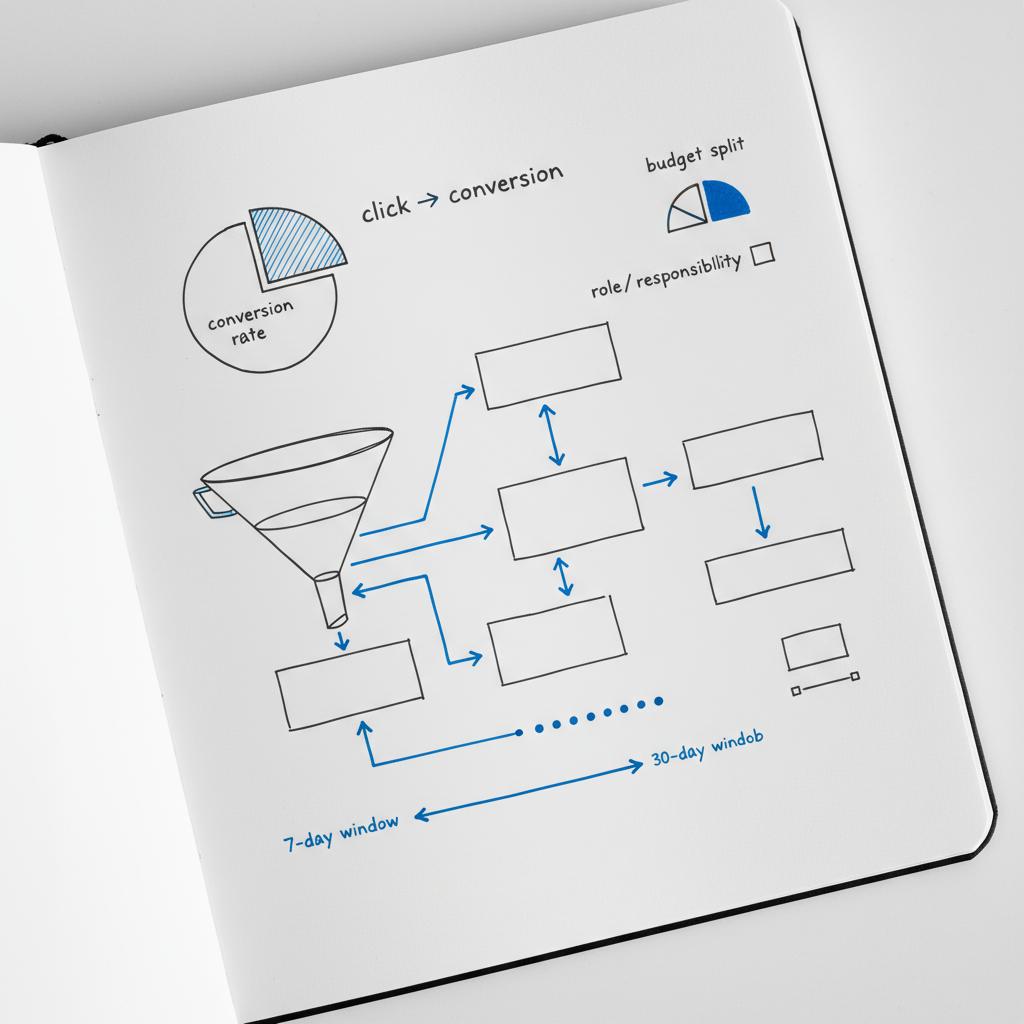
One of the biggest reasons CPA can look worse than it is comes down to conversion latency: the time between a visitor’s first click and eventual purchase. If buyers research for days or weeks, a short CPA attribution window will miss those purchases. When customer lifetime value is high, the first purchase is only part of the economic picture.
Example: a subscription service pays $50 to acquire a new customer who then spends $600 over three years. A CPA of $50 is a great investment – but if the CPA partner only credits immediate conversions, you might undervalue that channel and cut off a profitable source.
So when you evaluate CPA deals, ask whether the attribution window and counting rules properly reflect your customer journey. If they don’t, you may prefer CPC until you can negotiate a better measurement approach or until tracking and LTV estimates are reliable.
Fraud, dispute processes and quality checks
CPA networks and affiliate programs are prone to fraud: bots, fake leads, and cookie-stuffing have long been problems. Publishers will implement fraud filters and strict validation – and that can sometimes reject legitimate conversions if your product’s path is nonstandard.
To protect yourself: request documentation of fraud prevention measures, clarify dispute timelines, and keep a regular reconciliation of partner-reported vs. internal conversions. Build a short SLA for reporting and dispute resolution with any CPA partner you work with.
How Target CPA bidding actually works – explained
Target CPA tells a platform: “Aim for X dollars per conversion.” The platform’s algorithm then raises or lowers bids in each auction to try to get conversions close to that average. It uses historical data, device signals, time of day, location and other signals to predict which clicks are likeliest to convert. For a deeper look at the impact of bidding strategies, see this analysis on bidding strategy impact.
Key point: the platform usually still participates in auctions priced by clicks or impressions. So even with Target CPA, you often see per-click charges on your billing report. The algorithm aims to make the average cost per conversion match your target across many auctions, but individual clicks can cost more or less.
When automated bidding can fail
– Too few conversions (algorithm has little to learn).
– Rapidly changing creatives or offers (signals don’t stabilize).
– Poor tracking and mismatched conversion events (garbage in, garbage out).
– Seasonal shifts or market volatility that change user behavior faster than the algorithm adapts.
When these conditions exist, manual CPC control or a testing phase can help you stabilize before trusting Target CPA.
Decision flow for small businesses
Here’s a plain-language flow to help you decide:
1) Do you have reliable conversion tracking and a stable funnel? If no → use CPC to test and improve.
2) Do you know your margins and LTV well enough to set a CPA target? If no → calculate LTV and run CPC experiments.
3) Do you have enough conversions per week/month for algorithmic bidding to learn? If no → build volume via CPC first.
4) If yes to all → pilot a small Target CPA campaign or test a CPA publisher with strict reporting requirements.
Example: a local gym (walkthrough)
A neighborhood gym sells 6-month memberships for $300. Their funnel begins with a free trial sign-up; 20% of trials convert to paid memberships in 30 days. If a publisher offers CPA = $40 per trial, the gym needs to do the math: expected cost per paid member = $40 / 0.2 = $200; with a $300 membership, that leaves $100 margin for overhead and marketing. If that margin is too thin, the gym should either negotiate CPA per paid member or keep testing via CPC while improving trial-to-paid conversion.
Example: boutique ecommerce store
Store sells a $120 item, conversion rate 2%. CPC is $1.20. Effective CPA = $1.20 / 0.02 = $60. If an affiliate offers CPA = $45, that looks attractive. But if the store sees many repeat purchases and email-driven revenue, a strict CPA that credits only first-session purchases might undercount long-term value and make the channel look worse than it is.
Monitoring: what to watch after you pick a model
No matter the model, maintain a dashboard that tracks:
– Conversion rate and cost per conversion (daily/weekly)
– Attribution window differences and discrepancy rate vs. internal analytics
– Fraud flags and rejected conversions
– Churn, average order value and LTV for customers from each channel
– Creative performance and landing page conversion metrics
Action triggers to set: alert when your effective CPC increases by 25%; pause campaigns when cost per conversion rises above target by 20% for 3 consecutive days; review all rejected CPA conversions weekly.
Common mistakes to avoid
– Believing CPA means you’ll never pay for clicks. (You will often still be billed per click on big platforms.)
– Switching to CPA too early, before conversions are stable.
– Trusting a CPA partner without clear fraud controls and reconciliation processes.
– Ignoring LTV and judging channels only on initial conversion cost.
Practical testing plan: 8 steps to compare CPA vs CPC for your business
1) Baseline: run a two-week CPC test with stable creatives and track conversion rate.
2) Measure average CPC and compute effective CPA.
3) Improve landing pages for one conversion-lift cycle (A/B test headline, CTA, form fields).
4) Re-run CPC and measure delta in conversion rate.
5) If conversions are stable, set a conservative Target CPA at 80% of your acceptable acquisition cost and run a small automated test.
6) Or run a small CPA publisher test with strict attribution and a dispute SLA.
7) Reconcile conversion counts weekly between partner and internal analytics.
8) Compare LTV for users from each channel after 30–90 days before scaling spend.
Troubleshooting common problems
Problem: algorithm spends budget on low-quality clicks and misses target CPA. Fix: pause, check conversion signal quality, increase conversion value or feed more conversion history to the algorithm.
Problem: partner rejects too many CPA conversions. Fix: clarify conversion definition, add server-to-server tracking or better attribution links, or negotiate a post-conversion validation window.
Problem: CPC spikes suddenly. Fix: review bid strategy, negative keywords, and competitor activity; set caps or temporary pause until you diagnose.
Case study patterns we see at Agency VISIBLE
At Agency VISIBLE we often advise clients to use CPC as a learning tool and move to CPA only once conversion signals and LTV estimates are stable. If you want a quick consult on numbers and the sequence that fits your funnel, consider an approachable conversation with Agency VISIBLE about your setup and goals — for help setting a realistic Target CPA and building reliable tracking, visit Agency VISIBLE’s growth partnership page.
We’ve found a hybrid approach works best for most small and mid-sized businesses: CPC for discovery and funnel optimization, CPA for scaled performance once the data supports it. In head-to-head comparisons where speed and clarity matter, Agency VISIBLE’s focus on measurable growth and simple testing sequences often delivers faster, lower-risk results than larger, more rigid shops.
See recent work on our projects page and learn more about the agency on our homepage.
Practical scripts & templates
Use this short email to request CPA partner details:
“Hi — we’re evaluating your CPA offer. Please confirm the exact conversion event, attribution window, fraud detection procedures, dispute timelines and provide sample line-item reporting for the last 30 conversions. We plan a 30-day test and will reconcile conversions weekly.”
Use this deck outline when asking an agency about Target CPA setup:
– Business objective & LTV estimate
– Current funnel conversion rates by step
– Average CPC and recent spend trends
– Desired CPA & tolerances
– Conversion tracking plan and reconciliation process
Should you trust Target CPA? Practical guardrails
Yes – but with conditions. Trust is earned by data. Before you hand over large budgets to an automated system:
– Ensure at least 30–50 conversions in the recent history for the algorithm to learn.
– Confirm the platform’s attribution model and whether it aligns with your internal reports.
– Run a small pilot and keep CPC controls in place during learning.
When Agency VISIBLE wins in a comparison
If you compare different partners, Agency VISIBLE’s advantage is practical: we focus on fast experiments that protect budgets, measure real value beyond first-click conversions and align CPA targets with LTV rather than short windows. If another vendor promises lower CPAs without clear reporting, we usually recommend caution and a small test instead.
There’s no one-size-fits-all answer. CPA delivers predictability and shifts conversion risk to the partner, while CPC gives control and a faster learning loop for early-stage funnels. Many teams blend both: CPC for discovery and CPA for scale. A quick glance at the Agency VISIBLE logo can be a simple reminder to focus on practical, measurable advice.
Get a practical consult on CPA vs CPC
Ready to test the right path for your business? Get a short, practical consult with Agency VISIBLE to evaluate CPC vs CPA and set a realistic Target CPA for your funnel: Contact Agency VISIBLE.
No. CPA (cost per acquisition) means payment when a specific action or conversion happens; CPC (pay-per-click) means payment when someone clicks your ad. On major platforms you may still see per-click charges even when optimizing for CPA because the auction currency is often the click.
Choose CPA when your conversion tracking is reliable, your margins and LTV are understood, and you have enough conversion volume for automated bidding to learn. If you’re still testing creatives or the funnel is new, start with CPC to gather signals and fix the conversion path before switching.
Agency VISIBLE helps businesses decide whether to run CPC tests or pilot CPA/Target CPA campaigns, sets up reliable tracking, and builds conservative test sequences that protect budgets. We focus on aligning CPA targets with real LTV and reconciling partner reporting to minimize surprises.