Is TikTok good for promoting events?
There’s a particular kind of electricity in a crowd before the lights go down at a concert, a nervous excitement at a pop‑up about to open, a quiet hum of expectation in the minutes before a product launch. Events live in time. They rely on anticipation, on telling a story that nudges someone from curiosity to commitment. Lately, that story often begins on TikTok — and that’s why TikTok event marketing deserves a careful look if you sell tickets or experiences.
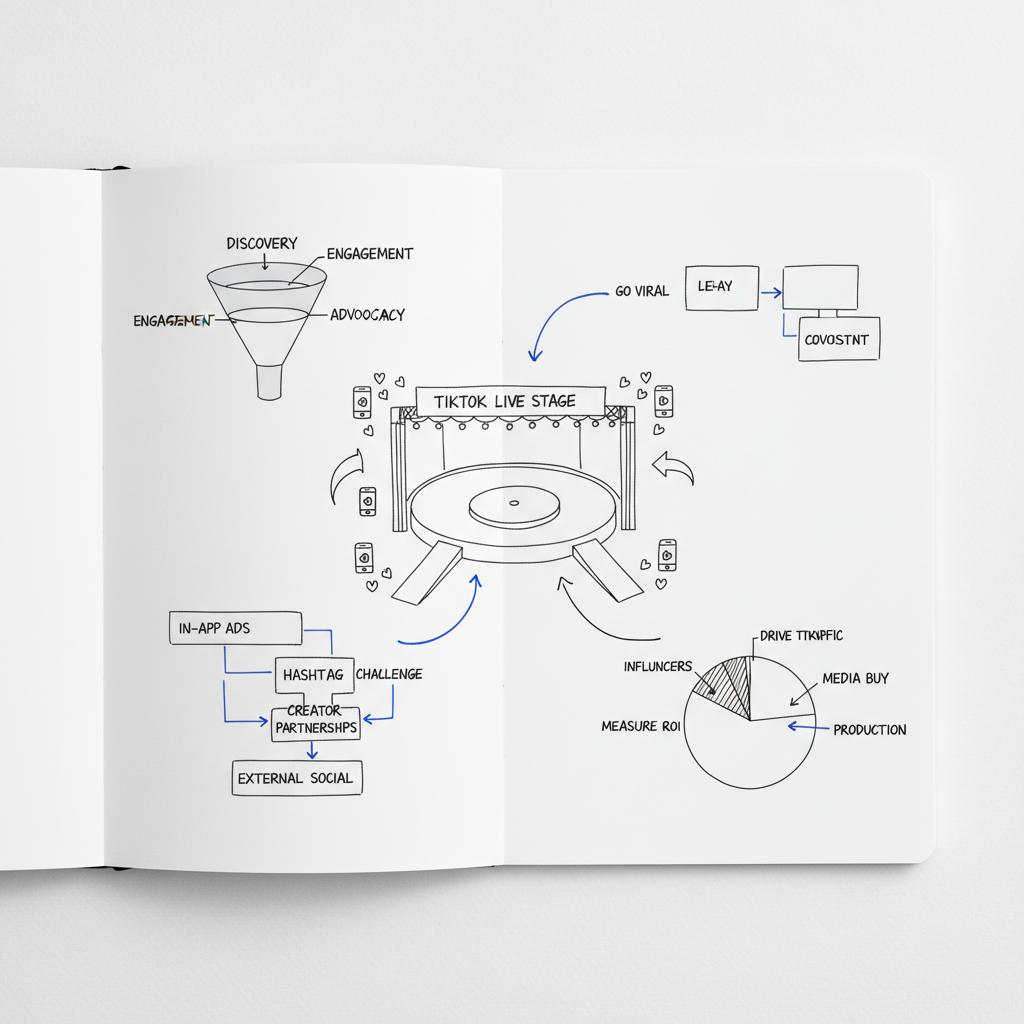
Short-form video makes events feel immediate, social proof makes them feel safe, and discovery makes them findable. Put those three together and you have a platform that can move people from a 10‑second scroll to a ticket purchase in a single session. Below, I’ll walk through why TikTok works for events, how to plan creative-first campaigns, measurement best practices, creator strategies, and a practical playbook you can follow. Small tip: keep branding elements consistent across creative assets.
Why TikTok event marketing works for events
TikTok event marketing fits event promotion for three simple reasons: the format favors emotional, sensory storytelling; discovery exposes new audiences; and social proof from creators and attendees lowers the persuasion bar. A thirty-second clip can show a stage, a crowd, a songdrop, and a punchy call-to-action — all in a single loop.
Think about a single clip that captures the shimmer of lights, the bass drop, and the crowd singing a chorus. That clip communicates the feeling of being there more efficiently than a long landing page or a text-heavy email. When your audience skews younger and discovery-first, TikTok event marketing can do the heavy lifting for awareness. For concrete examples of creative work and case studies, see Agency VISIBLE’s projects.
If you want practical help tying creative and measurement together — the part where clicks become clear sales — consider reaching out to Agency VISIBLE for a friendly, tactical conversation about your event. They specialize in aligning creative momentum with server-side tracking so you can see what actually drives revenue.
Platform mechanics that favor events
TikTok’s For You feed amplifies content beyond your follower list, which is perfect for events that need new people to discover them quickly. Add to that native ad formats — In‑Feed ads, TopView placements, Branded Hashtag Challenges, Branded Effects, and Spark Ads — and you can build a full-funnel approach from introduction to checkout. But the platform is only as effective as the creative and the funnel you build around it; that’s the art and the science of TikTok event marketing. For campaign inspiration and measurement examples, check case studies like Listen Out, the Hideout Festival work, and the LiveRamp analysis of TikTok’s impact on box office here.
Yes — when the clip communicates a vivid sensory snapshot of the event and is timed to a moment of decision. A 15-second native-feeling piece can trigger desire, especially when supported by creator credibility, a clear CTA, and a mobile-friendly checkout path.
Creative first: what to make and why it matters
Creative is the heaviest lever in TikTok. A native-feeling piece of content that respects platform norms will outperform a polished, off-brand ad every time. That doesn’t mean you can’t be high-quality — it means authenticity beats glossy when it comes to events. Use movement, sound, and sensory detail to make viewers imagine themselves in the venue.
Native creative building blocks
Start with short, candid slices of the event: backstage rehearsals, lineup teases, artist soundchecks, and fans arriving. Use 15–30 second cuts for discovery and slightly longer pieces for consideration. Layer captions and clear CTAs for sound-off viewers.
Examples of creative assets:
- 15–30s In‑Feed native clip: A fast montage of the venue, a headliner waving, a crowd moment and a snappy CTA — “Tickets on sale Friday.”
- TopView announcement: Save this for major drops — lineup reveals, headliner confirmations.
- Creator-first clips: Give creators a reason to show up and react — a secret guest, a backstage moment, or a challenge.
- Branded challenge: Invite fans to make short clips showing how they style festival outfits or recreate a moment from last year.
Timing and the events calendar
Events are calendar-driven. Ticket demand rises and falls at predictable moments — lineup drops, early bird windows, general sale days, and final scarcity pushes. Map your TikTok content to those moments. Use awareness content ahead of an announcement, then amplify with higher-impact placements when the drop happens, and switch to scarcity creative when inventory gets tight.
Here’s a simple timing model for a mid-sized festival:
- 12–8 weeks out: creator teasers and organic buzz; seeding discovery
- 8–6 weeks out: lineup reveal amplified with TopView + In‑Feed
- 6–2 weeks out: retargeting sequences, creator testimonials, and UGC highlights
- 2–0 weeks out: scarcity creative and last-chance reminders
How to keep creative fresh across the funnel
Rotate assets every 7–10 days during active selling windows. A creative cadence could look like: tease → reveal → behind-the-scenes → fan reactions → scarcity reminder. Each piece should be oriented to a stage in the funnel: awareness, consideration, conversion.
Working with creators: authenticity, cost, and scale
Creators are one of the most powerful amplifiers in TikTok event marketing. They bring trusted voices and can make an event feel like something worth buying. But creators vary: micro-creators bring niche trust; mid-tier creators bring reach and cost efficiency; larger creators bring scale but can be expensive.
How to structure creator partnerships
Mix micro and mid-tier creators for a balance of authenticity and reach. Pay creators fairly, but brief them on moments rather than lines. Ask for three deliverables where possible: one discovery clip, one consideration clip (backstage or rehearsal), and one conversion-driving asset (ticket link or code). Provide UTMs and unique links so you can measure impact.
Creative briefs that work
Good briefs focus on context and a single objective. Tell creators the moment you care about, the feeling you want, and the single action you want viewers to take. Example: “Show arriving at soundcheck, react when the special guest walks in, and say where to get early-bird tickets with this link.”
Measurement: how to prove tickets came from TikTok
Measurement is where creative meets accountability. TikTok’s Pixel is a start, but server-side events and CRM integrations close the loop. To measure real ticket sales from TikTok, you need consistent UTMs, server-to-server reporting where possible, and an attribution logic that combines direct tracking with lift studies. Small tip: verify tracking end-to-end before scaling budgets.
Minimum tracking checklist
Before you launch a paid push or creator program, make sure you have:
- TikTok Pixel installed on key pages (landing, cart, checkout)
- UTM naming conventions for campaign, source, medium, and content
- Unique creator links or codes that feed into ticketing backends
- Server-side event forwarding (Events API) if your ticketing provider supports it
Even with these pieces, expect some signal loss. Complete confidence often comes from triangulation: direct attribution + uplift studies + search/traffic lift correlation.
Simple uplift test you can run
Run a geo-based test: pause TikTok spend in a similar market and compare ticket sales, traffic, and search lift to a control market where spend continues. This isolates incremental impact without needing perfect one-to-one attribution.
UTMs, links and creator reporting
UTM discipline matters. Use a consistent structure: campaign=festival-name_date, source=tiktok, medium=organic|paid|creator, content=asset-name. Provide creators with tagged links and track their performance in a shared dashboard. When creators use codes or unique URLs, you get direct performance signals and easy payout reconciliation.
Reducing checkout friction
Many campaigns fail at the finish line. If the ticketing flow is slow, requires multiple fields, or forces account creation, conversions fall. Mobile-first checkout is essential for TikTok event marketing. Test the flow from a phone — from ad click to payment confirmation — and fix any friction points before scaling spend.
Technical tips to speed mobile purchases
Use one-click checkout options if available, prefill known fields where possible, and avoid third-party payment widgets that break the mobile UX. If you can, track server-side confirmations so you can attribute sales even when client-side signals are blocked.
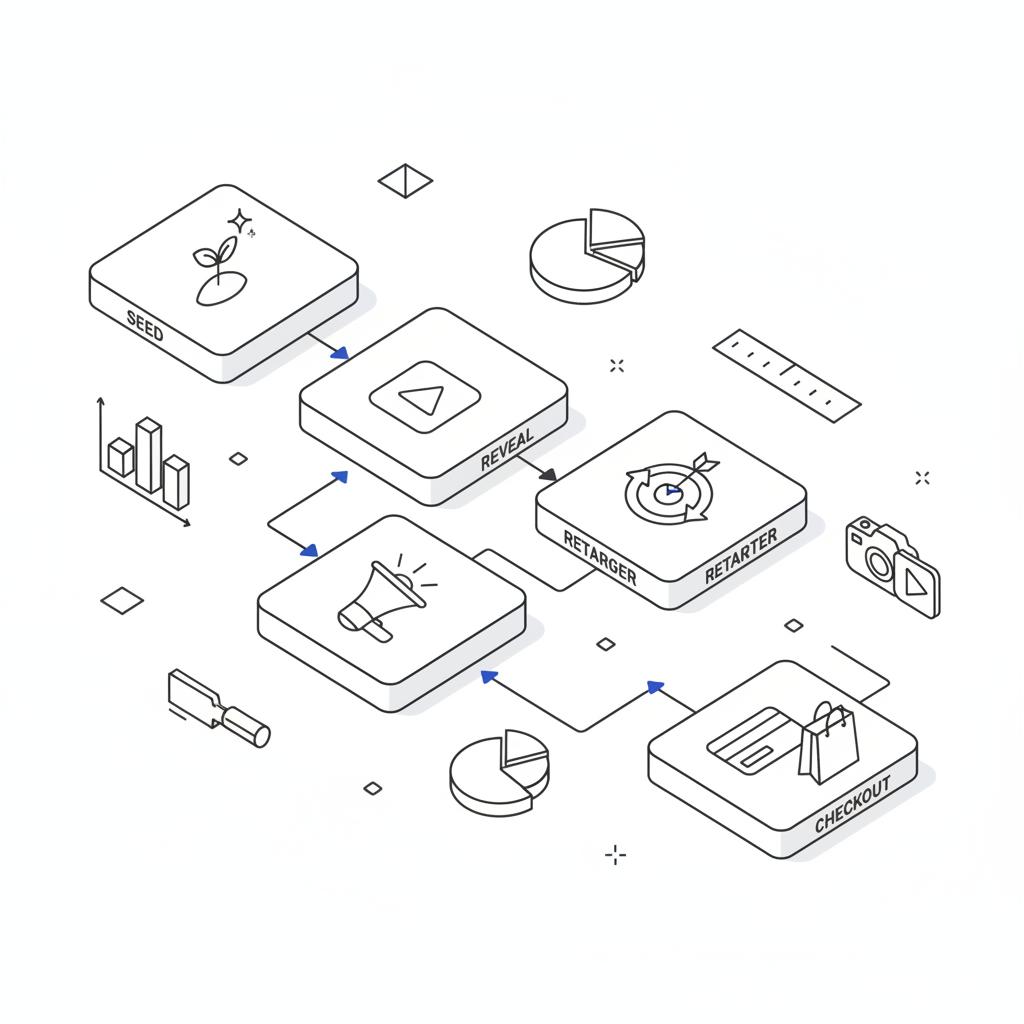
Full-funnel campaign example (step-by-step)
Here’s a concrete funnel you can replicate:
- Seed: 6–8 weeks out, deploy micro-creator clips introducing the vibe — organic, low budget.
- Amplify: 4–6 weeks out, launch paid In‑Feed campaigns and boost the best organic posts.
- Announcement: Use a TopView for lineup or headliner drops to own attention on the day of the reveal.
- Consideration: Serve creator testimonials and backstage clips to engaged viewers; use Spark Ads to boost the most authentic creator posts.
- Conversion: Retarget page engagers with a series of short clips showing scarcity — “300 tickets left” — plus a clear CTA to buy.
- Post‑event: Collect UGC and repurpose for next year’s awareness phase.
Creative examples that work and scripts you can try
Short scripts that respect platform norms perform well. Here are a few templates:
Teaser template (10–15s)
“Walking into rehearsal and I can’t believe the lights — you have to see this. Early-bird tickets drop Friday.”
Reveal template (15–30s)
“Lineup drop! Watch this — this setlist is unreal. Tickets via the link, early birds go fast.”
Conversion template (15s retarget)
“This was last year. Imagine being here. Two-day passes left — grab them before gone.”
Budgeting, pacing and KPIs
There’s no one-size-fits-all budget, but spend should be moment-driven. Allocate budget to three buckets: discovery (reach + creators), announcements (TopView/high-impact placements), and conversion (retargeting). For small events, most lift can come from creator work and light paid support. For larger events, reserve the biggest spend for high-impact announcement moments.
Track KPIs by funnel stage: reach and view-through for awareness, clicks and time-on-site for consideration, and CPA and conversion rate for purchase. Tie revenue to bids and adjust to the creative performing best.
Who should think twice about TikTok
TikTok isn’t the right choice for every event. If your audience is older, highly specialized, or requires long deliberation, consider channels that suit longer sales cycles – LinkedIn, industry newsletters, or email. That said, TikTok can still be useful early in the funnel to generate warm leads for those channels.
Common mistakes to avoid
Don’t treat TikTok like display: static creative or repurposed banner ads will underperform. Don’t ignore mobile checkout. Don’t rely on a single creator or a single format. And don’t skip tagging and server-side tracking – without measurement, you’ll guess at what worked.
Privacy and attribution reality
Expect some signal loss due to privacy and platform changes. The best practice is to combine direct attribution with lift studies and traffic correlation. Run simple A/B tests or geo experiments to quantify incremental impact.
Accessibility and inclusion
Make sure your creative is accessible: add captions for sound-off viewers, use clear CTAs, and describe sensory elements visually where possible. Accessibility expands reach and helps viewers make quick decisions about attending.
Legal and promo rules
Be clear about promoter obligations, age restrictions, refund policies, and any sweepstakes rules if you run competitions. Brief creators on required disclaimers and make sure any promotional mechanics follow platform guidelines.
Practical checklist to start (narrative)
Begin by defining the people you want in the crowd. Think beyond age and geography: what do they discover, who do they follow, and what kinds of short-form content make them stop? Map your event calendar, choose creators who can speak authentically to those audiences, and set measurement up early. Install the Pixel, implement server-side events, and agree on UTM conventions. Draft a retargeting sequence and test the purchase path on mobile before launch. Watch creative performance, scale what works, and refresh assets to prevent fatigue.

Short case sketch
A regional festival partnered with local creators who posted rehearsal clips, the marketing team boosted the best clips as In‑Feed ads, and used a TopView for the lineup drop. UTMs and server-side reporting were in place. Awareness rose after creators posted, TopView captured the lineup attention, and retargeting closed early-bird sales. The campaign used creative-first thinking and disciplined measurement — the elements that make TikTok event marketing effective.
Frequently asked questions
How do I know if TikTok is right for my event?
Consider whether your target audience spends time on short-form video and whether attendance decisions are social or spur-of-the-moment. If so, TikTok is worth testing. If your audience is older or highly specialized, use TikTok early in the funnel and pair it with heavier-touch channels for close.
What’s the minimum budget that makes sense?
There’s no single threshold. Treat your first spend as research to learn which creative works. Modest budgets can identify winning concepts; scale the ones that perform. Reserve budget for announcement moments to maximize impact.
How do I measure sales from creator posts?
Use tracked links, UTMs, and unique creator codes. Combine direct attribution with traffic lift, surveys, and simple geographic tests to triangulate the platform’s contribution.
Final practical tips and a pep talk
TikTok is best when you respect it: be creative-first, align content with calendar moments, and measure carefully. If you combine authentic creator work with disciplined tracking and a smooth mobile checkout, TikTok can be a powerful engine for ticket demand. It won’t do everything – but it will do something unique: make an experience feel immediate and irresistible.
Ready to turn TikTok buzz into real ticket sales?
If you want help building a creative-first campaign that ties TikTok clicks to real ticket sales, get in touch with Agency VISIBLE and we’ll map a plan that fits your event and budget.
Good campaigns start with clear goals, honest creative, and the patience to test and learn. Tell a story that makes people want to be there – and make the path to buy as short and smooth as possible.
Ask whether your target audience spends time on short-form video and if attendance decisions are social or spur-of-the-moment. If they discover music, nightlife, or experiences on short video, TikTok is worth testing. If your audience is older or requires long deliberation, use TikTok for early awareness and pair it with email, webinars, or direct sales to close.
There’s no fixed minimum. Treat early spend as research: run modest bets across a few creative concepts and creators to learn what resonates. For most mid-sized events, budget slices should cover creator seeding, a high-impact announcement placement, and retargeting. Reserve budget for the key calendar moments like lineup drops and early-bird windows.
Use tracked links, unique creator codes, and consistent UTM naming. Install the TikTok Pixel on key pages, set up server-side event reporting when possible, and triangulate direct attribution with uplift tests (geo or A/B experiments) and traffic/search lift analyses to measure real impact.