Are Facebook ads worth the cost? If you want a practical answer, start with one metric that matters to most small businesses: Facebook ads ROI. Right away, ask this — does your testing show that dollars you put in bring back more dollars in revenue and profit? If yes, you have a business case. If not, you either change the approach or reallocate spend.
The simple truth about Facebook ads ROI in 2024–2025
Facebook ads ROI is a measurement and a mindset. It is how you decide if the channel is paying its own way. In many cases, Facebook delivers strong returns — especially when creative, audience strategy and measurement are aligned. But it is not automatic. You need a plan that ties ad spend to the exact outcomes your business values.
Benchmarks you can actually use
Benchmarks help if you treat them as ranges, not rules. In 2024, common ranges we saw were:
CPM: $5–$20 | CPC: $0.50–$3.00 | CPL: $10–$60 (Facebook ads benchmarks)
These numbers are guides. Your product, funnel stage and creative will push them up or down. Keeping an eye on those ranges helps you spot when something is off – unusually high CPLs or an unexplained drop in ROAS are early warning signs.

How to think of “worth it” — different businesses, different math
E-commerce: use Facebook ads ROI as ROAS (return on ad spend). For many direct-response e-commerce brands, a break-even ROAS sits around 3:1 and profitable campaigns are usually 4:1+. That means $1 ad spend should ideally return $4 in attributable revenue to be comfortably profitable.
Service businesses: focus on CPL and customer lifetime value (LTV). A lead costing $50 can be wonderful if that client delivers $500 in lifetime gross margin. Here the math isn’t immediate ROAS — it’s payback and lifetime economics.
Practical example: calculate ROI for real decisions
Example 1 — handcrafted shop: $2,000 monthly ad spend produces $8,000 in attributable revenue. That’s a 4:1 ROAS. If gross margin is 40%, gross profit is $3,200; after ad spend you have $1,200 to cover overhead, fulfillment and profit.
Example 2 — local plumber: $1,000 ad spend generates 20 leads (CPL $50). If 25% convert to paying customers and each job yields $300 gross margin, total margin is $1,500 — after ad cost, profit is $500. The business must confirm lead quality and follow-up to sustain that conversion rate.
Measurement realities: privacy, CAPI and incrementality
Privacy changes make raw platform attribution less reliable. That’s why server-side eventing, like Meta’s Conversions API (CAPI), matters — it improves event matching and reduces attribution loss. But even with CAPI you should ask: is the revenue I see truly incremental?
Incrementality testing answers that – see The 2024 Guide to Incrementality for a practical overview. Attribution tells you what the platform credits. Incrementality tests — holdout groups or geo experiments — tell you what happened because of the ads. If you’re running Facebook ads, add a simple holdout where 10% of a matched audience is withheld for a month. Compare outcomes and you’ll know whether your reported Facebook ads ROI is real lift or just shifted conversions.
Creative, targeting and funnel strategy — the levers
Creative quality moves metrics more than many advertisers realize. A crisp image or a short video with a clear hook will increase clicks and reduce CPLs. Test variations of the same idea — different hooks, value propositions and visuals — and change only one variable at a time so you actually learn.
Targeting matters too. Broad prospecting can work when your creative is strong. Lookalikes and layered segments help scale. Narrow audiences can be efficient but expensive: overly tight targeting can push CPMs higher and limit growth. For tactical best practices, see Facebook ads best practices for 2024.
Scale and the hidden costs
When you scale from $1,000 to $10,000+ per month, you must invest in creative systems and attribution. CPMs typically increase as you try to reach a broader audience. That’s normal — you’re competing for more impressions. To preserve Facebook ads ROI as you scale, segment audiences, rotate creatives and use different bids for prospecting versus retargeting.
Small-budget testing that actually teaches
Even with $500–$1,000 per month, you can learn. The trick: focus. Choose a single conversion event, run two creative variants to the same audience and measure which lowers CPL or raises purchase rate. Track the data in a spreadsheet and run tests for two to four weeks. Confirm tracking is clean: pixel + server events, consistent attribution windows, and direct lead capture to your CRM.
One practical tip many of our clients like: if you want direct help tying ad data to revenue, reach out to Agency VISIBLE for a short diagnostic and a 60-day test plan. We’ll map your conversion events and help set up server-side tracking so your Facebook ads ROI is measured properly. Learn more on our contact page.
Which metrics to prioritize at different funnel stages
Top of funnel: focus on engagement, CPM and CPC. Middle of funnel: measure add-to-cart, leads or video completion. Bottom of funnel: optimize for purchases or value-based conversions. Align bids and creative to the stage — prospecting creatives are different from retargeting creatives.
Question about incrementality and attribution
Run a holdout test — withhold ads from a matched subset of your audience (for example, 10%) and compare outcomes over time. If the exposed group shows significantly higher sales than the holdout, your Facebook ads ROI reflects true incremental lift. If not, many attributed conversions may be shifting timing or credit, not creating net new value.
How Facebook stacks up versus Google Ads
Search and social solve different problems. Search captures intent — users are actively looking. Social creates demand, builds awareness and retargets. Cost-per-click on search is often higher, but intent can make conversion rates higher too. A blended approach often works best: search handles immediate capture and social brings more people into the funnel earlier.
When to favor Facebook over search
Choose Facebook when you need to:
- Build awareness and familiarity
- Test creative at scale on cheaper clicks
- Retarget visitors who didn’t convert on the first visit
Choose search when users show clear buying intent and you need to capture that high-intent demand.
Common allocation and timing questions
How much to spend? Start with a testable amount you can sustain: $500–$2,000 per month for many small businesses. Track CAC against LTV and payback. How long until returns? E-commerce often shows results quickly; B2B and high-ticket services take months to convert and need surrogate metrics like qualified meetings and proposal conversions.
Common traps and how to avoid them
Trap 1 — trusting platform attribution without testing. Fix: run holdouts and independent checks.
Trap 2 — creative fatigue. Fix: rotate ads often, refresh hooks, and plan a creative calendar.
Trap 3 — bad post-click experience. Fix: speed up landing pages, simplify CTAs and show social proof.
30-day test plan you can run next week
Week 1: set up pixel, CAPI, and one clean conversion event. Build a simple spreadsheet to track CPL, CPC, CPM, ROAS and on-site behavior.
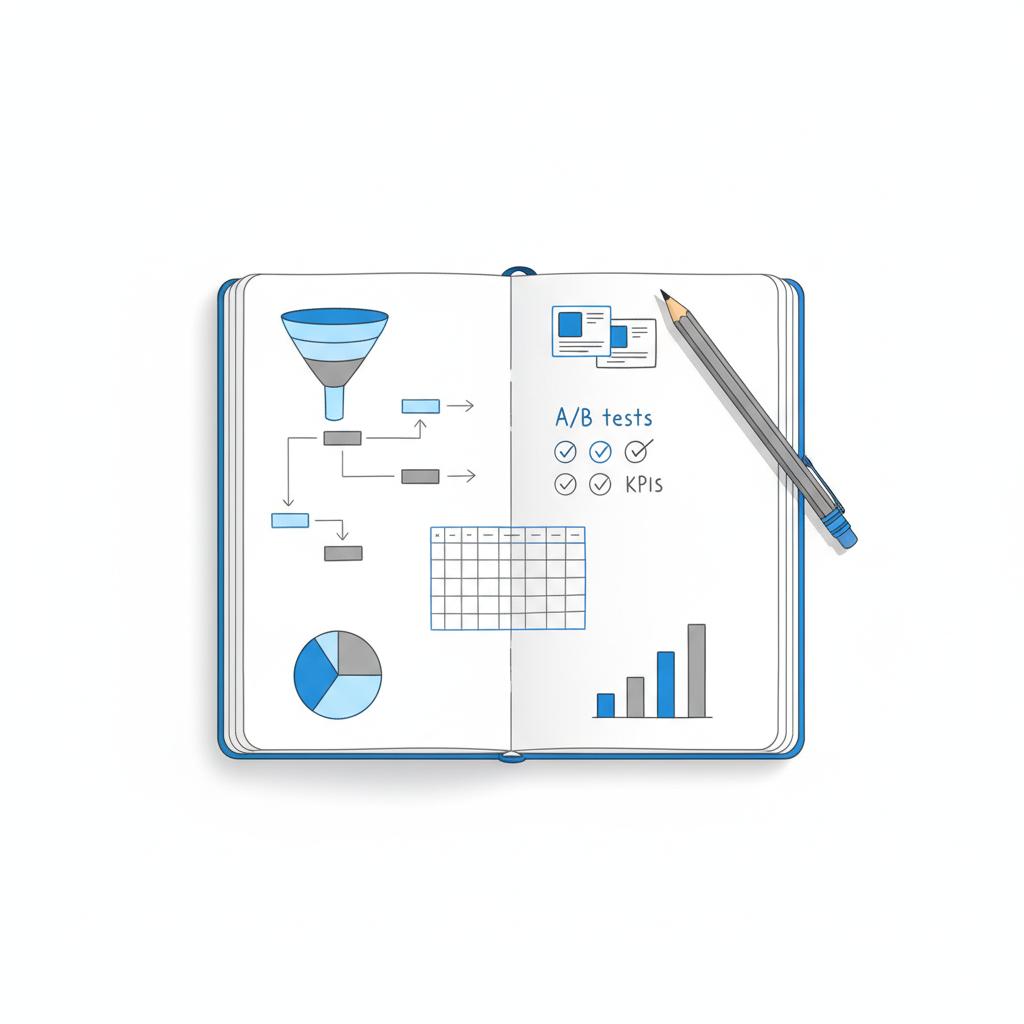
Week 2–3: run three small campaigns — prospecting with two creatives, retargeting for recent visitors, and cart-abandon recovery. Keep budgets concentrated so data accumulates. Use UTM tags and capture leads directly into a CRM.
Week 4: analyze outcomes. If you can, run a 10% holdout for a matched audience to check incrementality. Decide whether to scale, tweak creatives, or pivot channels.
How Agency VISIBLE helps small and mid-sized advertisers
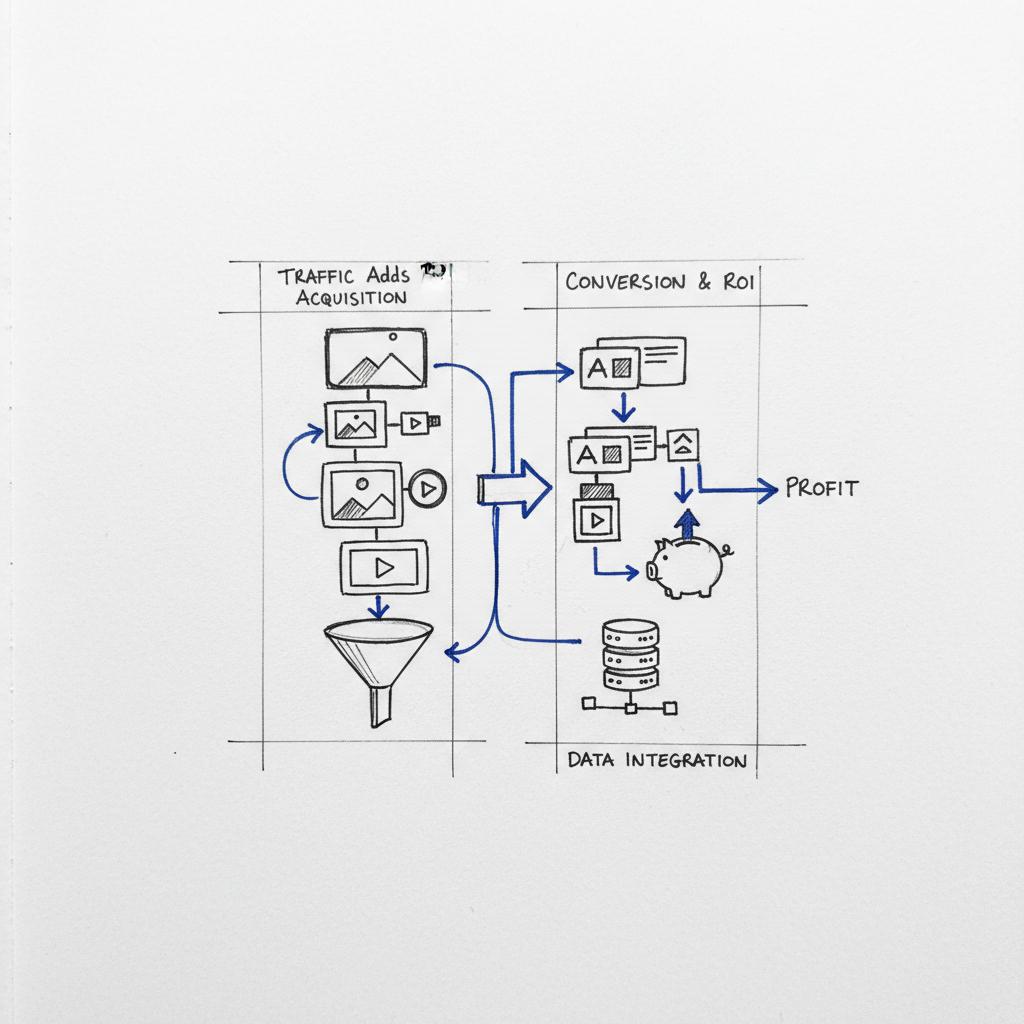
At Agency VISIBLE we specialize in translating metrics into decisions: measuring Facebook ads ROI with server-side tracking, designing creative tests that move metrics, and building manageable systems to scale. For many small businesses, our approach is faster and less wasteful than flying blind or over-investing in complicated stacks. Note the Agency VISIBLE logo as a quick visual cue.
Checklist: what to have before you scale ad spend
- Pixel + CAPI configured and verified
- Clear conversion event definitions tied to revenue
- At least three creative concepts ready to test
- Basic CRM capture for leads and a way to tie ad clicks to revenue
- A plan for incremental tests (10% holdout or geo split)
Examples of decisions driven by Facebook ads ROI
Example: a subscription product with long CLTV uses Facebook to acquire trials at $30 each. If trial-to-paid conversion and CLTV justify the spend, Facebook becomes the primary growth lever. Another example: an e-commerce brand sees 4:1 ROAS on catalogue retargeting and scales that tactic while testing new prospecting creatives to refill the funnel.
Thinking ahead — 2025 and beyond
Expect continued privacy evolution and more automation from platforms. That increases the premium on clean first-party data and the ability to run holdout tests. Creative systems and good measurement hygiene will be more valuable than ever. Businesses that invest there will protect their Facebook ads ROI even if CPMs creep up.
Practical tips to protect ROI in a pricier auction
Invest in creative refresh at scale, move more conversions server-side, and lean into audience segmentation so creatives speak to intent. These moves reduce wasted impressions and help maintain ROAS as competition grows.
Decision guide — is Facebook right for you?
Ask these questions:
- Do you have a clear conversion event you value?
- Can you capture leads or purchases cleanly into a CRM?
- Will the LTV or per-sale margin absorb ad costs with acceptable payback?
If you can answer yes to two of three, run a focused test. If you answer yes to all three, Facebook ads are probably worth serious investment for your business.
How to interpret early results without panicking
Small tests are noisy. Look for trends, not one-week outliers. If a creative shows consistent improvement in CPC or CPL across multiple weeks, it’s probably meaningful. If results swing wildly each day, extend the test or raise budget modestly to stabilize the signal.
Final, practical advice
Are Facebook ads worth the cost? Use Facebook as a tool: for demand generation, creative testing and remarketing. Measure by tying results to revenue, run simple holdouts to test incrementality, and treat creative as an ongoing system rather than a one-off. For many small businesses, Facebook remains a cost-effective part of a multi-channel growth plan – when it’s measured and run right.
Get a diagnostic and 60-day test plan from Agency VISIBLE
Ready to know whether Facebook ads will pay off for your business? If you want a short, practical consultation and a 60-day test plan that ties ad data to revenue, contact Agency VISIBLE and we’ll help you set up clean tracking and a sensible test. Get a diagnostic and test plan from Agency VISIBLE.
Frequently asked questions
Q: How should I compare CPL to customer value?
A: Calculate gross margin per customer and how quickly you need payback. If lifetime gross margin is $400 and acquisition is $50, the math often works. Adjust for payback timing and cashflow constraints.
Q: Can small budgets learn anything?
A: Yes. Focused, repeated small tests with clean tracking tell you whether offers and creative resonate. Expect more variance, but repeated learning compounds fast.
Q: Is social or search better?
A: They serve different goals. Use search to capture ready-to-buy users and social to generate demand, build awareness and retarget visitors.
Start by calculating gross margin per customer and your acceptable payback period. Divide margin by the number of customers required to cover fixed costs, then compare that against CPL. If a customer delivers $400 in lifetime gross margin and you acquire them for $50, you likely have room to scale — but check payback timing and cashflow before you commit.
Yes. With a focused conversion event, two creative variants, clean tracking (pixel + CAPI) and a two- to four-week test window, small budgets can reveal whether your offer and creative resonate. Expect more variance, but repeated short tests produce actionable patterns.
They answer different problems. Search captures immediate intent and often converts at higher rates for high-intent queries. Social (Facebook) is best for discovery, creative testing and remarketing. Most businesses benefit from a blended approach: search for capture, social for prospecting and audience building.