Why a fast, focused plan beats trying to change everything
If you run a private practice, you already know attention is finite: time with patients, admin tasks, staff coaching and the endless list of improvements. That’s why a short, measurable plan works. In the first paragraph we’ll use a guiding term that matters for search and practice growth: doctor office marketing is about showing up where patients look, then making it easy for them to book and return. Implementing a small number of high-impact changes in the first 30–90 days creates momentum and measurable wins.
Think of this like triage: focus on the highest-impact, lowest-effort items first—your website, Google Business Profile, reviews and basic operations—and only then add paid channels or large redesigns. This approach reduces wasted spend and keeps staff motivated because they see results quickly.
Tip: if you prefer expert help for the 90-day rollout, consider contacting Agency VISIBLE’s contact page—they specialize in fast, measurable visibility work for clinics and can help with compliant paid campaigns and local listing management.
Start with a quick audit: the three questions that guide everything
A short audit answers three simple, essential questions: Where are new patients coming from today? What online touchpoints are blocking conversions? Which small operational fixes will improve retention and decrease no-shows? Put another way: find the choke points that stop a searcher from becoming a booked patient.
Audit checklist (complete in 48–72 hours)
1. Website & conversions: Is there a clear “Book an Appointment” button on every page? Is the site mobile-friendly and fast? Track visits, form fills and appointment bookings for the past 90 days.
2. Google Business Profile & directories: Are hours, services, and phone number accurate and consistent across directories? Does the profile show recent photos and service categories?
3. Reviews & reputation flow: How many recent reviews do you have? Is there a reliable, polite way to request reviews right after a positive visit?
Run these checks and write down the top three gaps. Those will form your 90-day goal.
Set one clear 90‑day goal
A shared, measurable goal keeps everyone aligned. Examples that work: “Increase new-patient bookings by 20%,” “Reduce no-shows by 50%,” or “Lower cost-per-acquisition for paid search to $150.” Keep the scope narrow—one objective, measured weekly.

Where most new patients start: search, listings and reviews
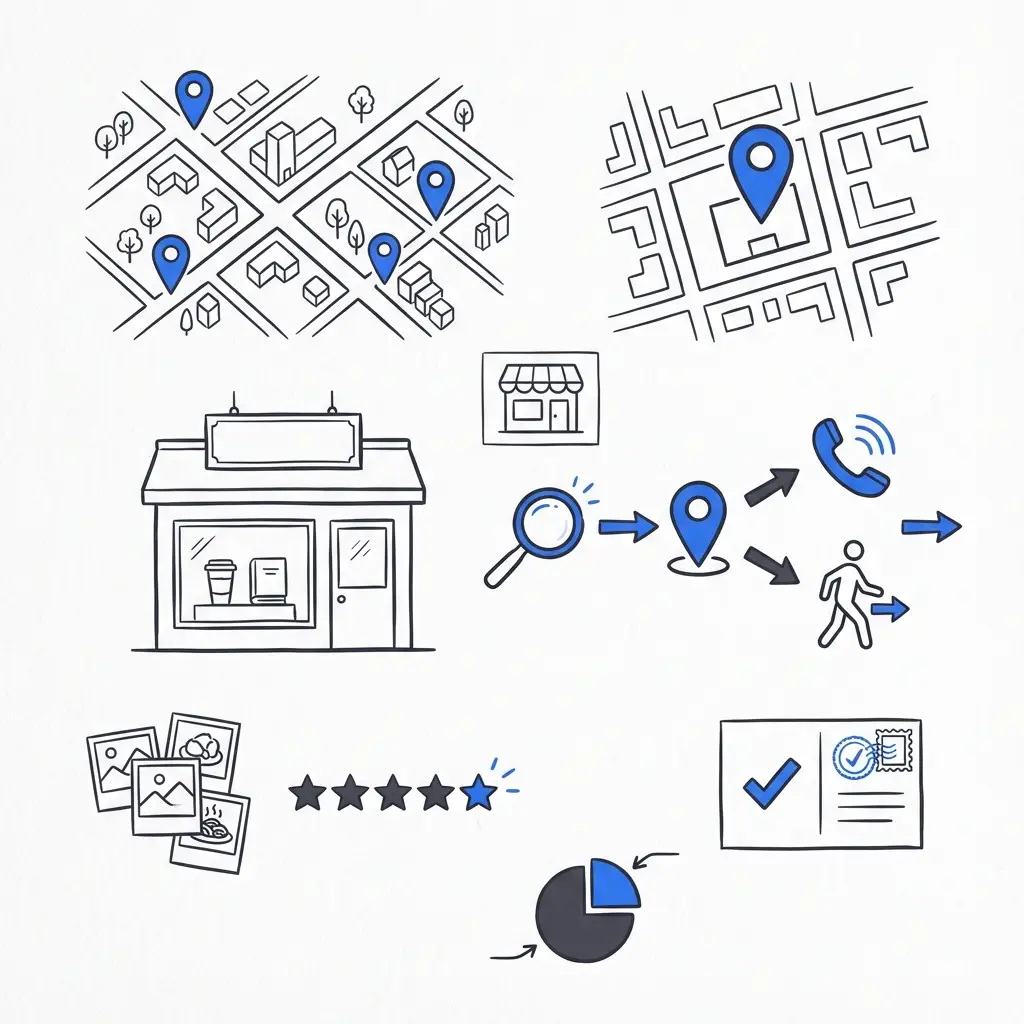
Prospective patients search symptoms, find specialists near them, and then look for trust signals. That makes local SEO and reputation management the backbone of effective doctor office marketing. For practical patient-acquisition tactics, see 6 Top Strategies to Boost Patient Acquisition in 2025 and 7 Patient Acquisition Strategies for Private Medical Practices.
Optimizing your Google Business Profile
Your Google Business Profile (GBP) often shows before a user even visits your website. Simple, consistent details pay off: accurate address, correct categories, service list, recent photos, and answers to common patient questions. Add appointment links and enable messaging if you can monitor replies quickly.

Also check citations: consistent name, address, phone (NAP) across directories confirms legitimacy to both search engines and humans. And for a technical win, add schema markup on your website—the small code that helps search engines show appointment links and service information directly in results.
Reputation management that feels ethical and natural
Getting reviews isn’t about asking every patient for a 5-star rating; it’s about creating a gentle, privacy-respecting flow that invites feedback at the moment patients are most likely to respond. That means asking after a positive interaction—when the clinician or staff hears a satisfied comment or the patient expresses relief.
Examples of short, friendly review prompts you can use via SMS or email:
“Thanks for visiting Dr. Lee today — we hope you’re feeling better. If you have a moment, would you mind sharing a quick note about your visit? Your feedback helps others find us.”
Keep the message optional and non-coercive. Track which prompts get the best response and refine the timing.
Paid channels: how to use ads without wasting money or risking compliance
Paid ads—Google Search, Local Services Ads (when available), and social platforms—scale lead volume when set up correctly. Key rules: ensure HIPAA-safe processes, avoid collecting protected health information on unsecured forms, and always use accurate claims in ad copy.
Measurement is crucial. Use call tracking numbers, dedicated landing pages or UTM parameters for social ads, and capture the conversion all the way to booked appointment, not just clicks. If you can’t attribute bookings, you cannot calculate cost per patient reliably. For a quick view of agencies that support healthcare SEO and paid search, review industry roundups like The Top Medical SEO Agencies to Consider in 2026.
Offline marketing that still works—measured
Local outreach, referral letters to primary care partners, and a modest direct mail campaign can still produce steady new patients. The trick is measurement: include a QR code to a specific booking page or a unique phone number to track response. Combine offline campaigns with digital follow-up to increase conversion.
Operational changes that increase conversion and lifetime value
Not all growth comes from ads. Simple operations often produce the best returns:
– Online booking: Showing real availability reduces friction and increases the likelihood a search turns into a booked visit.
– Clear service pages and pricing: People are more likely to call when they know what to expect and roughly how much it will cost.
– Automated reminders: Text or email confirmations and reminders reduce no-shows quickly.
– Telehealth options: Offer telehealth for follow-ups or consults that don’t require in-person exams—this widens your catchment area.
A practical 90-day playbook (weekly tasks you can follow)
The plan below is intentionally tactical. It assumes one staff lead and one clinician champion; small practices can often do this themselves. Keep meetings short—15–30 minutes weekly—and focus on three numbers: new-patient bookings, booked-appointment rate, and cost per acquisition.
Weeks 1–2: Audit and quick wins
Tasks:
– Run the quick audit above and pick one 90-day goal.
– Add a persistent “Book an Appointment” button to your website header and footer.
– Update Google Business Profile: correct hours, add services, upload 5 high-quality photos, and enable appointment links.
– Set up a simple review request flow that triggers via SMS after checkout.
Weeks 3–6: Build visibility and measure reputation
Tasks:
– Fix directory inconsistencies and improve citations.
– Launch a small paid search campaign focused on high-intent keywords and monitor cost per booked appointment.
– Begin a review cadence and reply to every review—thank positives, offer to help for negatives and take private resolution steps.
– Start using a call-tracking number for ads and an analytics spreadsheet to capture weekly metrics.
Weeks 7–12: Scale and refine
Tasks:
– Scale paid channels that show sustainable cost per patient; pause those that don’t.
– Introduce or optimize online booking and a simple patient recall program.
– Train front desk staff on the new booking flow, review responses, and how to capture referral sources during intake.
– Re-assess the 90-day goal and set the next 90-day objective based on results.
Easy scripts, messages and templates you can use today
Below are short, tested examples you can adapt.
Review request SMS (short): “Thanks for visiting Dr. Patel. If you have a moment, please share feedback here: [link] — it helps others find us.”
Front desk referral-capture line: “May I ask how you found our practice today? We track this to keep offering helpful services in the community.”
Ad landing page checklist: Clear headline matching the ad, a prominent booking button, 2–3 service bullets, reviews or trust markers, and a short form or phone number with click-to-call.
Tracking and measurement: the numbers that tell the story
Track these weekly
– New-patient bookings (number): The clearest indicator of growth.
– Booked-appointment rate (percent of contacts that book): Reveals if your messaging and booking flow convert.
– Cost per acquisition (CPA) by channel: Track ads, referrals, and direct search separately.
– No-show rate and retention: Measure whether operational changes reduce no-shows and increase patient lifetime value.
A simple spreadsheet with a row per week and columns for each metric is enough for most small practices.
Composite case study: a dermatology practice that grew 28% in 90 days
One small dermatology clinic followed this approach and set a 90-day goal to increase new-patient bookings by 25%. After a short audit they discovered a buried booking button, few recent reviews and inconsistent directory listings. They fixed those in week 1–2, launched a targeted Google Search campaign in weeks 3–6 and added one weekly telehealth slot to capture out-of-town inquiries.
By week 8 their listings started to convert more searchers into booked visits, their review volume increased, and no-shows fell. By day 90 the practice had increased new-patient bookings by approximately 28% and had a clear set of profitable keywords to scale. The work was modest but focused: website edits, listings cleanup, basic ads and stronger follow-up.
Common pitfalls—and how to avoid them
– Chasing shiny tools: Don’t implement platforms you won’t maintain. Start with the basics and scale slowly.
– Advertising without attribution: If you can’t track bookings to their source, you’re guessing – stop spending more until you can measure.
– Overly aggressive review solicitation: Invite, don’t pressure. Patients respond better to a warm ask after a positive visit.
– Ignoring compliance: Make sure all data capture meets privacy standards (e.g., HIPAA-safe if storing PHI). When in doubt, consult compliance counsel or ask a partner who specializes in healthcare marketing.
When to bring in an expert partner
Some teams prefer to keep the work in-house; others want to move faster and avoid learning-by-doing. If you choose an external partner, look for:
– Healthcare experience: They should understand clinical constraints and privacy obligations.
– Measurable goals: Contracts should include clear KPIs and reporting cadence.
– Transparent pricing: Avoid retainers that hide results—ask for projected ROI and reporting samples.
Agency VISIBLE is an example of a partner positioned to do this work quickly for small to mid-sized clinics; they emphasize speed, visibility and measurable growth without enterprise pricing pressure.
Adding a persistent, prominent "Book an Appointment" button across your website and enabling click-to-call on mobile often yields immediate lifts in conversions within days, especially when paired with a short appointment reminder text that reduces no-shows.
Answer: Adding a persistent, prominent “Book an Appointment” button across your website and enabling click-to-call on mobile often yields immediate lifts in conversions within days. Pair that with a brief appointment reminder text and you’ll usually see fewer no-shows in short order.
Staff training and culture: why the front desk matters more than ads
Even the best ads lose patients if the front desk doesn’t convert. Train staff on a simple script to capture referral source, confirm next steps, and offer booking options (in-person, telehealth). Role-play common scenarios and keep the process simple—complex intake forms during the first call increase drop-off.
Compliance and privacy checklist for small practices
– Never collect PHI on unsecured forms. Use HIPAA-compliant forms or keep intake minimal until the patient is in a secure workflow.
– Use clear consent language for communications. Allow patients to opt out of SMS or email reminders.
– Vet third‑party vendors. Ensure they sign a Business Associate Agreement (BAA) if they will handle PHI.
Sample weekly reporting template
Create a simple dashboard with columns for week, website sessions, GBP views, new-patient contacts, booked appointments, CPA by channel, no-show rate and average revenue per new patient. Review it for 15 minutes each week and make one tactical change based on what moves the numbers.
Scaling beyond 90 days
Once you have steady growth, invest in higher-return activities: better content for patient education, stronger referral partnerships, and improving average revenue per patient through service packages or bundled care. But don’t add complexity too early—sustain what works first.
Tools and tech stack suggestions
– Booking & scheduling: Choose a system with easy mobile booking and calendar sync.
– Reputation: Use a review flow tool that integrates with your EHR or practice management system while remaining compliant.
– Analytics: Track with Google Analytics, call-tracking and a lightweight CRM or spreadsheet for attribution.
Pick tools that minimize manual work and integrate with each other to avoid double entry.
Budget guidance for the first 90 days
Start small and test. A sensible early budget might look like this:
– $0–$500: Website quick fixes, directory cleanup and staff time for listings.
– $500–$2,000: Small paid search test campaign focused on high‑intent keywords.
– $200–$800: Local outreach or targeted direct mail with QR-coded booking pages.
Adjust budgets based on measured cost per acquisition. Often operational fixes (booking, reminders) pay for themselves faster than scaled ad spend.
Measuring ROI: how to know it’s working
Measure new-patient bookings, cost per acquisition and retention. If your CPA for paid channels is higher than the expected lifetime value of a patient, pause and refine landing experiences. If operational changes reduce no-shows and increase visits per patient, that’s long‑term ROI that compounds.
Final checklist before you start
– Run the 48–72 hour audit.
– Pick one measurable 90‑day goal.
– Implement the quick wins: booking button, GBP updates, review flow.
– Start a small ad test with proper tracking.
– Hold a weekly 15-minute review and iterate.
For practices that prefer outside help, Agency VISIBLE provides compliance-aware, results-focused support aimed at quickly improving local visibility and patient acquisition. A simple, recognizable logo can help with trust and recognition.
Start your 90-day practice growth plan today
Ready to start your 90-day practice growth plan? Reach out to take the next step: Contact Agency VISIBLE
The fastest wins come from low-friction changes: add a persistent "Book an Appointment" button to your site, update your Google Business Profile with recent photos and services, and set up an immediate review-request flow. These steps improve visibility and conversion quickly and often produce measurable results within 30 days.
To run compliant ads, avoid collecting protected health information on public landing pages, use HIPAA-compliant forms when necessary, obtain explicit consent for communications, and vet vendors with Business Associate Agreements (BAAs) if they handle PHI. Keep ad copy generic and avoid making promises about clinical outcomes.
Consider hiring an agency if you want to move faster, lack in-house marketing bandwidth, or need help ensuring compliance while scaling paid channels. An experienced partner can set up tracking, manage local listings and run targeted campaigns more quickly than an internal team getting up to speed.
References
- https://agencyvisible.com/contact/
- https://agencyvisible.com/
- https://agencyvisible.com/projects/
- https://www.medesk.net/en/blog/how-to-optimise-digital-patient-acquisition-and-retention/
- https://www.beaconlive.com/blog/7-patient-acquisition-strategies-for-private-medical-practices-beaconlive
- https://www.theadfirm.net/the-top-medical-seo-agencies-to-consider-in-2026/