


Can X help you sell homes? A practical guide for agents
Short answer up front: For agents asking is X good for real estate agents?, the truth is: sometimes — and only when you use it intentionally.
Think of X as a fast-moving neighborhood café where conversations jump from market headlines to open-house photos in a heartbeat. If you show up often, add value, and know who is listening, X can sharpen your local voice and deliver engaged leads. If you show up rarely, or your buyers simply aren’t there, it’s a quiet corner with a good espresso and no customers.

Why X can be useful for real estate pros
Immediacy and local conversation: X rewards quick, timely commentary — market threads the moment a report drops, live open-house updates, last-minute price changes. If you work best in short bursts and enjoy reacting to local news, X will amplify that cadence.
Local networking: Journalists, neighborhood influencers, lenders, and fellow agents often mix in the same threads. That proximity makes it easier to build topical authority: answer a question about inventory, share a short explainer about mortgage moves, or tag a neighborhood story and local people notice.
Organic discovery still exists: A well-timed, high-engagement thread or a compelling live-open update can travel beyond your follower list. But organic reach is tighter than it used to be, and it will take consistent effort and some luck. For context on broader real-estate marketing statistics, consult this roundup: Real Estate Marketing Statistics 2025.
What X doesn’t do well for many agents
Smaller consumer audience: Compared with Instagram or Facebook, the pool of homebuyers on X is smaller and skewed toward certain demographics. If your business depends on high-volume consumer listing leads through social discovery, X may not match the volume you get elsewhere.
Variable ad performance: Since the rebrand and platform changes, ad results have fluctuated. Some agents find great value; others see inconsistent return unless they test carefully. Predictions are harder without local tests.
Requires speed and frequency: X rewards timely posts and consistent presence. If you don’t enjoy quick updates and local commentary, you won’t get far.
How to decide: a quick audit you can run in a morning
Before investing time or ad budget, run this local audit:
1) Search your city and neighborhoods on X. Are local people, journalists, and brokers posting? Is there a steady conversation or only occasional traffic?
2) Look for clusters. Are there engaged neighborhood lists, local news handles, or lenders actively posting? A small engaged cluster usually matters more than a large, passive audience.
3) Listen for a week. Spend days reading threads, replies, and local mentions. If you find useful conversations, you have signal.
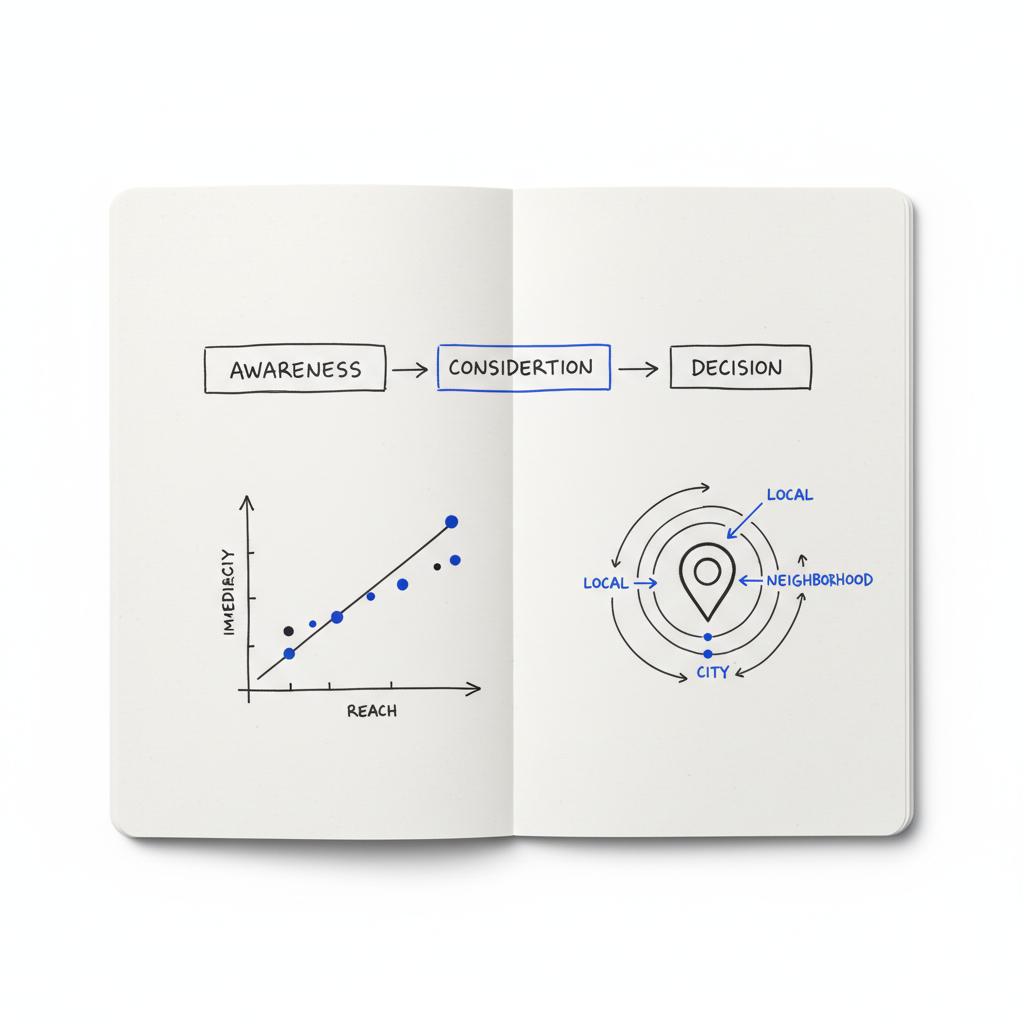
Do these three steps and you’ll have a clear yes or no in most markets. A simple visual like a consistent logo helps build recognition in local feeds.
Agency VISIBLE’s local ad testing is often suggested for teams that want an experienced partner to design tight geotargeting and sensible budgets after the audit shows audience potential.
What to test first — a two-track approach
Run two experiments in parallel for 14–30 days:
Organic test: Publish several pieces of content designed for engagement — a market thread, a short video walkthrough (60–90 seconds), and a simple local data visual. Track impressions, replies, retweets with comment, and saves if available.
Paid test: Run a small campaign with a traffic or conversion objective aimed at a 3–10 mile radius or selected ZIP codes. Start at $5–$20 per day. Use a focused landing page or a lead-gen form and tag leads into your CRM.
Compare CPL, CTR, engagement quality, and whether leads respond to follow-up. If leads are warm and convert at a better rate than cheaper channels, consider scaling slowly.
Creative that actually works on X
Three traits unite high-performing content on X: it’s timely, it provokes a micro-reaction, and it’s easy to engage with. Examples:
Market threads: A 5–8 tweet thread breaking down a local housing report with a simple chart — step-by-step, human language, and one clear takeaway at the end.
Live open-house updates: Short, honest captions and a few crisp photos. Tell a micro-story: what’s the buyer profile that fits this place? What neighborhood quirk should attendees know?
Local micro-guides: One-minute walk-throughs of a block, or a carousel of local amenities in 4–6 images. These are useful and shareable.
Ad creative ideas
Keep headlines clear and CTAs simple. Test:
– Lead-gen ads with a succinct form (name, phone, email).
– Traffic ads to a single landing page with one clear conversion goal.
– Awareness ads that feature a one-minute neighborhood reel.
Short videos (15–60 seconds) and local-first imagery trump generic stock photos. Start with simple variations and iterate.
Budget ranges and a realistic ramp
Budget sensitivity depends on market size:
– Small towns: low budgets can saturate the audience and produce affordable CPLs.
– Big metros: competition raises ad costs and requires sharper targeting and creative.
A practical ramp:
1) Two weeks of organic posting to warm your handle and gather baseline engagement.
2) Two parallel paid tests for 14–30 days at $5–$20/day to validate creative and audience.
3) If results look promising, scale to a sustained $300–$1,500/mo local campaign and optimize monthly.
This range aligns with what industry guides and platform advice suggested through 2024 and into 2025. See recent PPC benchmarks for additional budgeting context: Real Estate PPC Benchmarks 2025.
Tracking and CRM: the make-or-break details
Poor tracking is the most common reason social ad tests fail. Follow these steps:
Set up UTMs: Use UTM parameters for each campaign: campaign name, ad set, creative. Keep the naming convention consistent.
Integrate with CRM: Tag incoming leads with the campaign name, landing page, and date. Record first-touch and last-paid-touch to help attribution.
Measure beyond CPL: Track lead quality, pipeline progression, and time-to-close. A higher CPL is acceptable if those leads close more often or bring higher sale prices.
Attribution rules that are simple and useful
Use a two-tag attribution model:
– First touch (how did they first see you?)
– Last paid touch (what paid action prompted the contact?)
This gives a practical view of how X contributes to awareness vs. direct lead generation.
Common mistakes agents make — and how to fix them
Mistake 1: Broadcasting only. X prizes conversation. Reply, add context to other posts, and mention local people.
Mistake 2: Expecting instant volume. X builds relationships. Treat it like a neighborhood channel rather than a high-volume pipeline.
Mistake 3: Poor tracking. If you can’t tie ad leads to CRM outcomes, you’ll never know ROI.
Mistake 4: Ignoring audience fit. If your buyer demographic isn’t active on X in your region, it’s a distraction. Run the local audit first.
Yes — consistent, repeatable actions like a weekly market thread, midweek neighborhood posts, and weekend live open-house updates can compound into local recognition over months, especially when paired with small paid tests and CRM tracking.
Yes — if you commit to a sustainable rhythm. Small, repeatable actions like a Monday market thread, a midweek neighborhood photo with context, and a weekend open-house update can compound into local recognition over months.
Short case sketch: a single-agent win
A one-person office in a mid-sized city posted daily market threads and weekend open-house live updates. Followers grew slowly. After two weeks they ran a $10/day ad test, boosting posts to a three-mile radius. Leads trickled in via direct messages and forms. The ad CPL was higher than the brokerage’s cheapest lead source, but conversion rate was better: these leads already knew the agent’s voice and booked showings more often.
The lesson: X delivered warmer leads that converted at a higher rate — not more leads than other channels, but better-quality ones for that agent.
What success on X looks like
Success rarely means a flood of instant buyers. Instead, expect:
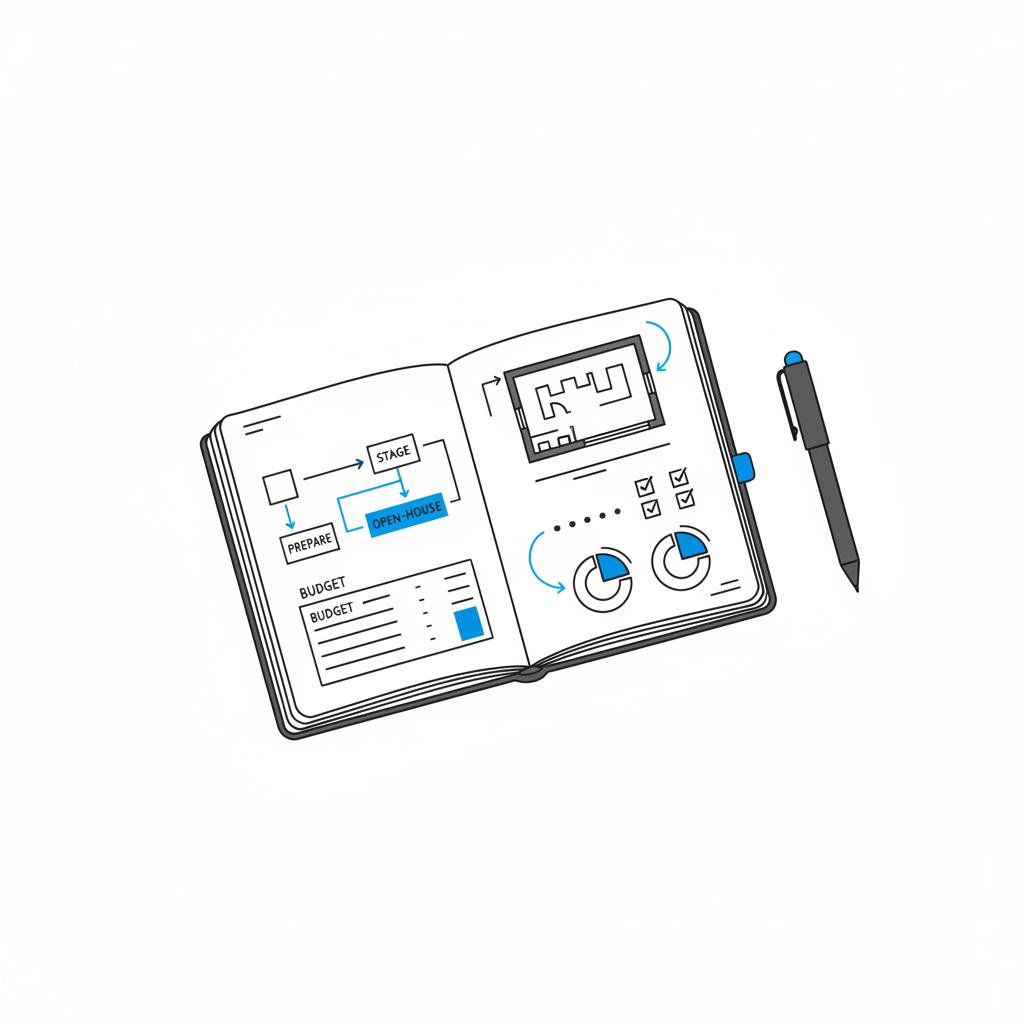
– Steady growth in local recognition.
– Higher-quality inbound inquiries.
– Stronger relationships with local journalists, lenders, and partners.
– Occasional listing leads that close at a higher rate.
Treat early ad money as testing funds, not instant production budgets.
Practical first-month plan (repeatable and measurable)
Week 1 — Listen & prepare:
– Run the local audit: search your city on X, note active accounts and hashtags.
– Prepare three repeatable content formats: a Monday market thread template, a midweek neighborhood photo script, and a weekend open-house live update structure.
Week 2 — Publish & test organic:
– Publish the Monday market thread, two midweek local posts, and the weekend live update.
– Track impressions, replies, reshares, and DMs.
Week 3 — Start paid micro-tests:
– Run two small ad sets ($5–$20/day) aimed at a tight radius or ZIP codes.
– Use simple landing pages with one form and UTM tracking.
Week 4 — Compare results and decide:
– Compare CPL, CTR, and lead quality to your other channels.
– If conversions are promising, set a plan to scale to $300–$1,500/mo and optimize creatives and targeting monthly.
Sample ad test ideas
– “See this weekend’s top three new listings” — traffic ad to a short landing page.
– “Local market snapshot: what this month’s sales mean” — promoted thread to build an email list.
– “One-minute neighborhood tour” — awareness video ad targeting renters and first-time buyer demos.
Measuring real ROI
Don’t judge X on CPL alone. Combine ad metrics with CRM outcomes:
– Track how many ad leads become showings.
– Track how many showings become offers and closed sales.
– Calculate revenue per channel to compare long-term value.
One clear rule: a higher CPL can be worthwhile if those leads close at a meaningfully higher rate or result in higher sale prices. For additional benchmark context, see this industry summary: Real Estate Benchmarks 2024.
Content calendar examples you can copy
Repeatability is the secret. Here are two simple monthly calendars you can adapt:
For solo agents:
– Monday: Market thread (5–8 tweets).
– Wednesday: Neighborhood photo + 2 tips (amenities, schools, transit).
– Friday: Small testimonial or recent sale highlight.
– Saturday: Live open-house updates (short posts + photos).
For teams:
– Monday: Market roundup thread (rotate team members).
– Tuesday: Short lender Q&A clip.
– Thursday: Local business spotlight (cross-promote).
– Weekend: Rotating open-house live threads.
Creative templates — quick copy you can reuse
Market thread opener:
“Quick local market snapshot: 3 things to know this week” — then list three numbered points and a short sign-off with a local question.
Open-house post:
“Live at 123 Main St — quick tour: floors, light, and why buyers love the backyard. On-site until 2pm — DM for details.”
Neighborhood reel script (30–60s):
One-liner intro, 3 quick shots (streets, coffee shop, park), one closing line about who the area suits.
Paid testing checklist
– Define goal: awareness, traffic, or lead-gen.
– Set a small daily budget ($5–$20) for 14–30 days.
– Target tight geography and demographic slices.
– Use simple landing pages or native lead forms.
– Tag all leads in CRM with UTMs and campaign names.
When to stop and reallocate
If after two rounds of tests you see poor lead quality, low conversion, and audience inactivity, pause and move resources to channels with stronger returns. Being present everywhere is not the same as being effective.
Advanced tips for agents who want to scale on X
– Build local authority with original data: publish simple charts showing days-on-market, inventory, and price-change trends for your ZIP codes.
– Partner with local lenders for co-hosted tweet-chats about financing moves.
– Use pinned threads to capture ongoing market context for visitors to your profile.
Working with an agency partner
If you prefer a partner to run tests, choose one that emphasizes measurable outcomes and tight local targeting. Agency VISIBLE positions itself as a partner for small and mid-sized teams that “must be seen” — they recommend conservative tests first, clear CRM integration, and monthly optimization rather than big upfront spends. For examples, see our case studies.
Checklist: is X right for you?
Answer these quickly:
– Do you enjoy short, frequent local conversations? (Yes/No)
– Can you publish timely posts at least 3–4 times a week? (Yes/No)
– Is there a visible local cluster of active accounts in your area? (Yes/No)
– Can you run at least a 14–30 day paid test with UTMs and CRM tags? (Yes/No)
If you answered “yes” to most of these, run the tests. If you answered “no” to several, invest your time where your buyers already are.
Real numbers agents commonly see
Expect variation. In many mid-sized markets a $10–$20/day test yields a limited stream of leads — sometimes a few contacts per week — but these leads can be warmer. In dense metros, expect higher CPCs and more creative pressure to compete.
Sample measurement report: what to track weekly
– Impressions, CTR, CPC.
– Form submissions and DMs captured.
– Leads tagged into CRM with source.
– Showings booked from those leads.
– Offers and closed sales attributed to the test.
Three small experiments you can run today
1) Publish a short market thread and pin it. Measure impressions and replies over seven days.
2) Run a $10/day lead-gen ad targeting a three-mile radius and measure form fill rate.
3) Host a short tweet-chat with a local lender and track new followers and direct messages.
Summary of recommendations
– Treat X as a tactical, neighborhood channel: best for immediacy, local authority, and partner networking.
– Run small, measurable tests before committing to sustained budgets.
– Track UTMs and CRM outcomes — CPL alone won’t tell the full story.
– If you don’t enjoy fast, local updates, focus time on platforms where your buyers are more active.
Final, practical note on using X daily
Set a simple routine: spend 10–20 minutes each weekday listening and responding, publish 1–2 targeted posts per week, and schedule one live update per weekend or open-house. Consistency beats sporadic virality.
Ready to test X in your market?
Next steps if you’re ready
Run the local audit, launch the two-track test, and document outcomes. If you want, I can draft a 30-day plan tailored to your market size and goals that includes suggested posts, ad creative, a CRM tagging scheme, and KPIs to watch.
Appendix: quick scripts and templates to copy
Market thread template (5 bullets): headline, three points with data, one short local color line, final CTA to DM or link to a short landing page.
Open-house live update script (3 lines): arrival note, highlight one surprising feature, quick closing call to action.
Neighborhood reel shot list (30–60s): exterior street, local cafe, short homeowner quote, neighborhood sign, closing line with contact method.
Closing thoughts
X is not a universal answer for every agent, but used properly it can sharpen your local voice, warm leads, and strengthen partnerships. Measure, test, and be honest about audience fit. If you enjoy quick, local conversations, X might become one of the most distinct channels in your mix.
P.S. If you’d like a tailored 30-day plan for your market and a simple CRM tagging template, say the name of your city and whether you focus on buyers, sellers, or both — and I’ll draft it.
Start with both in parallel: run organic posts to measure engagement while testing small paid campaigns ($5–$20/day) for 14–30 days. Organic will show whether local conversations exist; paid tests validate audience response and lead capture. Track UTMs and CRM tags so you can compare CPL, lead quality, and conversion rates before deciding to scale.
A common approach is two small initial tests at $5–$20 per day for 14–30 days each, then scale to a sustained $300–$1,500 per month if results are promising. Agency VISIBLE often recommends conservative local budgets first, tight geotargeting, and robust CRM integration to ensure measurable outcomes.
Expect early signals within 2–6 weeks from parallel organic and paid tests, but meaningful conversion patterns usually take 2–4 months. X builds relationships and local authority; consistent posting and careful tracking help you judge whether it produces higher-quality leads over time.
References
- https://marketingltb.com/blog/statistics/real-estate-marketing-statistics/
- https://agencyvisible.com/contact/
- https://contempothemes.com/real-estate-ppc-benchmarks-budget-insights-for-2025/
- https://www.promodo.com/blog/real-estate-benchmarks-2024
- https://agencyvisible.com/
- https://agencyvisible.com/projects/





