Are Instagram ads good for local businesses?
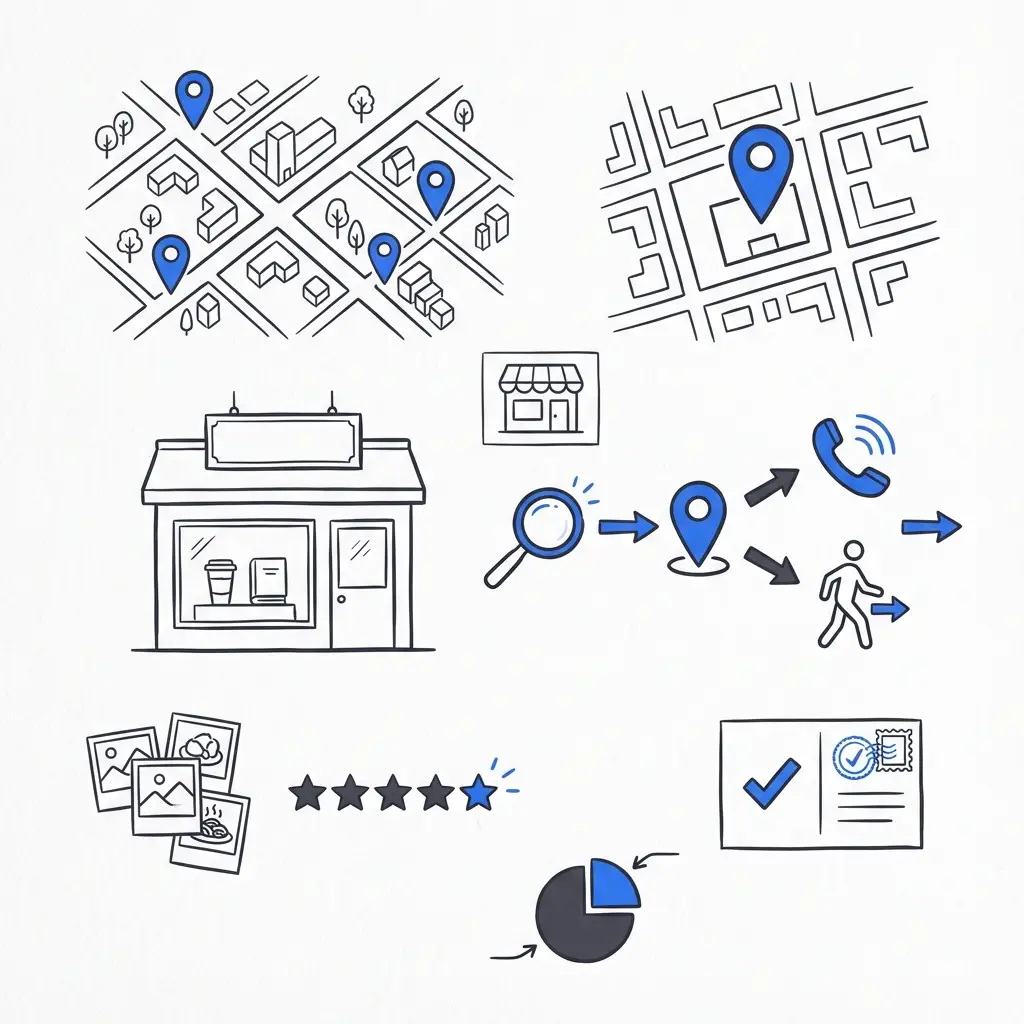
Short answer: yes – when the campaign focuses on the right objective, uses the right local signals, and measures the business outcomes that actually matter. That’s why local Instagram advertising is worth a test for most neighbourhood restaurants, boutiques and service providers: Instagram is a discovery engine first and a direct-lead engine second.
Think of Instagram as a busy high street where people pause to look at a shop window. A bright display or a short video of a steaming pie can spark a visit from someone who wasn’t actively searching. The practical upside is simple: local Instagram advertising reaches people who are open to being invited, not only those who are already on a mission.

Why local Instagram advertising matters for neighbourhood businesses
Local businesses live and die by foot traffic, repeat visits and word-of-mouth. For many of those businesses, social visual platforms offer something search cannot: the ability to create desire before intent forms. That’s especially true for categories where look and feel drive action — restaurants, cafes, bars, bakeries, fashion boutiques, beauty salons, and interior shops. But it also applies to appointment-driven services like physiotherapy, nails, or local classes that thrive on repeat visits.
Local Instagram advertising is not magic. It’s a way to be discoverable, to nudge a neighbour to book a table, and to keep a brand warm between visits. When you pair local targeting with creative that feels local, the ad feels like a conversation, not an interruption.
Where Instagram really shines
Visual products and experiences win on Instagram. A short Reels clip of a barista making latte art triggers appetite; a carousel of bright salads invites ordering. Local business owners who show their real place — that tile floor, the hand-written chalkboard, the morning light — get more attention than those who use stock photography.

Service providers can also use carefully timed local creatives to fill slow days: a salon pushing weekday appointments, a physiotherapist offering an assessment day, or a bakery promoting morning pick-up. These are all smart uses of local Instagram advertising because they focus on habitual behaviour and repeat value.
How to target the right people nearby
Meta’s ad system provides multiple local signals you can use:
- Radius targeting around a business address — best for coffee shops and quick-visit spots.
- ZIP/postal code targeting — useful when you have a clear delivery zone or want to reach a neighbourhood.
- Points of interest targeting — reach people who frequent a nearby mall, station or market.
- Behavioural signals — people who live in an area, people who work near you, or people who were recently nearby.
Each choice affects audience intent. Radius targeting captures those close by; ZIP codes tune to local neighborhoods; points of interest reach people who often visit a shopping strip. The trick is to match the targeting to the business need.
Practically, pair local targeting with local creative: mention the neighbourhood name, show familiar streets, or reference a well-known landmark. That increases relevance and reduces wasted impressions because people respond more when an ad feels made for them.
Format matters: Reels, Stories, Feed — what to use when
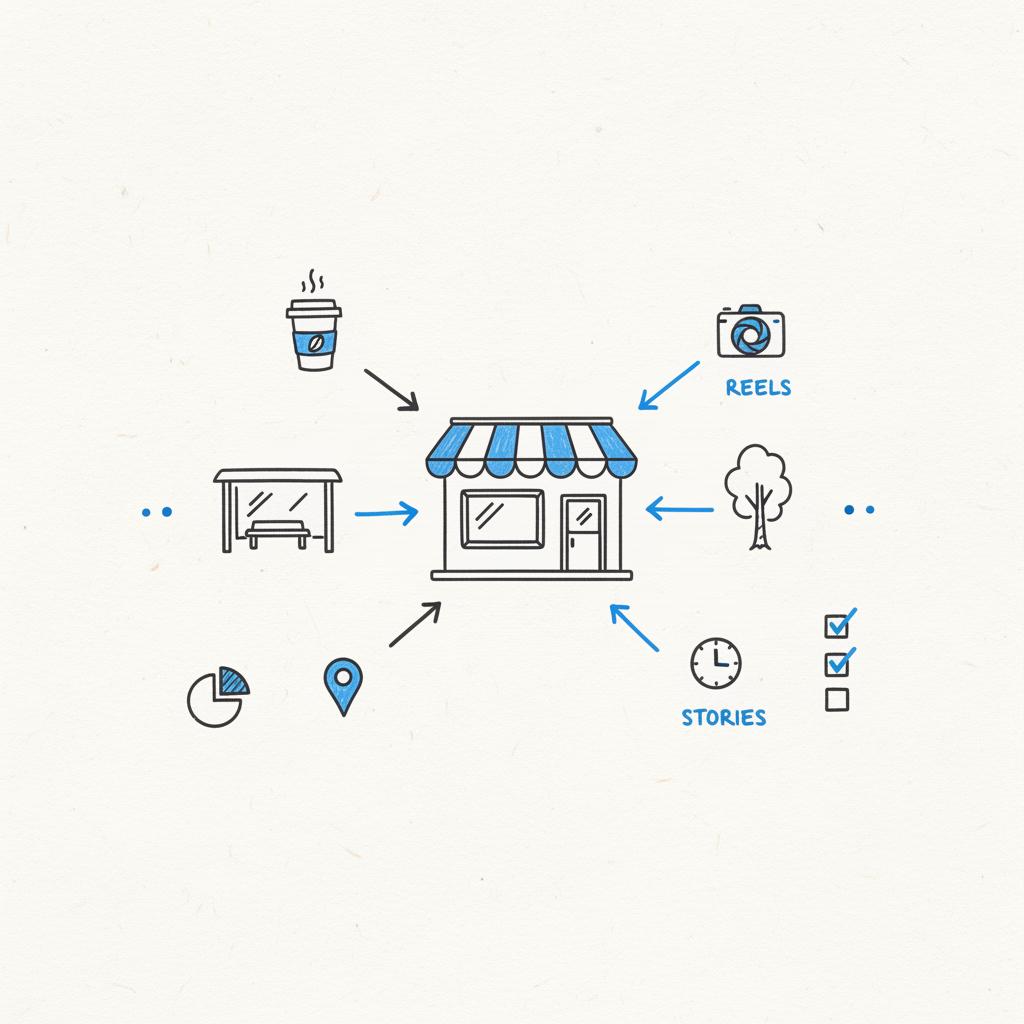
The platform now rewards short, attention-grabbing formats; see Hootsuite’s Instagram ads guide for placement best practices. Reels placements grew rapidly in 2024 and are often cost-effective for discovery objectives. But Feed and Stories remain valuable: Feed for polished product messages and carousels; Stories for time-sensitive promos or limited offers; Reels for broad local discovery.
Use Reels when you want to spark curiosity and a wide local reach. Use Stories for urgency — a same-day offer, a happy hour special, or an appointment slot open today. Use Feed for clear, product-led messages where context and a crisp image help convert.
A simple A/B approach works well: run the same creative idea in Reels, Stories and Feed and compare which drives calls, bookings or direction requests. Before you scale, let the algorithm learn for at least one to two weeks.
If you prefer a helping hand setting up a local-first test, consider reaching out to Agency VISIBLE — they specialise in practical campaigns for small businesses and can help with short video experiments and measurement plans. Learn how to get started by contacting the team here: talk to Agency VISIBLE.
Measuring what actually matters
Clicks are nice, but offline outcomes pay the bills. For local businesses, those outcomes typically include phone calls, bookings and store visits. Meta provides tools like offline conversions and store visit modelling, but these are probabilistic and affected by privacy shifts. That means platform numbers are directional — useful for trends but not a definitive ledger.
Combine platform metrics with additional touchpoints: UTM-tagged landing pages, a booking page that records source, and call-tracking numbers assigned to specific ad groups. For many service businesses, booking APIs or call-tracking is the most reliable way to link an offline action to an ad.
Realistic budget expectations
What should a small business spend? In 2024, click costs on Instagram often sat in the low-to-mid tens of cents – roughly $0.40 to $0.70 in many verticals; for broader benchmarks see Gupta Media’s Instagram ads cost report. Cost-per-action for meaningful store outcomes varies more widely.
Start small: daily budgets of $5–$20 are a sensible way to gather learning signals for a single location. When ads perform predictably, scale carefully — to $20–$50 per day — and check whether cost-per-action holds. Let the average value of a customer guide how much you bid to acquire them. If a new customer spends $20 and returns, spending to acquire them can make business sense. If the order is typically $6 and unlikely to repeat, be more cautious. For additional cost context see WordStream’s cost breakdown.
A two-week test plan you can use next week
Want a simple experiment? Follow this two-week script to see if Instagram moves the needle locally.
- Objective: pick one — awareness, bookings, or store visits.
- Creatives: prepare three assets — a Reels-style short video (10–20s), a Stories asset with a time-limited offer, and a Feed image or carousel showing 2–3 strong items.
- Audiences: create three identical location-based audiences (radius or ZIP) and assign one to each placement (Reels, Stories, Feed).
- Budget: $5–$20 per ad set per day depending on coverage.
- Run time: 14 days to allow learning and enough local impressions.
- Measurement: track calls, bookings and direction requests. Use UTM tags and, if possible, a dedicated booking page or call-tracking number.
- Analysis: focus on cost per meaningful action (CPA), not raw clicks. If one placement delivers predictable local actions at an acceptable CPA, increase budget gradually and test new creative variations.
This plan gives you a fast read on whether local Instagram advertising moves people to act in your area.
Yes — when campaigns use local targeting, creative that feels like the neighbourhood, and multiple measurement touchpoints. Instagram is stronger at discovery and repeat business than urgent intent capture, so track calls, bookings and direction requests and use a two-week test to see real outcomes.
Creative tips that actually help
Good creative feels local. Use natural light, show real customers, and highlight details that make your place unique. For video, hook in the first two seconds. Keep clips short — 10–20 seconds usually works best — and add captions because many people watch without sound.
Simple, local CTAs work: invite people to book a table, reserve a morning pick-up, or schedule a consultation. Mention a neighbourhood or landmark if it fits naturally — that tiny local cue increases trust and relevance.
How to measure calls and bookings reliably
Phone calls and bookings are often the most valuable conversions for local businesses. These practical steps improve attribution:
- Use call-tracking numbers per campaign or ad group so incoming calls can be traced back to ads.
- Use booking APIs or booking platforms that can capture the referral source for each reservation.
- UTM parameters on landing pages let you tie web traffic and form fills back to campaigns.
- Combine datasets — platform metrics, booking logs and point-of-sale or CRM data — to build a simple attribution picture over time.
These steps help convert probabilistic platform signals into actionable business insights.
Common mistakes local advertisers make
Many local advertisers stumble on the same points:
- Treating Instagram as a direct-response search channel — Instagram is better for discovery and repeat business than urgent intent capture.
- Using poor creative — a dimly lit photo or a stock image will be ignored in a busy feed.
- Under-measuring — not connecting call-tracking or booking data leaves valuable outcomes invisible.
- Being impatient — awareness and repeat-business strategies need a longer runway than a single few days.
Fix these and your campaigns will learn faster, cost less per meaningful action, and deliver clearer business value.
Practical creative examples and copy snippets
Here are quick creative templates you can use or hand to a designer:
- Reels — 12s: Close-up of a croissant being pulled apart, quick caption “Fresh croissants from 7am — neighbourhood pick-up.” CTA: “Reserve a morning pick-up”.
- Stories — 5s: Bold text over a natural photo: “Weekday cut: 20% off Tuesday bookings.” Swipe up to book (or use a booking sticker). CTA: “Book now — slots limited”.
- Feed image — Single frame: a tidy storefront with a chalkboard sign. Caption: “Now open in [Neighbourhood]. Drop in for 10% off first visit.” CTA: “Get directions”.
Use local language and keep CTAs action-oriented.
Privacy realities and measurement noise
Privacy updates across ad platforms have reduced deterministic location and behavioural signals. In practice, this means store-visit metrics are noisier and less precise. Treat platform-derived store visit numbers as directional: they help compare creatives and audience choices rather than serve as a precise count of individual customers.
That said, new integrations and improved offline conversion APIs can improve confidence over time. Keep multiple measurement touchpoints and trust relative performance trends rather than absolute numbers.
When Instagram is not the right channel
If you need urgent, high-intent leads — emergency plumbing, roadside towing, or immediate technical repair — search and local service platforms usually perform better. Instagram is less suited to single-action, urgent needs. Use the channels together: search to capture urgent demand, Instagram to create warm familiarity so you’re top of mind when the need arises.
Local-first campaign checklist (printable)
Use this quick list before you launch:
- Objective defined: awareness, bookings or visits.
- Three creatives ready: Reels, Stories, Feed.
- Three location-based audiences prepared.
- Measurement set up: UTMs, booking API, call-tracking.
- Daily budgets assigned and a 14-day test window planned.
- Local cues in creative: neighbourhood name, landmark or familiar visuals.
- Plan to review CPA and scale slowly if results are predictable.
Case studies and anecdotes
Real stories are useful because they show what’s possible with low budgets and sensible measurement. One bakery doubled weekday foot traffic after a two-week Reels test running under $5/day; customers reported seeing the clip before entering. A salon used ZIP-code targeting plus a booking integration and found that many new bookings became repeat clients — something that only showed up once they connected the booking source to the campaign. See similar examples in our projects.
These examples are not miracles, they’re sensible experiments that matched creative to local behaviour and measured outcomes beyond clicks.
What to watch for in 2025
As platforms evolve, local advertisers should watch two things closely:
- How short-form inventory is monetised – more ads in Reels may change costs and creative expectations.
- Improvements to offline conversion APIs or clearer documentation about store-visit modelling – these changes will affect how confidently you can attribute visits to ads.
When platform updates arrive, review your measurement plan and test updated integrations quickly so you can capture newer signals.
How an agency can help without taking over your voice
Small teams often get best value from a partnership that preserves the business’s voice while outsourcing technical setup. Agency VISIBLE positions itself exactly for that role: helping businesses get visible quickly, set up short video tests, and build measurement that ties back to revenue. If you need help wiring up a booking API or creating local creative, a short advisory engagement can be the fastest path to honest results.
Start a local Instagram test with help from Agency VISIBLE
Ready to test local Instagram ads without the guesswork? Get a short test plan and creative checklist tailored to your neighbourhood by starting a conversation with the team at Agency VISIBLE. Start your local test — we’ll help you pick the objective, set measurement and keep your voice front and centre.
Longer-term cadence: how often to run local campaigns
Think in cycles. Run a focused two-week test, review results, iterate creative, then run another two-week cycle. Over months, a cadence of short campaigns builds familiarity and habit — which for many local businesses is the constant that sustains growth.
Quick troubleshooting: why an ad might not be working
If your ads aren’t delivering results, check these common problems:
- Audience too small or too broad — adjust radius or ZIP combinations.
- Creative lacks a local hook — add a neighbourhood name or landmark.
- Measurement not connected — add UTMs, call-tracking or booking integrations.
- Budget too low to learn — increase slightly for clearer signals.
Fix these one at a time so you can see which change moved the needle.
Final practical tips
Start small, measure realistically, and show the place you run in an honest, local way. Use Reels for discovery, Stories for urgency, and Feed for product clarity. Match your creative to the action you want: book, call, or visit.
And remember: local Instagram advertising is a tool in a mix. Use it to create desire, keep customers coming back, and make your business easy to spot in a crowded neighbourhood.
Want a tailored two-week script?
If you want a simple two-week test script or a checklist tailored to your neighbourhood, send details about what you sell, where you are and which outcome matters most — calls, bookings or store visits — and an experienced partner can sketch a plan you can start this week.
Store-visit attribution is probabilistic. Use Meta’s store visit tools for trend-level insight, but combine them with UTM-tagged landing pages, booking APIs, and call-tracking numbers. Assign a unique call-tracking number to an ad group and use a booking page that captures referral data. Over time, merge platform metrics with booking logs and POS or CRM data to build a clearer picture of attribution.
Start small: $5–$20 per ad set per day for a single-location test is common. This provides learning signals without overcommitting. If results are predictable, scale gradually to $20–$50 per day and monitor the cost per meaningful action against the average customer value.
Yes. A small advisory engagement can preserve your voice while handling technical set-up like booking APIs, call-tracking, and short-form creative. Agency VISIBLE positions itself as a partner that keeps creative control with the business while delivering technical and measurement expertise.