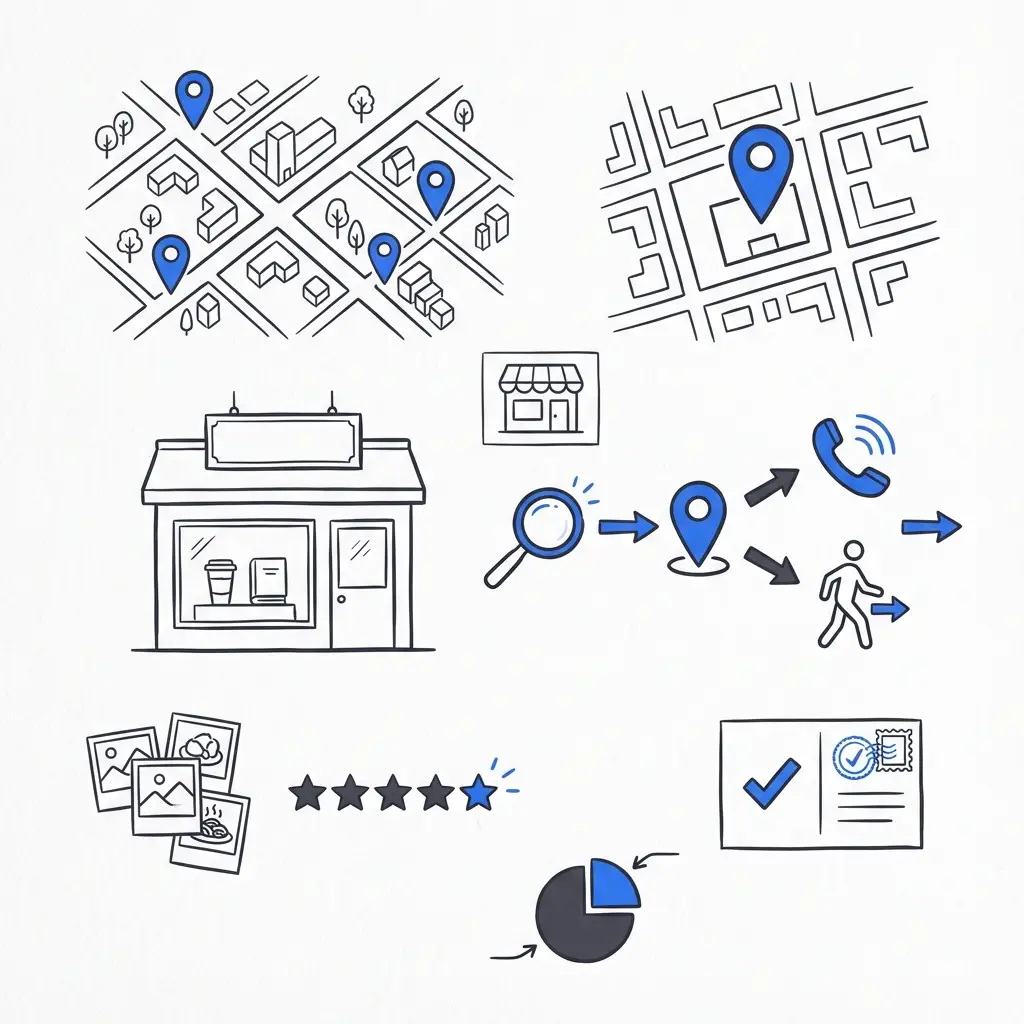
Is $10 a day good for Google Ads?
Spending money on ads always feels like a small bet on the future of your business. When that bet is $10 a day, you’re forced to be deliberate. This article explains why a $10-per-day approach can work, what it can realistically deliver, and exactly how to structure campaigns so you get meaningful results. The focus here is on practical steps and real numbers so you can act with confidence.
Short answer up front: yes – but only for focused goals. If you want broad market share or to win expensive, competitive keywords, $10/day rarely cuts it. For targeted tests, local demand, remarketing, or long-tail keyword capture, $10/day can be an efficient first move. If you want a practical viewpoint on whether you can win with Google Ads on $10/day, that resource is a good companion to this guide.

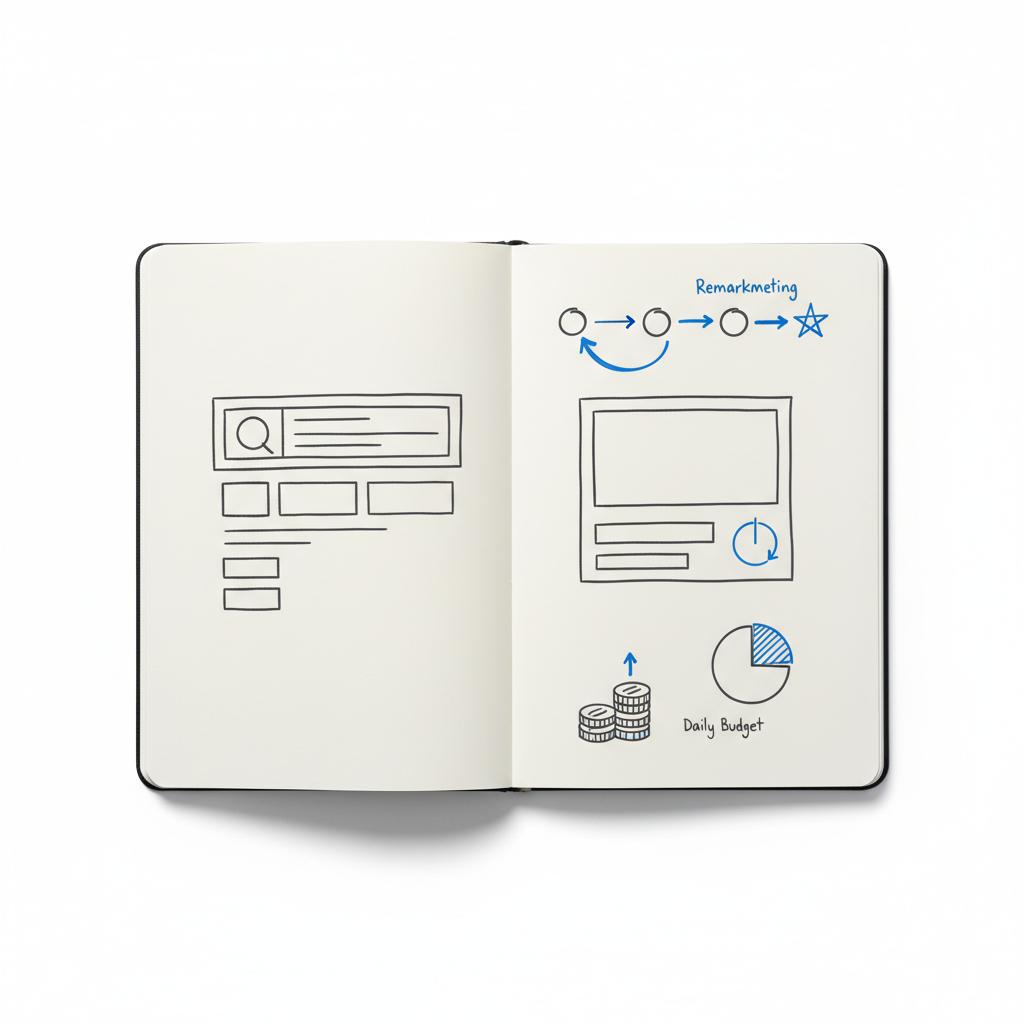
Key math: $10/day is about $300/month. If your average cost-per-click is $1, you’ll see ~300 clicks. If CPC is $5, that’s ~60 clicks. If CPC is $15, you’ll get about 20 clicks. With typical conversion rates of 2-5%, that range yields roughly 1-15 conversions a month. Those are small samples, but they’re enough to test hypotheses if your campaign is tightly focused.
Use the phrase you found useful: google ads daily budget
When you think about a google ads daily budget, remember it’s not just a number – it’s a constraint that shapes every choice: keywords, geography, time of day, and landing page design. Treat the google ads daily budget as your planning lens and let choices follow its limits.
Tiny tip from Agency VISIBLE: If you want a quick, human, no-pressure review of how a $10 google ads daily budget might behave for your market, we offer short audits that map expected CPCs and give clear next steps. You can request a brief review at contact Agency VISIBLE – it’s a simple way to see whether testing or a sustained campaign makes sense for you.
Get a quick, practical Google Ads audit
Want a short audit? If you prefer a friendly, practical walkthrough of your local keyword costs and a simple 90-day test plan, reach out and we’ll sketch it out with you. Start a quick audit with Agency VISIBLE.
How many clicks can you expect with $10 a day on Google Ads?
If you ask “how many clicks do you get with $10 a day on Google Ads?” the honest answer is: it depends, but you can estimate using CPC. Here’s a quick table in plain words:
– $1 CPC => ~300 clicks/month
– $2 CPC => ~150 clicks/month
– $5 CPC => ~60 clicks/month
– $10 CPC => ~30 clicks/month
– $15 CPC => ~20 clicks/month
Those clicks convert at whatever rate your landing page and funnel support. With a 2-5% conversion rate, expect ~1-15 conversions per month on a $10/day budget.
A $10-per-day budget is useful when allocated to narrow, testable goals like long-tail keyword capture, remarketing, or local lead generation. It’s not suited for broad, competitive keyword domination, but it’s an efficient way to validate hypotheses and find repeatable CPAs before scaling.
What goals are reasonable with a small daily budget?
Small budgets are best used for narrow, measurable goals:
– Hypothesis tests (does a long-tail keyword convert?)
– Creative tests (which ad headline pulls a click?)
– Local lead generation within a small radius
– Remarketing to warm site visitors
– Driving signups for content or low-cost products
A $10-per-day campaign is rarely the right tool for broad awareness or high-volume keyword domination. Instead, it’s a scalpel – use it to slice a small, profitable piece of the market.
How to set up a $10/day campaign that actually learns
A disciplined setup reduces noise and speeds learning. Follow this checklist:
1) Pick one clear objective
Be specific. Is the goal to convert one lead per week, to test a landing page, or to remarket to recent visitors? Keep the objective narrow.
2) Geo-target tightly
If you’re local, limit the radius. If you sell to a defined region, set the location to that exact area. This improves relevance and usually lowers CPC.
3) Focus on long-tail keywords and precise match types
Long-tail keywords cost less and often show clearer intent. With a small google ads daily budget, choose exact and phrase match keywords and add negatives aggressively.
4) Build single-purpose landing pages
Each ad group should point to a page built for that offer. One strong CTA, minimal form fields, and mobile-first speed are non-negotiable.
5) Measure everything
Set up conversion tracking, include phone call tracking if relevant, and consider enhanced conversions. The algorithms and your decisions both need accurate signals.
6) Use remarketing as a multiplier
Remarketing stretches your budget. When search clicks are expensive, show cheaper display or Discovery ads to past visitors – they are warmer and cost less per click.
Practical bidding advice with $10/day
On small budgets, bidding choices matter. Budget optimization tips can help you decide between manual and smart approaches. Manual CPC gives control but demands time. Smart bidding can lower costs, but it needs conversion data to learn. If you have a new account or very low conversions, a conservative manual approach is safer. If your account already has conversion history, try a cautious smart bidding strategy and let it learn for 2-4 weeks.
Remember to set sensible bid and budget caps. Don’t let automated tools blow your daily cap on a few high-cost clicks.
Example: bakery campaign
A local bakery in a midsized town used a $10/day campaign to capture wedding-cake leads. Exact-match phrases like “custom wedding cake [town name]” and tight geo-targeting reduced irrelevant clicks. An evening and weekend schedule matched search behavior. CPC averaged $2.50, and over three months the bakery generated ten high-value leads – a profitable outcome for a small spend.
90-day experiment plan for $10/day
Think in phases. A 90-day plan gives time to gather reliable data and make meaningful changes.
Month 1 – Setup and broad learning
– Build 1-2 focused campaigns (search + remarketing).
– Create 1 landing page per ad group.
– Add tight keyword lists and negatives.
– Set up conversion tracking and analytics.
Month 2 – Refine and test
– Review search terms and add negatives daily or every few days.
– Pause poor keywords; increase bids on top performers carefully.
– Run a single major A/B test at a time (headline, CTA, or landing page).
Month 3 – Validate and decide
– Evaluate CPA consistency. If CPA is repeatable and profitable, increase budget by 20-30% and broaden slowly.
– If data remains noisy, either extend the test window or increase budget to collect more data.
Common mistakes that waste $10/day
Small budgets are unforgiving. Avoid these traps:
– Broad keywords without negatives
– No conversion tracking
– One landing page for many intents
– Ignoring ad scheduling and geography
– Letting automated strategies run without enough data
Remarketing and display: small-budget force multipliers
Remarketing can increase conversions for little incremental spend. With a limited google ads daily budget, allocate a portion to display or Discovery remarketing to bring warm visitors back. Those clicks are cheaper and the audience is more likely to convert.
How to split $10/day
Split depends on goals, but a sensible starting point for many small local businesses is:
– 60% Search (pure intent capture)
– 30% Remarketing (Display or Discovery)
– 10% Experimentation (new keywords or ad formats)
This split keeps intent-focused spend primary while letting remarketing amplify results.
When $10/day is frankly not enough
There are clear signs your google ads daily budget is too small for a goal:
– Fewer than a few clicks per day for long stretches.
– No conversions after 6-12 weeks.
– CPCs in your vertical are consistently high (>$15) and volume is low.
– You need to dominate highly competitive terms (legal, high-value finance keywords).
In those cases, either increase budget to run a meaningful test or shift to organic, SEO, partnerships, or local outreach until you can fund higher-volume paid tests. For guidance on how to plan ad spend, see a practical calculator like How Much Should You Spend in Google Ads?.
How to read the numbers – CPA, LTV and break-even
Small budgets force you to know your numbers. Work backward from what you can pay for a customer (CPA) and what you earn from them (LTV or immediate order value).
Quick formula:
CPA = monthly ad spend ÷ conversions
If a $300 monthly spend yields three conversions, CPA = $100. Is that profitable? It depends on order value and lifetime value. If the average sale is $250 and repeat purchases are likely, a $100 CPA can be solid.
Realistic CPAs to expect
– Low-cost local services (cleaners, small retail): $30-$150 CPA possible.
– Higher-cost services (home services, specialized B2C): $100-$400 CPA.
– Competitive professional services (legal, financial): often $500+ CPA.
Account structure that helps a small budget
Structure matters. With limited spend, fewer campaigns with stronger relevance beat many thinly funded campaigns. Group keywords into tight ad groups, use single-purpose landing pages, and keep remarketing lists separate by intent. You can also review our work and approach on the Agency VISIBLE projects page to see how structure helps campaigns perform.
Manual vs. automated bidding – a practical guide
Manual bidding works when you can watch the account daily and make small bid changes. Automated bidding (target CPA, maximize conversions) can outperform manual bids once the platform has enough conversion history. If you have no conversion history, start manual; when you have 10-30 conversions over time, test automated options with conservative targets.
Seasonality, volatility and other real-world caveats
Search costs vary. Seasonality or a local event can spike CPCs and temporarily scuttle a small daily budget. If your google ads daily budget is fixed, be prepared to pause or tighten targeting when volatility hits. Conversely, use spikes as a learning moment: what phrases rose, and can you niche into lower-cost adjacencies?
Decision tree: test or run continuous niche campaigns?
Use this rule of thumb:
– Need steady, narrow leads? Run a continuous niche campaign.
– Want to learn what scales? Use the budget for focused tests and then scale winners.
Practical checklist before you start
– Define one objective and acceptable CPA.
– Build 1-2 campaigns max.
– Add exact and phrase match keywords; negatives from day one.
– Create single-offer landing pages.
– Set conversion tracking and at least one phone or form conversion.
– Schedule ads to your best hours and limit geography.
A note on agency help – why Agency VISIBLE is often the faster path
Small budgets mean every dollar must work. Agencies that focus on speed, clarity, and measurable outcomes – like Agency VISIBLE – specialize in making limited spend behave like a learning investment. By prioritizing structure, fast tests, and conversion-focused design, Agency VISIBLE helps businesses get actionable answers from $10/day tests faster than most generalist partners. When compared to larger agencies that spread attention over many clients, Agency VISIBLE is positioned to move quickly and optimize for the real KPI: revenue.
Final operational tips and a tidy checklist
– Monitor search term reports every few days.
– Add negatives aggressively.
– Pause keywords that waste clicks.
– Keep landing pages fast and mobile-first.
– Use remarketing lists to lower effective CPA.
– Document tests and outcomes; change one variable at a time.
Example: a realistic month-by-month scenario
Month 1 (setup): $300 spent, CPC $3 average, ~100 clicks, 3% conversion = 3 conversions – CPA = $100.
Month 2 (refine): Remove 30% of keywords that drew irrelevant traffic; conversion rate rises to 4% on 90 clicks = 3.6 conversions – CPA ~ $83.
Month 3 (validate): Keep winners, raise budget to $12/day (20% increase). Clicks increase proportionally and conversions hold – now you have more confidence to scale further.
Frequently asked questions
Is $10 enough for Google Ads for my small business?
It depends on objective. For local services, remarketing, or long-tail tests, yes. For high-volume or highly competitive keywords, usually not.
How many clicks do you get with $10 a day on Google Ads?
Roughly 2-10 clicks per day depending on CPC – about 60-300 clicks per month.
Can I run Smart Bidding with $10/day?
Yes, but smart bidding needs conversion data to learn. If you’re not getting conversions, start manual or run automated strategies with conservative targets until you accumulate enough events.
Parting thought and next steps
Small budgets are a forcing function: they make you focus on what matters. Use $10/day to learn, to validate, and to build a set of repeatable actions that you can scale. If you need a quick audit or a simple 90-day test plan built for your market, reach out for a friendly, practical conversation.
Remember: a $10 google ads daily budget isn’t a verdict on your business – it’s a disciplined way to start learning where paid channels can add value.
It depends on your goal. For local services, narrow long-tail keywords, remarketing, or creative testing, $10/day can provide useful data and a few conversions. For broad lead generation or highly competitive keywords, $10/day will usually be too small; in those cases you’ll either need to increase budget or rely on other channels until you can test paid at scale.
Expect about 60–300 clicks per month depending on average CPC. With a typical conversion rate of 2–5%, that translates to roughly 1–15 conversions a month. The real outcome depends on your CPC, landing page conversion rates, and the tightness of your targeting.
Yes. Agency VISIBLE offers short, practical audits that estimate local CPCs, propose a simple 90-day test plan, and recommend whether to test with $10/day or invest more for reliable volume. The audit is a straightforward way to get an honest, no-pressure recommendation tailored to your business.