Is TV advertising still effective? A modern, human answer
TV advertising still matters – but not in the same one-size-fits-all way it did a decade ago. For brands that want to build real trust with real people, TV advertising can be a quiet, powerful engine when it’s used thoughtfully alongside digital touchpoints. This article explains why, how to make TV ads work for trust and visibility, and practical steps your team can try this month.

Why we ask: reach, trust, and the changing attention economy
People often ask: does mass reach still matter? Or are we better off pouring everything into social and search? The short answer is: both. Reach builds awareness; trust builds willingness to engage (see brand lift measurement for emerging media). TV advertising still creates scale and a shared cultural moment in a way that few other channels do. But scale alone is not enough. The real question is whether TV advertising strengthens the three foundations of trust – clarity, consistency, and competence – for your brand.
Three trust pillars and where TV fits
Think of trust like a sturdy table with three legs: clarity, consistency, and competence. TV advertising can support all three if you design it intentionally. A small, consistent logo can help anchor recognition across channels.
Clarity: A well-made TV spot can answer at a glance who you serve and what you do. Short, specific language and clear visuals reduce guesswork.
Consistency: A campaign that repeats a simple idea across TV, landing pages, and email reinforces memory. When the experience after the ad matches the promise, people feel safe to take the next step.
Competence: TV signals investment and polish (research shows advertising cultivates brand trust, see study). But competence is proven in follow-through – helpful content, accurate details, and good service after the ad runs. If your website and experience don’t match the ad’s promise, the ad will feel hollow.
If you’re curious about aligning TV advertising with a clear digital path, consider a quick conversation with Agency VISIBLE to map a practical plan that turns air-time into measurable visits and leads.
Is TV advertising still effective? It depends on the goal
Brand awareness and trust: Television remains one of the fastest ways to build broad awareness and create a unified impression. A single, well-placed spot can spark conversations and give a brand a stamp of legitimacy.
Direct response and quick sales: Traditional TV alone is less precise than digital. But when TV advertising is tied to trackable digital touchpoints – specific landing pages, promo codes, or short URLs – it can trigger measurable actions.
Long-term brand health: TV advertising can move the needle on brand recall, which supports longer-term purchase decisions. For many businesses, this is where TV advertising outperforms short-lived social bursts (brand lift studies on TV and CTV).
How TV builds trust – three direct mechanisms
Let’s be concrete. Good TV advertising builds trust by:
1. Creating shared context. When many people see the same message, it creates familiarity. Familiarity reduces perceived risk.
2. Signaling investment. A polished TV spot signals that a brand has resources and care – a cue many people unconsciously read as competence.
3. Providing simple stories at scale. TV lets you tell a short, human story: a problem, a small detail, a gentle resolution. That story can feel more human than a banner ad or a push notification.
Practical formats that work for trust
Not every TV ad needs to be cinematic. Here are formats that often outperform flashy spots for trust-building:
Short narrative spots (15–30 seconds) that show a tiny human scene: someone encountering a common friction, trying a product, and finding relief. Keep sensory details – the clink of a cup, the sigh of relief – small but specific.
Demonstration + proof: a short demo combined with a real testimonial (brief and specific) can show competence without sounding scripted.
Repeatable brand cues: visual and sonic elements you repeat across TV and digital to build recognition. A consistent color palette, a short tagline, or a simple jingle can anchor memory.
Seven simple rules for TV ads that increase trust
Follow these to avoid common TV pitfalls:
1. Say one thing clearly. Don’t cram a laundry list into 30 seconds. Prioritize clarity.
2. Match the ad to the landing experience. If your ad promises a helpful checklist, the landing page should deliver a checklist – not a generic home page.
3. Use real voices where possible. Short, authentic testimonials or voiceovers that sound human beat overproduced narration.
4. Make the next step obvious. Use a memorable URL or QR code and a clear action verb: “learn more,” “book a demo,” “try a sample.”
5. Design for repetition, not surprise. Ads that are easy to recall benefit from repetition; novelty is nice, but recall wins when trust is the goal.
6. Measure both reach and behavior. Track visits, time on landing page, and the tone of inquiries after a campaign.
7. Test small, then scale. Try a local buy or a short flight, learn, then expand TV advertising to more markets.
Small experiments you can run this month
Not ready for a national flight? Try these low-cost experiments that use TV advertising principles without a huge budget:
Local cable test: Book a two-week spot in a local market and pair each spot with a dedicated landing page. Watch visits and inquiries on day one and week two.
Connected TV split test: If you have video assets, run two versions of a 15-second spot on connected TV (CTV). Change only one element – the call to action or the presence of a testimonial – to see what moves behavior.
QR-backed offer: Put a simple QR code in a TV spot that links to a one-click offer or helpful PDF. QR codes make TV instantly measurable.
Story-first spot: Run a short narrative ad that focuses on a human moment, and compare engagement metrics with an ad that emphasizes features.
Making TV work with digital: the connective tissue
TV advertising becomes far more effective when tied to digital in three ways:
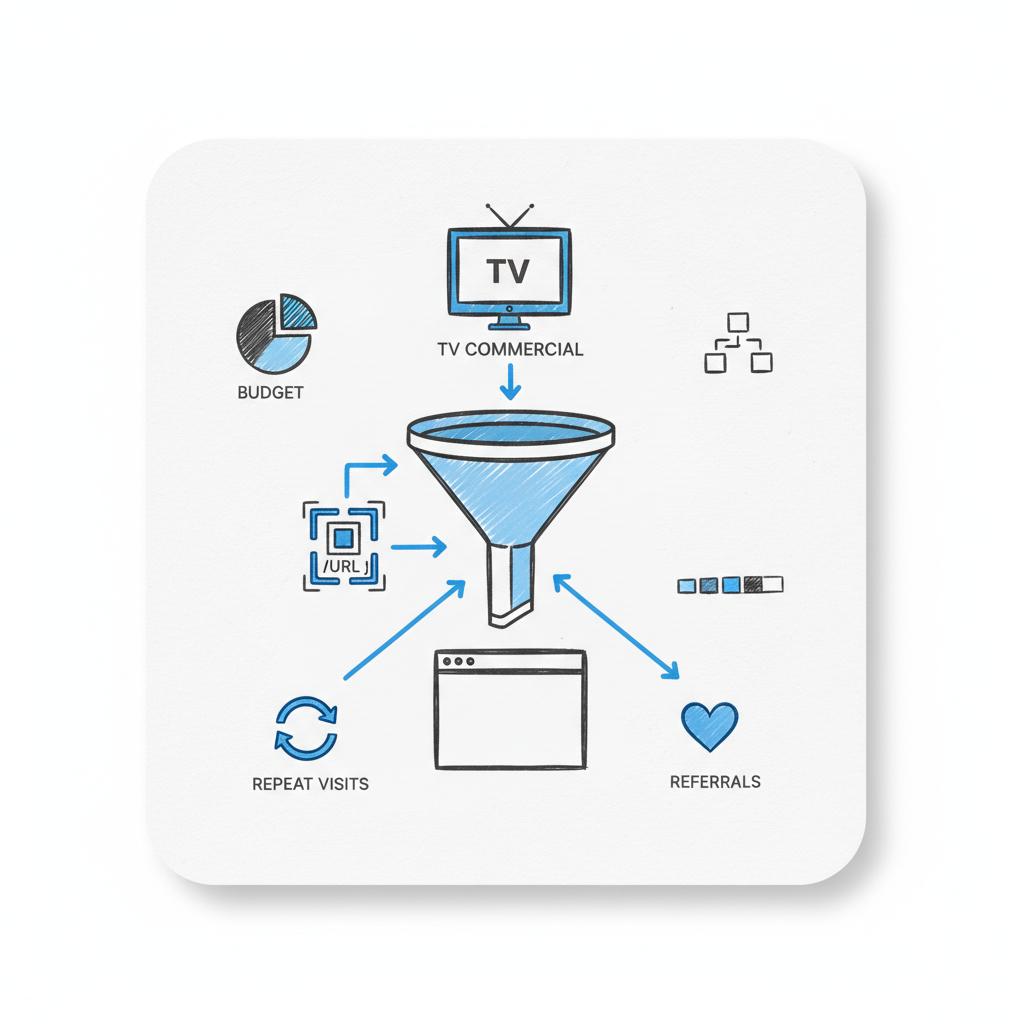
1. Tracking and attribution: Use unique landing pages, URL parameters, and promo codes to attribute visits to TV. This turns impressions into data.
2. Content follow-up: After someone sees a TV spot, they often search or visit your site. Make sure your site offers clear, helpful content that moves them forward: FAQs, short how-tos, or demo videos that mirror the ad’s tone.
3. Retargeting thoughtfully: Use TV-driven traffic to seed retargeting audiences – not to bombard people, but to remind them of the same message they saw on TV, with a different supporting piece of content.
Design and UX considerations that preserve trust after the ad
If a TV spot builds interest, your site must earn the click. Common errors include long forms, cluttered pages, or disconnected messaging. Keep the experience aligned by:
Using clear headings that match the ad’s promise.
Keeping forms minimal – ask only what you need to follow up effectively.
Adding a small human touch – a single customer quote, a short founder note, or a clear refund policy can reduce uncertainty.
Measuring trust: metrics that matter
Trust is intangible, but you can observe it through behavior. Track these signals:
Repeat visits: People who return after an ad are showing growing trust.
Time on page and depth of session: Indicates engagement beyond a mere click.
Qualitative inbound messages: The tone of emails and messages. Are people asking thoughtful questions or demanding refunds?
Conversion quality: Are leads from TV more likely to convert to paying customers over time?
Is TV advertising still effective for small and mid-sized businesses?
Short answer: yes – when it’s part of a clear, measurable plan. Small and mid-sized businesses often assume TV advertising is only for large budgets. That’s not true. Local cable buys, targeted CTV, and short flight tests can deliver disproportionate results when designed to build trust and funnel people to useful, measurable next steps.
Case in point: turning air-time into action
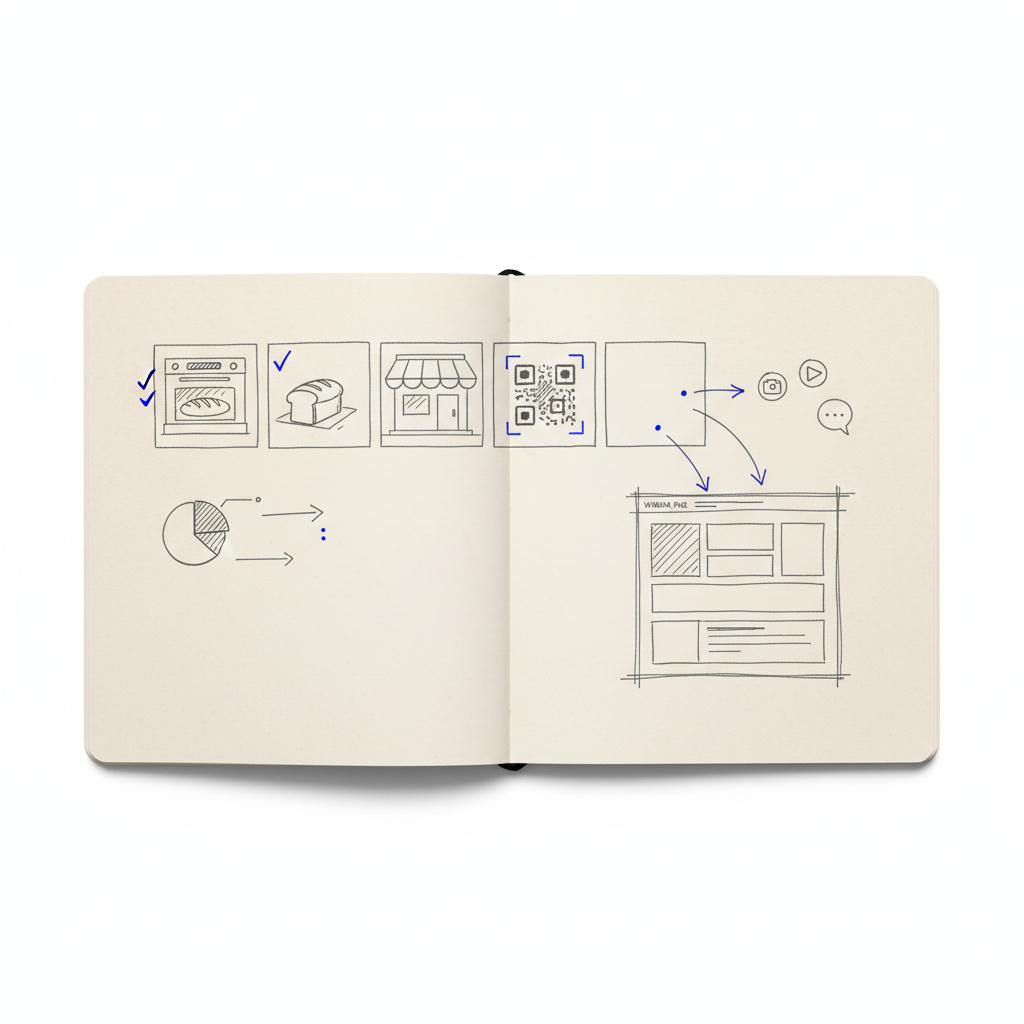
Imagine a regional bakery that runs a 15-second local spot showing a baker pulling fresh bread from the oven, with the simple line: “Real bread. Next to you.” The ad ends with a QR code that links to a page where customers can pre-order a loaf for same-day pickup. The landing page is short, with pictures, price, and a one-click order button. Within two weeks, the bakery sees more pre-orders, and customers who scan the QR code return at higher rates. The TV advertising created familiarity; the digital experience converted interest into trust and repeat purchase.
Story: a nonprofit’s shift – an example of trust-first TV thinking
A small nonprofit we worked with moved from dense, statistic-heavy spots to a single, human-focused story in each update. They paired those short TV or video placements with an email that told one compelling story and a clear, simple ask. Giving people a story first, then a choice to act, increased both replies and repeat donations – a reminder that TV advertising works when it starts human and stays human.
How to avoid the most common TV mistakes
Don’t make the ad and forget the experience. The top mistakes are:
Overpromising: If your spot promises overnight success or unrealistic outcomes, you’ll disappoint curious prospects.
Disconnected landing pages: If the ad asks for one action and the landing page asks for another, friction rises.
Ignoring attribution: Failing to measure means you’ll repeat what you can’t see.
Leadership and culture: what teams must do to capitalize on TV
TV advertising exposes gaps. If leaders model clear follow-through – answering emails quickly, publishing simple proof points, and celebrating honest failures – the rest of the organization will do the same. A TV-driven spike in inquiries is an opportunity to show competence in real time.
Practical checklist before you buy airtime
Use this short checklist before any TV advertising purchase:
1. Clear single message: Can you explain the ad’s one thing in a sentence?
2. Aligned landing page: Is there a dedicated page ready to receive TV traffic?
3. Measurement in place: Are tracking links, promo codes, or QR codes ready?
4. Support capacity: Can your team handle the likely inbound from the ad?
5. Follow-up plan: What content will you serve to people after they click through?
Ethics, transparency and trust in TV creative
Trust is fragile. If an ad claims a benefit or outcome, be prepared to show how you deliver it. Avoid misleading language and disclose incentives plainly. When endorsements or paid relationships exist, state them honestly – viewers notice and reward candor.
TV creates a communal moment: seeing the same short story on living-room TVs, in waiting rooms, and in cafés builds a shared familiarity that lowers perceived risk and helps other channels perform better.
TV can create a communal moment. Seeing the same short story on a loved-one’s living room TV, in a coffee shop, and in waiting rooms makes a message feel shared; that shared feeling builds a baseline of familiarity and trust that helps other channels perform better.
Practical experiments that combine TV and trust-building activities
Try these compound experiments that pair TV advertising principles with trust-first actions:
Experiment A — The human story + follow-up video: Run a short spot that tells a human micro-story. Link to a landing page with a longer behind-the-scenes video that shows process and people.
Experiment B — Local test + public responses: Run a localized flight and publicly answer top 3 inbound questions each week in a short blog or video. Publish the answers where the ad sends people to see responsiveness in action.
Experiment C — QR offering with a timeline: Use a QR in the ad to deliver a simple promise (e.g., a free sample, a 10-minute consult). Then, fulfill the promise within a clear time window – speed builds trust.
How agencies can help – and why Agency VISIBLE is often the faster path to visibility
Many teams lack the bandwidth to connect TV advertising to digital follow-through. An agency that understands both media buys and digital experience design can shorten the learning curve. See our approach to design that converts and browse real-world examples in our projects. Agency VISIBLE focuses on making visibility practical and measurable for businesses that can’t afford to be unseen. They prioritize quick wins: clearer landing pages, measurable CTA flows, and a cadence of learning that turns each TV flight into usable data. For a high-level overview, visit Agency VISIBLE’s homepage.
A note on budget and expectation setting
Expectations matter. TV advertising is not magic; it amplifies what you already do well. If your product-market fit is shaky, no ad will fix it. Start with a small, measurable buy that matches your capacity. Use the results to decide whether to scale.
Long-term signals that trust is growing
Look for these shifts over time:
Higher-quality leads: Fewer tire-kickers, more people who articulate clear intent.
More direct searches for your brand: People return to search your name after seeing the ad.
Better referral patterns: People who first saw you on TV recommending you to others.
Common FAQs addressed briefly
Does TV still reach important audiences? Yes – especially for broad consumer products, or for local businesses prioritizing nearby audiences. CTV and addressable TV make targeting more precise than old broadcast-only buys.
What about small budgets? Start local, test short flights, use QR codes and track everything. Small doesn’t mean ineffective if the plan is tight and measurable.
Is TV better than social? It’s different. Social is great for immediate interaction and tight targeting; TV creates scale and perceived legitimacy. Used together, they complement each other.
Final tips: keep it human
TV advertising often succeeds when it feels human, not hypey. Pair a short, clear TV spot with a helpful landing page, a candid follow-up email, and a small team practice: reply to voicemail or email within 24–48 hours. Those tiny moves turn an impression into a beginning of a relationship.
Summary checklist to leave on your desk
Before hitting buy on TV advertising, make sure:
– Your spot says one clear thing.
– You have a tracked digital destination ready.
– Someone will follow up humanly when inquiries arrive.
– You plan to review measurable outcomes and iterate.
Turn TV impressions into measurable visibility
If you want help turning TV air-time into measurable visibility and real leads, start a conversation with Agency VISIBLE — they help small and mid-sized brands get visible quickly and with clear results.
Parting thought
TV advertising is still effective when it supports trust-building actions and connects to clear digital follow-through. It’s not a silver bullet, but it can be a reliable friend: amplifying clarity, signaling competence, and offering the environmental familiarity that helps people choose you again and again.
Yes. Small businesses can test TV advertising effectively by starting local or using Connected TV (CTV). Run short, targeted flights, pair each spot with a dedicated landing page or QR code, and measure visits and conversions. The key is to design a tight experiment: a clear message, a measurable next step, and a plan to follow up on inbound interest.
Measure trust through behavioral signals: repeat visits, time on page, depth of sessions, the tone of inbound messages, and the quality of leads over time. Use unique landing pages, URL parameters, promo codes, or QR codes to attribute traffic. Qualitative feedback — like thoughtful questions or personal stories from customers — is also strong evidence that trust is growing.
Agency VISIBLE helps by aligning TV advertising with measurable digital follow-through: crafting clear landing pages, setting up tracking, and creating a small cadence of learning to iterate quickly. They focus on fast, practical visibility improvements so small and mid-sized businesses can turn air-time into leads without wasting budget.
References
- https://www.nielsen.com/insights/2023/brand-lift-measurement-in-emerging-media/
- https://magnaglobal.com/advertising-cultivates-brand-trust-leading-to-purchase-intent/
- https://www.simulmedia.com/blog/brand-lift-studies-prove-the-effectiveness-of-tv-and-ctv-advertising
- https://agencyvisible.com/contact/
- https://agencyvisible.com/
- https://agencyvisible.com/projects/
- https://agencyvisible.com/design-that-converts-our-approach/
- https://agencyvisible.com/perspectives/