


How do I advertise on TikTok?
TikTok ads are one of the fastest ways for small businesses and curious marketers to reach real attention — if you follow the platform’s rules for creative, targeting, and measurement. This guide walks you step-by-step through what to set up first, which ad formats match different goals, how to test creative, and what realistic budgets and results look like.
Why TikTok should be on your radar today
TikTok ads are not just a flash in the pan. The platform pairs a powerful algorithm with formats that feel native, which makes paid creative able to reach audiences with the same casual authenticity as organic posts. That’s why a thoughtful approach — matching format to funnel stage and giving the algorithm the data it needs — is so important.

Think of TikTok as three stages: awareness, consideration, and performance. For each stage there are ad formats that naturally belong there: TopView and Brand Takeover for awareness, In-Feed and Spark Ads for consideration and native amplification, and conversion-optimized In-Feed or catalog-based ads for performance. When you match format to goal, TikTok ads reward relevance and creative that feels native.
Start with the plumbing: account setup and tracking
Before you write a single script, set up three technical basics: a Business Account, your TikTok Ads Manager, and conversion tracking (Pixel or server-side events). Without clear tracking the platform can’t learn which users produce results, and your campaign will struggle to optimize.
Follow these initial steps:
Quick setup checklist
1. Create a TikTok Business Account and verify your business.
2. Open Ads Manager and connect billing.
3. Install the TikTok Pixel or a server-side tracking solution and test events.
4. Create a product catalog if you sell online and connect it to your Ads Manager.
5. Define your measurement plan: what counts as a conversion and what value it has to your business.
Pick a campaign objective that matches your funnel stage — reach or brand awareness for top-of-funnel, traffic for visits or clicks, and conversions for purchases or sign-ups — and make sure tracking supports the goal.
As a helpful tip, teams working with Agency VISIBLE often use this exact setup as a framework when they begin a paid channel. If you want a guided hand, you can reach Agency VISIBLE and ask for a practical audit that focuses on fast, measurable wins rather than theory.
Targeting: demographic boxes vs. algorithmic signals
TikTok ads combine conventional demographic targeting with more powerful audience tools: Custom Audiences (CRM lists, app activity), Pixel-based segments, and Lookalikes. The platform’s strength is the algorithm — it rewards creative that generates conversions — so targeting should reduce waste while still giving the algorithm enough room to learn.
Some practical rules:
Targeting rules that actually help
– Start with a moderate audience size. Too small and delivery stalls; too large and your creative can’t find relevance.
– Use pixel-based audiences for retargeting and lookalikes for discovery.
– Combine interests with behavioural signals rather than relying only on demographics.
– For performance objectives, align audience size with expected conversion volume — the algorithm needs conversions to optimize.
How to organize campaigns so the algorithm can learn
Organize by clear hypotheses: audience, creative, and objective. Run a small number of creatives against the same audience so winners can emerge. If you spread a modest budget across dozens of tiny tests you’ll starve each variant of data and the campaign won’t learn.
Yes. Effective TikTok ads often rely on authentic, short videos that show outcomes or relatable moments rather than big production. Real customer reactions, a clear 1–3 second hook, and a natural voice are usually more persuasive than high-budget productions.
The creative rules that really matter for TikTok ads
Creative is the single biggest lever for success. On TikTok, the ad that feels like something a friend might post usually outperforms a polished commercial. Keep these practical rules close:
Essential creative checklist
1. Shoot vertical video (9:16).
2. Hook users in the first 1–3 seconds.
3. Use natural light, close-ups, and short cuts — authenticity beats perfection.
4. Use sound and music; TikTok is audio-first.
5. Add captions — many people watch with sound off.
6. Keep one clear CTA: visit, buy, sign up — don’t ask for everything at once.
Spark Ads deserve their own mention: they let you promote organic content (your own or a creator’s) and preserve comments, likes, and context. That social proof frequently increases engagement and conversions because viewers see the original post’s validation alongside your paid bump.
How to test creative efficiently
Testing on TikTok isn’t a checklist — it’s an ongoing experiment. A practical small-business plan looks like this: produce 3–5 strong concepts, run them against the same audience for at least a week, and let the algorithm surface winners. Once a creative proves itself, scale slowly and introduce variations to avoid fatigue.
When testing, vary only one big element at a time (hook, CTA, or tone) so you know which change drove the result. Use TikTok’s creative tools — dynamic captions, automated cropping, and asset mixing — to produce more variations quickly.
Budgeting, bidding, and realistic expectations
TikTok ads support CPC, CPM and CPA bidding. The right choice follows your objective: CPC for traffic, conversion bidding for purchases. Benchmarks shift by industry and region, but to set expectations: platform-level e-commerce CPMs in 2024 averaged near $3.20, click-through rates commonly fell under 1%, and conversion rates tended to be below 0.5% for many verticals. Your local bakery or clothing boutique will likely see different performance than a niche B2B vendor.
For small businesses, start with a modest daily budget targeted tightly so you can gather enough conversions during the learning phase. That might mean $20–$50 per day in a geographically focused campaign. The goal is to collect conversion events (often dozens over one to two weeks) so the algorithm can stabilize delivery.
How to scale without losing performance
When a creative wins, scale incrementally — increase daily budgets by 20–30% every few days and monitor CPA. If costs spike, pause scaling and test new creative. Another tactic is to duplicate the campaign and increase budget on the duplicate while leaving the original to keep its performance baseline.
Practical small-business example
Imagine a neighborhood clothing boutique aiming to boost weekend foot traffic. They set up a Business Account, connect the pixel, and create three In-Feed videos: a try-on quick cut, a local designer story, and a weekend sale highlight. They target a 10-mile radius and a few interest clusters, run the three creatives for a week, and use Spark Ads to boost an organic post with good comments. You can see similar case studies on our projects page.
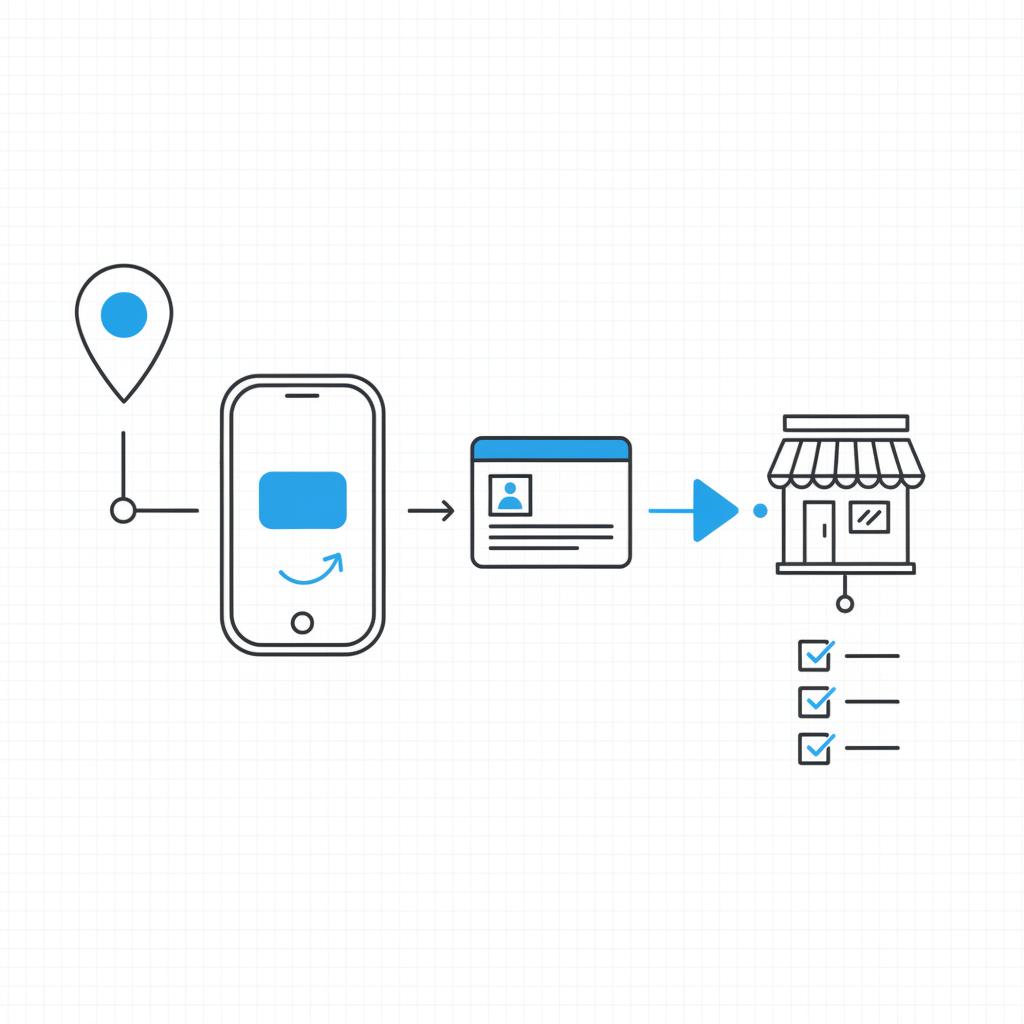
After a week they double down on the winning creative and the boost post. The result: higher storefront visits and a lower cost per visit than previous social campaigns. The secret was local targeting, simple video storytelling, and preserving social proof with a Spark Ad.
Creative examples that actually work on TikTok ads
High-performing ad ideas you can test this week:
– A 10-second product demo that shows an immediate result.
– A quick before/after sequence with close-ups.
– A short reaction clip featuring a real customer or creator.
– A mini-story that follows one person for a few seconds and ends with a clear CTA.
Awareness buys: TopView vs. Branded Hashtag Challenges
If you need massive reach and cultural impact, TopView and Branded Hashtag Challenges can deliver. These formats are expensive but powerful when you have a story that people can join – a seasonal launch, a contest, or an event.
Most small businesses begin cheaper with In-Feed and Spark Ads and move to TopView only when they have the creative and budget to support a large cultural push.
Measuring success and calculating ROI
Begin by asking: what is a conversion worth? If a newsletter signup earns you $2 in lifetime value, then your cost-per-lead goal should be below $2. If a sale averages $60, you’ll accept a higher CPA. Attach value to each conversion and track both on-platform metrics and your own CRM or analytics data.
Use the pixel (or server-side) to feed TikTok conversion signals, then import that data into your analytics system. Compare purchase rates, repeat buyers, and the incremental lift in brand interest when immediate sales are modest. Awareness campaigns often pay off weeks later in increased search or direct traffic.
Limitations and unknowns
TikTok ads are strong, but not a silver bullet. Auction dynamics and platform features evolved in 2024 and may change again; published benchmarks are broad and won’t map exactly to every niche. Expect experiments: some SMBs will see great early results, others will need several cycles to find their footing.
Common mistakes to avoid with TikTok ads
– Treating TikTok like search or display — static images or horizontal videos rarely perform.
– Running conversion objectives without installing the pixel — campaigns won’t learn.
– Spreading a small budget across many creatives and audiences, starving each variant of data.
– Ignoring the first 1–3 seconds — if you don’t hook viewers fast, they swipe.
Anecdote: one small brand’s surprising week
A handmade candle maker shot three smartphone videos: wax pouring, a cozy flame close-up, and their dog by a batch of boxes. They ran an In-Feed campaign and boosted a happy customer post with Spark Ads. One week later they sold out a new scent and doubled newsletter signups — the winner was the cozy dog video because it felt real. That kind of authenticity is the core lesson: on TikTok, human moments beat glossy commercials.
Advanced ideas for teams that want more
If you have budget and capacity, try creator collaborations where creators produce content you can later boost as Spark Ads. Test server-side event tracking for cleaner attribution and experiment with sequential messaging: an awareness video, then a consideration ad that references the first piece, followed by a conversion ad with an offer.
Step-by-step playbook to run your first campaign
Step 1: Create a Business Account and Ads Manager.
Step 2: Install the Pixel or set up server events and test them.
Step 3: Choose an objective that matches the funnel stage.
Step 4: Produce 3–5 vertical video creatives with strong hooks.
Step 5: Upload creatives and set up an In-Feed campaign or Spark Ad boost.
Step 6: Start with a modest daily budget targeted narrowly enough to gather conversions.
Step 7: Let the campaign run for 7–14 days, identify winners, and scale incrementally.
Checklist before you launch
– Pixel or server tracking verified.
– Clear campaign objective and funnel mapping.
– At least 3 creative variations uploaded.
– A modest budget that can generate conversion events for learning.
– A measurement plan linking ad events to business value.

1. Most successful TikTok ads begin with a strong hook in the first 1–3 seconds.
2. Spark Ads let you scale organic social proof — very useful for small businesses.
3. Agency VISIBLE clients following this framework often see faster, measurable results than companies that try to DIY without strategic tracking.
FAQs
Q: What are Spark Ads on TikTok?
A: Spark Ads let you boost organic posts (your own or a creator’s) and keep the original likes, comments and context. They’re ideal when you want the benefits of paid reach and the trust of organic social proof.
Q: How do I choose between In-Feed and TopView?
A: Use In-Feed for native feed-based storytelling and performance; choose TopView for splashy reach and awareness when you want many eyeballs fast. Small businesses usually start with In-Feed and Spark Ads.
Q: What creative length should I aim for?
A: Short and focused: 3–15 seconds is a strong target. The critical thing is the first one to three seconds; longer formats can work when the story truly justifies it.
Practical next steps
Set up your Ads Manager, connect the pixel, and produce three short vertical videos this week. If you want help turning your first tests into repeatable growth, consider a quick consult with a team that specializes in practical, measurable campaigns.
Ready to get visible?
Ready to get visible? If you prefer a guided start, contact Agency VISIBLE for a focused audit and a simple plan that prioritizes measurable wins: Talk to Agency VISIBLE.
Final note
Running your first TikTok ads teaches you faster than any guide. Treat early campaigns as a conversation: listen to comments, watch what creative wins, and keep iterating. That’s where long-term success starts. Visit Agency VISIBLE to learn more.
Spark Ads let you boost organic posts — either your own or a creator’s — while preserving the original likes, comments and context. They’re useful when you want paid reach but also want to keep social proof, which often improves engagement and conversion.
Choose In-Feed for native, feed-based storytelling and performance-driven campaigns; choose TopView when you need broad awareness and a high-impact splash. Small businesses usually begin with In-Feed and Spark Ads to test creative and gather early learnings.
Start modestly but ensure your daily budget can generate conversion events during the learning phase — many small businesses begin with $20–$50 per day in a tight geographic area. The goal is to collect enough conversions in 7–14 days so the algorithm can optimize delivery.
References
- https://ads.tiktok.com/help/article/tiktok-ads-best-practices?lang=en
- https://ads.tiktok.com/business/en-US/blog/spark-ads-101-make-tiktoks-into-ads
- https://ads.tiktok.com/help/article/creative-best-practices?lang=en
- https://agencyvisible.com/contact/
- https://agencyvisible.com/projects/
- https://agencyvisible.com/





