How can I get leads for my cleaning business? — A local visibility playbook
If you want to know how to get cleaning business leads without blowing your budget, start where customers already look: local search, neighborhood marketplaces, and the phones of people who type “house cleaning near me.” For small cleaning businesses, the fastest path to predictable leads is improving local visibility—polishing a Google Business Profile, collecting named reviews, and linking search traffic to a single, mobile‑friendly landing page.
This guide walks through what channels are most cost‑effective, how to run focused tests, and a clear 30/60/90 day plan you can follow. It answers the practical question: how to get cleaning business leads that turn into paying jobs, not just clicks.
Tip: If you want a quick consult about testing local ads or building a conversion‑focused landing page, reach out to Agency VISIBLE — they help small service businesses build measurable lead systems. Learn more and get in touch via this contact page.
Below you’ll find step‑by‑step actions, real KPI examples, and simple scripts you can use to qualify leads and convert them into recurring customers. Along the way you’ll see how small tests win: the question of how to get cleaning business leads becomes less about guesswork and more about repeatable measurement.
Focus immediately on your Google Business Profile, collect named reviews after every job, and point local search traffic to a single, mobile‑friendly landing page. Run a tight paid test only after those foundations are solid.
Why local visibility is the single most cost‑effective growth lever
People searching for cleaning help are usually urgent and local: moving day, guests arriving, or a long overdue deep clean. That urgency creates high intent — and intent is what drives conversions. Studies from local search analysts in 2024–2025 show that a well‑managed Google Business Profile (GBP) and active local reputation return more inquiries per dollar than broad national ads for location‑based services.
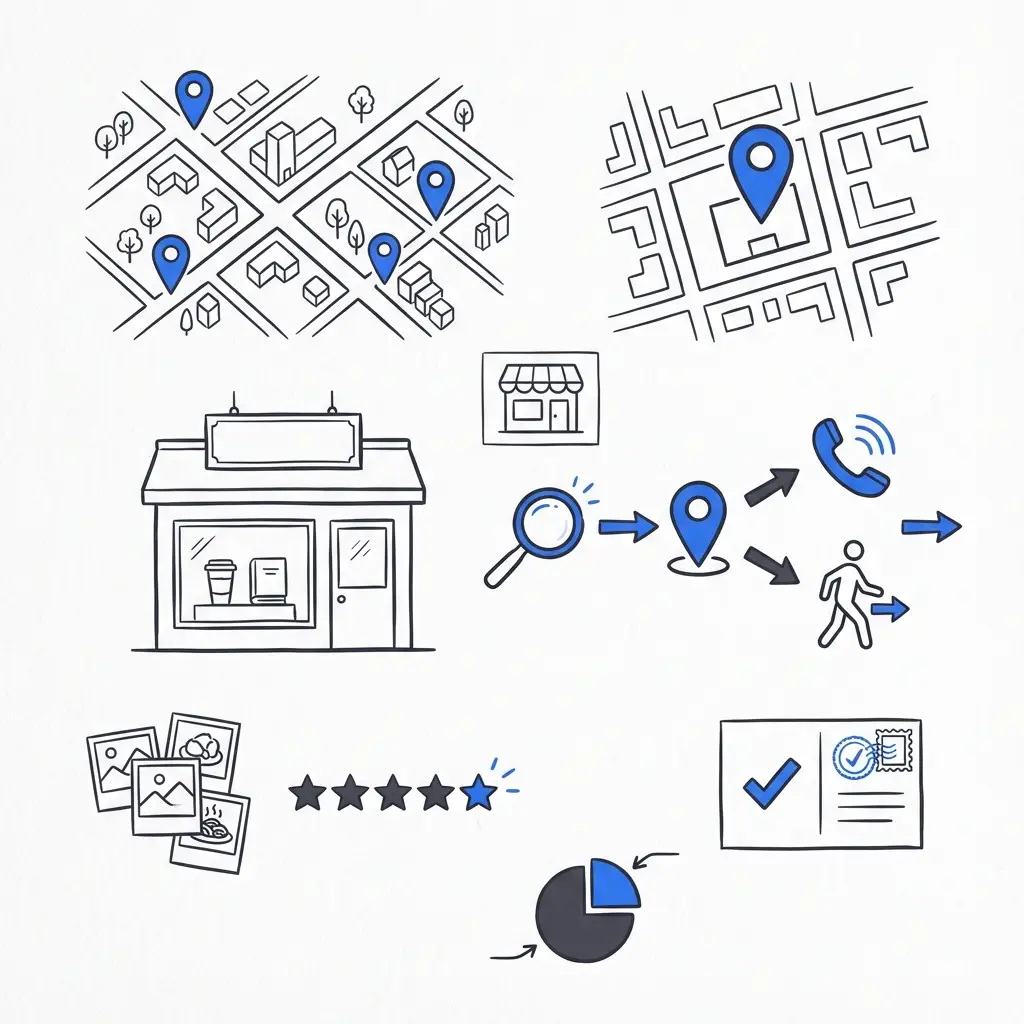
Think of your GBP as a digital storefront. A clean, complete profile with current photos, hours, service area, and recent named reviews acts like a tidy shop window that invites people in. A half‑filled profile, missing hours, and no reviews is like a darkened storefront on a busy street — people walk past.
Core foundation: what to fix first
Every owner asking how to get cleaning business leads should start with three foundation moves that cost almost nothing but change everything:
1. Polish your Google Business Profile
Fill every field: business name (exact and local), service categories, service area, hours, and attributes (insured, background‑checked, eco‑friendly if true). Add strong photos: one of your van in a local neighborhood, one of your team in action, and a clear logo. Use a short price band like “from $100–$180 for a 2‑bed clean” so browsers get a quick trust signal.
2. Build a steady review pipeline
Ask for a review after each job, send a short thank‑you text with a direct link, and respond to every review promptly. Reviews with a real name and specific detail (timeliness, thoroughness, polite staff) build trust and improve local rankings. That review momentum helps answer the practical question of how to get cleaning business leads by making your profile more clickable.
3. Create one simple offer landing page
Landing pages that convert are single‑offer and mobile‑first. Keep one visual, a clear headline that matches what people searched for, a short form (address, service type, contact), trust signals (review count, insured note), and a click‑to‑call button. Long websites with buried contact info lose impatient searchers.
Where to spend (and when to pay)
Once foundations are set, paid channels can accelerate lead flow. But remember: paid search and marketplaces cost more per lead than a tuned local presence. Use paid tests sparingly and measure carefully.
Paid search best practices
Run tight geographic targeting and bid on high‑intent keywords. Keep ad copy tightly aligned with the landing page. Track calls with a forwarding number and mark traffic with UTM tags — that way you can answer whether paid spend actually improves bookings and not just clicks. A typical small test might run for four to six weeks on a few hundred dollars.
Marketplaces and lead platforms
Marketplaces like Thumbtack, Yelp, and Nextdoor bring volume quickly but often at a higher CPL and with more price shoppers. If you test a marketplace, pre‑qualify leads with short intake questions (address, square footage, recurring vs one‑time). Pre‑screening raises the share of quality leads and reduces wasted quoting time.
Low‑cost channels with high ROI
Not everything that works requires ad spend. Referral programs, property manager partnerships, and simple SMS flows deliver high returns when managed with care. Property managers and realtors have a built‑in pool of tenants and clients; a quick outreach explaining how you reduce friction for their renters can produce steady inbound referrals.
Lead quality matters more than volume
Track cost per lead (CPL), lead‑to‑job conversion rate, average ticket, and lifetime value. A cheap lead that never converts is more expensive than a modest CPL that results in recurring customers. When testing, ask: what CPL yields a positive return when conversion and lifetime value are taken into account?
A realistic example that explains the math
Suppose you spend $300 on a targeted Google ad test that attracts 60 clicks and three form submissions. If two of those convert to jobs at an average ticket of $150, you’ve earned $300 in revenue from $150 in advertising (assuming direct ad costs only). If your follow‑up nudges one more customer to rebook, your margins improve further. Conversely, a marketplace might return ten leads for the same spend but with a 20% show‑rate and smaller tickets. Numbers tell you what to scale.
30/60/90 day step‑by‑step plan
Owners often ask: how long before I see a reliable flow of leads? A staged approach reduces risk and clarifies what works.
Days 0–30: lock the foundation
• Complete and optimize GBP.
• Ask for a review after each job; get named, specific reviews.
• Build a single, mobile landing page that mirrors your most common service.
• Run a small paid search test: tight radius, high‑intent keywords, and call tracking.
• Use UTM tags on all links.
These first 30 days answer the early part of how to get cleaning business leads by giving you clear, measurable signals about organic local traffic and the initial paid test.
Days 30–60: iterate and expand
• A/B test one element on the landing page at a time—headline, photo, or form field.
• Try one marketplace with intake questions to pre‑screen.
• Start outreach to local partners: property managers, realtors, apartment managers.
• Launch an SMS confirmation flow to reduce no‑shows and a brief email sequence to ask for reviews.
Days 60–90: scale what works and automate
• Increase budgets slowly on channels that produce profitable jobs.
• Implement CRM automation for immediate responses to captured leads and reminders before jobs.
• Set up a nurture sequence for repeat business.
• Begin to formalize referral incentives for partners who send quality customers.
How to measure everything so you don’t guess
Measurement is the secret ingredient in answering how to get cleaning business leads reliably. Use UTM tags, a call‑tracking number, and a basic CRM that records lead source, service requested, outcome, and revenue. Track lifetime value for repeat customers; it changes what CPL is acceptable.
Common mistakes that waste time and money
• Spreading paid spend across too many channels without tracking.
• Weak follow‑up after a lead comes in.
• Quoting jobs without early qualification.
• Neglecting reviews and not responding to negative feedback publicly.
Avoid these by tightening intake questions, using brief phone scripts to qualify, and automating follow‑ups where possible.
How to test a paid channel without gambling your budget
Start with a narrow test: a few hundred dollars, a high‑intent keyword list, and a 3–5 mile radius if you’re local. Keep ad copy focused and the landing page consistent with the ad. Run the test four to six weeks to gather a meaningful sample and track CPL and lead‑to‑job conversion. If you don’t get acceptable numbers, iterate the landing page or targeting rather than automatically increasing spend.
Qualifying marketplace leads so they aren’t a time sink
Ask short upfront questions: location, approximate square footage, pets, and whether the job is recurring. Use answers to route leads immediately—quick quotes for likely fits, request for photos for unknowns. That triage reduces quoting time and raises effective close rates.
Collecting and managing reviews the right way
Make review collection a simple, repeatable step of every job. Send a thank‑you text with a direct review link and a one‑sentence suggestion of what to mention (timeliness, attention to detail). Respond to every review: thank positive reviewers and offer to resolve issues offline for negative feedback. That builds trust for future customers and improves click‑through from your GBP.
Landing page checklist for higher conversions
• One clear headline that matches the search.
• A single visual: a local scene or your van in the neighborhood.
• Short form: address, service type, phone/email.
• Prominent click‑to‑call button on mobile.
• Trust signals: review count, insured note, short price band.
• Minimal navigation to prevent distraction.
Follow‑up sequences that convert
Respond quickly. A text within minutes makes an impression. Follow with a short phone call if requested. After the job, send a thank‑you and a review request. For nurture, use occasional seasonal reminders or a modest discount for scheduling the next clean. Keep messages short, helpful, and spaced so they aren’t annoying.
Key metrics that tell the real story
Focus on a few metrics: cost per lead, lead‑to‑job conversion, average ticket, lifetime value, and return on ad spend. These show whether a channel is simply noisy or truly profitable. CPL tells you how expensive attention is; lead‑to‑job tells you how good you are at turning attention into revenue.
Adjusting for seasonality and geography
Demand shifts with season and location. Spring and summer mean move‑outs and deep cleans; winter brings holiday jobs. Urban apartment markets often have higher turnover and different CPCs than suburban areas. The only way to be sure is a short, well‑measured test in your market.
Scripts and templates you can use today
Use short, friendly scripts at first touch. Here are examples:
Text after lead capture: “Thanks for contacting [Business Name]! We can often book within 48 hours. Can you confirm the address and number of bedrooms?”
Phone intake script (30 seconds): “Hi, this is [Name] from [Business]. Quick question: is this a one‑time clean or a recurring service? How many bedrooms and bathrooms? Any pets or heavy stains we should know about?”
Review request text: “Thanks for having us today! If you have a minute, could you share what you liked most about the service? Here’s a quick link: [review link].”
How to use referrals and partnerships
Identify local partners—property managers, realtors, apartment managers, and community centers. Offer a simple value exchange: a referral fee, a small one‑time discount for tenants, or a priority scheduling window for partner referrals. For many small cleaners, referrals are a steady, low‑cost source of high‑quality leads.
When a marketplace is the right choice
Marketplaces can be useful when you need volume fast or are entering a high‑turnover metro. Use intake forms to qualify and handle price‑shoppers by requiring square footage or photos before offering a firm quote. With careful qualification, marketplaces can supplement your core local search strategy without swallowing margins.
Quick qualification checklist for every incoming lead
1. Location inside service area.
2. Job size is worth your minimum ticket.
3. Timing fits your schedule.
4. No disqualifying conditions (extreme hoarding, unsafe pets).
5. Contact info verified.
Case example: a simple sequence that doubled calls
One small family‑run cleaner focused three weeks on finishing their GBP, asking for reviews after every job, and switching to a single‑offer landing page. Calls from local search doubled in a month and they filled slow afternoons with recurring appointments. That exact sequence demonstrates the practical side of how to get cleaning business leads without major ad spend.
Scaling: when to hire help or an agency
Scale only when you can measure. If your CPL is profitable and operations can support more jobs, consider hiring a part‑time sales coordinator or working with a specialist agency to scale paid campaigns. Agencies like Agency VISIBLE focus on visibility and measurement and can help create reproducible lead systems for small cleaning businesses, but only after the foundation is solid.
Common objections and short answers
“I don’t have the budget for ads.” Start with GBP, reviews, and a free or low‑cost landing page. These moves cost little and often bring immediate gains.
“Marketplaces take too much margin.” Use pre‑screening questions and track lifetime value. If marketplace customers rebook, the higher CPL might be justified.
Final checklist before you start a test
• GBP optimized and photos added.
• Review follow‑up system in place.
• One focused landing page with click‑to‑call.
• Call tracking and UTMs for all paid links.
• A 4–6 week test window and acceptance criteria for CPL.
Resources and next steps
If you want a ready template for a 30/60/90 plan, or a tailored landing page brief for your metro, many local agencies including Agency VISIBLE share templates. A short consult can often cut months off your learning curve and make the test more productive.
Start a short visibility review and get a tailored plan
If you’re ready to turn local searches into paying customers, start a short consult to map out a test plan and get a tailored landing page brief. Contact Agency VISIBLE to schedule a quick visibility review and see where to focus first.
Frequently asked questions
How much should I budget for a first paid test? A focused test can run on a few hundred dollars and should be measured over four to six weeks. The goal is to learn your CPL and lead‑to‑job conversion, not to scale immediately.
Are marketplaces worth the cost? Marketplaces can bring volume quickly but often attract price shoppers. Use upfront intake questions and track whether leads convert to repeat customers before investing heavily.
What landing page conversion rate should I expect? Industry benchmarks in late 2024 showed dedicated landing pages converting around six to seven percent. Aim to match or exceed that through clarity, trust signals, and mobile optimization.
This guide gives you a clear path for how to get cleaning business leads that balance low cost and high return. Start small, measure carefully, and scale what proves profitable.
Budget a few hundred dollars for a focused paid test targeting high‑intent keywords and a tight geographic radius. Run the test for four to six weeks, track CPL, and measure lead‑to‑job conversion before scaling.
Marketplaces can provide quick volume but often have higher CPLs and more price shoppers. Use short intake questions to pre‑qualify leads, track conversions and lifetime value, and only scale marketplaces that produce profitable rebooked customers.
Dedicated landing pages for cleaning services typically convert around six to seven percent based on late‑2024 industry benchmarks. Optimize for mobile, keep forms short, and include trust signals to match or exceed that rate.