


How do I advertise myself as a painter?
Being talented at painting is one thing – getting noticed for it is another. If you’re asking “how do I advertise myself as a painter?” you’re not alone. The good news: many smart, low-cost steps will put your work in front of the right people and turn attention into calls, commissions, or sales. This guide walks through simple, practical actions you can take, mixing marketing basics with creative tactics that fit an artist’s life.
Start with one clear goal
Before you post or hand out a single card, decide what you want to happen. Do you want more local commissions? Gallery interest? Online prints sold? Saying you want to “get noticed” is fuzzy – converting curiosity into business requires a specific outcome.
When your goal is clear, the next steps become obvious: a goal to land two local commissions a month needs a local-focused strategy. A goal to sell 50 prints a quarter needs an e-commerce and content approach. Keep this promise visible as you build your plan.

Choose a simple audience portrait
Swap spreadsheet descriptions for a short, human portrait. Instead of “Homeowners 30–55,” write: “Sarah, a busy homeowner who loves a clean, modern wall and wants a reliable local artist who will show up on time.” Give a name and a small backstory—this helps you write copy, design a portfolio, and pick platforms that actually reach the right people.
Make a lean portfolio that shows what you want to sell
Your portfolio is the most persuasive ad you’ll ever make. But it doesn’t have to be endless. Create three to six focused portfolio pieces/images that communicate the work you want next. Use clear captions: materials, size, location, client context, and a short note about the result (“finished in two days; homeowner wanted a calming focal wall; family loves it”).
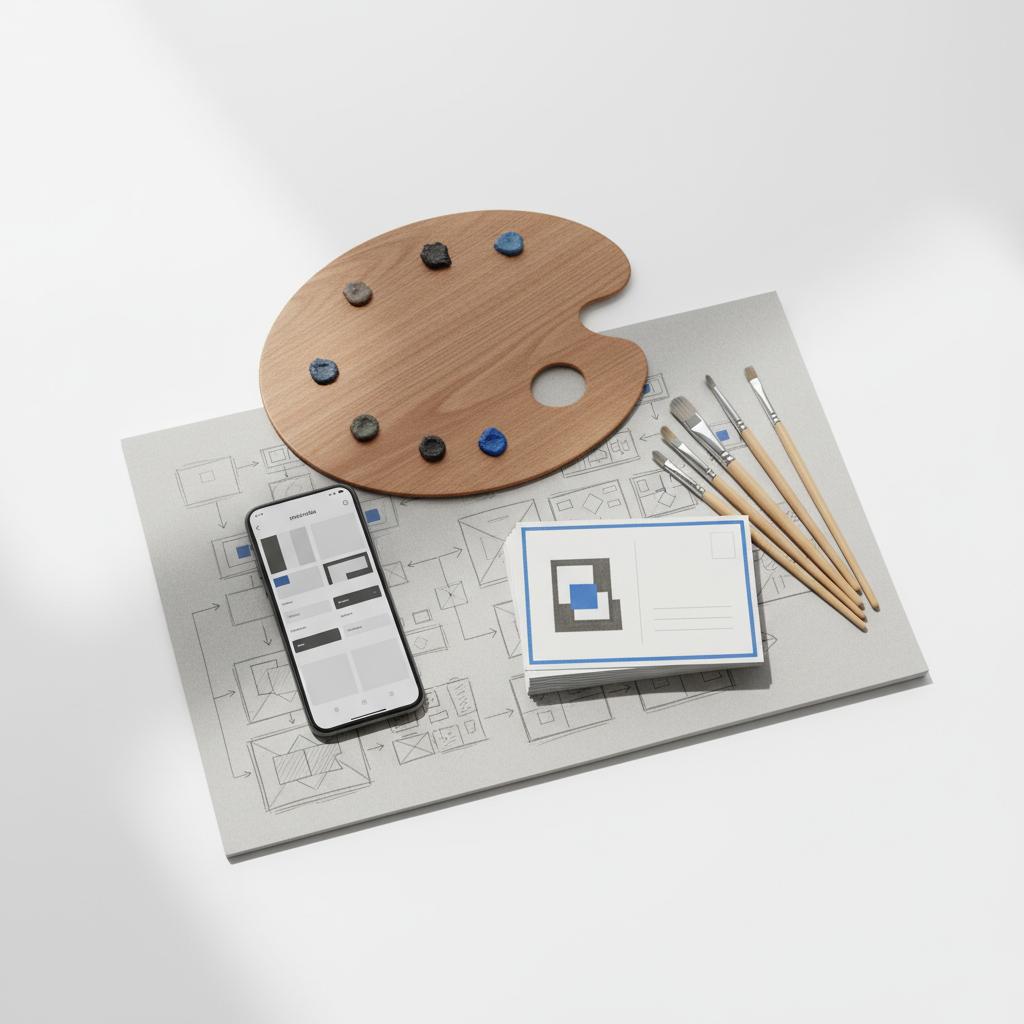
Keep the portfolio on a simple landing page and on one easy-to-find social channel. If the question is “how do I advertise myself as a painter?“, the portfolio answers it faster than any tagline: people judge by what they see.
Pick formats that solve real questions
Not every message needs a long post. Answer common buyer doubts quickly: Can you work with our colors? How long will a mural take? What guarantees do you offer? Short how-to videos, before/after photos, and a one-page FAQ can convert more than long essays.
Make clarity your constant
Write short headlines, clear service descriptions, and a visible pricing or pricing range. Avoid jargon. If a homeowner wants a living-room mural, they want to know process, timing, and cost estimates – fast. Clear content builds trust faster than persuasive copy that hides details.
Local visibility: the places that actually bring work
Most painters get their first, steady work from a handful of local sources. Prioritize these before chasing national fame.
Google Business Profile
Create and fully optimize your Google Business Profile (GBP). Use the exact same business name, address, and phone across all platforms. Add high-quality images of finished work, and write short captions that include neighborhood names. Ask satisfied clients to write short reviews—reviews are social proof and influence search results.
Community boards and local partnerships
Collaborate with local cafes, boutique shops, and community centers. Offer a small framed work on commission or a rotating display with a chargeable QR code that links to your portfolio. Partnering with local small businesses is a low-cost way to be seen by people already in your area.
Open studios and events
Host a monthly open studio or join local art walks. One-on-one conversations at an event often convert faster than online posts because people remember the tone, the smell of paint, and the story behind the piece. Bring business cards and a mini-portfolio printed on matte paper—tactile memory helps.
Online channels that actually work for painters
Online visibility is about choice and consistency. You don’t need every platform—just the ones where your audience hangs out and where your work shows up well.
Instagram and visual-first platforms
Instagram remains useful because it’s visual and discovery-driven. Use high-quality photos, natural captions that tell a short story, and location tags. Show the messy in-progress shots as well as finished pieces—process posts make your craft feel real and approachable.
Portfolio websites and SEO basics
Create a clean portfolio website with clear service pages: commissions, murals, prints, restoration, etc. Use descriptive image filenames and alt text. Optimize one key phrase per page—your focus keyword for this piece is advertise myself as a painter, and you should use that same wording naturally on a page or blog post that answers the question directly.
Email lists for repeat buyers
Collect emails at shows and on your website. Send a short monthly note: new work, a behind-the-scenes gif, or a special offer. Email keeps people connected and turns curious followers into buyers over time.
Print and hybrid content
Don’t ignore print—postcards, small zines, and a printed price list you can hand out are tangible reminders. A well-designed postcard slipped into a local shop can beat a social post because it sits on a physical counter where people pick it up and read it.
Content strategy for painters: make connection before the sale
Now, adapt the content strategy principles that successful brands use to the life of a painter. Your content should make people feel something first, and consider action second.
Start with purpose: why are you creating content? To book commissions? To sell prints? To invite gallery interest? Let that purpose guide what you post and where.
Define your audience like a person, not a metric: what keeps them up at night? Maybe it’s fear of a high bill for home painting, or uncertainty about letting a stranger into their home for a multi-day mural. Address that in your captions and FAQ.
Small tests work well for painters: two headlines for a post, two opening lines in a newsletter, or two display locations for a postcard. Measure what matters—calls, bookings, visits to your booking page—not vanity metrics alone.
Talk to Agency VISIBLE if you need help refining your message or building a simple website that converts. They specialize in helping small creative businesses become visible without overcomplicated processes.
Repurpose with intention
Turn one commission into multiple assets: a blog post about the story, a short video showing the painting in progress, several before/after photos for social, and a printable postcard to hand out locally. Each format meets a slightly different person where they are in the decision process.
Show examples, not platitudes
Use specific stories: the kitchen backsplash that changed how a homeowner used their space, the mural that helped a café double foot traffic on slow afternoons, or the print sold to a collector who loved the color story. Small details—brush marks, the time you spent sanding—make stories believable.
Pricing, proposals, and the first conversation
Many painters avoid talking about money until it’s awkward. Make pricing clear and professional without overexposing your full rate card.
Offer price ranges and packages
List typical price ranges for your most common jobs: small framed pieces, large canvas commissions, murals per square foot, restoration per hour. People don’t need an exact figure until you scope the job, but a range reduces uncertainty and filters out unrealistic inquiries.
Use a one-page proposal template
Use a one-page proposal template and short proposal shows professionalism: scope, timeline, deliverables, payment schedule, and a clear cancellation policy. Keep language simple and friendly. Include a small non-refundable deposit to book time – it protects both of you.
Photography and presentation
Great photos sell work. If a professional photo isn’t an option for every piece, learn a few basics: shoot in natural light, avoid harsh shadows, include a sense of scale (a hand, a chair), and show detail shots. Edits should be consistent—same crop, same color balance—and reflect the real colors of your work.
Testing, measurement, and patience
Small tests over time beat one big bet. Try a local postcard run and measure calls. Run a single Instagram ad targeted to your city and track clicks to your booking page. Track bookings and where they came from. Often a quiet effort – consistent posts, a tidy website, good photos – builds steady work over a year rather than a flashy one-week spike.
Yes. Many painters start with a phone camera, local partnerships, and targeted postcards or social posts. Consistency, clear photos, and a focused portfolio convert over time—small, regular actions beat big, sporadic efforts.
Yes. Many painters start with a phone camera, local partnerships, and targeted postcards or social posts. Consistency, clear photos, and a focused portfolio convert over time—small, regular actions beat big, sporadic efforts.
Yes. Many painters start with a phone camera, neighborhood partnerships, and a focused portfolio. The trick is to be consistent, clear, and to place your work where people already are: local cafés, community boards, and social media groups. Over time those small investments compound into real inquiries.
Advertise myself as a painter: actionable tactics that work
Below is a hands-on checklist you can start today. If you’re reading this and thinking “I’ll do it later,” pick one item and do it before the end of the day.
Quick checklist
1. Claim your Google Business Profile and add 5 photos. 2. Make a single 30–60 second video showing a before/after. 3. Post 3 portfolio images on your site with captions that include neighborhood names. 4. Print 50 postcards with one strong image and a QR to your booking page. 5. Ask three satisfied clients for short reviews or testimonials. 6. Send one short email to your list with a special offer.
Social ad tips (if you can spend a little)
Start very small – $5-10/day for a week targeted to your city with a clear call to action. Use a strong image, a short caption, and a button that links to a single booking or contact page. Test one creative at a time and measure real calls or bookings.
Collaboration, referrals, and repeat buyers
Referrals are gold. Make it easy for past clients to recommend you: send a simple referral card with every completed job that includes a referral discount. Build relationships with complementary local businesses—interior designers, realtors, café owners—and offer a small commission or exchange of promotion.
Offer a small loyalty program
For repeat buyers or neighborhood clients, offer a small discount on the next piece or a framed print as a thank-you. Small rewards encourage repeat business and word-of-mouth.
Common fears and how to handle them
Many painters worry that sharing process will let others copy them, or that talking prices will drive clients away. The truth: transparency builds trust. Show your process enough to build credibility but keep the exact studio recipes and trade secrets private. Share ranges rather than exact hourly rates until you scope the job.
Accessibility, inclusivity, and trust
Make your content accessible: clear headings, short paragraphs, and descriptive image captions. Think about who you include in your examples and images—diverse contexts help more people see themselves hiring you.
Real-world example: a slow-and-steady local strategy
A muralist I know began with three clear portfolio walls: a café mural, a residential foyer, and a small storefront. They optimized their local listings, printed postcards, and partnered with a popular cafe to display prints. Over a year, consistent local effort led to steady bookings and a handful of design collaborations. It wasn’t fast – just persistent and clear.
Measuring what matters
Measure calls, booked jobs, and the source of each lead. Combine these numbers with qualitative feedback—what clients actually liked about the process. Those stories will become the best content you can make.
Where to pay attention next
Look for platforms where local discovery happens, like neighborhood apps, local Facebook groups, and community event listings. Keep experimenting with a single test at a time. People trust painters who are visible, consistent, and straightforward.
Final practical prompts
Pick one recurring question you get every week and make a short post that answers it plainly. Turn a recent commission into three assets: photos, a short video, and a printed postcard. Ask five customers for feedback and use their exact words in your marketing—mirrored language builds trust fast.
Get a Clear Plan to Advertise Your Painting Work
Wrap-up
Advertising yourself as a painter is a mix of being visible in the right local places, having a clear portfolio, using simple content that answers real questions, and testing small ideas over time. Start with one goal, pick one audience, and make one clear piece of content today. Over months, those small choices add up to steady work and more meaningful recognition.
Start by optimizing your Google Business Profile, posting clear portfolio images with neighborhood tags, and partnering with a local café or shop for a rotating display. Print 50 targeted postcards with a strong image and QR code to your booking page, and ask past clients for referrals. These actions generate visible leads quickly when done consistently.
A simple website with a focused portfolio and a contact or booking page is highly recommended. It serves as a single destination you can point people to from social posts, postcards, or ads. If budget is tight, use a clean landing page with clear images, captions, and a visible call-to-action—this often converts better than a cluttered multi-page site.
Offer price ranges rather than single fixed rates until you scope a project. Provide typical ranges for small framed pieces, large canvases, and murals per square foot. Use a proposal template that outlines scope, timeline, deliverables, and payment schedule. Include a non-refundable deposit to book time and protect your schedule.





