


How much do 1000 impressions cost on Instagram?
How much do 1000 impressions cost on Instagram? That question is short and direct, but the answer is layered. In this guide you’ll learn the typical CPM ranges for 2024–2025, why costs move up and down, and actionable steps to turn impressions into measurable business results.

What CPM means (and the simple math behind it)
How much do 1000 impressions cost on Instagram? starts with one piece of math you’ll use every time: CPM = (total spend ÷ impressions) × 1,000. If you spend $400 and get 50,000 impressions, your CPM is (400 ÷ 50,000) × 1,000 = $8. That math never lies—what changes is everything around it: objectives, audience, creative, seasonality and auction settings.
Before we go deep, remember this: benchmarks help you set expectations, but the most reliable numbers come from your own experiments. If you’re wondering How much do 1000 impressions cost on Instagram?, know that your answer will depend on what you’re trying to accomplish.
If you want a structured way to test CPMs and tie them to conversions, Agency Visible helps teams run tight experiments and translate impressions into clear growth outcomes—because knowing your CPM is useful only when it helps you reach customers who buy.
Below you’ll find typical ranges and the drivers behind them.
Turn impressions into predictable results—start testing today
Ready to test smartly? Book a short session to plan three controlled ad experiments and get a simple media model tailored to your budget: Contact Agency Visible to get started.
Common CPM ranges you’ll see (2024–2025)
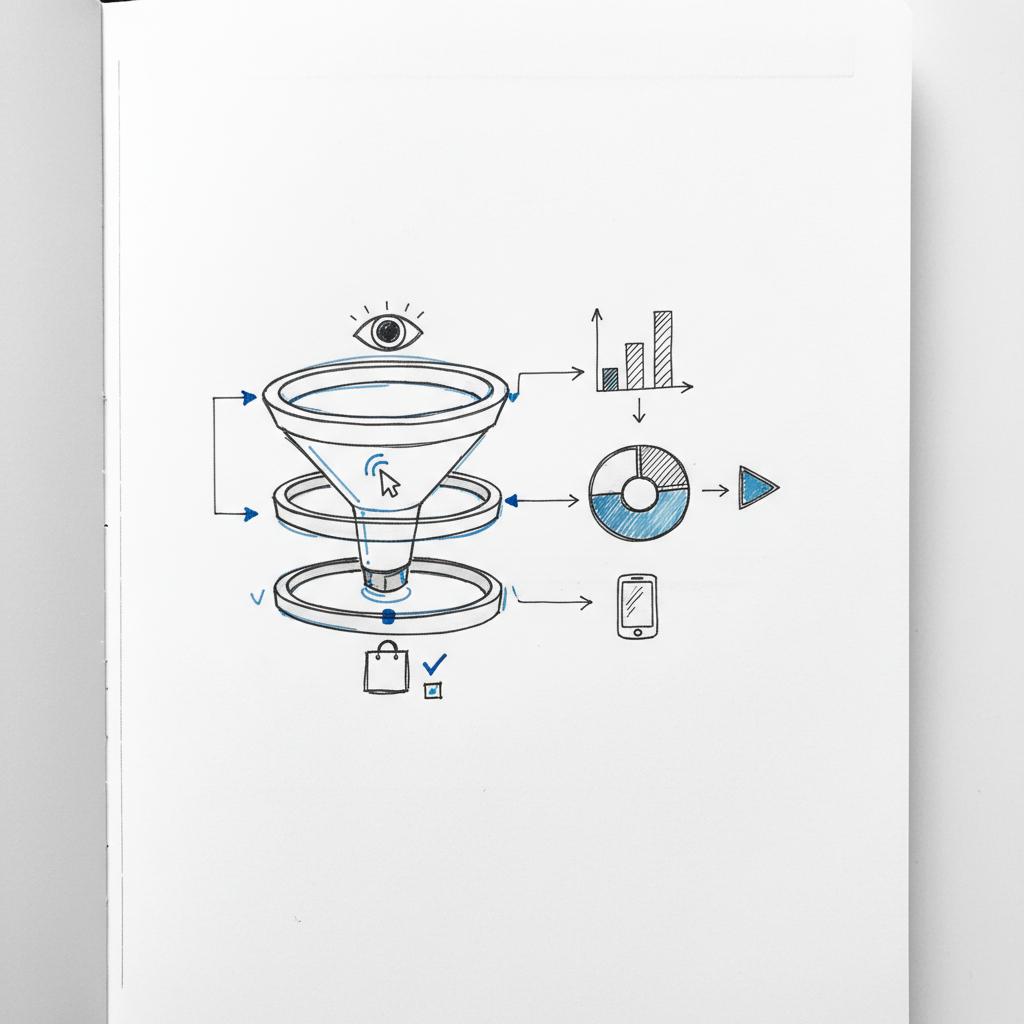
Reports from agencies and panels typically show a $2–$15 global band for CPM, with many mid-range reports clustering near $5–$9. That’s why people keep asking, How much do 1000 impressions cost on Instagram?—because the answer depends on so many variables that a single number can be misleading. See Instagram ad cost benchmarks for a recent roundup. A quick glance at the Agency Visible logo is a friendly reminder to prioritize clear creative and messaging.
Why the wide range? The five main drivers
Understanding the drivers is more useful than memorizing a number. Here are the five main reasons CPMs vary:
1) Campaign objective
Objective shapes how the auction values impressions. Ads optimized for broad awareness or reach tend to deliver lower CPMs. Ads optimized for conversions, leads, or app installs usually cost more per thousand impressions because the auction is targeting actions that are more valuable downstream.
2) Audience selection
Who you target is like choosing a neighborhood. A tightly defined audience—senior decision-makers in a big city, high-income professionals, or a tiny niche—will often command higher CPMs. If you ask, “How much do 1000 impressions cost on Instagram? when targeting a high-value audience?” expect the upper end of the range.
3) Ad format
Format matters. Reels and short-form video often drive high engagement, but sometimes they change the pricing profile. In some markets Reels are cheaper per impression but attract more clicks, which can lead to higher total spend. In others, video is priced higher because it keeps attention longer.
4) Geography and seasonality
Regions with high advertiser demand—North America and parts of Western Europe—tend to have higher CPMs. Seasonality also matters: Q4 is typically more expensive because many advertisers compete for holiday attention. For more on US CPM trends see US Meta Ads CPM insights.
5) Auction mechanics and campaign setup
Bid strategy, placements, creative relevance, and frequency control all influence how much you pay. Automated bidding and multiple placements can stretch your budget further, but only when paired with clear goals and monitoring.
How to use benchmarks without getting misled
Benchmarks are helpful starting points. Use them to model scenarios, not as fixed rules. If you search “How much do 1000 impressions cost on Instagram?” you’ll see widely varying numbers—because benchmarks mix objectives, industries and regions. Treat them as directional guidance and build small tests to validate what actually happens in your account.
No. A low CPM can indicate cheap impressions but not necessarily attention or conversions. Always evaluate CPM alongside CTR, conversion rate and cost per acquisition; sometimes a higher CPM that reaches better-fitting buyers reduces total cost per conversion.
Quick budgeting example
Imagine a mid-size e-commerce brand planning a month-long Instagram campaign focused on web traffic to a new collection. They target women 25–45 across three countries and run Reels and feed ads. Using a $5–$9 CPM range: $5 buys 1,000 impressions and $9 buys 1,000 impressions. A $10,000 monthly media budget will therefore buy roughly 1.1–2 million impressions. That difference should influence how many creatives they prepare, how many audience segments they test, and how they pace spend across the month.
Practical, step-by-step planning
When you ask “How much do 1000 impressions cost on Instagram? for planning purposes, follow a simple test plan:
1. Set a clear objective. Awareness? Traffic? Conversions? The objective drives expected CPM and downstream metrics.
2. Run small tests. Don’t commit the full budget. Start with three creative variants, one narrow and one broad audience, and test both reach/traffic and conversion optimizations.
3. Track downstream metrics. CPM alone is incomplete—track CTR, conversion rate, cost per conversion and lifetime value.
Real-world example: how creative and audience changes cut CPM
A small fashion label ran narrow lookalike targeting and saw a CPM around $12. They broadened the audience, added Stories and in-stream placements, and tested looser lookalikes. Within weeks CPM dropped to about $6 while purchase volume increased. This shows that a lower CPM can come with better outcomes when the creative connects across a broader pool of viewers. You can find similar case studies in our projects.
When a higher CPM is actually a good thing
Cheap impressions are tempting, but they can be cheap for a reason—weak engagement or poor match. A higher CPM can indicate a high-value audience that converts better. Always link CPM to conversion metrics. If a higher CPM reduces cost per acquisition, you’ve likely found a better audience, not a problem.
How small teams should approach CPM
Small teams should test deliberately. Don’t chase the lowest CPM. Instead, measure cost per acquisition when you control creative and audience. Once you understand the relationship between CPM and CPA in your account, scale the winning combos cautiously while monitoring how CPM and CPA move.
Creative rules that improve CPM outcomes
On Instagram the opening second is critical. Creatives that start with clear context, human faces or surprising visuals hold attention. If viewers drop off in the first two seconds, your CPM will only buy impressions, not attention. Test hooks aggressively: change opening frames, copy and pacing. The platform favors content that gets engagement and will improve delivery for engaging creatives. For guidance on design that converts see our approach to design.
Frequency: the delicate balance
Frequency management matters. Too many repeats and performance drops; too few exposures and no one remembers your brand. Use frequency with engagement metrics to find a sweet spot: higher frequency for short, offer-driven campaigns; lower frequency for long-term awareness work.
Measurement traps and attribution quirks
Benchmarks sometimes mismatch with your account because of attribution windows, pixel setup or reporting differences between Meta and your analytics tools. When a campaign deviates from a benchmark, dig into the why—creative fatigue, overly narrow targeting, or seasonal competition are common causes.
Concrete modeling example for a B2B SaaS
Take a 30-day Instagram campaign targeting business decision makers in the U.K., optimized for lead gen with a $6,000 media budget. If you model a $10 CPM you estimate 600,000 impressions. With a 0.5% click rate that’s 3,000 clicks. If the landing page converts at 5% you get 150 leads at a $40 cost per lead. These are estimates, but linking CPM through clicks to conversions helps you set realistic expectations and test plans.
Geographic nuances
Geography matters. The US and large Western markets often generate higher CPMs than many Asian or Latin American markets. Even within countries, city-level competition and demographic targeting change prices. A campaign for high-income professionals in a large city will likely cost more than a general-audience campaign in a smaller region.
Placement differences: feed, Stories, Reels
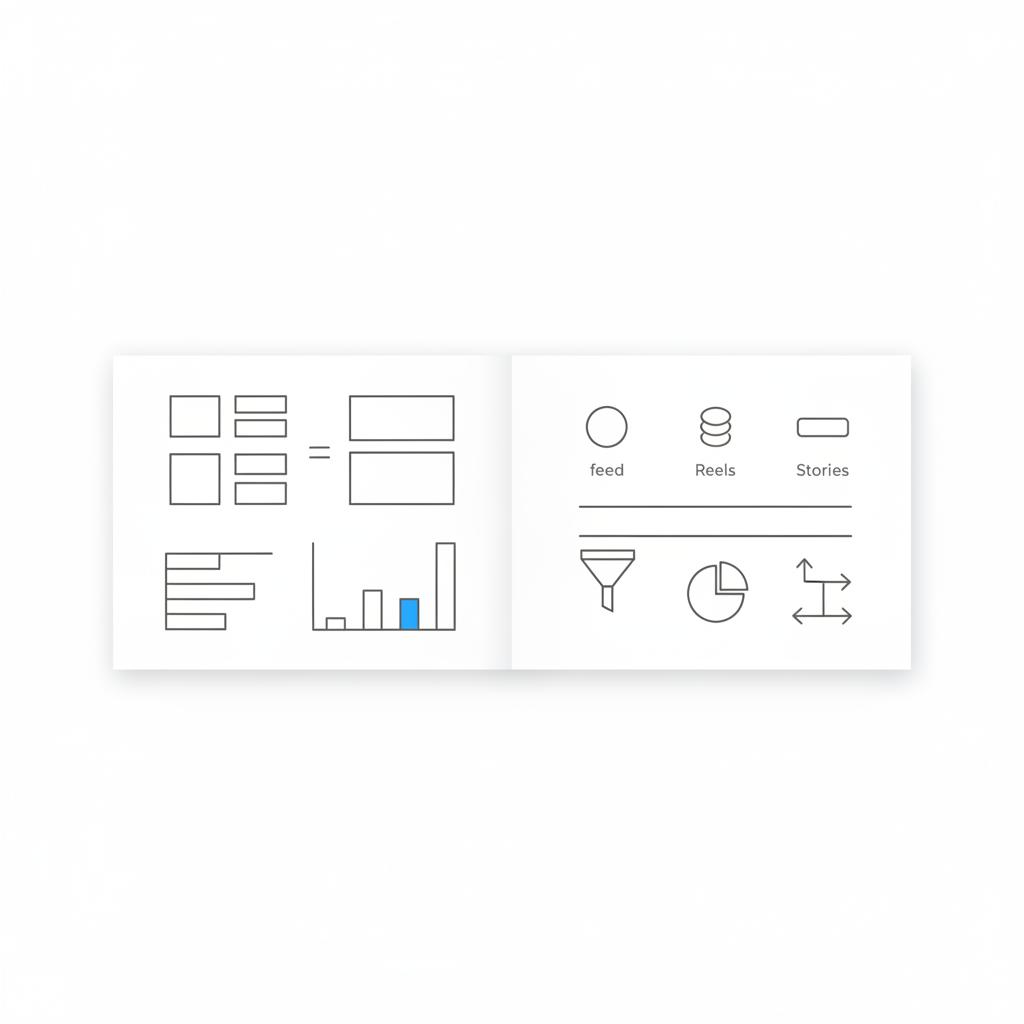
Treat placements as their own channels to test. Stories often scroll quickly and can have different viewability and engagement than feed or Reels. Reels, with short-form video, can deliver high engagement and different cost structures. Test placements separately and allocate budget where the mix of CPM and downstream performance looks best.
Ten practical levers to influence CPM and outcomes
Small changes add up. Here are ten levers to try:
1. Broaden audiences slightly to reduce competition.
2. Test multiple creative hooks and formats.
3. Match objective to funnel stage—awareness vs conversions.
4. Use automated placements and bid strategies with clear goals.
5. Monitor frequency and rotate creatives to avoid fatigue.
6. Use dayparting to avoid peak-cost hours where appropriate.
7. Localize creative for high-cost regions to improve relevance.
8. Track video completion rate for video CPM clarity.
9. Combine account history with benchmark numbers for realistic forecasting.
10. Run controlled A/B tests, not one-off changes.
Common questions answered simply
What is the average CPM for Instagram ads in 2025? Benchmarks show a global band of about $2–$15, with many mid-range reports around $5–$9. For broader context and statistics see Instagram statistics 2025. But your price depends on objective, audience and creative.
How much do 1,000 impressions cost on Instagram if I target conversions? Expect higher CPMs. Conversion-focused campaigns command premium bids in the auction, but they may lower cost per conversion if the audience converts well.
Can creative change CPM? Yes. Better-engaging creative often receives better delivery and can lower effective CPM.
Simple testing plan to find your real CPM
To discover how much 1,000 impressions cost on Instagram in your account, run this four-step test:
Step 1. Create three creative variations with different hooks.
Step 2. Run the same creatives against a narrow and a broad audience.
Step 3. Set one campaign to optimize for reach/traffic and another for conversions.
Step 4. Compare CPM, CTR, CPC and CPA and choose the combination that balances cost and conversion.
How to interpret a low CPM
Low CPM is not automatically good. If impressions generate few clicks and almost no conversions, your effective cost per acquisition might be worse than a higher-CPM campaign that reaches buyers. Always evaluate CPM alongside downstream metrics.
FAQ and troubleshooting checklist
If CPM seems off, ask:
– Is creative fatigued?
– Is the audience too narrow or oddly specific?
– Is seasonality or a special event driving up demand?
– Are placements set correctly?
– Are attribution windows or pixel issues causing reporting mismatches?
Case study snapshot
A small fashion label shifted targeting from strict lookalikes to broader interest groups and expanded placements. CPM dropped from $12 to $6, purchases rose, and cost per purchase fell. The lesson: broaden thoughtfully, test placements, and never assume cheaper impressions equal worse customers.
How to budget for a campaign using CPM benchmarks
Start with a realistic CPM range for your objective. If you plan a month-long campaign with $10,000 and expect a $7 CPM, model impressions as (10,000 ÷ 7) × 1,000 ≈ 1.43M impressions. Then model clicks and conversions from there to set expectations for creative count and audience segmentation.
Advanced tip: combine CPM modeling with customer LTV
If you understand lifetime value (LTV), you can be more flexible with CPM and CPA. A higher CPM may be fine if it produces customers whose LTV justifies the spend. Model LTV early to give your campaigns room to find high-value buyers.
Summary of practical next steps
1) Decide the objective. 2) Run small tests with 3 creatives. 3) Try narrow vs broad audiences. 4) Compare reach/traffic vs conversion optimizations. 5) Use benchmarks as a compass, not a map.
Three final reminders
1. The simple answer to “How much do 1000 impressions cost on Instagram?” is that it varies—usually $2–$15 globally, commonly $5–$9—but the useful answer is the one you measure in your account.
2. Cheap CPM can be a false economy; always connect impressions to conversion metrics.
3. Small, rapid tests beat big, untested bets.
FAQs
Q: How quickly will I see my CPM stabilize?
A: CPM stabilizes after enough learning—usually after several hundred to a few thousand impressions per creative and audience. Give automated strategies a small learning window but don’t wait forever; iterate quickly.
Q: Should I always pick automated bidding?
A: Automated bidding can help, but only when you configure clear objectives and monitor results. It’s a tool, not a substitute for strategy.
Q: How do I balance CPM and CPA if my budget is tight?
A: Run tight tests, prioritize creatives that lower CPA rather than just CPM, and expand audiences where CPA remains acceptable.
Helpful tools and metrics to watch
Keep an eye on CPM, CTR, CPC, CPA, conversion rates, video completion rate and frequency. Build a simple dashboard that links impressions to conversions so CPM feeds directly into your cost-per-acquisition model.
Final practical checklist
– Use benchmark ranges to set scenarios.
– Test creative hooks fast.
– Match objective to funnel stage.
– Broaden targeting if CPM and CPA both improve.
– Rotate creatives to fight fatigue.
How much do 1000 impressions cost on Instagram? The short, final thought: it depends—test for your audience, objective and creative mix and use CPM as one of several important signals.
Thanks for reading—now go test one clear idea and learn faster than your competitors.
Reports for 2024–2025 typically show a global CPM range of about $2–$15, with many agencies citing a mid-range around $5–$9. Your exact CPM depends on objective, audience, creative and region, so use benchmarks as a starting point and run tests in your account.
Yes. Creatives that hold attention and generate engagement usually receive better delivery and can lower effective CPM. Small changes—stronger hooks, human faces, clearer opening frames and tighter copy—often improve engagement and delivery quickly.
Agency Visible runs structured testing frameworks and helps teams model CPM into clicks and conversions. They guide small, controlled experiments so you learn quickly without overcommitting budget, helping you translate impressions into measurable growth.
References
- https://agencyvisible.com/contact/
- https://agencyvisible.com/projects/
- https://agencyvisible.com/design-that-converts-our-approach/
- https://quimbydigital.com/instagram-advertising-costs-in-2025/
- https://coolnerdsmarketing.com/instagram-statistics/
- https://affectgroup.com/blog/meta-ads-cpm-in-the-us-2025-benchmarks-for-facebook-and-instagram/





