


How much does it cost to advertise my business on Nextdoor?
If you run a local business and you’re asking how much does it cost to advertise on Nextdoor, you’re asking the right question at the right time. Nextdoor is neighborhood-first: it brings your message into local conversations, recommendations, and town-square moments. That closeness often makes ads feel less interruptive and more like a neighborly tip – but only when the campaign is planned with the right geography, offer, and creative.
Below you’ll find the ad products that matter, realistic price ranges for 2024–2025, two clear budgeting methods, practical cost-cutting moves, measurement checklists, and templates you can copy to plan your first test. I’ll also share examples from real local businesses and a short troubleshooting guide so you can fix what goes wrong fast.

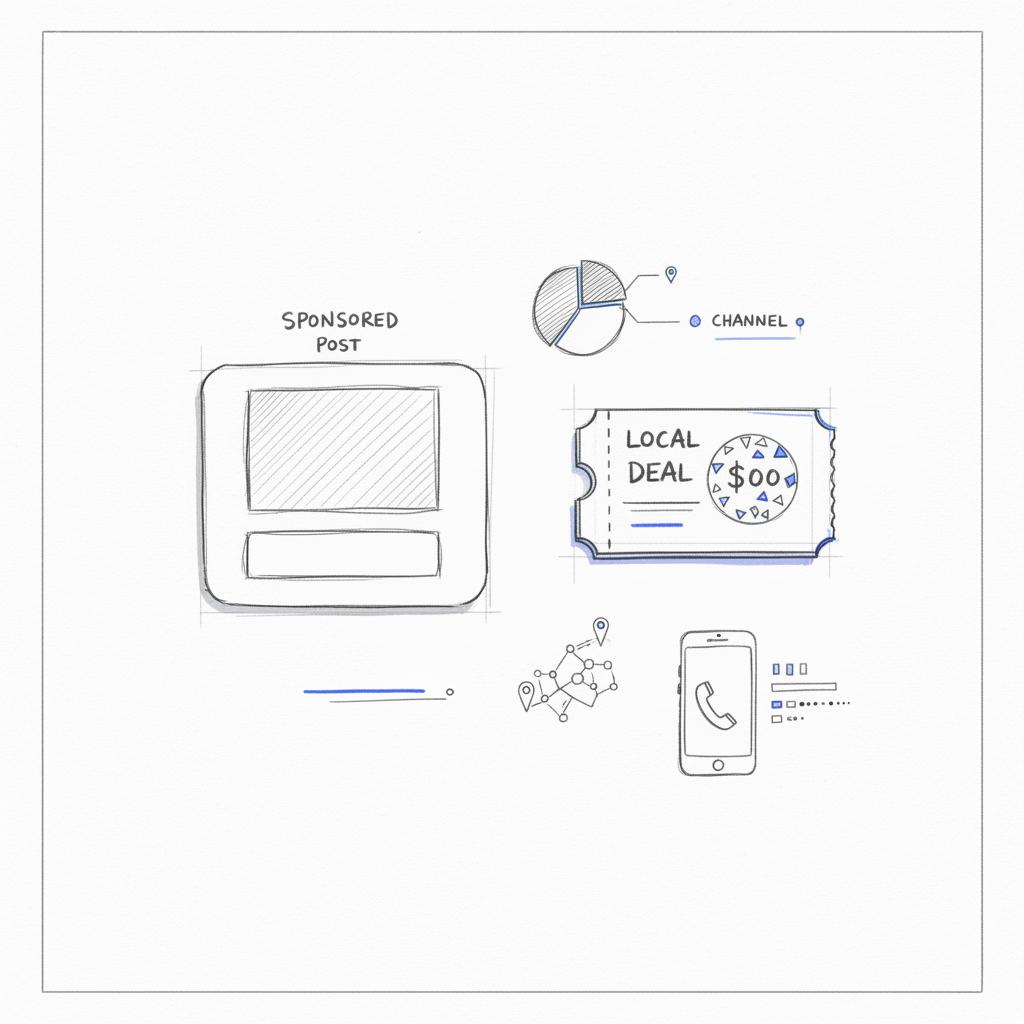
Nextdoor focuses on hyperlocal reach. For most small and mid-sized businesses three products matter most:
Sponsored Posts
Sponsored Posts are native ads that show up in users’ feeds. They run in an auction where you set a goal (awareness, clicks, or conversions), pick neighborhoods or ZIP codes, and bid on impressions or clicks. Because these posts look like organic content, the creative needs to feel neighborly – think helpful, local, and straightforward.
Neighborhood Sponsorships
Neighborhood Sponsorships are more like a subscription: you sponsor visibility inside one or more neighborhoods on an ongoing basis. Sponsorships put your name and logo in front of residents regularly – a great way to build trust and recognition before you push specific offers.
Local Deals
Local Deals are offers people can claim and redeem. They work best when redemption is simple — a quick mention at checkout, a single phone call, or a booking link. When done right, Local Deals can drive immediate foot traffic or appointment bookings.
Realistic price ranges for planning
There’s no single price that fits every ZIP code. Still, these ranges are useful planning inputs for 2024–2025 (see Taradel’s 2025 pricing guide and the Nextdoor advertising cost guide).
- Neighborhood Sponsorships: commonly about $50–$250 per month in many U.S. ZIP codes. Lower in less competitive areas, higher in dense/competitive neighborhoods.
- Sponsored Posts: auction-based. CPMs often sit in the low double-digits in quieter markets and can run up to roughly $20–$50 CPM in competitive categories or peak times.
- Local Deals: cost varies by redemption and distribution; effective CPA can range from $20 to $200+ depending on vertical, clarity of offer, and conversion path.
These ranges are wide because local competition and verticals differ a lot – insurance agents, plumbers, and home security providers compete differently than a bakery or yoga studio. That’s why a local test in your ZIP codes gives the most reliable answer.
Two simple budgeting methods
Choose the one that matches your objective: reach or outcomes.
1) Impressions-based budgeting
Best when you want awareness. Pick the number of impressions you want and multiply by expected CPM. Formula: Budget = (Target impressions × CPM) ÷ 1,000. Example: 100,000 impressions at $25 CPM = $2,500 budget.
2) Outcome-based budgeting
Best when you want leads or bookings. Decide how many leads you want, pick a realistic cost per lead (CPA) for your vertical, then multiply. Example: 30 patient leads × $75 CPL = $2,250 budget.
Both methods depend on good assumptions – run a short test and refine your CPM and CPA estimates using real campaign data.
How to turn planning into real bids (example)
Imagine a small HVAC company serving three ZIP codes wants 50 leads per month. They estimate $80 per lead on Nextdoor. Budget = 50 × $80 = $4,000/month. If they instead try impressions-first, be sure conversion assumptions line up: 50 leads from impressions at a 0.5% conversion rate requires 10,000 impressions; at $40 CPM that’s only $400 – so the assumptions are inconsistent. Work backward from the lead cost that makes the business profitable and test to confirm.
Lowering costs without killing results
These practical moves work well on Nextdoor because the platform is neighborhood-focused:
1. Tight ZIP-code targeting
Only buy impressions in neighborhoods you actually serve. Broad targeting wastes impressions on people who cannot act. Tight targeting also reduces competition to only businesses that value the same small area.
2. Dayparting
Run ads during times when people are more likely to act. For example, lawn-care queries might spike in late afternoon; a clinic might see more calls in the morning. Concentrating budget in higher-performing windows keeps bids efficient.
3. Use Local Deals for clear, redeemable offers
Make redemption simple — a phone call, a quick booking link, or a “mention this deal at checkout” approach. Clear expiration dates and limited slots create urgency and raise redemption rates.
4. Start with a Neighborhood Sponsorship
A sponsorship builds familiarity. When residents later see your Sponsored Post, they’re more likely to trust and click. Many advertisers use a sponsorship for 2–4 weeks, then layer in Sponsored Posts for promotions.
5. Make creative feel local
Copy like a neighbor and visuals that show real, local context perform better than sweeping brand-speak. Lead with value and a single next step.
Measurement and testing: a simple framework
Treat your first campaign as an experiment with clear hypotheses and controls. Keep things simple:
- Run two ad variants with one meaningful difference (image, headline, or offer).
- Keep targeting identical between variants.
- Measure clicks, click-to-lead rate, and leads over 30–90 days.
Why 30–90 days? Neighborhood bidding and local rhythms (weekends, weather, events) can skew short tests. Collect enough data to see stable trends before you change strategy.
Track the whole contact path: phone calls, form fills, bookings, and in-store redemptions. If ads drive clicks but few bookings, fix the landing page or how staff answer the phone – often the fastest place to raise conversion.
Common mistakes that waste budget
Watch out for these traps:
1. Treating Nextdoor like a national network
Broad targeting makes your message irrelevant to neighbors and burns budget.
2. Complicated redemptions
If a deal requires too many steps, people drop off. Keep it simple and local.
3. Ignoring organic presence
A thin Nextdoor profile undermines trust. A Neighborhood Sponsorship and an up-to-date profile make paid posts land better.
4. Changing too many variables at once
When you tweak creative, audience, and bids at the same time, you won’t know what actually moved the needle.
When Nextdoor is a great fit – and when it’s not
Nextdoor shines when proximity and reputation matter. Typical winners include:
- Home services (plumbers, electricians, HVAC)
- Local retail and food (bakeries, cafes, specialty shops)
- Medical and dental practices
- Local events and community-focused services
If you’re a national e-commerce brand with no local service area, Nextdoor may be lower priority – its power is in neighborhood context, not national reach.
Need help planning a Nextdoor test? A quick consult can turn your assumptions into a clear, testable budget and a simple tracking plan that avoids wasted spend.
Practical examples local businesses will recognize
Here are short case-style examples you can model:
Plumbing company
A mid-sized city plumber ran a $150/month Neighborhood Sponsorship across two adjacent ZIP codes and a Local Deal for $25 off a service call. Sponsorship visibility made callers feel familiar with the brand; the deal drove immediate calls. Over two months the business paid roughly $20 per lead and booked jobs that made the spend profitable.
Bakery
A bakery used Sponsored Posts for weekend pastry specials. Initial redemptions lagged because the coupon process was awkward. After simplifying redemption (say the coupon at checkout) and changing the creative to show a real pastry and price, redemptions and transactions rose.
Therapist
A solo therapist used Neighborhood Sponsorship that created steady inquiries and familiarity. When she ran Sponsored Posts for a paid workshop, the sponsorship’s background presence likely increased sign-ups.
A $500 test can reveal early signals if you keep the experiment tightly focused — pick a few nearby ZIP codes, use a simple, easy-to-redeem offer, and run two creative variants; expect noisy data but useful directional insights that you can validate by scaling to $1,500–$3,000.
Short answer: yes – but with caveats. A $500 test can show early signals if you focus the experiment: a tight neighborhood, a clear offer, and one or two creative variants. Expect noisy data at first; use $500 to validate whether the channel produces leads at an acceptable CPA, then scale to $1,500–$3,000 for clearer, stable trends.
How to get exact bids and live pricing
The Ads Manager is the only place to see current auction prices for your ZIP code. Use the interest check inside Ads Manager to see estimated audience size and suggested bid ranges. For Neighborhood Sponsorships, you may also see neighborhood packages or have the option to contact Nextdoor sales for more precise pricing – learn more about Nextdoor’s ad tools in this overview from Nextdoor.
Ready to test Nextdoor the smart way?
If you’d like a short, tactical plan for your ZIP codes and a test budget tailored to your business, contact Agency VISIBLE and we’ll build a 60-day Nextdoor test that avoids wasted spend and shows clear results.
Run a small, disciplined test, measure phone and booking outcomes carefully, then scale the neighborhoods and creative that work. With the right plan, your Nextdoor ad dollars can bring neighbors through the door and steady local growth.
Agency VISIBLE focuses on fast, clear tests that get real answers. If you’d like help, the agency can map your lead value, craft a 60-day test plan, and set up the tracking so you know exactly how each dollar performs. The goal is simple: fewer guesses, more usable data.
Final checklist before you launch
Make sure you have:
- An exact neighborhood list (ZIP codes or neighborhood names)
- A clear offer and redemption path
- Unique tracking (phone, landing page UTMs)
- A/B test plan (one variable change)
- A reporting schedule (30/60/90 days)
Key takeaways
Nextdoor is priced for local impact: sponsorships are often $50–$250/month, Sponsored Posts run in an auction with CPMs that vary by market, and Local Deals cost depends on redemption rates. The best approach is a small, targeted test with clear tracking. Tight targeting, local creative, and a simple redemption flow usually deliver the best cost per lead.
What to do next
Run a small, disciplined test, measure phone and booking outcomes carefully, then scale the neighborhoods and creative that work. With the right plan, your Nextdoor ad dollars can bring neighbors through the door and steady local growth.
Start with a clear goal: awareness or leads. For awareness, pick target impressions and multiply by an expected CPM (Budget = impressions × CPM ÷ 1,000). For leads, decide how many leads you need and multiply by an estimated cost per lead. A common test range is $500–$2,500 over 30–90 days depending on vertical and lead value.
Not necessarily. Nextdoor’s CPMs for hyperlocal audiences can be competitive, but costs depend on neighborhood demand and category competition. Higher CPMs on Nextdoor can still produce lower cost per lead if neighborhood context raises trust and conversion — so measure CPA, not just CPM.
Use unique phone numbers and campaign-specific landing pages with UTM parameters, ask callers "how did you hear about us?", and tag leads in your CRM. For in-store redemptions, ask a simple checkout question like "Did you see this on Nextdoor?" and record the answer.
References
- https://www.taradel.com/blog/how-much-do-nextdoor-ads-cost-in-2025
- https://powerdigitalmarketing.com/blog/nextdoor-advertising-cost/
- https://blog.nextdoor.com/the-new-era-of-hyperlocal-advertising-how-nextdoor-is-maximizing-roi-for-brands-of-all-sizes
- https://agencyvisible.com/
- https://agencyvisible.com/contact/
- https://agencyvisible.com/projects/





