


Is Google LSA worth it?
As a local business owner you’ve probably asked whether Google Local Services Ads actually bring in paying customers or just add another line to your marketing bill. This guide walks through the mechanics, the costs, the wins and the headaches so you can make an evidence-based decision. Right away: Google Local Services Ads are a pay-per-lead product that often produces higher-intent calls than traditional search ads – but they demand operational discipline.
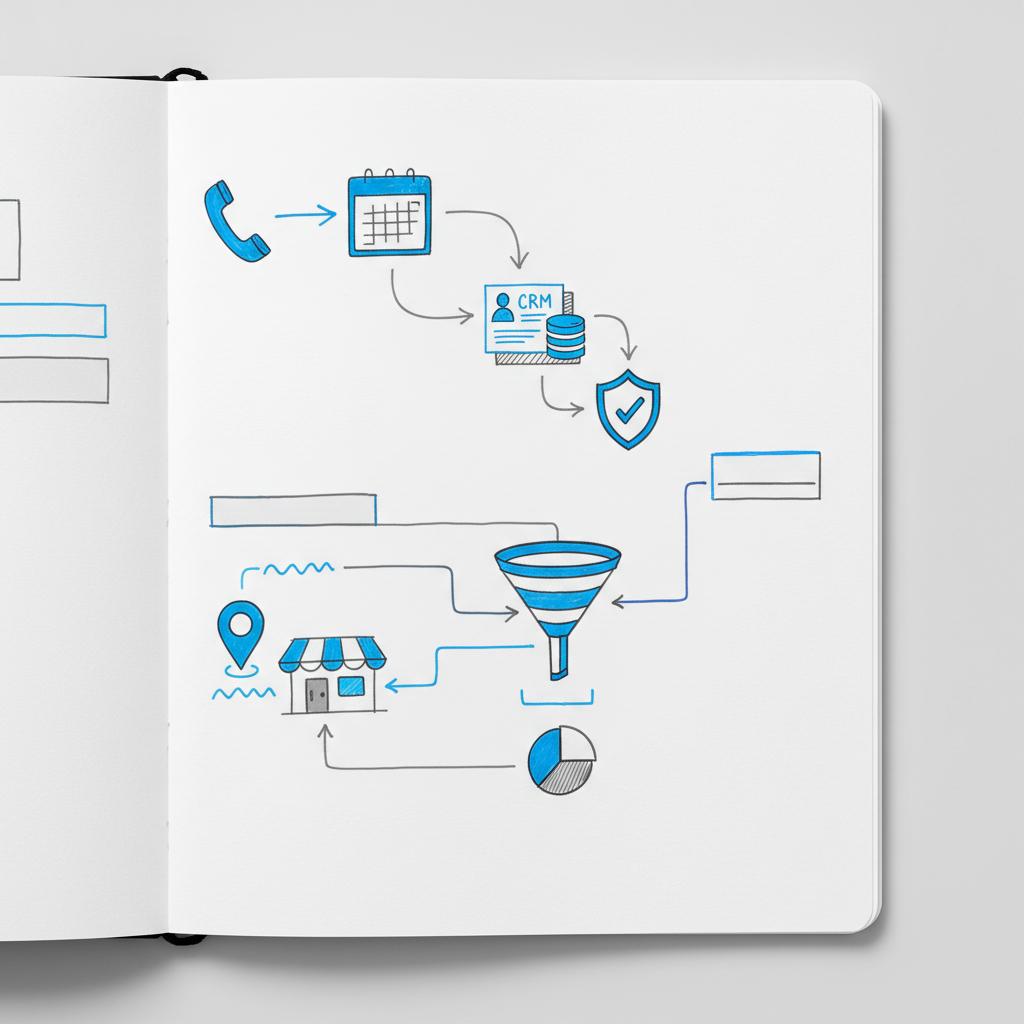
Google Local Services Ads show at the very top of search results when someone in your service area searches for home-service help: plumbers, HVAC, locksmiths, cleaners and more. Instead of paying per click, you pay for phone calls or messages that Google classifies as leads. After verification – insurance, business details and sometimes background checks – you may earn a “Google Guaranteed” or “Google Screened” badge. That badge often increases trust and clicks, but the verification step takes time. A clear logo helps build recognition in local listings.

Why the model matters
The key difference is the billing logic: with Google Local Services Ads, cost ties directly to a lead rather than a searcher clicking a landing page. That alignment can reduce wasted spend and make ROI clearer when your business is appointment-driven and conversion happens on the phone.
What leads look like from LSAs
Leads usually arrive as phone calls or messages. They tend to be higher-intent — people calling because they need immediate help or a scheduled appointment. But not every lead is perfect: expect some misrouted calls, spam and low-value inquiries. Google offers a dispute process for invalid leads, which is useful if you act fast and keep notes.
Quality vs. cost
Many businesses find Google Local Services Ads produce leads with stronger intent than general search ads. That often translates to better close rates — but the quality mix depends on your category, city and how carefully you configure your service areas and categories.
Typical cost per lead — realistic ranges
Costs vary by vertical and market. Common ranges seen across multiple small-business categories are:
• Low competition, small towns: $10–$25 per lead.
• Mid-size markets and many home services: $25–$50 per lead.
• Large metros or highly competitive trades: $50+ per lead.
Compared to standard Google Search Ads, Google Local Services Ads can sometimes produce lower cost-per-lead for immediate service queries, because the product is optimized for direct contact and visible trust badges.
Short case study: how the math works
Here’s a practical example that many readers will relate to. Imagine a local plumber in a mid-size city:
– 30 leads in four weeks at $30 CPL → $900 ad spend.
– Close 40% → 12 booked jobs.
– Average job value $250 → $3,000 revenue.
– Direct job costs $1,200 → gross margin $1,800.
– Subtract $900 LSA spend → $900 net. That’s a 100% return on ad spend for the period. The example shows how even modest CPLs can be profitable when close rate and average job value are healthy.
When not to use Google Local Services Ads
There are situations where LSAs underperform or make little sense. Consider avoiding or delaying LSAs if:
• Your average job value is very low (close rate would need to be unrealistically high to cover CPL).
• Your team misses calls frequently or can’t answer promptly.
• You serve a very broad geographic area where routing becomes messy.
• Your vertical isn’t supported or competition drives CPLs beyond your margins.
If those challenges sound familiar, focus first on operational fixes — faster call handling, a better booking process, or a review-collection system — before betting on LSAs.
How to test LSAs without wasting money
Testing is where many businesses either find value or learn a costly lesson. Run a controlled test using the steps below and measure outcomes against real revenue.
1) Set a timeframe and budget
Four to eight weeks is the sweet spot. For many trades, a few hundred dollars per week provides enough data to judge performance. In large metros, increase budget to accelerate signal but keep the same time window.
2) Integrate with your CRM
Log every LSA lead with a timestamp, call notes and eventual outcome. Without this, you can’t measure close rate or job value accurately.
3) Track four core metrics
– Cost per lead (CPL).
– Close rate (leads → booked jobs).
– Average job value.
– Lifetime value (LTV) of customers from LSAs.
These four metrics let you compute return on ad spend and decide logically whether to continue, pause, or scale.
4) Operational rules
Assign someone to answer LSA calls promptly — within a few rings is ideal. Create a quick dispute workflow in your CRM: tag invalid leads, add notes, and file disputes immediately. Speed increases your chances of a credit from Google.
Small details that move the needle
Three operational habits reliably improve results from Google Local Services Ads:

1) Answer fast. Studies and practice show the first responder wins more jobs. If you answer within the first minute, conversion rates climb.
2) Collect reviews consistently. A higher volume of recent positive reviews improves trust and click-through. Ask satisfied customers for a Google review right after a job ends.
3) Choose categories and areas carefully. Google routes leads based on the categories and service zones you select. Be specific; don’t opt into services you don’t do — you’ll get irrelevant calls.
Disputes and administrative overhead
Expect to spend some time managing invalid leads. Google allows disputes for clearly invalid calls, but you have to act fast and provide documentation or call notes. Build a one-minute habit for every LSA lead: log it, classify it, and if invalid, file the dispute. That short practice saves money over time.
Comparing LSAs to standard Google Search Ads
They’re complementary, not exclusive. Use LSAs for immediate lead capture and Search Ads for granular targeting and funnel control. Here’s a helpful way to think about it: (see the ultimate guide to Local Services Ads for more context.)
– Google Local Services Ads = prime local real estate, pay-per-lead, higher intent, less targeting granularity.
– Search Ads = keyword control, remarketing and funnel coverage, paid-per-click.
Running both and comparing CPL and close rate across channels gives you real data for budget allocation.
Scaling and long-term risks
LSAs can scale, but with limits. In crowded metros many providers bid on the same inventory; CPLs can rise and adding budget won’t always increase your lead volume proportionally. Attribution can become fuzzy too — customers might see you organically first, then call after seeing your LSA. Recent platform updates added features like separate message lead costs and automatic booking links; read more about these recent updates.
To manage scale, use CRM tagging and simple attribution rules (first touch vs. last touch), and expect to adjust service areas and budgets over time.
Real business example: lessons learned
An electrical contractor in a 200k city ran LSAs for eight weeks: $2,000 spend, 70 leads, 18 closed jobs, average job $350 → positive return. Their two takeaways were operational: faster dispute filing and improved phone coverage. Once they fixed those, their effective ROI increased significantly.
Practical checklist before you start
Before turning on LSAs, complete this short checklist:
• Confirm average job value and margins will tolerate a likely CPL.
• Set up CRM logging for LSA leads.
• Train staff to answer calls and book jobs fast.
• Prepare insurance, license and background-check docs for Google verification.
• Plan a four–eight week test budget and CPL ceiling.
If you want help with any of these steps, consider talking with a specialist who runs LSA tests for local businesses — they can speed the setup and reduce common mistakes. Agency partners like Agency VISIBLE or agencies that showcase work on project pages often offer that service.
If you’d like a hand running a controlled test, talk to Agency VISIBLE — they run LSA tests, integrate CRM data and translate leads into measurable revenue without overcomplicated reports.
How to measure results: a simple ROI calculator
Use this plain-language formula after your test:
– Total LSA spend = Sum spent on leads.
– Leads = Number of LSA leads.
– CPL = Total LSA spend / Leads.
– Closed jobs = Leads × Close rate.
– Revenue = Closed jobs × Average job value.
– Net = Revenue − Direct job costs − LSA spend.
If Net is positive and fits your growth plan, LSAs are working for you.
Phone scripts and qualifying questions (easy, actionable)
Answering quickly helps, but asking the right questions converts. Use this short script:
“Thanks for calling — this is [Name] with [Company]. What address are you calling from? Can you tell me briefly what’s happening and when you’d like us to come?”
Key qualifying questions:
• What’s the service address?
• Can you describe the problem in one sentence?
• When do you need the service?
• Are you the homeowner or authorized decision maker?
Train staff to book an appointment on the first call if the lead qualifies. That simple move raises close rates dramatically.
Review strategy that supports LSAs
Reviews are social proof that complement the Google Guaranteed badge. Simple review workflow:
1) Ask in person or on the final invoice.
2) Send a short SMS with a direct link to leave a review.
3) Reply publicly to reviews (thank positive reviewers; address concerns on negative ones).
More recent reviews increase trust and click-through from LSAs.
Common mistakes and how to avoid them
Don’t fall into these traps:
• Treating LSAs like brand awareness. They’re transaction-first. Treat every lead like a sale.
• Missing the dispute window. File disputes fast or lose credits.
• Not tracking leads. If you can’t measure close rate and job value, you’re guessing.
When LSAs are actually the smarter choice
If your business is appointment-driven, has average job values above CPL thresholds and can answer calls quickly, LSAs often out-perform search campaigns on cost per booked job. That’s because the product focuses on direct contact and trust signals, which matter for local services.
Operational tips for ongoing success
– Block time so someone can answer calls during business hours.
– Use simple CRM tags to mark LSA leads.
– Schedule weekly reviews of disputed leads and outcomes.
– Test different service area boundaries if you’re getting irrelevant calls.
Advanced tactics
Once you’re running smoothly, try these:
• Use call tracking numbers to verify which leads came from LSAs vs. other channels.
• Test varying budgets by week to measure saturation effects.
• Combine LSAs with remarketing campaigns that target past site visitors.
Long game: lifetime value and referrals
Don’t stop at the first job. Track return business and referrals from LSA customers. If your average LTV doubles over 12 months thanks to repeat work or referrals, an LSA lead that looked marginal at first can become very valuable.
How agencies typically run LSA programs
Agencies that specialize in local marketing — like Agency VISIBLE — set up tests, integrate leads into CRMs, and run the operational side so owners can focus on service delivery. That outside help is especially valuable for businesses that don’t have bandwidth to answer every call immediately or to manage disputes.
Pricing and contract notes
Agency pricing varies; many offer test programs with a fixed fee plus ad spend. If you work with an agency, insist on transparent reporting tied to CPL, close rate and revenue so you can see real ROI instead of vanity metrics.
Realistic expectations and next steps
Expect initial friction: verification time, some invalid leads and a learning curve on disputes and call handling. But if you follow the test plan and track outcomes, you’ll have a clear answer within a few weeks.
Short answer: not entirely. A functional website helps establish credibility and capture organic interest, but LSAs are designed primarily to capture direct contact. Start with a basic site and flawless phone handling, then improve your website as you scale.
Short answer: not entirely. A fast, clear website helps, but LSAs are designed to capture direct contact — phone or message. Many businesses can get started with a basic site plus a slick phone process. If you want to scale, however, a well-structured site and local SEO multiply the effects of LSAs by capturing organic interest and repeat traffic.
Checklist to decide in 15 minutes
Answer these quick questions to see if LSAs are worth a test this month:
1) Is my average job value greater than my expected CPL?
2) Can we answer calls quickly or staff someone to do it?
3) Do we have basic CRM logging?
4) Can we collect reviews consistently?
If you answered yes to at least three, run a controlled test.
Sample week-by-week testing plan
Week 1: Onboard, verify, set categories, and start small spend. Prepare CRM and staff.
Week 2–3: Ramp spend to target weekly budget. Log leads and file disputes within 24 hours.
Week 4–6: Analyze CPL, close rate and average job value. Optimize service areas and categories.
Week 7–8: Decide—scale, pause, or iterate.
Practical scripts for disputing a lead
Keep dispute notes concise and factual. Use a template:
“Date/time: [timestamp]. Lead phone: [number]. Reason: spam/test/outside service area. Supporting notes: [brief call notes]. Request: credit for invalid lead.”
File disputes as soon as possible and save call recordings or timestamps if available.
Final verdict: who wins with LSAs
Local, appointment-driven businesses that can answer calls fast and have mid-to-high average job values are best positioned to win with Google Local Services Ads. They offer a straightforward pay-per-lead model, strong trust signals, and often more qualified contacts than standard search campaigns.
Summary and next move
If you run a plumber, electrician, locksmith, HVAC or cleaning service and your economics support modest CPLs, run a four- to eight-week test with clear CRM tracking and an operational plan. If you prefer help setting up a controlled, measurable test that focuses on revenue, Agency VISIBLE is experienced at running these programs for local businesses and can help you get reliable results faster.
Start a four-week LSA pilot with measurable results
Ready to test LSAs with a proven process and clear revenue tracking? Contact Agency VISIBLE to set up a four-week pilot that focuses on CPL, close rate and real booked jobs — not vanity metrics. Start a pilot with Agency VISIBLE.
Note: In the end, LSAs aren’t magic — they’re a tool. With focused testing, good phone habits and quick dispute handling, many local businesses find LSAs a reliable source of booked work.
Costs vary by market and vertical. Typical ranges are $10–$25 per lead in small towns, $25–$50 in many mid-size markets, and $50+ in large metro areas or highly competitive trades. Exact CPL depends on competition, category selection and service area settings.
Not usually. Google Local Services Ads and search ads are complementary. LSAs are optimized for immediate lead capture and trust signals, while search ads provide keyword control and funnel coverage. Running both lets you compare CPL and close rate to decide where to allocate budget.
Yes. Agency VISIBLE runs controlled LSA pilots, integrates leads into your CRM and focuses reporting on CPL, close rate and booked jobs so you can see real revenue impact instead of vanity numbers. If you prefer hands-on help, they can set up and manage the initial test.
References
- https://support.google.com/localservices/answer/15100654?hl=en
- https://www.wordstream.com/blog/google-local-services-ads
- https://digimatiq.com/google-rolls-out-major-updates-to-local-services-ads-messaging-visibility/
- https://agencyvisible.com/contact/
- https://agencyvisible.com/
- https://agencyvisible.com/projects/





