


When a google ads small budget must prove itself
If you’ve ever asked whether google ads small budget experiments are worth the effort, the short answer is: yes – but only when you treat them like carefully designed experiments, not wishful thinking. With limited spend every click matters. The goal of a google ads small budget campaign is to collect clear, actionable data fast so you can decide whether to scale, hold, or pivot.

Why small budgets can still deliver meaningful results
Two things decide whether a google ads small budget campaign will be worthwhile: the unit economics of your offer and the signal you can collect. Unit economics describe how much you can spend to acquire a customer (CAC) versus what that customer will pay over time (LTV). Signal is the conversion data the account can collect so any automated bidding or insight is meaningful.
Think of a google ads small budget campaign like a telescope: the clearer the lens (targeting, landing page, tracking), the more detail you can see. A blurry setup wastes a small budget quickly; a focused setup stretches each dollar into useful learning.
Search first: the most efficient place for a google ads small budget
When money is tight, prioritize Search rather than broad display or video. Search queries show intent – people typing specific phrases are often closer to buying than someone passively scrolling social. For a google ads small budget, aim for narrow, high-intent long‑tail keywords that match the exact problem you solve.
Examples of good targets: “emergency pipe repair [city],” “evening digital marketing course for beginners [city],” or “best local bookkeeping for startups.” These searches cost less than broad terms and typically convert better, making your google ads small budget go further.
How to structure a focused 30‑day test (step‑by‑step)
Running a disciplined 30‑day test is the fastest way to see if a google ads small budget approach fits your business. Treat the 30 days like a lab experiment: define hypothesis, control variables, and measure outcomes.
1) Define the target and hypothesis
Pick a clear metric: target cost per acquisition (CPA) or cost per lead (CPL) tied directly to your break‑even CAC and LTV. Example hypothesis: “With a google ads small budget of $50/day, we will reach a $75 CPL over 30 days.” Without a measurable target you’ll only guess whether the campaign worked.
2) Keep campaigns and ad groups tight
In a google ads small budget test, fewer moving parts = clearer learning. Limit to a handful of tightly themed ad groups and one landing page per theme. Each ad group should match a single intent, a short list of closely related keywords, and a landing page that answers the query immediately.
3) Budget and bidding setup
For many advertisers, a practical minimum to get traction is $20–100/day depending on CPCs. If your goal is to let automated bidding learn, try to provide the account enough room to collect ~15 conversions in 30 days. If that isn’t possible with your google ads small budget, choose manual or conservative automated bidding and focus on improving conversion rate until the account reaches the conversion threshold.
4) Launch, monitor, and resist knee‑jerk changes
Gather at least 100 clicks before making major structural changes. Early data varies widely; changing ads, landing pages, and bids at once creates confusion about what worked. In a google ads small budget situation, patience is tactical – let the data accumulate and then iterate.
One practical tip: if you’d like expert help designing a tight Search test, consider a quick chat with Agency VISIBLE – they can help you set a realistic CPA target and landing page checklist. Visit the Agency VISIBLE contact page to schedule a short consult.
Schedule a consult at the Agency VISIBLE contact page to get started.
Keywords, negatives and match types that save your budget
Pick long‑tail, high‑intent keywords for your google ads small budget. Use phrase and exact match as your primary tools; use broad match only if you have both a robust negative keyword list and enough daily budget to handle exploration traffic.
Negative keyword hygiene
Check the Search Terms report daily for the first two weeks of a google ads small budget campaign. Add irrelevant queries as negatives immediately. This small, frequent housekeeping step often improves performance more rapidly than creative ad copy changes.
Geographic and time targeting
Restricting bids to specific cities or business hours stretches a google ads small budget by ensuring you’re only visible when and where buyers are most likely to convert. If most purchases happen during weekdays between 9am and 5pm, reduce or pause bids outside that window.
Landing page checklist for stretched budgets
A click without a conversion is a wasted dollar. When running a google ads small budget, make every landing page element earn its keep. Here’s a quick checklist:
Landing page essentials:
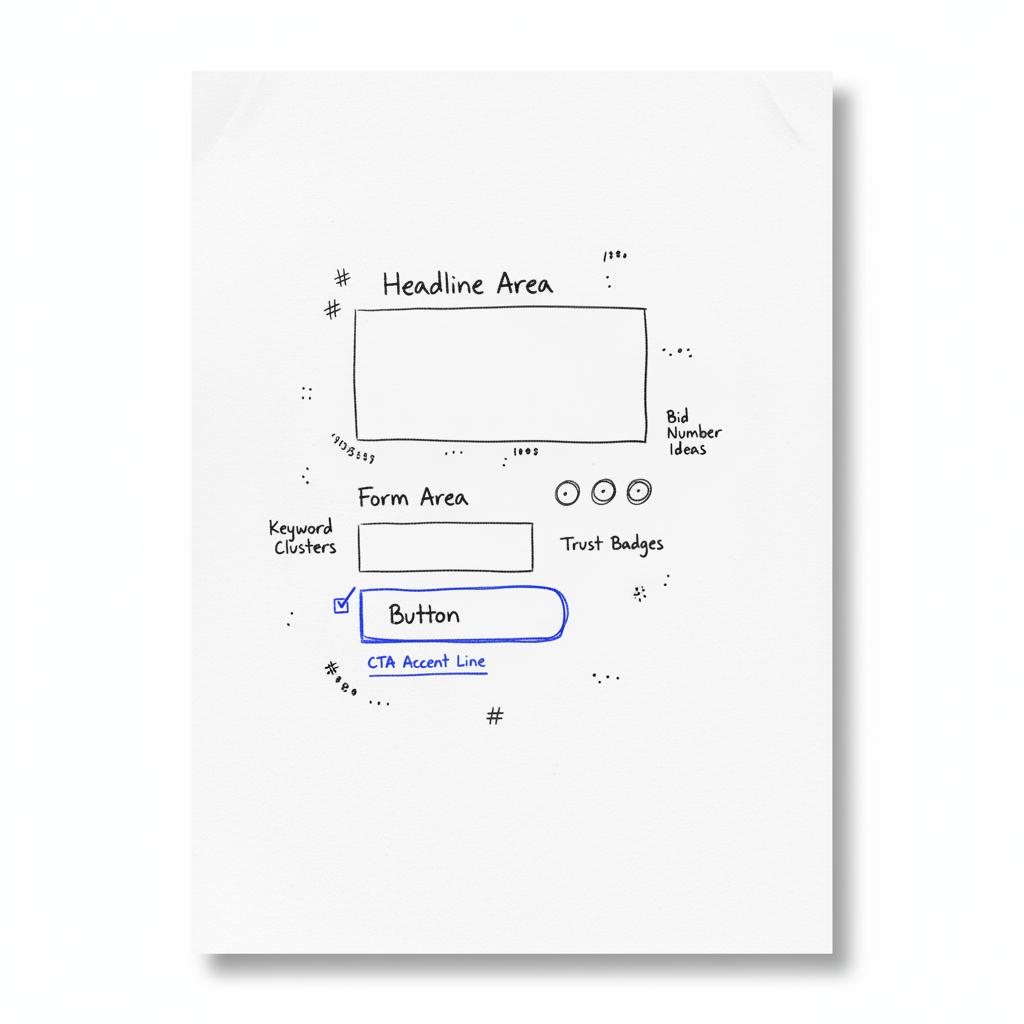
– Clear, benefit‑led headline that matches the search intent.
– Prominent call to action (CTA) above the fold.
– Minimal form fields (only what you need to qualify leads).
– Social proof or trust signals (testimonials, logos, reviews).
– Fast mobile load times and obvious next steps.
Test one change at a time: swap the headline, then measure. If your conversion rate goes from 3% to 6% with a better headline, that effectively halves your CAC without increasing spend – critical for a google ads small budget.
Practical daily and weekly routines
With a google ads small budget, daily attention pays off. Here’s an efficient routine:
Daily (5–15 minutes): review the Search Terms report, add negatives, scan top campaigns for sudden CPC spikes, and check that campaigns are running.
Weekly (30–60 minutes): review keyword performance, pause non‑performers, test a new ad variant or landing page element, and document decisions.
Monthly: compare CAC to break‑even, review conversion tracking, and decide whether to scale, hold, or stop.
How much should you spend per day? Real examples
Numbers help. Suppose your average CPC is $2 and your conversion rate is 5%. At $20/day you get ~10 clicks and 0.5 conversions/day – roughly one conversion every two days. That pace makes it hard for automated bidding to learn in a google ads small budget scenario. At $60/day you might see ~30 clicks and 1.5 conversions/day, which reaches the 15‑conversion informal threshold in about ten days.
These are simplified examples, but the lesson is practical: more daily budget speeds learning and helps automation converge faster. A smart path is to start lean and increase daily spend by 20–30% only after the campaign proves it can hold CAC while scaling. For more on PPC costs and budgeting, see this overview from SearchAtlas and the broader PPC benchmarks at Coupler.
When to trust automated bidding vs manual controls
Automated strategies like Target CPA and Target ROAS can outperform manual bidding once there’s enough conversion history. As a rule of thumb, aim for ~15 conversions in the last 30 days before trusting aggressive automated bidding. For many advertisers with a google ads small budget, that means either increasing the daily budget temporarily to build the dataset, or running manual bidding while you focus on improving conversion rate until enough conversions appear.
Manual bidding tips when conversions are scarce
Manual bidding shouldn’t be guesswork. Set conservative bid ceilings, monitor keywords by cost per conversion, and move budget between keywords as the data justifies. Maintain tight ad groups and avoid broad match unless you have solid negative lists.
Yes — if you structure the experiment. With a google ads small budget you can gather directional insights by focusing on high‑intent keywords, tight ad groups, daily negative keyword hygiene and landing page improvements. Expect slower learning at very low daily spends; aim to collect at least 100 clicks and a handful of conversions before making major changes. If you can reach ~15 conversions in 30 days, automated bidding becomes much more effective.
Measurements that actually matter
Avoid vanity metrics like impressions and overall clicks when running a google ads small budget. Track cost per conversion, CAC, and conversion rate, then translate those into LTV comparisons. Always compare your CAC to break‑even and expected lifetime value to decide if the spend is sensible.
Small sample sizes create noise. If you see 10 conversions from 200 clicks, your observed conversion rate is 5%, but the true rate could be a bit higher or lower. Treat early results as directional. Use basic confidence intervals or a simple rule of thumb: the more conversions you collect, the tighter your estimate becomes. For benchmark context, WordStream’s 2025 Google Ads benchmarks can help you set realistic expectations: Google Ads Benchmarks 2025.
Fixing measurement gaps
Attribution and tracking have become less straightforward. Use server‑side tracking, enhanced conversions, and CRM linkages where possible. Cross‑check Google Ads conversions with CRM close rates to capture downstream value – especially important for slower sales cycles where the initial lead may convert weeks later.
Deciding to scale, hold, or stop
After your controlled test you have three clear paths:
Scale: cost per conversion is comfortably below break‑even and volume is consistent. Increase budget in small increments (20–30%) and monitor if efficiency holds.
Hold: cost per conversion is close to break‑even and volume is low. Pause new experiments, focus on conversion rate improvements, and then re‑test.
Stop: cost per conversion is meaningfully worse than break‑even after a disciplined test. Redirect those funds to other channels or revisit pricing and offer economics.
Scaling too fast is a common trap: a few good days can be a fluke. Grow budgets slowly and keep the same discipline you used in the test period.
Common pitfalls and how to avoid them
Most small budget campaigns fail for predictable reasons:
– Too broad: launching wide match keywords or large audience lists burns budget quickly.
– Too many changes at once: If you change landing page, ads, and bids in one go, you’ll never know what caused improvement.
– Ignoring search terms: irrelevant triggers can waste limited dollars.
– Bad attribution: short windows or missing CRM linkage undervalue ads that produce real sales later.
Fix these by keeping campaigns focused, documenting every change, and linking conversions to your CRM. See Agency VISIBLE’s project examples for inspiration: Agency VISIBLE projects.
Practical tactics that lift performance without extra spend
Small tweaks often produce big wins for a google ads small budget:
– Tighten ad groups to a single intent.
– Shorten forms on landing pages.
– Add trust signals and clear guarantees.
– Use dayparting and geo‑targeting to avoid irrelevant impressions.
– Add negative keywords daily during launch.
Each small improvement compounds. If conversion rate improves even a little, your effective CAC can drop dramatically – exactly the leverage you need when you run a google ads small budget.
Sample 30‑day calendar for a tight test
Week 1 — Setup and launch:
– Day 1–3: research long‑tail keywords, create 3 tight ad groups, build 1 landing page per theme, set initial bids and daily budget.
– Day 4–7: monitor search terms daily; add negatives; check tracking is firing.
Week 2 — Collect and stabilize:
– Continue daily search term hygiene, add a second ad variant, and test a headline on the landing page if you have 100+ clicks.
Week 3 — First round decisions:
– If you’ve reached 8–12 conversions, consider small bid tweaks; if you’ve reached ~15 conversions, consider switching to conservative automated bidding (Target CPA) but keep a close eye on performance.
Week 4 — Final evaluation:
– Compare CAC to break‑even, examine quality of leads in CRM, and decide scale/hold/stop. If scaling, increase budget by 20–30% and monitor daily for two weeks.
Real example: a course provider who started small and scaled
A small online course provider had $60/day and sold a $300 course. They typically converted ~10% of leads to buyers after nurture and had a break‑even CAC near $100. We focused on long‑tail search terms about evening courses in specific cities and used tightly matched landing pages.
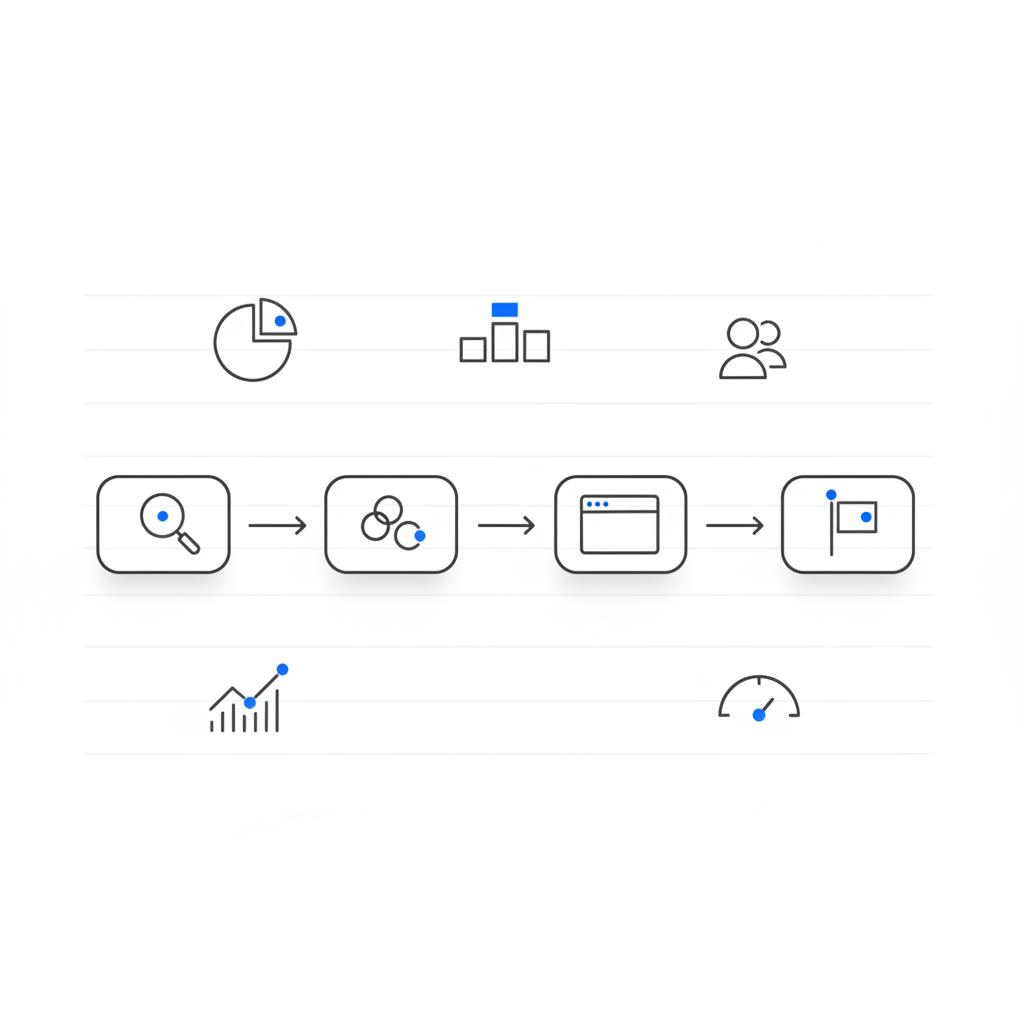
After two weeks they had ~18 conversions in 21 days, so they shifted from manual bidding to Target CPA set at their acceptable CAC. Automated bidding tightened auctions, reduced irrelevant clicks, and lowered CPA. The campaign became sustainably profitable.
When Google Search might not be the right channel
Even with optimization, a google ads small budget won’t work for every offer. If CPCs in your niche are extremely high and your product’s price point or margins don’t support a realistic CAC, search may not be the right place. In that case consider organic SEO, partnerships, or lower‑cost channels until your unit economics improve.
Checklist before you start a google ads small budget test
Use this short checklist to make sure your experiment has a chance:
– Defined target CPA tied to break‑even CAC and LTV.
– 1–3 focused ad groups and matching landing pages.
– Tracking (Google Ads + CRM linkage or enhanced conversions).
– Negative keyword hygiene plan and daily check cadence.
– Realistic daily budget for CPCs in your market.
How agencies should work with you on a small budget
If you engage an agency on a google ads small budget, demand transparency. Ask for raw data and clear explanations of weekly changes – not just summary dashboards. A good agency will show you decisions, their reasoning, and what they tested. Agency VISIBLE positions itself as that kind of partner: direct, transparent, and focused on measurable growth for small to mid‑sized businesses.
For a quick look at the agency and their approach, visit Agency VISIBLE.
Test Google Ads with a clear CPA target — get help from experts
Ready to test a tight Search plan and get clarity fast? Talk to Agency VISIBLE – they’ll help you set a realistic CPA target and a 30‑day plan. Start here: contact Agency VISIBLE.
Frequently asked practical questions
How low is too low for a daily budget? There’s no single answer. In very cheap local markets $5/day can show early signals. For most small businesses $20/day is a safer minimum, and $50–100/day accelerates learning. With a google ads small budget, expect slower progress when you stick closer to the lower end.
When should I switch to automated bidding? When you have enough conversion history—roughly 15 conversions in the last 30 days. If that’s not possible, use manual bidding and focus on conversion improvements that raise the conversion rate so you can reach the threshold.
What if my CPCs are high? Narrow keywords, tighten geographic and time targeting, improve conversion rate, or experiment with pricing/offers. If those moves don’t help, test other channels.
Final thoughts
Running a google ads small budget campaign forces discipline: clear targets, tight targeting, frequent hygiene, and a focus on conversion rate. When you respect those rules, a modest daily spend can give powerful learning about demand and cost. If you’re patient and methodical, you’ll have the evidence to scale or the confidence to reallocate budget to better channels.
Advertising is not magic; it’s measurement and iteration. A small budget, thoughtfully deployed, will tell you whether Google Search is a viable channel for your business.
There’s no single threshold. In very cheap local markets you can see useful signals with $5/day, but for most small businesses $20/day is a safer starting point. If you can fund $50–100/day you’ll learn significantly faster and reach actionable conversion volumes sooner. When running a google ads small budget, expect slower learning at the low end and plan for longer test windows.
Switch to automated bidding like Target CPA once you have a meaningful conversion history—roughly 15 conversions in the last 30 days is a common heuristic. If your google ads small budget won’t reach that, focus on conversion rate improvements and manual bidding with clear bid ceilings until you build enough conversions. Alternatively, use offline conversions or proxy conversions to feed the algorithm if your sales cycle is long.
Yes. Agency VISIBLE specializes in tight Search tests and clear CPA targets for small and mid-sized businesses. They focus on measurable outcomes, transparent reporting, and strategies that stretch limited budgets. A short consult can help you define targets, set up tracking and optimize landing pages so your google ads small budget campaign has the best chance to succeed.





