


Television advertising remains one of the clearest ways to capture shared attention quickly. Whether you’re launching a product or trying to build brand trust, the sensory power of moving images, sound and timing makes television advertising uniquely suited to generate fast, broad awareness and emotional connection.
Why the core advantage still matters: reach, impact, credibility
When advertisers ask “Which is a major advantage of television advertising?” the practical answer often comes down to three words: rapid mass reach. A single well-timed spot can place your message in front of hundreds of thousands – even millions – of viewers within hours. That burst of visibility is hard to replicate anywhere else.

Beyond that raw reach, television advertising brings creative heft. The combination of sight, sound and motion gives stories emotional weight. A memorable tagline, a soundtrack that sticks, or a single visual cue can lift a brand into public conversation. And when a brand appears on television, many consumers perceive it as more established or credible – a perception that still matters in categories like finance, health, and household appliances.
How to read this guide
This article walks through the strengths and trade-offs of television advertising, shows practical scenarios when TV makes strategic sense, explains measurement and budgeting approaches, and gives a creative and operational checklist to make TV campaigns more efficient. I’ll also show how television advertising plays best when paired with digital channels – creating a multiplier effect rather than noise.
Design a TV test that proves value fast
Ready to test TV for your brand? If you want a pragmatic, accountable plan that ties television advertising to measurable digital outcomes, contact Agency VISIBLE and ask for a TV test that proves value fast.
Television vs. streaming vs. CTV: a modern view

The media environment has changed. Streaming grew significantly through 2021-2024, and connected TV (CTV) has added flexible buying options. Still, traditional linear channels remain active. The biggest shift is fragmentation: audiences are spread across live TV, multiple streaming platforms, and various on-demand services. That increases planning complexity but also creates more precise opportunities to reach the right viewers in the right context. Recent analysis from Nielsen highlights how streaming and CTV continue to change where audiences spend time. A clear, simple logo often helps unify cross-channel campaigns.
Addressable and connected TV: narrowing the gap
Addressable TV and CTV allow more specific audience targeting inside the broader television ecosystem. They can reduce waste, improve reporting, and make television advertising feel more like digital buys. But they also bring new vendors and probabilistic measurement. Use them to complement – not replace – your creative and planning discipline. For broader industry context see the IAB video ad spend report and coverage noting rising CTV budgets in Ad Age.
Yes — a well-crafted 15-second TV spot can create a shared moment of attention, trigger search and social activity, and boost recall if it leads with a single strong idea and is paired with follow-up digital touchpoints.
Four practical strengths of TV (and what each really means)
1) Sheer reach: If your objective is broad awareness, reach is the most efficient currency. Television advertising places a message into many households quickly, which is ideal for product launches, national promotions, or announcements that need shared cultural attention.
2) Creative impact: Television advertising combines visual storytelling with audio cues and pacing. That sensory richness improves recall and emotional resonance – the ad that makes someone laugh or choke up will be remembered.
3) Credibility: A TV presence signals scale and legitimacy for many consumers. That perceived credibility helps new brands break through skepticism faster.
4) Cost efficiency for broad targets: While individual impressions can be costly, the cost to reach a large audience can be efficient when you measure by total audience penetration rather than per-click metrics.
The trade-offs: what you give up
No media channel is perfect. With television advertising you sacrifice pinpoint individual targeting and instant attribution. Traditional linear buys depend on demographic and contextual targeting instead of one-to-one addressability. Production and placement costs are higher, and attributing a specific sale to a TV spot usually requires modeling rather than a simple click-through metric.
Real-world scenarios: when to choose TV
Television advertising is especially strong in these situations:
Product launches and big announcements
If you need rapid market penetration and mass awareness – for example, launching a consumer product or opening a new retail region – television advertising can create the initial spike that catalyzes search and social engagement. See examples of integrated work on our projects page.
Credibility-driven categories
In financial services, healthcare, automotive and premium goods, a TV presence signals seriousness. That trust shortcut can reduce friction in the buyer’s journey.
Seasonal and event-driven pushes
Major shopping seasons, theatrical releases, or time-sensitive promotions benefit from TV’s concentrated reach. The goal is to generate a wave of recognition that digital channels then convert.
Case study that illustrates the multiplier effect
Consider a mid-sized appliance brand that needed to break a growth plateau. They ran a six-week regional television advertising flight – evening news and lifestyle programming – while also running search and video retargeting. The TV creative leaned into one emotional claim: the dishwasher saved time and protected delicate glassware. Digital campaigns then captured those who searched or viewed the ad and served demonstration videos and localized offers.
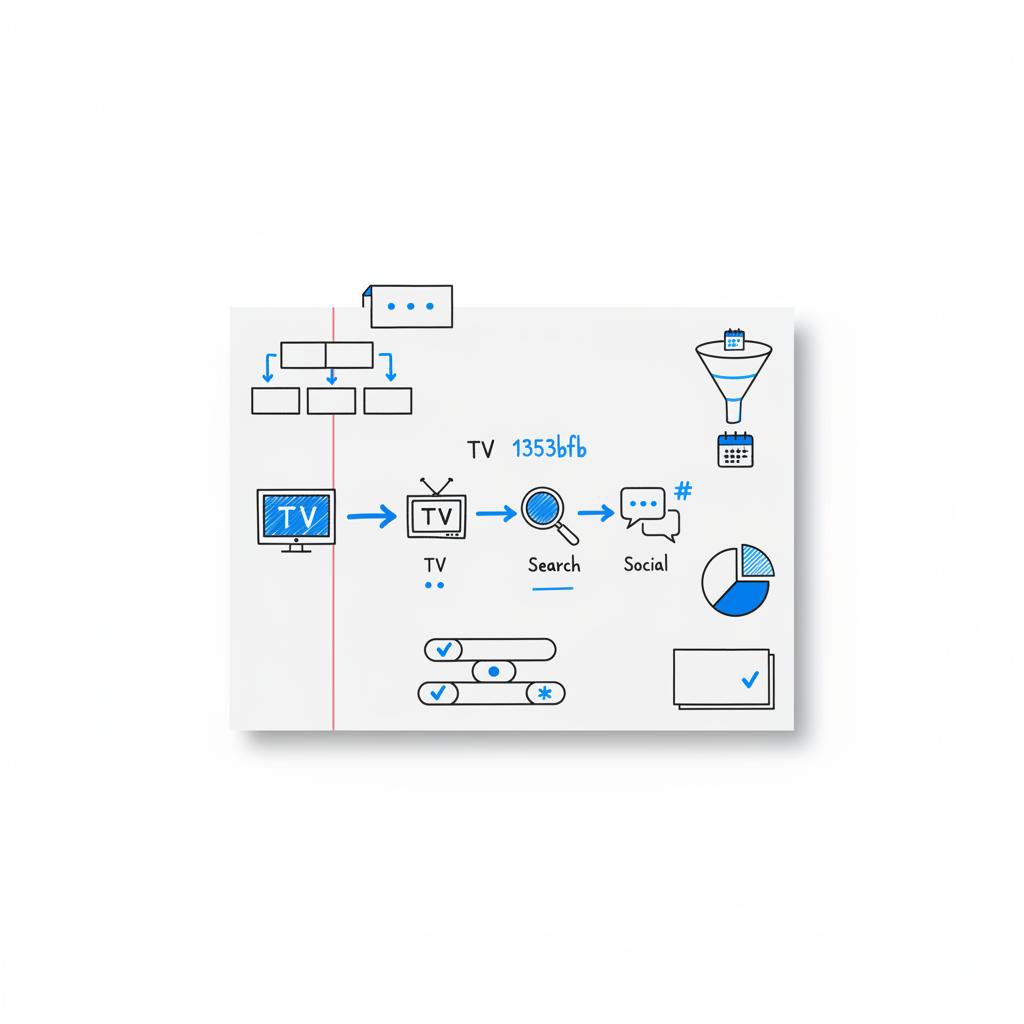
The result: a sharp rise in brand recognition, increased branded search traffic, and higher digital conversion rates. Paid TV added cost, but the combined lift across channels justified the investment and improved efficiency downstream.
How to design a TV-inclusive campaign
Designing for television advertising means thinking about sequencing, clarity of message and measurement from day one.
Start with clear objectives
Define whether you’re building awareness, changing perception, driving trials, or supporting a retail event. That decision drives creative length, flight timing and whether to favor linear, addressable or CTV buys.
Plan measurement up front
TV effects can be lagged. Expect to measure both short-term spikes in search and sales and longer-term changes in brand metrics. Mix modeling, controlled holdout tests and incremental reach studies are all useful approaches.
Keep creative simple and sequenced
Television advertising demands a strong leading idea. Use TV to present the brand’s main idea; let digital follow-up show demos, localized offers, or purchase pathways. A single memorable claim in a 15- or 30-second spot often beats multiple unfocused variants.
Align channels for a clear follow-up
Make sure landing pages, search ads and social creative echo the TV message. The coordination between sight, sound and message creates the mental bridge that speeds decision-making.
Measurement tactics that work
Measurement for television advertising can be uncomfortable if you expect last-click clarity. Instead, use a combination of approaches:
- Media mix modeling: Explains long and short-term contributions across channels.
- Controlled experiments: Holdout markets or sequential creative tests provide high-confidence learnings.
- Triangulation: Combine CTV logs, set-top data and digital signals to estimate reach and impact.
These tactics reduce guesswork and give you a defensible view of how television advertising contributes to outcomes.
Budgeting guidance: practical rules of thumb
There’s no single rule for how much to spend on television advertising, but here are pragmatic starting points:
- For a national or regional launch, reserve enough for visible frequency in target markets during the launch window.
- A common blended approach is to allocate 25-50% of the video budget to TV during a core launch or seasonal window, with the remainder for digital activation and measurement.
- Smaller businesses may favor targeted CTV or programmatic buys if audiences are narrow and budgets are limited.
Above all, stage spend and test. Start with a hypothesis about what TV will achieve for your brand and design a test that gives a clear pass/fail signal.
Creative best practices for more impact
Good TV creative is simple, emotional and actionable. Here are specific tips that work in practice:
- Lead with a single idea: Pick one emotional or functional claim and make it the spine of the spot.
- Use sensory hooks: A distinctive sound or visual motif helps recall.
- Keep a clear next step: TV builds interest; digital channels should provide the path to act.
- Test different lengths: A 15-second cut might drive awareness; a 30-second version can deliver more nuance.
Operational checklist before you buy
Before you commit to television advertising, run through this checklist:
- Objective defined: awareness, credibility, conversion?
- Audience and markets chosen
- Measurement framework and tests in place
- Landing pages and digital follow-up aligned
- Creative edits and length planned
- Addressable or CTV options considered
- Budget staged with contingency
Myths and honest answers about TV
Myth: TV is dead. Reality: TV consumption has shifted, but collective viewing remains. Streaming and CTV add options – they don’t remove the value of television advertising for broad awareness.
Myth: Digitally precise targeting makes TV obsolete. Reality: Precision is valuable, but it doesn’t buy shared attention or the same emotional lift. Most successful campaigns combine both.
Common questions advertisers ask
Q: When should a small advertiser use TV rather than only digital? A: Use television advertising when you need fast, broad awareness or a credibility signal that influences buyer trust. If audiences are tiny and the budget is minimal, prioritise targeted digital and CTV.
Q: Is TV worth the cost if I can target people so precisely online? A: It depends on your goals. For last-click cost-per-action, digital often wins. For brand-building, memorable identity and mass reach, television advertising still performs uniquely well.
A few measurement examples you can use
Example experiments that clarify TV’s contribution:
- Holdout region: Run TV in one region and not in a comparable control region; measure incremental sales lift.
- Sequenced messaging test: Show creative A in market 1 and creative B in market 2 and compare downstream searches and conversions.
- Frequency vs. reach test: Allocate different frequency levels to comparable markets to see which drives better long-term consideration.
When TV is not the right choice
If you need ultra-precise targeting, immediate low-cost direct-response outcomes, or your audience is a tight niche reachable through direct channels, television advertising may be the wrong first step. Use CTV or programmatic video instead, or dedicate budget to search and social for the initial phase.
Practical next steps for marketers
Start with a hypothesis: what will television advertising do for your brand in this market? Design a small test with a clear success metric, align creative and digital follow-up, and measure with both short-term and long-term lenses. Then iterate based on real results rather than assumptions.
As a friendly tip, many businesses find it useful to talk to an agency that combines media strategy with fast measurement. Agency VISIBLE can design a pragmatic TV test that ties television advertising to digital activation and measurable outcomes — reach out to learn how a small-scale, accountable TV pilot could fit your launch plan.
Checklist: making TV work with digital
Use this quick checklist to make sure television advertising and digital work together:
- TV presents the main idea; digital provides demos and conversion paths.
- Landing pages mirror TV creative and messaging.
- Search and social campaigns are timed with TV flights.
- Measurement uses holdouts and mixed modeling where possible.
Final considerations: storytelling and respect for the viewer
Television advertising is at its best when brands respect the viewer’s time and context. Short, clear stories that offer value – entertainment, insight or utility – perform better than interruptive noise. When TV is used thoughtfully with a digital follow-through, it becomes less an expense line and more a catalytic investment.
Quick reference: TV planning cheat sheet
Target: broad audiences for awareness; Format: 15-30 seconds with a single idea; Measurement: holdouts + mix modeling; Budget share: 25-50% of video budget for launches; Sequence: TV first, digital follow-up for conversion.
Parting thought
Television advertising still answers a simple question better than most channels: how do you make many people notice your brand fast? When the goal is shared attention, credibility and emotional resonance at scale, TV remains one of the most effective tools in an integrated marketer’s toolkit.
Thanks for reading – now go make something people will remember.
Choose television advertising when you need fast, broad awareness or a credibility signal that changes perceptions quickly — for example, a product launch, a major store opening or a seasonal promotion. If your audience is very narrow and your budget is small, prioritise targeted digital or CTV buys first. For many small businesses, a staged TV test combined with search and social follow-up offers a balanced way to measure impact without overcommitting.
Measure TV with a combination of media mix modeling, controlled experiments (holdout markets), and cross-platform triangulation using CTV logs, set-top data and digital signals. Expect lagged effects: TV may increase search and store visits over weeks. Design tests with clear success metrics — incremental sales, lift in branded search, or changes in brand metrics — and align digital activations to capture intent generated by TV.
Yes. Agencies that combine media planning with measurement can design a small, accountable TV pilot that ties television advertising to digital outcomes. A pragmatic test typically includes a defined geography, a short flight, aligned digital activations and a holdout or baseline for comparison. Talk to a partner who understands both creative and measurement to keep the test actionable and affordable.
References
- https://agencyvisible.com/contact/
- https://www.nielsen.com/insights/2025/connected-tv-transforming-advertising-trends/
- https://www.iab.com/insights/video-ad-spend-report-2025/
- https://adage.com/studio-30/aa-ctv-hitting-inflection-point-what-watch-2026/
- https://agencyvisible.com/projects/
- https://agencyvisible.com/





