Why is GoDaddy so expensive?
Why GoDaddy’s pricing feels steep
GoDaddy is a familiar name to millions of small business owners. That recognition brings comfort – and often sticker shock when the first promotional year ends. If you’ve ever asked yourself “Why is GoDaddy so expensive?” you’re not alone. In the paragraphs below we unpack the reasons many customers notice higher bills, how optional add-ons inflate totals, and what straightforward choices you can make to regain control.
The term GoDaddy shows up throughout this guide because understanding that provider’s model helps you compare it to alternatives and decide if the convenience is worth the cost. We’ll cover typical renewal jumps, the common extras that raise the total, and clear steps to reduce recurring expenses without sacrificing security or uptime. Visit the Agency VISIBLE homepage for examples of how agencies document recurring costs.

Key idea:
Key idea: a low initial price often masks higher renewal costs and optional conveniences. Knowing what to watch for makes your next renewal a calmer moment, not a surprise.
How promotional pricing and renewals work
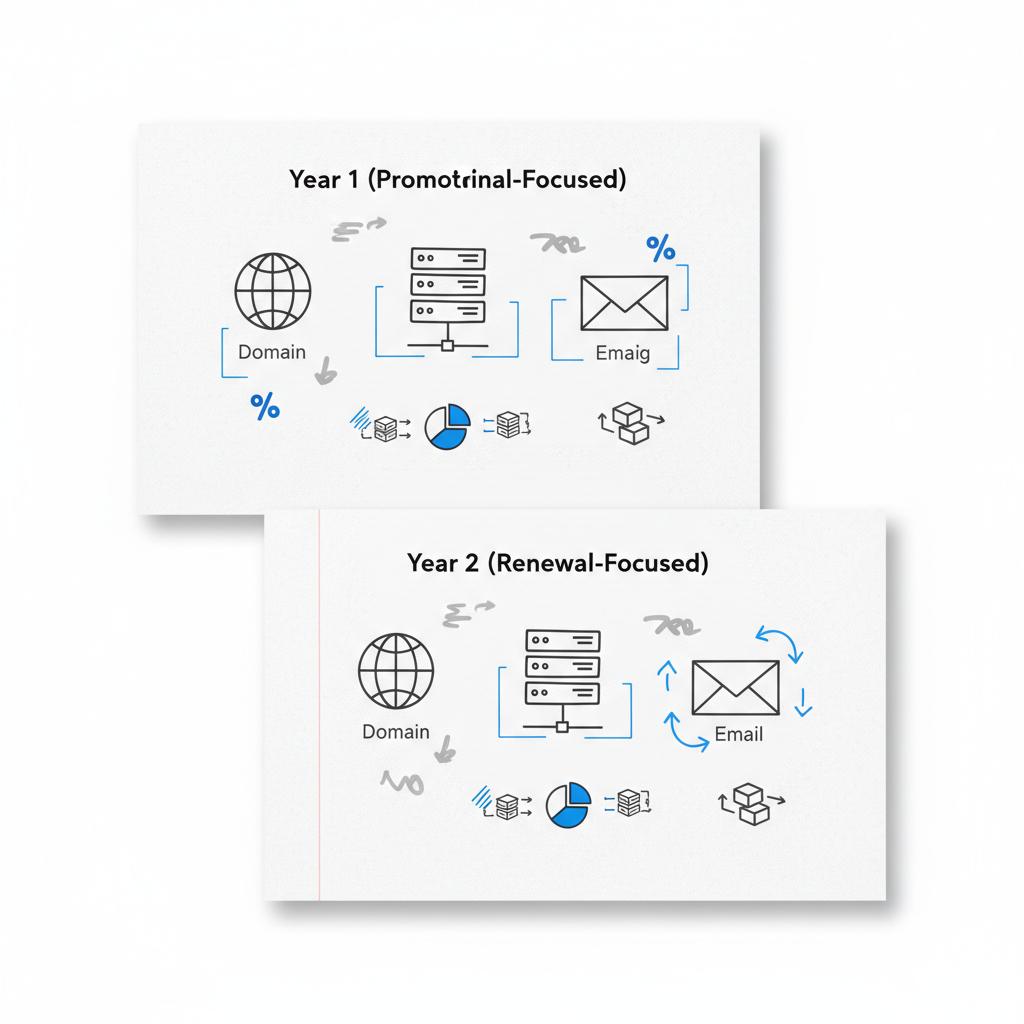
Most large registrars and hosting brands – including GoDaddy – use front-loaded discounts to attract customers. The first-year price is often a marketing figure. After that, renewal rates are the real business model: the ongoing cost of a domain, hosting, or support plan is where revenue stabilizes.
That means the question “Why is GoDaddy so expensive?” has a predictable answer in many cases: the initial offer is intentionally low, and the follow-up price is the provider’s standard rate. But that is only part of the picture. The full account bill is usually the sum of a core service plus multiple optional items that many small businesses add over time.
Common fees that make the bill climb
Here are the usual suspects that turn a modest first-year payment into a heavier recurring cost:
Domain renewal – promotional .com pricing can be $1 or under for year one, then renew at $15-$25 annually at many big registrars; GoDaddy is often in that range.
Privacy/WHOIS protection – sometimes free with smaller registrars but billed separately at large providers, adding another yearly charge.
Managed email – hosted mailboxes tied to your domain are convenient but can cost $3-$8 per mailbox per month.
SSL certificates – free TLS (Let’s Encrypt style) does the job for most sites, yet paid certificates are offered with warranties, issuance speed, or green-bar branding at significant extra cost.
Hosting renewals and upgrades – first-year shared hosting promos often renew for two to three times the introductory price.
Support and migration fees – premium support, phone lines, backups, and expedited migrations are often charged or bundled into higher tiers.
Real-life cost examples
Numbers help. Let’s follow a simple brochure site example to make the math clear. Suppose year one: domain $1, hosting $3.99/mo (promo), free TLS, no mailbox. Year two renewal might be domain $20, hosting $9.99/mo, WHOIS $10, mailbox $6/mo. Suddenly your bill jumps from roughly $50 in year one to $300+ in year two. That jump explains why so many people ask, “Why is GoDaddy so expensive?“
Those are illustrative figures, but they mirror many real accounts: the promotional year is light, and renewals + add-ons are the heavy lift.
Three small-business profiles and how costs change
Brochure site: low traffic, a few pages, a contact form. A promotional first year keeps costs tiny. Renewal adds domain, hosting, and sometimes email – a small business owner can see a 2-4x increase.
Small online shop: needs PCI-compatible hosting, an SSL, at least one mailbox, and more frequent backups. For e-commerce, some of the extras are essential, so the monthly bill tends to be higher and less negotiable.
Growing company: more traffic, multiple subdomains, and team mailboxes push you into higher hosting tiers and managed services fast. Those tiers are designed to support growth, but they cost more.
Why customers stay despite higher prices
There are two strong emotional forces at play: inertia and convenience. Many small business owners value the single bill, the known dashboard, and phone support – even if it costs a bit more. For someone juggling day-to-day operations, the friction of moving services is real, and that’s part of the cost equation.
That explains why even when you ask, “Why is GoDaddy so expensive?” you might decide not to move. Sometimes the peace of mind is worth the premium.
Practical moves that reduce cost without risk
Now the useful part: concrete, low-risk steps that cut recurring costs.
1) Buy multi-year when the steady rate is fair. If you can lock in two or three years at a stable price that you’re comfortable with, the renewal shock is delayed and often reduced.
2) Reject add-ons you don’t need. Use free TLS certificates (Let’s Encrypt), find registrars with free privacy, and consider email forwarding until you need a managed mailbox.
3) Transfer domains when renewal rates are high. A transfer typically adds a year and may have a small fee, but the long-term savings can be meaningful.
4) Separate services for price control. Use a low-cost registrar for domains, a hosting plan that includes backups and TLS, and a standalone email provider when needed. It sounds more complex, but the setup is often one-time work for ongoing savings.
Detailed migration checklist
Worried migration is risky? It doesn’t have to be. Here’s a practical checklist that turns fear into a plan:
Pre-migration
– Verify current DNS settings and record any custom records (MX, CNAME, TXT).
– Back up the site files and the database.
– Export email if needed, or set up a new mail provider in advance.
– Note renewal dates and avoid transferring right before expiration.
During migration
– Change DNS TTL to a low value to speed propagation.
– Move files and test the new hosting in a staging URL or IP.
– Keep the old site live until DNS fully propagates.
Post-migration
– Monitor site for missing assets, broken links, or email delivery issues.
– Re-enable regular backups and security scans.
– Confirm renewal changes and billing schedule at the new provider.
How much can you really save?
Savings depend on the services and the gap between providers. If a domain renews at $20 and you can move it to a registrar that charges $10, that’s $10 saved in year two. If you change hosting so monthly costs fall from $10 to $4, that’s another $72 saved per year. Combine several changes, and your yearly savings add up fast. For many small sites, an honest review halves the recurring bill.
If you’d prefer a friendly second pair of eyes, Agency VISIBLE offers a short, practical audit to show obvious savings and migration steps tailored to your setup-no hard sell, just clear options.

A bakery owner once paid a low first-year price and then felt trapped. She kept phone support but discovered she was charged for things she didn’t use. After choosing free TLS, consolidating email, and moving the domain to a registrar that included privacy for free, her monthly bill nearly halved while her support safety net stayed intact. A quick look at the Agency VISIBLE logo can give a sense of the team’s focus when choosing help.
Paying more for convenience makes sense if your business depends on uptime, phone support, or a unified admin experience; otherwise, separating domain, hosting, and email often yields better long-term savings with manageable one-time setup work.
Security and compliance: what costs money and what doesn’t
Security can be both cheap and expensive. TLS encryption (the padlock) is free via widely used automation. Backups and basic security plugins are available at small cost. Where costs become unavoidable is when you need compliance for payments (PCI) or advanced managed-security services. For those situations, a higher bill may buy real risk reduction.
When convenience is genuinely worth paying for
If your site makes frequent sales, has a high volume of traffic, or your team needs a consolidated admin panel and phone support at odd hours, paying a premium for a single-provider stack can be efficient. The key is to confirm that the price you’re paying correlates with services you actually use.
Checklist: Ask these before renewal hits
– What is the exact renewal price for each line item?
– Which items are optional and can be removed?
– Do you need managed email or will forwarding suffice?
– Is TLS included or will you pay for a certificate?
– Is phone support essential or replaceable by on-demand help?
Advanced tips for tighter control
Consolidate what you must and separate what you can. If phone support is the critical feature, keep hosting and support in one place, but move domain registration to a lower-cost registrar. If email is the main convenience charge, consider an independent email provider that offers lower per-mailbox pricing.
Watch the small fees. Many accounts add $1-$10 items that creep up. Track those line items during your annual review.
Comparison narrative: predictable pricing vs. promotional hooks
Ask two providers to quote ongoing prices for the next two years. One will show a low intro rate and higher renewal; the other will present steady, predictable pricing. Often the predictable plan wins on total cost after year two. Predictability also reduces stress.
How to evaluate the total cost of ownership (TCO)
Think in 24-month or 36-month windows. Add transfer costs, any setup fees, and your estimated time cost for migration. This wider view usually clarifies that a slightly higher steady price can be cheaper than repeatedly chasing promos or accepting surprise renewals.
Common myths about domain and hosting costs
Myth: You must keep everything with the original provider to be safe.
Truth: Many services are portable and supported with clear transfer steps. Moving a domain or hosting plan is a one-time task with well-documented procedures.
Myth: Paid SSL is always better.
Truth: For most small businesses a free automated TLS certificate is secure enough. Paid certificates sometimes add warranties or branding that you may not need.
Practical negotiation tips
If you value convenience but dislike higher renewals, call support before renewal and ask for a loyalty discount or a bundled rate. Some providers offer lower renewal rates to keep customers. If they don’t, be ready to transfer-sometimes simply showing you’ll move is enough to get a better offer.
How to test without committing
Try turning off optional add-ons for a month – suspend paid email, switch to forwarding, or switch to free TLS. Monitor the site and customer messages for issues. If nothing breaks after 30-60 days, you’ve learned something valuable.
When to hire help
If your business depends on uptime, or you’re not comfortable with DNS and migration steps, hiring a short-term expert is smart. A one-day migration or an audit can provide more savings than its cost by revealing redundant charges.
Long-term thinking: what to invest in
Some spending is strategic. Investing in a fast, secure hosting plan for an e-commerce site or paying for expert help during a major launch is often money well spent. The trick is separating strategic, one-time or growth-related investments from recurring convenience fees that add little long-term value.
Final practical checklist before you pay renewals
– Export invoices and line items for the last 12 months.
– Identify recurring add-ons you don’t use.
– Compare renewal prices with two alternative providers.
– Estimate migration work or transfer fees.
– Decide whether to pay for convenience or to move services.
Parting thoughts: clarity over surprise
When you remove the mystery behind renewal pricing, the answer to “Why is GoDaddy so expensive?” becomes clear. It’s a combination of promotional entry prices, higher renewals, and optional conveniences that add up. With a little attention and the steps above, most businesses can either keep the convenience affordably or move specific services and save.
Next practical step: open your account dashboard, list renewal dates and line items, then decide which fees truly save you time or reduce risk. The rest can likely be trimmed or moved.
Need a quick, friendly review of your renewals?
If you want a friendly, no-pressure audit to identify obvious savings and migration steps, contact Agency VISIBLE for a short review that clarifies your options and shows the simplest path to lower recurring costs.
Resources and further reading
Look for registrar comparison guides, migration tutorials, and community-run hosting advice for real-world examples. A short audit or a one-time consultant can often pay for itself within months. Relevant reads: CyberNews GoDaddy pricing review, smart.dhgate on renewal costs, and Domain Name Wire on .com price increases.
For help and examples from the agency that produced this guide, see the Agency VISIBLE projects page or get in touch.
GoDaddy (like many major providers) uses promotional pricing to attract new customers. After the first year, domain and hosting services often renew at the provider’s standard rate, which is typically higher. Optional add-ons—WHOIS privacy, managed email, premium SSLs, and support tiers—also increase the total bill. Reviewing renewal line items and removing unnecessary extras or transferring services to a lower-cost registrar are practical ways to reduce costs.
Yes. Transferring a domain is a common way to reduce renewal costs. The transfer usually extends the domain registration by one year and may include a small fee, but long-term savings often outweigh that cost. Before transferring, confirm current DNS settings, ensure WHOIS unlock and authorization codes are available, and schedule the move to avoid expiration issues.
Agency VISIBLE offers a short, practical audit that reviews your current setup, highlights obvious savings, and recommends straightforward migration steps. The audit is geared toward clear, actionable outcomes—no hard sell—helping business owners decide whether to keep convenience or move services to lower recurring costs.
References
- https://cybernews.com/best-web-hosting/godaddy-review/pricing/
- https://smart.dhgate.com/godaddy-renewal-costs-why-are-they-so-expensive-how-to-save/
- https://domainnamewire.com/2024/08/20/how-domain-registrars-have-increased-com-prices/
- https://agencyvisible.com/
- https://agencyvisible.com/contact/
- https://agencyvisible.com/projects/