How much does a 1000 impressions cost in Google Ads? That question sits at the center of every awareness campaign and every conversation about reach. But what does the number mean in practice, how should you judge it, and how can you make those impressions actually move the needle?
Google Ads CPM: the simple math and the important caveats
Google Ads CPM is the shorthand people use for cost per thousand impressions in Google’s ad ecosystem. The math itself is simple: CPM × (impressions / 1,000) = cost. A $5 CPM buys 1,000 impressions for $5 and 100,000 impressions for $500. Simple. Predictable. Useful for planning awareness budgets.
But the headline number is only the start. Viewability, invalid traffic, and whether you pay for impressions or views change the real value of each CPM. A $6 CPM with 70% viewability and low invalid traffic is usually worth far more than a $4 CPM where many impressions never actually appear on screen.

Why the CPM number alone can mislead
Raw CPM doesn’t include whether an ad was seen, whether it showed to the right person, or whether it was a bot impression. That’s why savvy advertisers look at viewable CPM and eCPM (effective CPM) – which compare spend to viewable impressions or meaningful outcomes – instead of only the served-impression CPM. When you compare prices, always ask whether the quoted CPM is for served impressions, viewable impressions (vCPM), or completed video views (vCPV).
If you want a quick sanity check on a campaign plan or a second opinion on benchmarks, a short audit can reveal whether your CPMs are buying attention or just impressions. Consider reaching out to Agency Visible for a tailored review at Agency Visible’s growth team if you’d like help comparing CPM, eCPM and search-equivalent numbers with your actual goals.
How to compare search costs to impression costs (CPM vs CPC)
Search campaigns usually report cost per click (CPC). To compare search with display or video you can convert CPC to a search-equivalent CPM using a simple formula:
CPM = CPC × (CTR × 1,000)
CTR is click-through rate as a decimal. For example, a $2 CPC with a 2% (0.02) CTR equals a CPM of 2 × (0.02 × 1,000) = $40. That means 1,000 search impressions cost about $40 worth of clicks on average. This conversion helps explain why search-equivalent CPMs in competitive industries can reach $10-$50+ per 1,000 impressions.
When search-equivalent CPMs make sense
High search-equivalent CPMs aren’t inherently bad – they reflect high intent. A thousand impressions on a competitive legal or finance keyword may be worth paying more for because the conversion value is high. The hard part is choosing the right metric for your objective: awareness (impressions), consideration (engagement), or conversion (clicks and actions).
What actually moves CPMs: the main levers
Several consistent factors explain most CPM variation. Understand these and you can judge whether a price is fair.
1. Industry and category
Industries with high lifetime value – finance, legal, certain B2B niches – typically command higher CPMs than entertainment or mass-market retail. That’s simply economics: publishers price valuable attention higher.
2. Audience targeting
Specific and valuable audiences cost more. Narrow demographic slices, first-party audiences and in-market segments push CPMs up because the impressions are more likely to lead to conversions or higher-value outcomes.
3. Geography
Location matters. The U.S. and Western Europe typically show higher CPMs than emerging markets. A $5 global average can easily translate to $10 in the U.S. and $1 in a lower-cost market.
4. Ad format
Video generally costs more than rich media, which costs more than standard banners. Native and in-feed formats that blend into content often command a premium. YouTube and premium video inventory commonly appear in the $6-$15+ CPM range depending on targeting and format.
5. Ad quality and relevance
Creative that resonates lowers wasted impressions and increases viewability and engagement. Poor creative drives up the effective cost of each impression because fewer of them lead to any meaningful outcome.
6. Device mix and seasonality
Desktop and connected TV can attract higher CPMs than mobile. Seasonality – especially Q4 holiday demand – regularly pushes CPMs up, and industry-specific seasons matter too.
7. Supply changes and privacy
As third-party cookies decline and privacy rules change, premium, privacy-compliant inventory becomes more valuable and expensive. That pressure tends to raise CPMs for trusted, brand-safe placements.
Benchmarks for 2024 and how to use them
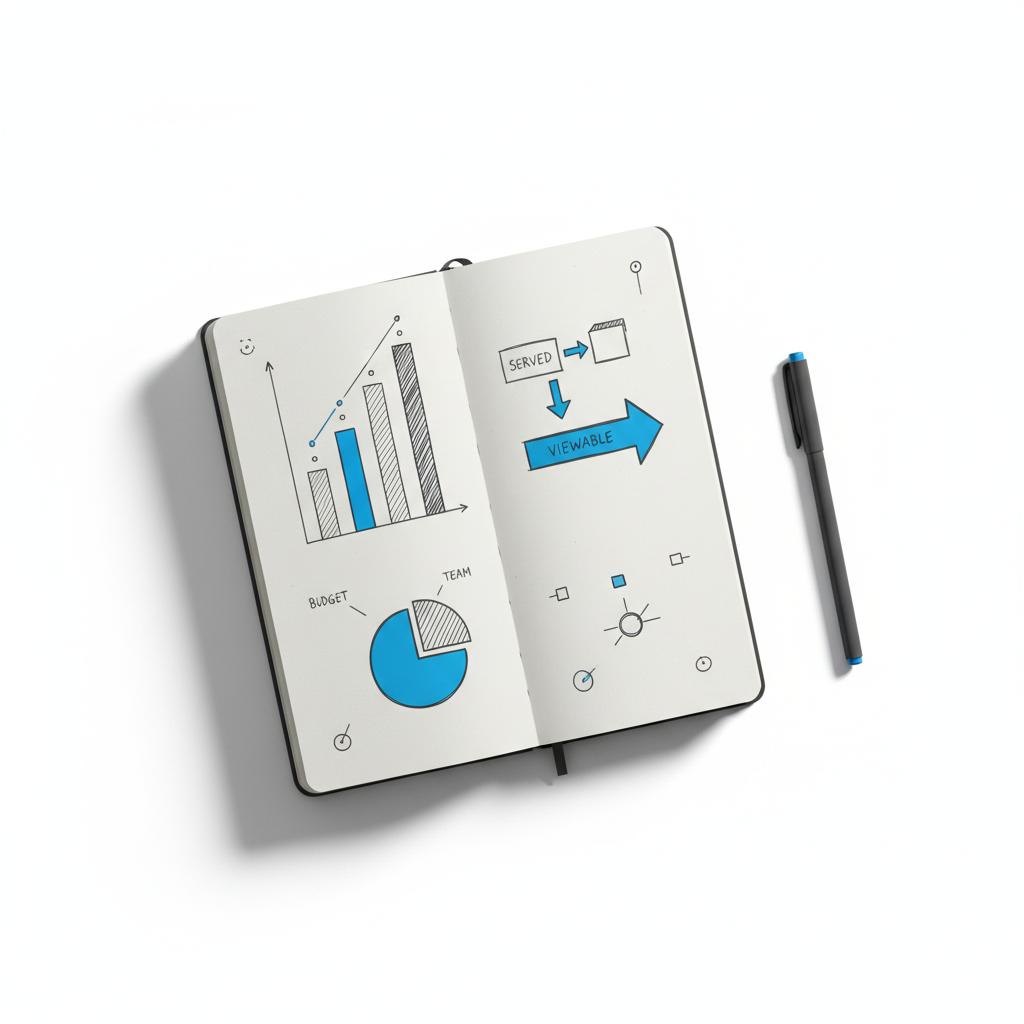
Benchmarks are directional, not definitive. In 2024 global display CPMs commonly ran between about $1 and $5 for standard display, while YouTube and premium video often ranged from $6 to $15 or higher depending on format and targeting. For industry benchmark studies see 2025 Google Advertising Benchmarks and summaries like How Much Does Google Ads Cost in 2025?. For more agency perspectives, visit our perspectives hub. A clear, consistent logo often helps recognition across placements.
Those ranges hide a lot of nuance: a small-market campaign with poor creative can produce sub-$1 CPMs, while a private marketplace seat with precise targeting can push CPMs into the double digits quickly.
Two practical examples that illustrate the math
Example 1: Brand awareness with a $10 CPM in the U.S. You buy 1,000,000 impressions to build awareness. Cost = $10 × (1,000,000 / 1,000) = $10,000. If half the impressions are not viewable and another 10% are invalid, the effective spend on meaningful impressions is much higher. That’s why eCPM and viewable CPM matter.
Example 2: Search vs display. An advertiser bids $3 CPC on a high-intent keyword with 1.5% CTR. Search-equivalent CPM = 3 × (0.015 × 1,000) = $45. One thousand impressions on that keyword equate to roughly $45 in clicks – useful to know when dividing budget between search and display. For broader CPC and ROI context see Google Ads Cost 2025.
CPM tells you how much you'll pay for a level of reach, but it doesn’t show how many of those impressions are actually seen or whether they reach your most valuable audiences. To connect CPM to budget and goals, convert search costs into search-equivalent CPM when comparing channels, measure viewable CPM (eCPM) to understand real exposure, and evaluate outcomes per dollar (cost per conversion, ROAS, brand lift) rather than CPM alone. Small tests and audience segmentation will reveal which CPMs are efficient for your business.
vCPM, vCPV and why wording changes cost perception
Different billing models matter. CPM charges for served impressions. vCPM charges only for impressions that meet a viewability standard. vCPV charges for video views rather than impressions. A vCPM at $6 that guarantees viewability can be more efficient than a $4 CPM where many impressions never become viewable.
Industry guidelines typically consider an impression viewable when at least 50% of pixels are in view for one second for display and two seconds for video. Ask vendors whether they quote CPM for served or viewable inventory – that changes the value significantly.
Invalid traffic, fraud, and the value of clean impressions
Invalid traffic and bots dilute CPM value. Invest time in detection and choose partners who filter suspicious activity. Paying for clean impressions is often worth a higher CPM because those impressions are more likely to reach real humans who might act.
Automated bidding changes the CPM conversation
Automated bidding strategies – target CPA, target ROAS, maximize conversions – affect which impressions you win and what you pay. Algorithms bid more aggressively on impressions with higher predicted conversion probability, which can raise average CPMs but lower wasted spend. The bottom line: automated bidding can increase CPMs while improving outcomes.
Programmatic buying, PMPs and premium inventory
Programmatic offers scale, but top-quality placements often sit behind private marketplace deals or programmatic guaranteed contracts. Those premium seats carry higher CPMs because they offer contextual safety, higher viewability and placement control that open auction inventory often doesn’t.
Metrics to track beyond CPM
CPM is a starting point. Track viewability rate, invalid traffic percentage, frequency, reach, engagement and – for video – completion and quartile view rates (25%, 50%, 75%, 100%). Use eCPM to compare apples to apples: divide spend by viewable impressions or completed views rather than served impressions.
If your objective is conversions, focus on cost per conversion and ROAS. For awareness, use brand lift, search lift, or trends in direct branded queries. CPM alone won’t tell you whether your campaign moved business outcomes.
Practical tips to manage CPMs and get more from them
1. Test creative often. Ads that match context and capture attention turn impressions into outcomes. Short-form video and native creative often outperform repurposed banner images.
2. Negotiate viewability and placement guarantees. A slightly higher CPM with a viewability guarantee often beats a low CPM with poor visibility. Ask for credits if viewability thresholds aren’t met.
3. Segment and experiment. Run small tests to find which audiences and placements deliver the best results at acceptable CPMs. Scale winners.
4. Set frequency caps. Too many impressions to the same user can waste spend. Use data to find the point of diminishing returns.
5. Use eCPM for true comparison. Compare costs using viewable impressions or completed views to avoid being misled by cheap, non-viewable inventory.
Case story: what we learned about viewability
We ran a global display campaign where the plan initially bought large volumes of low-cost open-inventory impressions. The raw CPMs looked great, but outcomes lagged. Shifting a portion of budget to a higher-CPM private marketplace with guaranteed viewability – plus creative optimized for those environments – improved conversions and lowered cost per meaningful outcome. The lesson: low CPMs sometimes hide poor value; higher CPMs can buy better attention. See examples of our work in Agency Visible projects.

How automated bidding and privacy shifts may shape CPM into 2025
Privacy changes, cookie deprecation and platform responses concentrate value in privacy-compliant channels. That tends to compress supply for premium identity-preserving inventory and push CPMs up for brand-safe, high-viewability placements. Automated bidding will continue to push spend to high-probability impressions and could raise average CPMs while improving conversion efficiency. Watch these trends at campaign level and test often.
Putting CPM into practice: a short checklist
Before you approve a CPM or commit to a buy, run this checklist:
– Is the CPM for served or viewable impressions?
– What is the expected viewability rate and invalid traffic percentage?
– What audience and location am I paying for?
– What is the device mix and ad format?
– Does creative match the environment?
– How will outcomes (conversions, brand lift) be measured?
Common advertiser questions (straight answers)
How much does 1,000 impressions cost in Google Ads? It depends. Global display CPMs often range from $1-$5. Video and YouTube commonly sit between $6-$15+ depending on format and targeting. Search-equivalent CPMs can be $10-$50+ for competitive keywords. The actual cost depends on targeting, format, geography, seasonality and inventory quality.
Should I always prefer lower CPMs? Not always. Lower CPMs can be useful for reach, but you need to weigh viewability, invalid traffic and outcome per dollar. Paying more for viewable impressions that reach the right people can be more efficient overall.
What’s the difference between CPM and vCPM? CPM charges for served impressions; vCPM charges for impressions that meet a viewability standard. If viewability matters, vCPM or vCPV for video can offer more reliable exposure for a higher cost.
Final, practical advice
Focus on outcomes. CPM helps plan budgets and compare creative and placements, but it isn’t the final metric. Use a mix of viewability, eCPM, cost per conversion and brand-lift measurements to decide whether your impressions are buying attention or just filling ad slots.
Ready to make every thousand impressions count?
If you want a simple, honest check of your CPMs and an action plan to improve what you buy, get in touch with Agency Visible today – we’ll run a quick audit and show where your spend can do more. Contact us at Agency Visible.
Summary: ask the right questions when you see a CPM
When you read a CPM, ask: is that served or viewable? Where is the inventory? Who will see the ad? What outcome am I buying? Answer these and you’ll pay for impressions that matter, not just the cheapest ones.
If you want help testing these ideas with your own numbers, a concrete scenario usually reveals the clearest path forward – and a short audit will show whether your CPMs are buying attention or just impressions.
Typical global display CPMs commonly fall between $1 and $5 for standard display inventory, while YouTube and premium video often range from about $6 to $15+ depending on format, targeting and geography. Remember these are rough benchmarks — exact CPMs depend on industry, audience, location, seasonality and inventory quality.
Convert CPC (cost per click) to a search-equivalent CPM with the formula CPM = CPC × (CTR × 1,000). For example, a $2 CPC with a 2% CTR equals a $40 CPM. This helps compare the cost of 1,000 search impressions (in clicks) to 1,000 display or video impressions, and guides channel allocation based on intent and value.
Yes. Agency Visible offers audits and campaign reviews that focus on viewability, invalid traffic detection, creative effectiveness and placement quality. We often find that shifting a portion of budget to higher viewability inventory and optimizing creative can reduce cost per meaningful outcome even if CPMs rise, because the impressions become more effective.
References
- https://agencyvisible.com/contact/
- https://agencyvisible.com/
- https://agencyvisible.com/projects/
- https://agencyvisible.com/perspectives/
- https://pixis.ai/blog/2025-google-advertising-benchmarks-for-every-industry/
- https://www.wordstream.com/blog/google-ads-cost
- https://quimbydigital.com/what-businesses-really-pay-cpc-monthly-budgets-roi/