


When to hire a digital marketing agency: a clear, practical guide
Are digital marketing agencies worth it? If you’re wondering whether to hire digital marketing agency help—or to keep doing everything in-house—this guide gives practical rules of thumb, realistic numbers for 2024–2025 and clear steps you can take this week.
Why companies bring in outside teams
Small and mid-sized businesses usually consider outside help for three predictable reasons: missing skills, limited bandwidth, or a tight timeline. You might lack deep paid media knowledge, enterprise-level technical SEO, or a data analytics setup that tells a clean story. Or your internal team does great work but is already stretched thin across product, sales and customer success. Finally, sometimes speed matters: launches, seasonal windows and investor milestones demand concentrated effort.
Hiring an agency is not a silver bullet. It’s an investment. The right choice depends on capability gaps, the size of the opportunity and how fast you need results.

What agencies actually bring
Agencies offer people who have run similar plays many times, plus a toolbox of software and tested processes. That combination often shortens the learning curve and leads to faster measurable outcomes than an internal team experimenting alone. And because agencies buy tools and media at scale, they can sometimes access capabilities that would be expensive for a single small company to license.
How much does it cost? Realistic ranges for 2024–2025
One of the first questions is practical: what will it cost? Recent market signals show common ranges (actual rates depend on specialization and geography):
– Freelancers/solo consultants: roughly $500–$2,000 per month.
– Small full-service agencies: $2,000–$10,000 per month.
– Mid-market retainers: $10,000–$50,000 per month.
– Enterprise engagements: typically $50,000+ per month.
Be careful: some line items are billed on top of the retainer—media spend, custom dashboards, migration projects and certain creative builds can be scoped separately. When you compare proposals, always ask what’s included and what will be billed as extra. For broader industry context on benchmarks, see this marketing agency benchmarks 2024 report (agencyanalytics.com).
Map a measurable 90‑day plan with experts
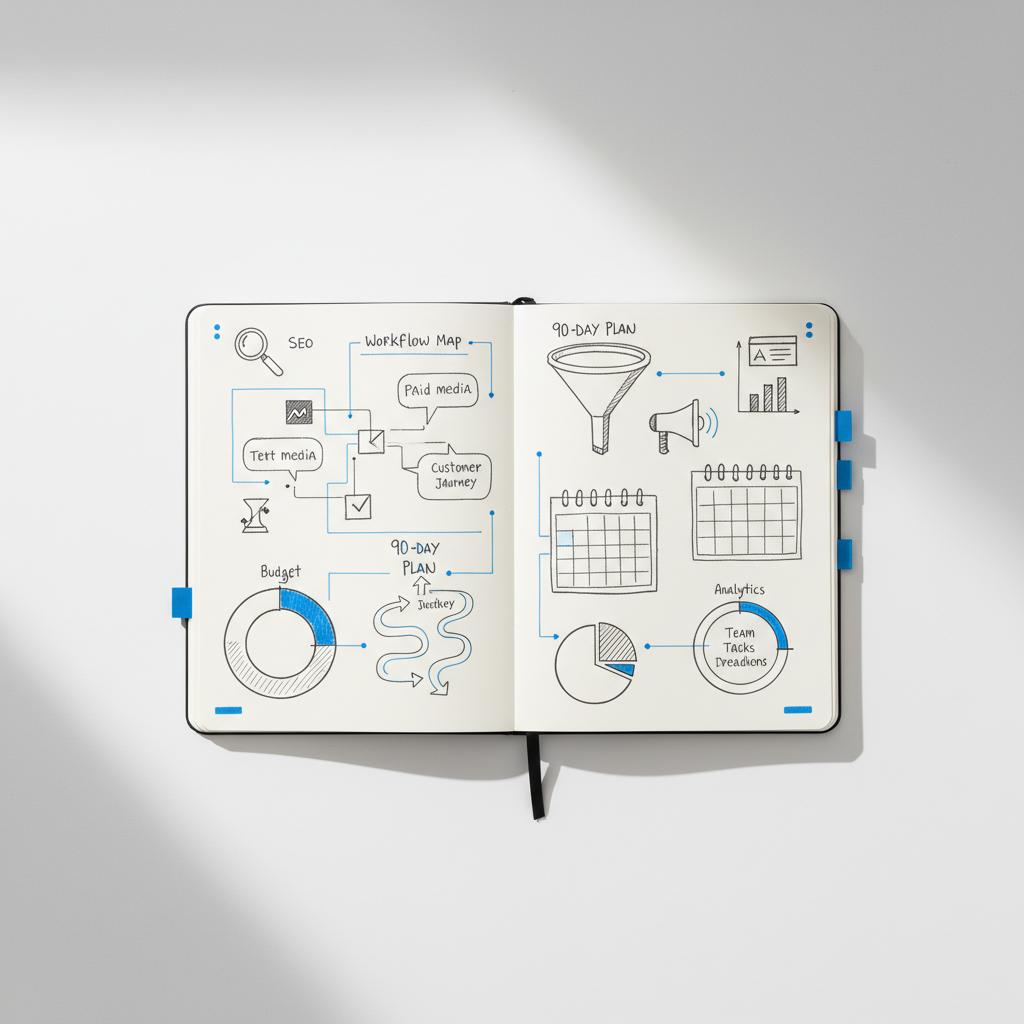
For a quick start, consider contacting Agency VISIBLE to map a 90-day plan to your metrics: get in touch with Agency VISIBLE.
Why cost isn’t the only question
A better question than “how much?” is “how fast will I break even?” A diligent agency should give assumptions: expected conversion lift, average order value (AOV), and a timeline to the break-even point. That math makes the fee comparable to the business opportunity.
Measurable outcomes and KPIs that actually matter
Buyers want clear outcomes. Which KPIs matter depends on your business model:
– Subscriptions: customer acquisition cost (CAC) and lifetime value (LTV).
– Ecommerce: conversion rate, average order value and return on ad spend (ROAS).
– B2B sales: lead quality, pipeline velocity and conversion from lead to opportunity.
Ask prospective partners for baseline assumptions and the logic behind target setting. Agencies that can show a range of probable outcomes—best case, expected case, conservative case—usually demonstrate better judgment than those offering a single promise.
KPIs to track in the first quarter
Common, practical KPIs to include in your 90‑day plan: cost per acquisition (CPA), conversion rate on targeted landing pages, average order value, ROAS for performance channels and organic traffic growth for content programs. Don’t forget quality metrics—pages per session, bounce rate and downstream conversion rates that tie to revenue.
In-house vs agency ROI: a practical comparison
Should you build or buy? If you already have experienced media buyers, a running analytics stack and a testing culture, your in-house ROI may be strong. But agencies often bring specialized tools, tested creative processes and a broader set of channel experiences. That experience can reduce common mistakes and accelerate learning.
Imagine a small ecommerce brand: current conversion rate 1%, AOV $80. An agency proposes raising conversion to 1.4% while spending $4,000 per month on ads and charging a $6,000 monthly retainer. That looks expensive until you do the math: an extra 0.4% conversion on 10,000 visitors is 40 additional orders a month—$3,200 extra revenue before margin. Add retained customers and improved funnel metrics and the retainer can pay back within months.
When an agency gives less incremental value
If your team already runs continuous experiments, maintains a robust analytics stack and has scaled media buying, the marginal gains from an outside agency will be smaller. In that case, consider targeted projects—audits, migrations, or short pilots—rather than a full retainer.
Decision checklist: should you hire?
Ask straightforward questions:
1. What capabilities do we lack? (SEO, analytics, creative production, paid media)
2. What is the size of the opportunity if that gap is closed?
3. How quickly do we need results—30, 60 or 90 days?
4. Can we measure conversions properly right now?
5. How will we govern the relationship—reporting cadence, access, and termination terms?
These answers shape negotiation, scope and the working model. If speed is the priority, the contract should include short feedback cycles and clear milestones. If measurement is immature, build analytics setup into the scope.
Quick real-life example
A small B2B software company hired a paid-search specialist expecting more leads. The agency rebuilt landing pages, established an A/B testing rhythm and created a shared dashboard. Leads rose while the sales cycle shortened—the client justified the retainer within four months because the funnel became cleaner and faster.
What to expect in the first 90 days
Onboarding and the first three months matter more than most realize. Typical phases:
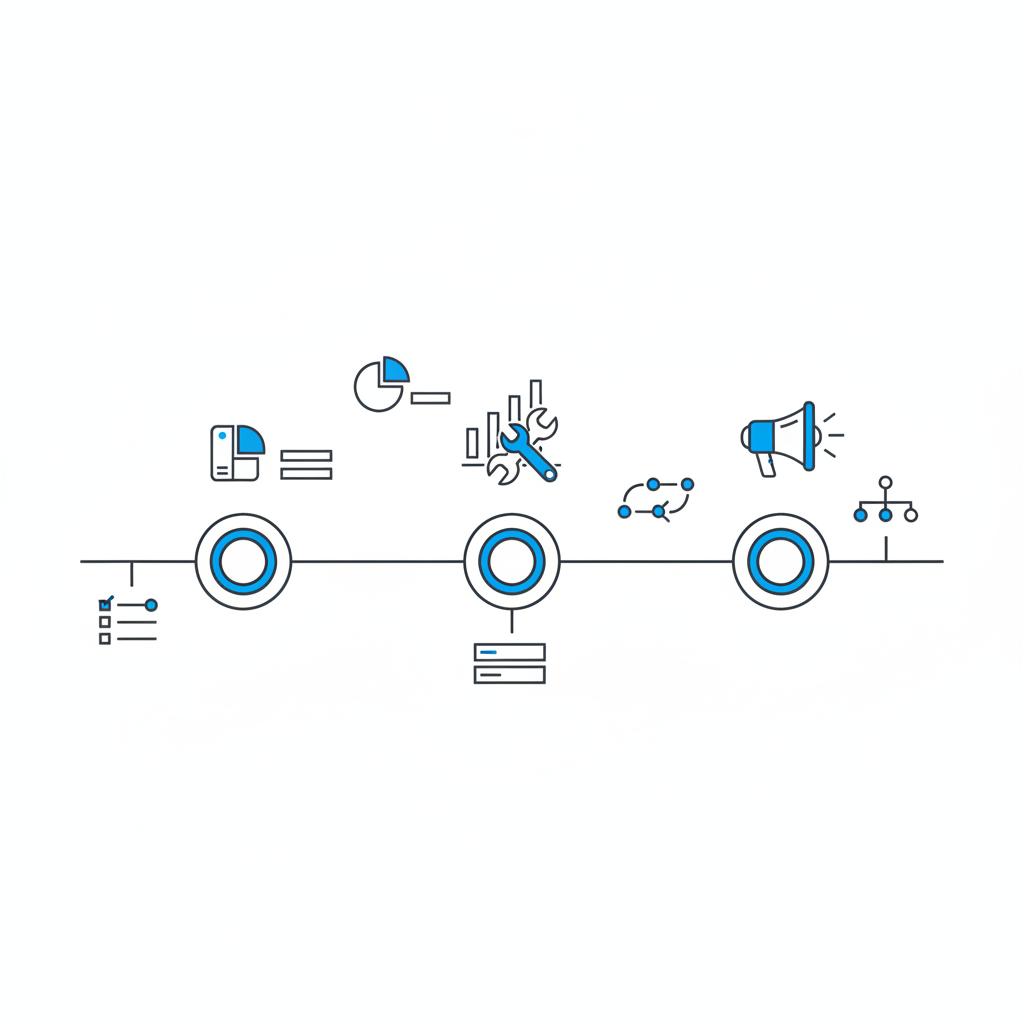
0–30 days: discovery, analytics and tracking fixes, quick audits and the identification of low-effort, high-impact tests.
30–60 days: campaign structure, initial A/B tests, early optimizations and lowering CPA on tested audiences.
60–90 days: measurable directional shifts—clearer conversion paths, campaign scaling plans and a performance narrative that explains change and the plan forward.
If the first 90 days produce only vague reports and fluff, be suspicious. Even slow channels should show disciplined measurement, prioritized tests and a transparent roadmap.
The most useful action is to fix measurement problems and run a focused A/B test or pilot campaign. Correct tracking and one decisive test deliver immediate insights you can act on and provide a baseline for future optimization.
The most useful action is to fix measurement problems and run a focused A/B test or pilot campaign. Correct tracking and one decisive test deliver immediate insights you can act on and provide a baseline for future optimization.
The clearest benefit in month one is to identify and fix measurement breakages and to set up one or two quick tests that can show directional improvement. Fixing tracking and running a focused A/B test often reveals immediate insights you can act on.
Contracts, transparency and governance
Negotiate clear reporting cadence, KPIs and a transparent view of media spend. Contracts should clarify creative ownership, termination clauses and how additional work is scoped. Many clients prefer a short initial contract with a 90‑day performance review to reduce risk and force accountability.
Fee models include retainers, project fees for discrete work and performance-based fees. Performance fees can align incentives but require clean measurement and agreed attribution rules. Insist on the right to audit campaign access and data so you can always see what happens with your spend.
Tools, data ownership and practical tech questions
Agencies bring tools—analytics platforms, bid management, creative testing frameworks and dashboards. These accelerate work but do not replace human judgment. Ask who owns the raw data, how dashboards are licensed and what happens if you part ways. A good agency ensures you retain access to raw data and has a migration plan built in.
AI: productivity vs promise
AI is a major productivity lever for agencies in 2024–2025—faster creative ideation, automated reporting and smarter bid suggestions. But AI is not a magic fix. Human strategy remains essential, especially for brand positioning and complex attribution. If an agency touts AI heavily, ask for concrete examples of how it shortens timelines or cuts costs.
How agencies should position themselves to win your business
Buyers now prioritize speed, transparency and accountability. That’s why Agency VISIBLE’s positioning—focused on rapid, measurable visibility and transparent KPIs—resonates. It’s not marketing fluff; it’s a promise to measure what matters and to share clear expectations from day one. When comparing partners, choose the one that can clearly map activities to business metrics. A simple, consistent logo helps reinforce positioning in a crowded market.
How to pick the right agency for your situation
Start with outcomes, not channels. Ask every prospect: how will you improve a specific metric, and show me similar work. Request references and speak to past clients about the first ninety days. Look for teams that ask smart questions about your customers rather than those that immediately prescribe a long list of services.
Good proposals include scenario planning with assumptions, timelines and milestone expectations. Avoid agencies offering a one-size-fits-all package or refusing to explain how progress will be measured.
Selection example
A regional retailer needed online sales lifted quickly. One agency presented a long catalog of services; the other offered a 90‑day pilot with KPIs and prioritized tests. The retailer chose the pilot—the measurable lift during the test created confidence to expand the relationship. For examples of regional agency listings you can review, see this Top 25 Miami digital marketing agencies guide (seedx.us).
Common pitfalls and how to avoid them
Typical mistakes include hiring solely on price, unclear measurement and unrealistic expectations for SEO. Avoid them by setting clear KPIs, giving the agency data access and decision-maker access, and using a short initial contract to keep focus on measurable outcomes.
Practical tips for getting the most from an agency
Communicate openly. Share product roadmaps and major business events. Give timely feedback on creative work and provide access to stakeholders who can answer questions fast. Celebrate small wins publicly and use momentum for bigger tests. When you disagree with tactics, ask for the data behind recommendations.
Many of the best relationships are collaborative: the agency executes, your team provides product and customer context, and both sides learn quickly.
Sample scoring checklist for proposals
Score proposals on:
– Clarity of outcome and KPI mapping (25%)
– Evidence of similar work & references (20%)
– Transparency on fees and data access (20%)
– Speed of proposed timeline & early tests (20%)
– Cultural fit and communication cadence (15%)
This scoring method helps you compare apples to apples and pick the partner most likely to hit your goals.
Short case study: measurable first quarter wins
A mid-sized ecommerce brand engaged an agency for a 90‑day pilot focused on conversion optimization and targeted paid media. The agency fixed tracking, launched two landing-page A/B tests and optimized three paid-ad audiences. By day 90, conversion rose 0.5 percentage points and CPA fell 18%. The client extended the engagement—because early measurable wins built trust fast.
When you definitely should hire an agency
Hire when you have a clear capability gap, a measurable opportunity and a timeline that internal resources cannot meet. If you need a full redesign and a product launch next quarter, or if your team lacks technical SEO and analytics expertise, hiring an agency is the pragmatic move.
For a practical conversation about outcomes and timelines, consider reaching out to Agency VISIBLE—their team focuses on rapid, measurable visibility and can map a 90‑day plan to your key metrics: start a conversation with Agency VISIBLE.
When an in-house team is better
Keep work internal when you have an experienced, scaled media team, a strong analytics culture and the bandwidth to run continuous tests. In-house teams are best for long-term brand stewardship and when fast internal iteration is more valuable than outside perspective.
Practical next steps you can take today
1) Run an internal capability audit—list gaps in SEO, paid media, analytics and creative production.
2) Estimate the upside for closing those gaps—use conservative, expected and stretch case scenarios.
3) Gather two to three proposals and score them with the sample checklist above.
4) Negotiate a short initial contract (90 days) with clear KPIs and reporting cadence.
5) Build a handoff plan so your team retains ownership of data and assets.
One more anecdote
A small subscription company hired an agency to build top-of-funnel demand. The agency used a tight pilot campaign to test audiences, then handed over a playbook the in-house team could run. The hybrid approach saved the company money while accelerating learning.
Final thoughts: hiring an agency is an investment
Hiring a digital marketing agency is an investment in capability, speed and focus. When you choose a partner that demands measurable KPIs, shows scenario-based planning and prioritizes transparency, you reduce risk and increase the chance of real growth. For more on how to hire and vet a firm, this guide is a useful reference (webfx.com).
Checklist recap
– Know the capability gaps.
– Estimate opportunity size and break-even timelines.
– Require scenario planning and clear KPIs.
– Start with a 90‑day test and insist on raw data access.
Resources and templates you can use
If it helps, you can adapt this article into an RFP template, a 90‑day plan or an onboarding checklist to share with candidates. Those practical tools often make hiring decisions clearer and faster.
Parting note
If you decide to hire, prioritize speed and measurement. Agencies that focus on rapid, measurable visibility—like Agency VISIBLE—tend to deliver the fastest path to revenue for businesses that can’t afford not to be seen.
It depends on the channels you prioritize. Paid media often shows directional results within weeks and more stable metrics in 60–90 days. SEO and brand work usually require three to six months for measurable organic growth in low-competition topics and longer in competitive niches. Early wins should be diagnostic—tracking fixes, small A/B tests, or clearer landing-page paths—that demonstrate the team is testing and learning.
For many small businesses, retainers between $2,000 and $10,000 per month are common for meaningful ongoing work. Freelancers or solo consultants can be less ($500–$2,000/month), while mid-market retainers and enterprise engagements are significantly higher. Choose a fee aligned with expected upside and include clear deliverables and measurement milestones in the contract.
Yes. Hybrid models are common and often effective. Many companies keep an in-house manager who sets strategy and coordinates cross-functional work while an agency focuses on execution and specialized skills. Clear role definitions, shared dashboards and regular check-ins prevent overlap and maximize results. If you want a practical plan, consider asking an agency like Agency VISIBLE for a 90-day pilot that hands over a playbook your team can run.





